
Two weeks isn’t enough for Central America, and that’s the right place to start. The region runs from the Mexican border down to Colombia, covers seven countries, three coastlines, dozens of volcanoes, and four currencies, and trying to “do it all” in fourteen days is how people end up exhausted and resentful by day ten. The fix is to pick a shape for your trip before you book flights. One country deep, two countries paced, or three countries on a brisk gringo trail. Each works. None of them is the same trip.
What follows is the practical version. Three different fourteen-day routes, each built around real flight gateways and real overland connections. You self-select. There’s a Guatemala-only route for first-timers who want depth, ruins, and one of the most striking lakes on the planet. There’s a Costa Rica-only route for travellers who want volcanoes, cloud forest, and the Pacific without ever showing a passport at a land border. And there’s a multi-country route along the classic gringo trail for anyone who’s already been to Costa Rica and wants the rougher, more interesting stuff. Plus the logistics, the visa quirks, the packing reality of a region where you’ll be cold at 3am on Acatenango and sweating in Roatán the next afternoon.
In This Article
- What Two Weeks Actually Buys You
- Pick Your Shape: Guatemala, Costa Rica, or the Trail
- Itinerary A: Guatemala in Two Weeks
- Itinerary B: Costa Rica in Two Weeks
- Itinerary C: The Gringo Trail in Two Weeks
- How to Fly In and Out
- Border Crossings, Buses, and the CA-4 Visa
- Currency, Cards, and Why It Doesn’t Matter Much
- Packing for Three Climates in One Trip
- Safety, Honestly
- When to Go
- Budget by Itinerary
- The One-Country Argument
What Two Weeks Actually Buys You
Fourteen days, minus two travel days at each end, leaves you ten on-the-ground days. That’s the honest math. Add a wet-season storm, a missed shuttle, or one stomach bug and you’re at eight or nine. Plan accordingly.
What ten days does well: one country in proper detail (three or four bases, a few day trips, time to actually slow down). It also covers two adjacent countries with a single land border between them, or three bases in a single country with an internal flight. What it does badly: more than three or four bases in two weeks. Six countries in fourteen days is the kind of itinerary that looks great on a spreadsheet and feels like a forced march in real life. The Times once published exactly that route through the region, and even the writer admitted it was a “whistle-stop tour.”
If you want to slow down, you have two options. Cut bases (do three places at four nights each rather than five at two and a half). Or extend to three weeks. The brokebackpacker.com folks recommend four to six weeks for the full backpacker experience and they’re right. But two weeks is what most people have, so two weeks is what we plan for.
Pick Your Shape: Guatemala, Costa Rica, or the Trail
The three routes below are not interchangeable. They suit different travellers, different fitness levels, and different tolerances for border-day chaos. Read the openers and pick honestly.
Itinerary A (Guatemala focus) is for first-timers who want depth over breadth. You see colonial Antigua, hike a volcano, sit on the most beautiful lake in Central America for three days, and fly up to one of the great Maya cities. You speak no Spanish? Fine. The infrastructure is built for tourists.
Itinerary B (Costa Rica focus) is for travellers who want comfort, infrastructure, and wildlife without the rougher edges of the rest of the region. The roads are paved, the buses run on time, the wifi works. It’s also the most expensive country in Central America by a fair margin. If you want easy, this is easy.
Itinerary C (Multi-country gringo trail) is for anyone who’s already done Costa Rica or wants the trip with the better stories. You cross at least one land border. You’ll get on a chicken bus at some point. You’ll arrive sweaty in a town you didn’t plan to stop in. Don’t pick this if you need predictability.
Itinerary A: Guatemala in Two Weeks
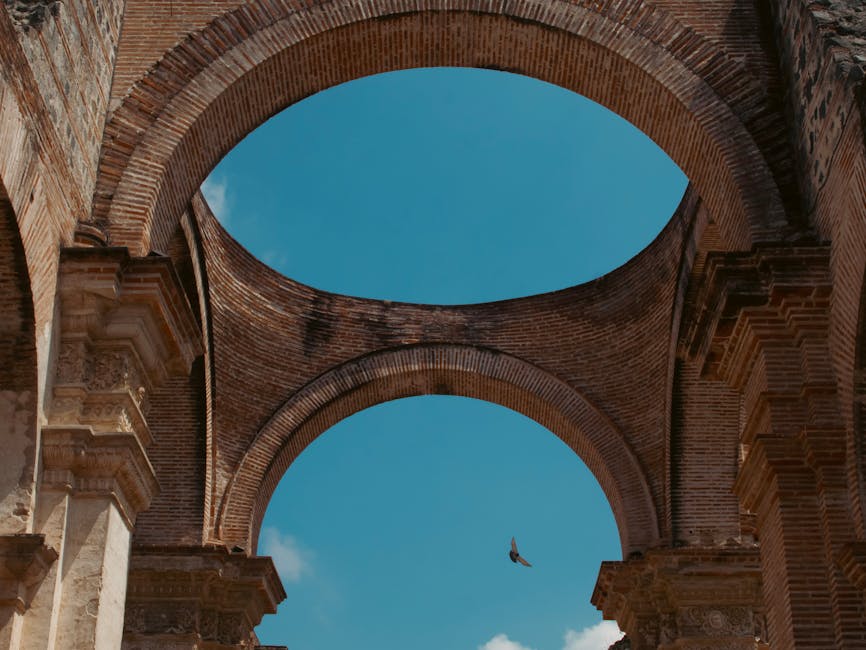
Fly into Guatemala City (GUA). Don’t stay in the city longer than your transfer requires. Guatemala rewards you the moment you leave the capital, so leave the capital. The route below is built around four bases: Antigua, Lake Atitlán, Flores/Tikal, and back to Antigua. Total ground covered is small enough that you spend most of your time actually somewhere, which is the whole point.
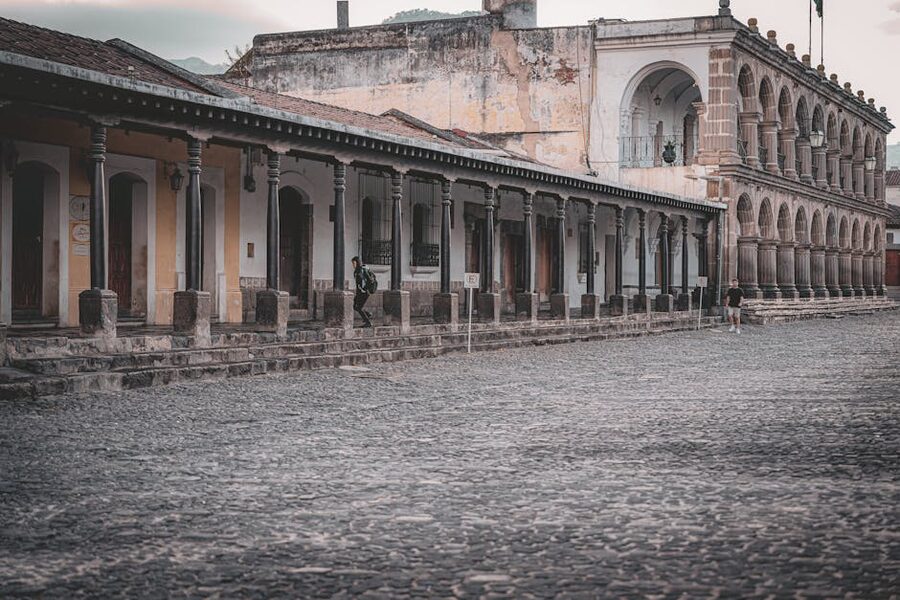
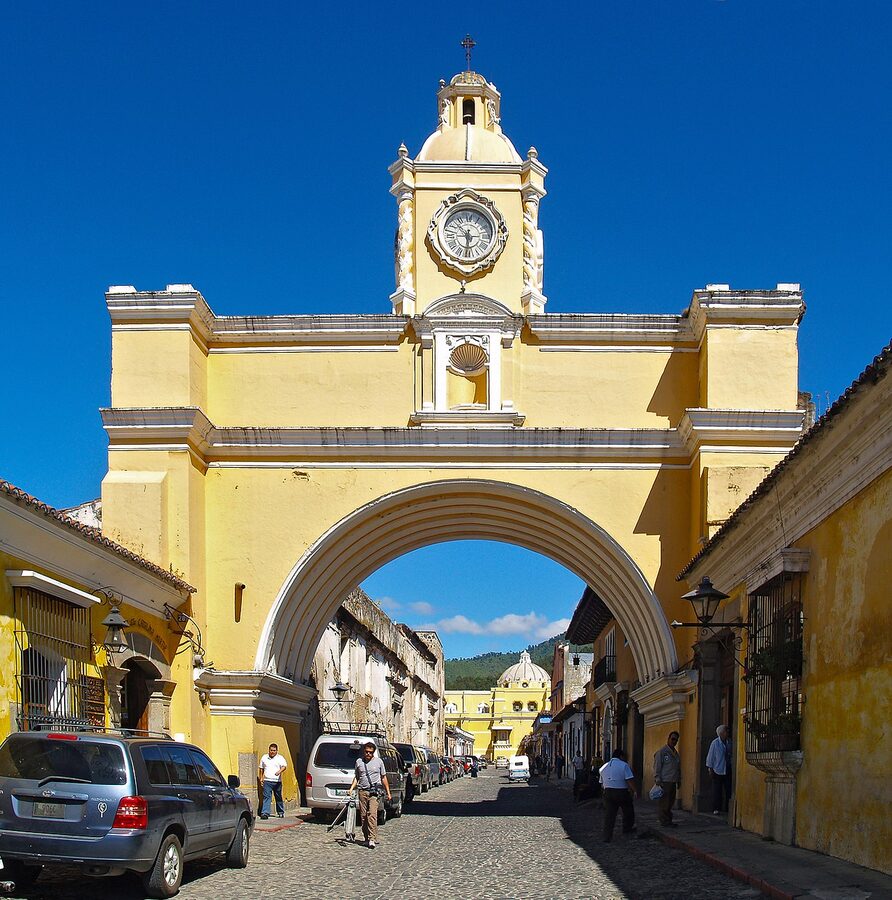
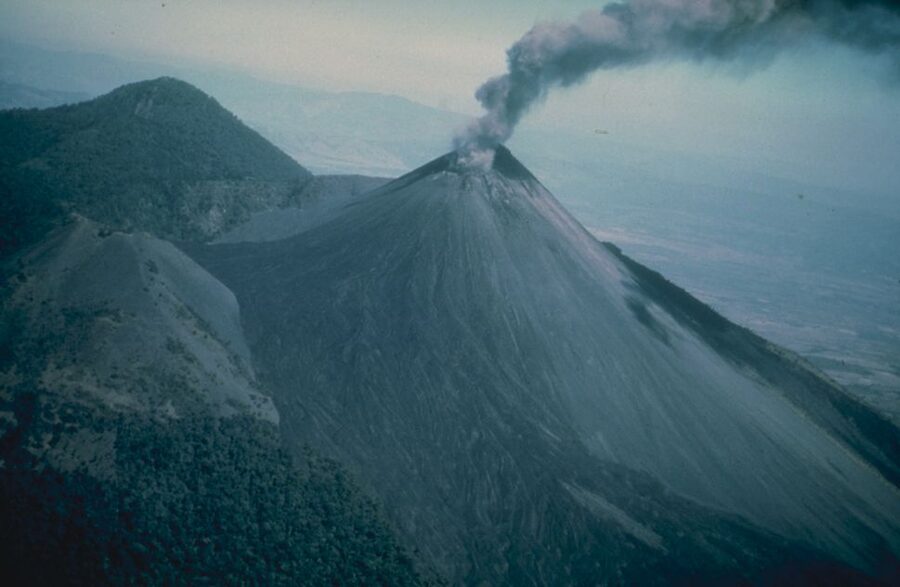
Days 1 to 4: Antigua. Shuttle from GUA airport to Antigua Guatemala takes 60 to 90 minutes depending on traffic and runs about Q70 to Q120 in a shared van. Antigua is your acclimatisation base. Day one: arrive, eat, walk. Day two: cobbled wandering, the Arco de Santa Catalina, lunch on a rooftop, an afternoon at one of the colonial ruins. Day three: a half-day trip up Volcán Pacaya (about Q150 plus park fee) for an introduction to volcano hiking that doesn’t require an overnight. Day four: do the overnight on Volcán Acatenango if you’ve got the legs for it. Otherwise spend the day on the cooking school or coffee tour circuit.
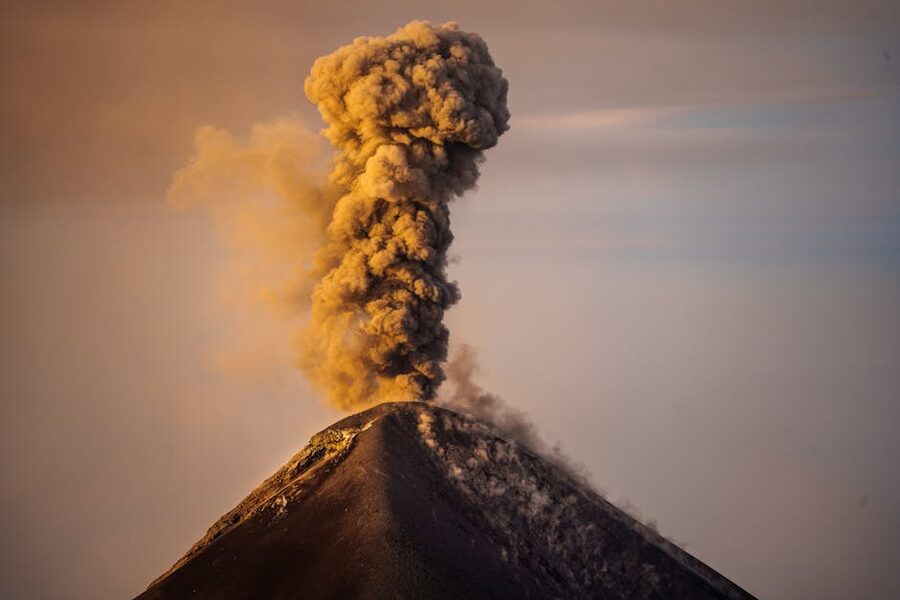
The Acatenango overnight deserves a paragraph of its own. You leave Antigua around 8am, hike five to six hours up to basecamp at roughly 3,600m, sleep at altitude, and watch Volcán de Fuego erupt across the valley through the night. It is genuinely one of the best things you can do in Central America. It is also brutally cold, often wet, and physically demanding. Outfitters like OX Expeditions, Old Town Outfitters, and Wicho & Charlie’s run reliable trips for around Q650 to Q900 including gear, food, and transport. Wear hiking boots you’ve already broken in.
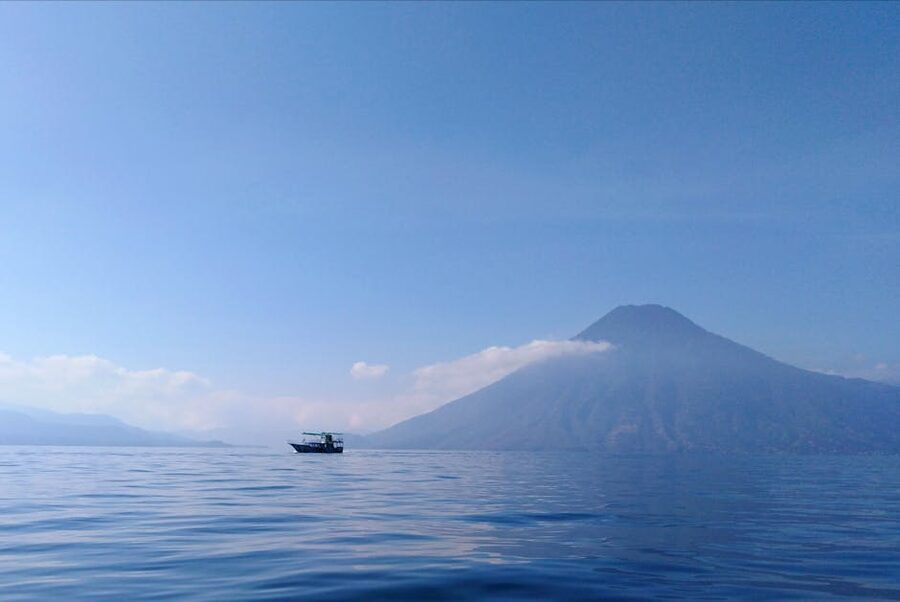
Days 5 to 8: Lake Atitlán. Tourist shuttles from Antigua to Panajachel run three or four times a day and cost about Q120 to Q180 for a three-hour ride. From Panajachel you take a public lancha (passenger boat) to whichever village suits you. Lake Atitlán villages each have a personality. San Pedro La Laguna is the backpacker hub: hostels, Spanish schools, party nights. San Marcos is yoga, vegetarian food, and silent retreats. Santa Cruz is quiet, expensive, and has the best lake views. Panajachel itself is the transit hub but the least atmospheric.
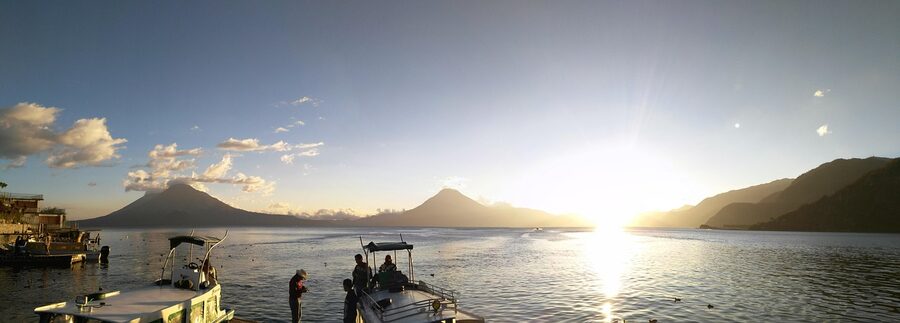
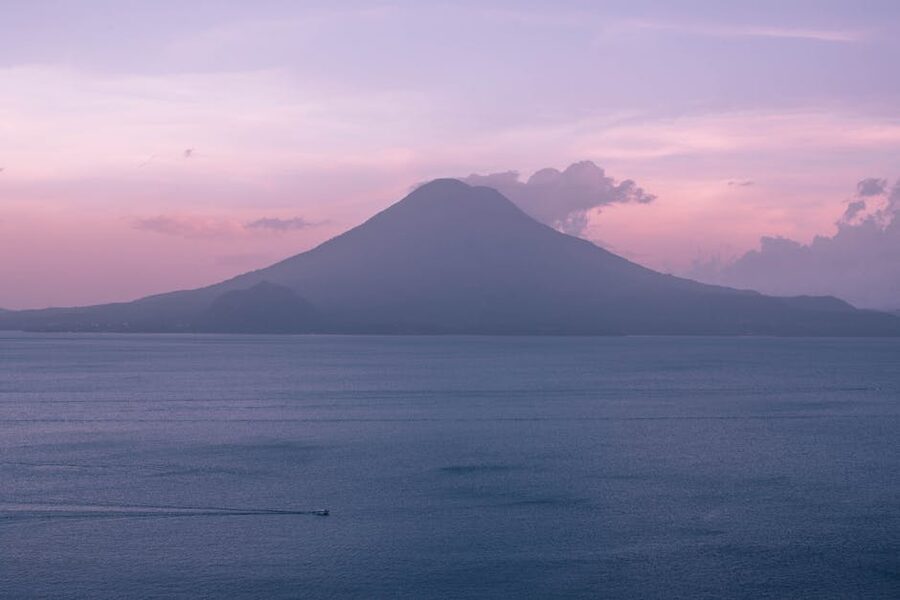
What to actually do over those four days: a kayak around the lake at dawn before the wind picks up, a hike up Volcán San Pedro (steep but doable, around Q200 with a guide which is mandatory), a day in Santiago Atitlán to see the cult of Maximón (a Maya-Catholic syncretic figure who lives in a different family’s house every year), and at least one full day where you do nothing except watch the lake. The wind hits hard around 1pm most days. Boats stop running between villages around 7pm. Plan accordingly.
Days 9 to 11: Tikal via Flores. The smart move is to fly. Avianca and TAG run morning flights from Guatemala City to Flores (Mundo Maya International, FRS) for around Q700 to Q1,400 depending how far ahead you book. The shuttle from Lake Atitlán to GUA airport is four hours; the flight to Flores is one. The alternative is the overnight bus from Guatemala City to Flores, which takes nine to ten hours, costs around Q200 to Q300 with Fuente del Norte’s premium service, and is fine if you’re tight on cash and willing to sleep on a bus.
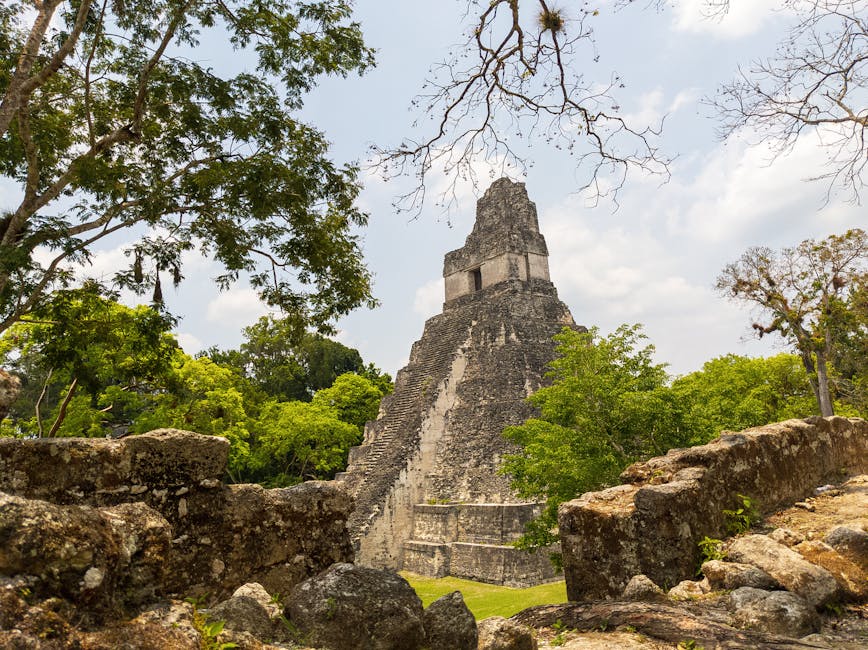
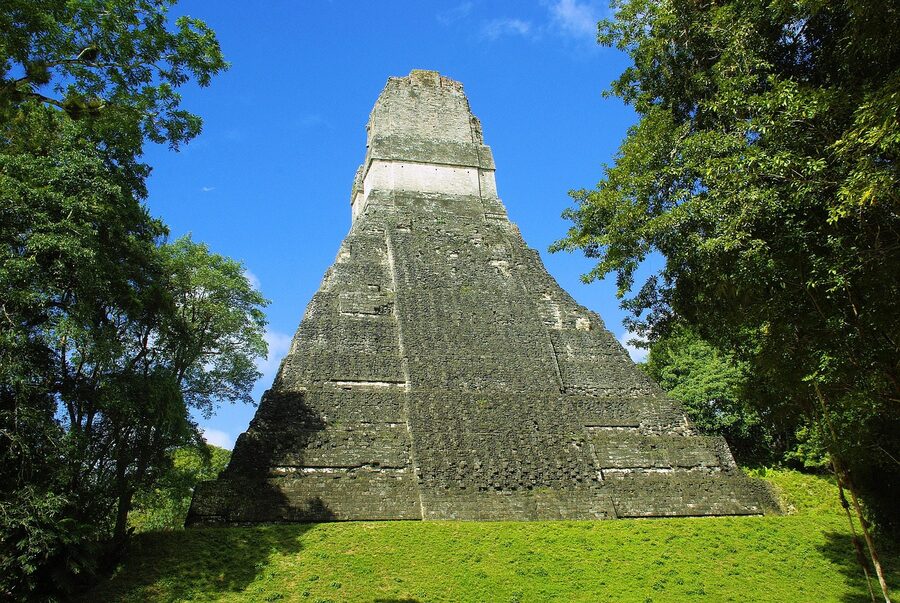
Stay on the island of Flores for atmosphere or in El Remate for proximity to Tikal. A sunrise tour leaves around 3am, gets you into the park before the gates officially open, and lets you sit on top of Temple IV listening to howler monkeys announce the day. The standard tour with park entry runs Q450 to Q600. Spend a second day exploring the more remote complexes (Mundo Perdido, Group H) without the crowds. Bring a torch even on day tours; some of the temple interiors are pitch dark.
Days 12 to 14: Antigua return + buffer. Fly back to Guatemala City, transfer to Antigua, spend the last two days slowly. Eat at the places you mentally bookmarked the first time around. Buy textiles at the Mercado de Artesanías if you want them. Day 14 is your departure buffer; do not schedule it as anything except a transfer day, because shuttles to GUA airport sometimes get stuck in traffic and you do not want to miss your flight chasing one more bowl of pepián.
What to skip if pressed: the Acatenango overnight is the most cuttable item if you’re injured, exhausted, or weather-bound. Substitute with a Pacaya day-hike, which is about a third of the effort and still gets you on a volcano. Skip Santiago Atitlán if you only have three nights at the lake.
If you have three weeks: add Semuc Champey (the limestone pools at Lanquín; rough road in but the pools are worth it) between Lake Atitlán and Flores, plus one or two extra nights at the lake. Or go to Quetzaltenango (Xela) for a week of Spanish school after Antigua.
Itinerary B: Costa Rica in Two Weeks
Fly into San José (SJO) or Liberia (LIR). SJO is cheaper from most US gateways; LIR puts you closer to the Pacific beaches. The route below assumes SJO arrival and departure, which is the more common setup. Costa Rica is small enough that you can build a four-base loop in two weeks and still have buffer time, but it is also the most expensive country in Central America. Budget USD 80 to 150 per person per day for mid-range, more if you do a lot of organised tours.
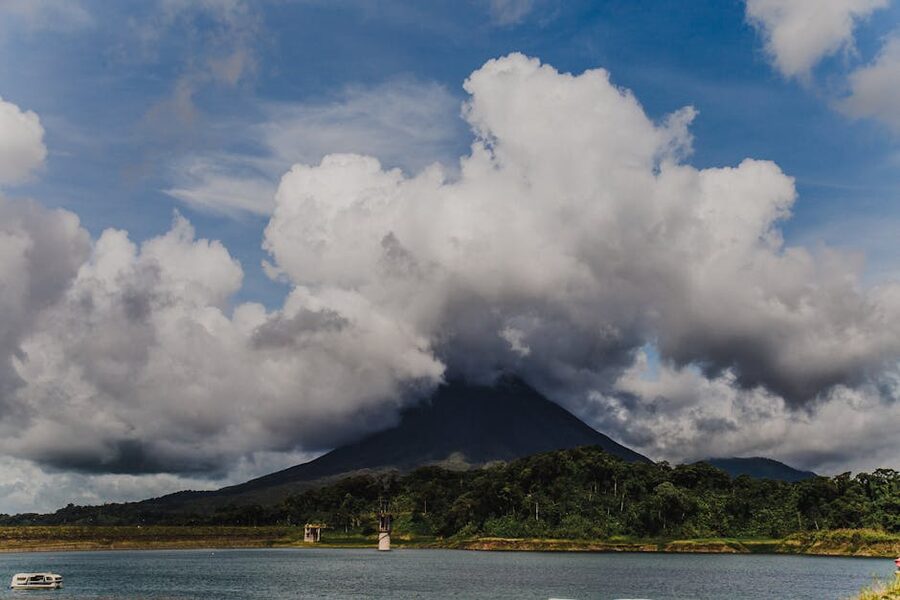
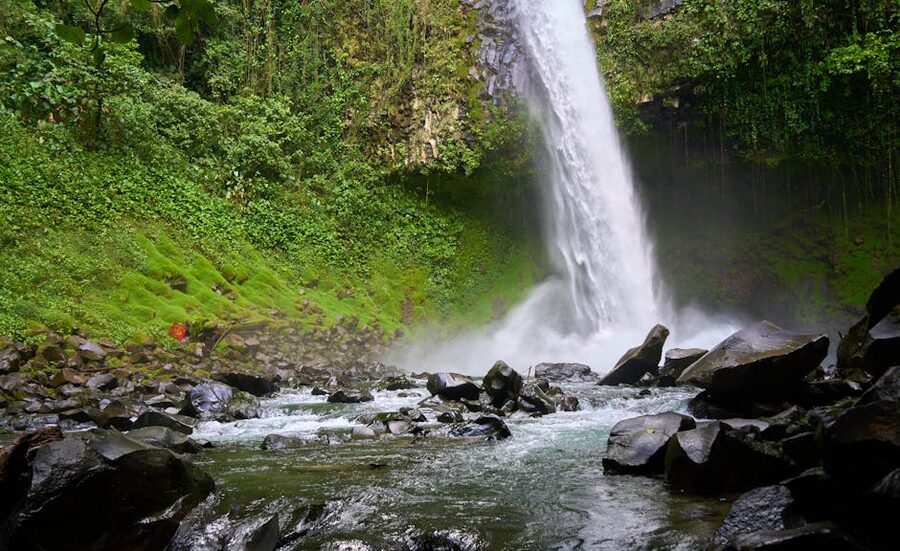
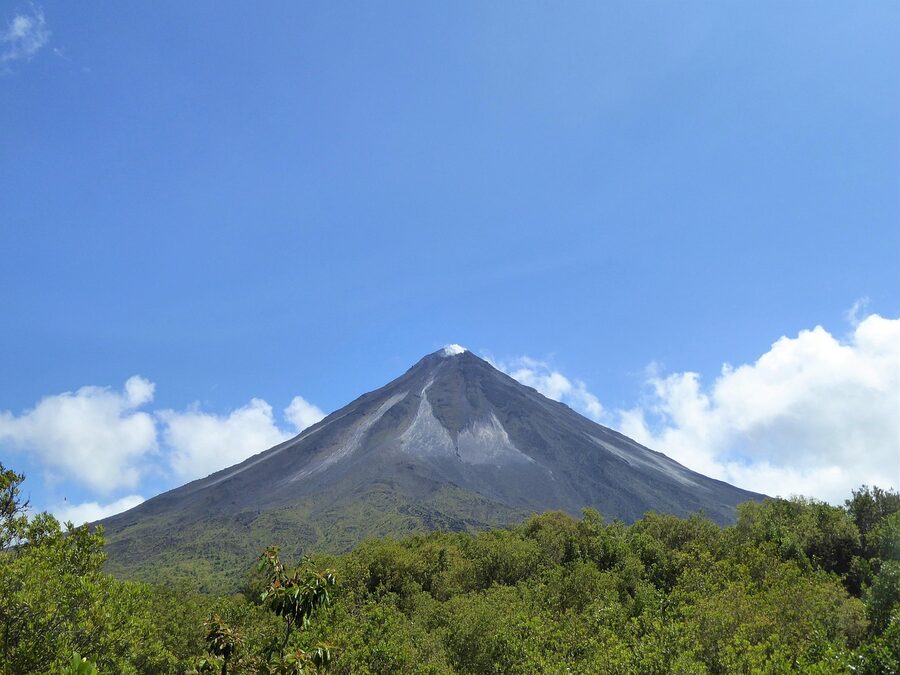
Days 1 to 4: La Fortuna and Arenal. Shuttle from SJO airport to La Fortuna takes about three hours and runs USD 50 to 60 with shared shuttle operators like Interbus or Caribe Shuttle. La Fortuna is your base for the Arenal Volcano area. The volcano stopped its open lava flows in 2010 but the cone is still photogenic, the rainforest around it is intact, and the geothermal heat means cheap hot springs. Day one: arrive, eat, soak. Day two: hike the Arenal 1968 trails on the old lava field (USD 15 entry, way better than the more famous park entrance which is mostly paved walkways). Day three: La Fortuna Waterfall (USD 18 entry, 500 steps each way, do it before 9am). Day four: hot springs night at one of the free river pools (locals will point you to Río Chollín off the highway) or splurge on Tabacón.
Days 5 to 7: Monteverde. The transfer from La Fortuna to Monteverde is the famous “jeep-boat-jeep” combo: 4×4 to Lake Arenal, boat across, 4×4 up the dirt road to Santa Elena. About four hours total, USD 30 to 35, and infinitely better than the seven-hour all-road option. Book it the day before with any tour office in La Fortuna. Monteverde is cloud forest at 1,400m. Bring a fleece. The temperature drops 15 degrees from La Fortuna and the rain is constant in shoulder season.
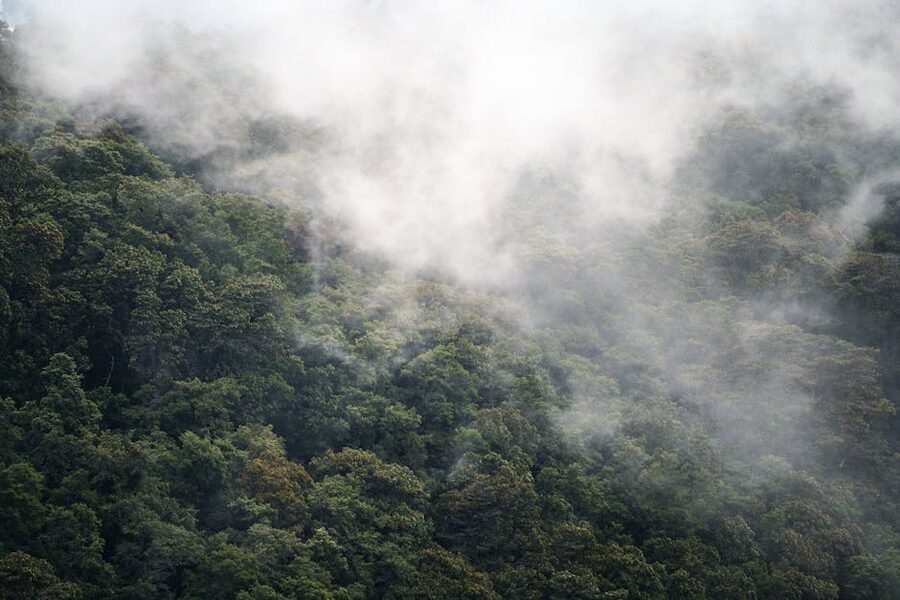
The Monteverde Cloud Forest Reserve (USD 25) is the original. Santa Elena Reserve (USD 16) is smaller, less crowded, and arguably better for actually seeing wildlife because the trails are quieter. A guided night walk (around USD 25) is the only way you’ll see most of the nocturnal animals. Day six: ziplines if you’re so inclined (Selvatura and 100% Aventura are the main operators, USD 50 to 70 for a half-day). Day seven: hummingbird gallery in the morning, slow afternoon at the Bajo del Tigre trail before the transfer.
Days 8 to 11: Manuel Antonio and the central Pacific. Shuttle from Monteverde to Manuel Antonio is around five hours, USD 55 to 65. Manuel Antonio National Park is the most-visited park in Costa Rica for a reason: the wildlife is dense, the beaches are inside the park, and the access is dead easy. Park entry is USD 18 and you must reserve online in advance through SINAC; walk-up tickets are no longer sold for foreigners. Get there at 7am when it opens.
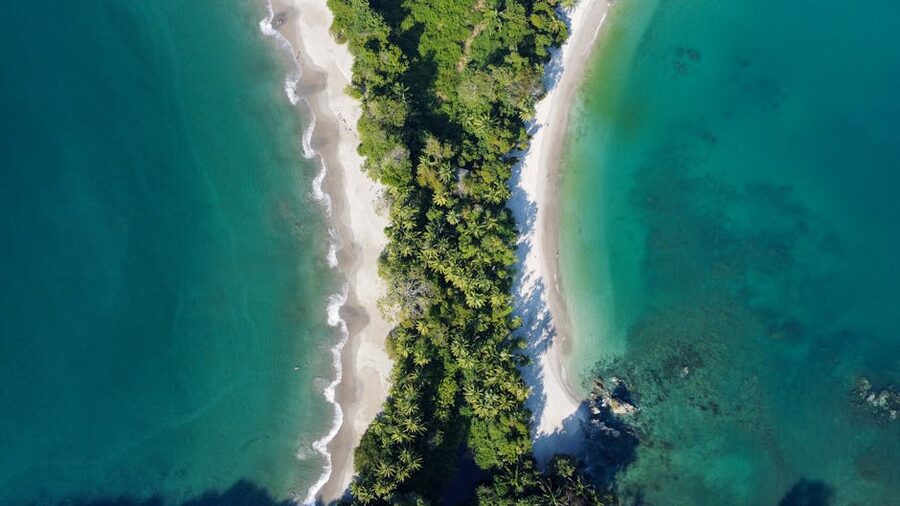
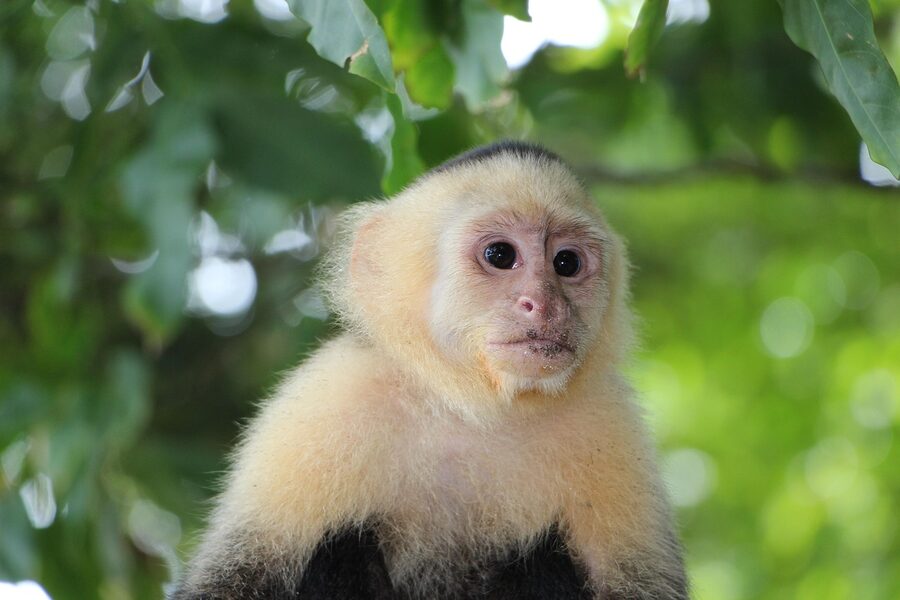
The town of Quepos is your accommodation base; the park is a short bus ride or a walkable 30 minutes uphill. A half-day with a local naturalist guide (around USD 50) will show you ten times the wildlife you’d see alone. Without one, you’ll see plenty of monkeys and a few sloths. The beaches inside the park, Playa Manuel Antonio and Playa Espadilla Sur, are usable for swimming. The currents outside the park are stronger.
Days 12 to 14: Pacific beach + return. The honest pick is Santa Teresa or Montezuma on the Nicoya Peninsula. From Manuel Antonio you take the Paquera ferry across the Gulf of Nicoya (around three to four hours total with the bus connections, USD 25 to 30). Santa Teresa is the surf scene and the better food. Montezuma is older, slower, and has a waterfall. Three nights here is enough to learn to surf badly, eat one excellent dinner, and sleep. Day 14: ferry back, drive to SJO, fly home.
What to skip if pressed: the Pacific beach segment is the most cuttable. If you’d rather have the days, stay longer in Monteverde or fly direct from SJO after Manuel Antonio. Or skip Manuel Antonio (which is genuinely overcrowded) and go to Corcovado on the Osa Peninsula instead, which is harder to reach but where the wildlife is.
If you have three weeks: add Tortuguero on the Caribbean side (canal boat tours, sea turtle nesting season July to October) or extend on the Osa for proper jungle. Either is worth a full week.
Itinerary C: The Gringo Trail in Two Weeks
This route crosses the Guatemala-Honduras border by land, the Honduras-Bay-Islands gap by ferry or short flight, and ends with a flight to Panama City to close the loop. It is the route most travel writers actually do, and it covers more ground than is sensible. You will be tired by day fourteen. You will also have the better stories.
Days 1 to 4: Antigua + Lake Atitlán. Same opening as Itinerary A but compressed. Two nights in Antigua (one for arrival, one for Pacaya half-day or the cooking school), two nights at Lake Atitlán (one in San Pedro for the party, one in San Marcos for the silence, or just stay in San Pedro both). Skip Acatenango on this route; you’re not back here in two weeks and you need the time elsewhere. Then back to Antigua the morning of day five for the cross-border shuttle.
Day 5: Antigua to Copán Ruinas, Honduras. The most efficient option is Hedman Alas’s direct service, which leaves Antigua around 5am and reaches Copán Ruinas in about eight hours including the El Florido border crossing. Cost is roughly USD 50 to 70. You hand the driver your passport, they handle the bulk of the border paperwork, you stamp out of Guatemala and into Honduras, and the bus continues. Both Guatemala and Honduras are in the CA-4 visa zone, so no new stamp at the border, just an exit and re-entry record. Have the printed itinerary ready at the border officer’s window; they sometimes want to see onward travel.
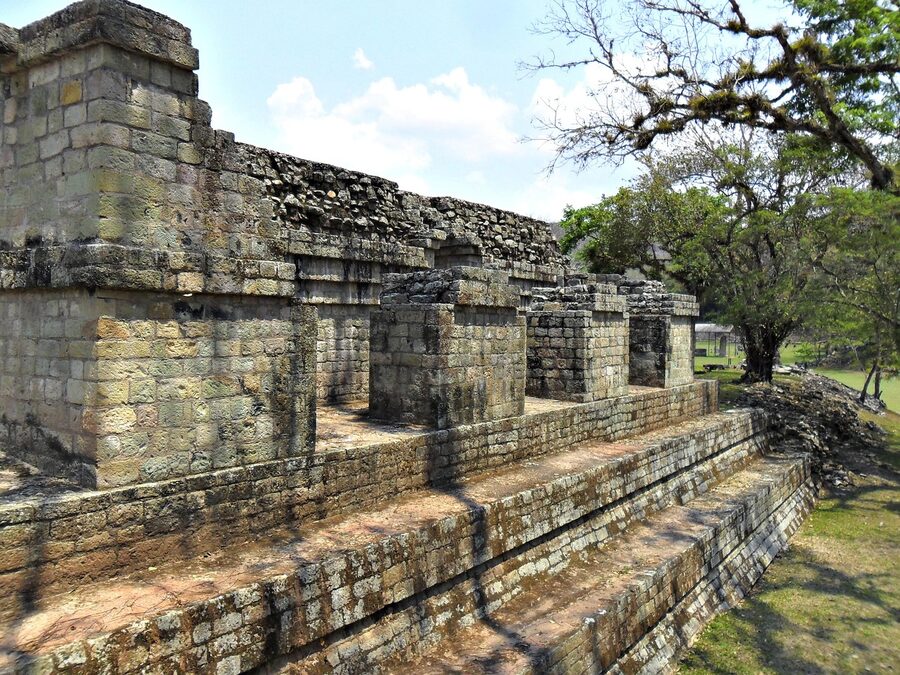
Day 6: Copán Ruinas. The town itself is small and walkable, all of two blocks from the central plaza in any direction. The archaeological site (L150 entry, about USD 6 at the door, plus L60 for the tunnels which are worth it) is a 20-minute walk or a five-minute mototaxi ride. Copán’s specialty is its carved stelae and the Hieroglyphic Stairway, which has more written Maya text than any other site in the region. UNESCO listed it in 1980 for good reason. A site guide is around USD 25 for two hours and absolutely worth it because the carvings tell stories you’d otherwise miss. The macaw rehabilitation centre at the site entrance is a freebie and properly run.
Day 7: Copán to San Pedro Sula to Roatán. This is a transit day. Hedman Alas runs Copán to San Pedro Sula in about three hours (roughly L450, USD 18). From San Pedro Sula you have two options for getting to Roatán. The first is a CA Aviation or Cm Airlines flight from SAP to RTB, which takes 30 minutes and costs USD 80 to 130 one-way. The second is the Galaxy Wave ferry from La Ceiba (USD 35 to 45 in main class, 90 minutes), which means an overland transfer from San Pedro Sula to La Ceiba (three hours by Hedman Alas, around L300). The flight saves you a day. Take it.
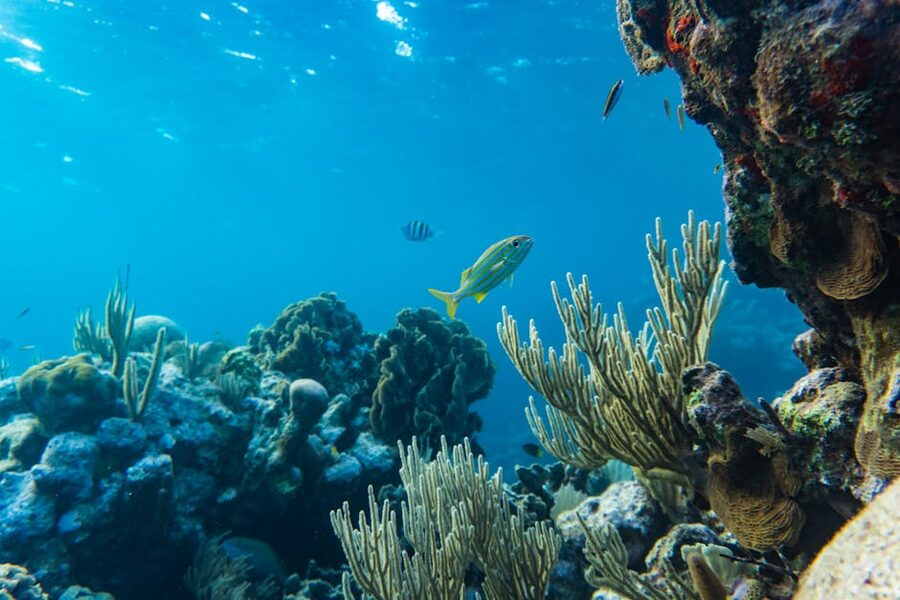
Days 8 to 10: Roatán or Utila. Pick one. Both are diving destinations, both are on the Mesoamerican Reef, the second-longest barrier reef in the world. Roatán is the bigger island, more developed, with a real town in West End, fancier resorts in West Bay, and prices to match. Utila is rougher, cheaper, more backpacker-coded, and famous for whale shark sightings and one of the cheapest Open Water dive certifications in the world (around USD 320 to 380 for the four-day course, all gear included).
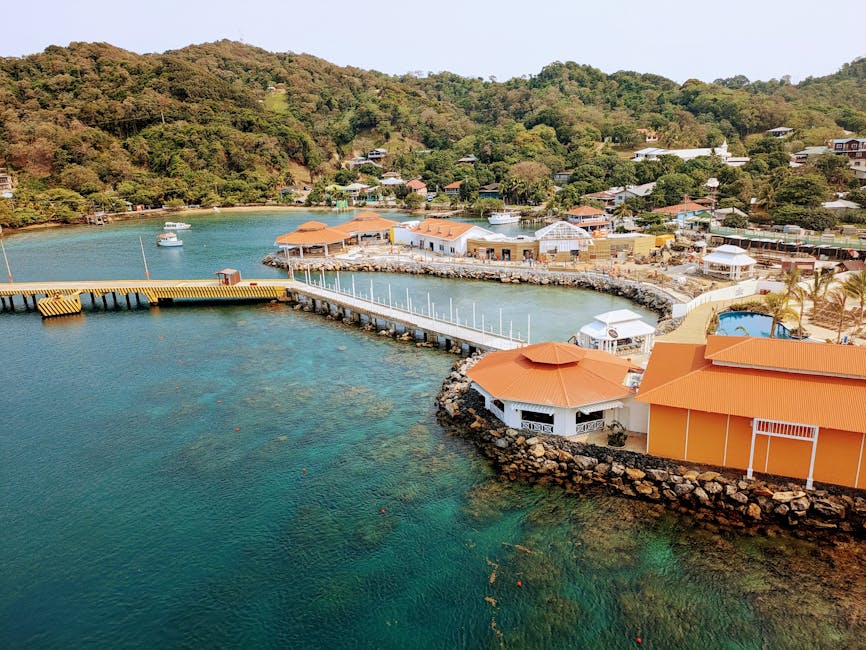
If you’re a non-diver: West Bay on Roatán has the best beach in the Bay Islands. Snorkel right off the sand at the western end. If you’re a diver: Utila for budget, West End on Roatán for variety. Three nights gives you two full days of dives (most outfitters run two-tank morning dives starting around USD 50 to 70 per dive on Utila, USD 80 to 100 on Roatán).
Days 11 to 14: South. Two options.
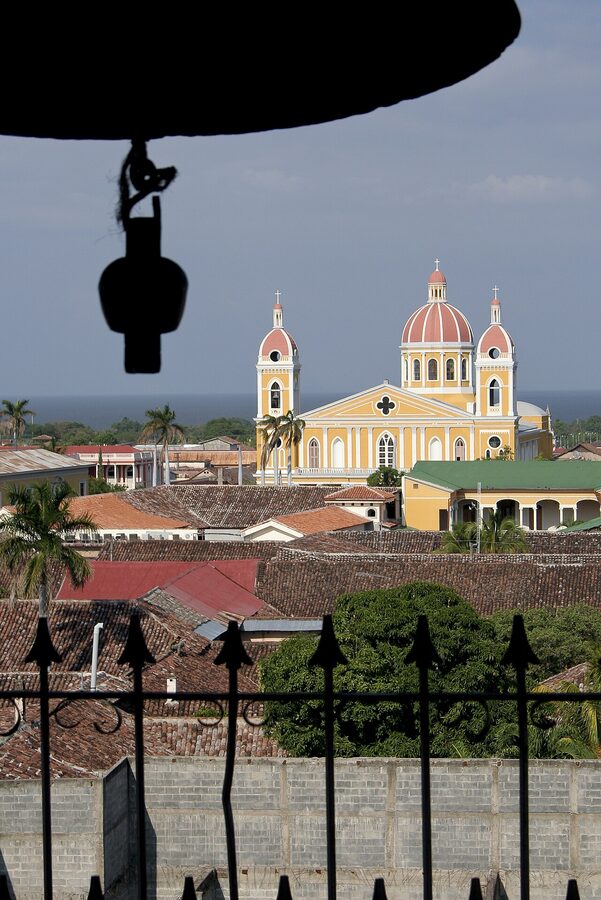
Option C1 (overland through Nicaragua and Costa Rica): fly Roatán or Utila back to La Ceiba or San Pedro Sula, take Tica Bus or King Quality south through Tegucigalpa to Managua and then on to Granada, Nicaragua. This is two long bus days (the Las Manos Honduras-Nicaragua border can be slow) and one day in Granada. It’s the budget option and a real Central America experience but it eats your last four days in transit. Only do this if you’ve got an extra week.
Option C2 (fly to Panama City): fly Roatán to PTY direct on Copa Airlines (USD 250 to 400, two hours). This is the route most people pick because it preserves your last three days as actual holiday rather than transit. Spend day eleven in transit. Days 12 to 14 you’ve got two real options:
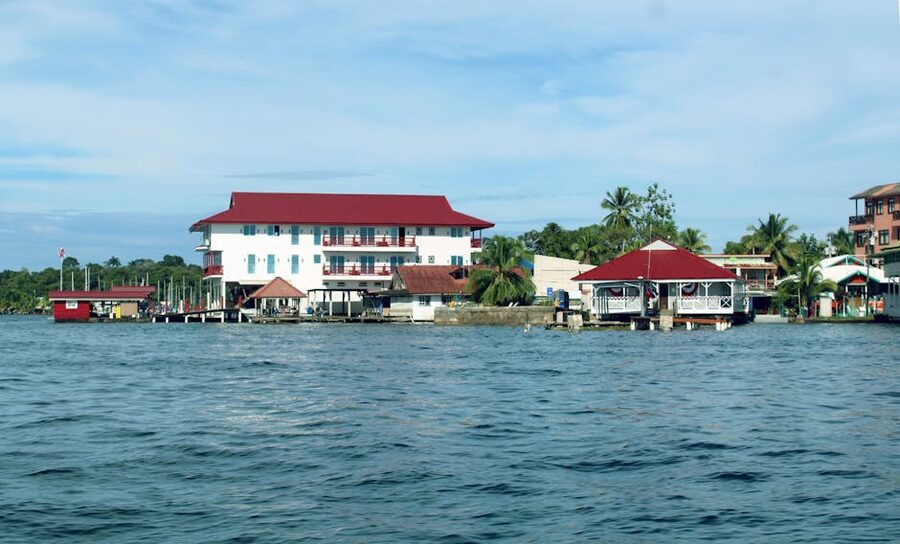
- Bocas del Toro on the Caribbean side: short flight from Panama City (around USD 100 one-way on Air Panama) or a long bus and water taxi. Beach town, party scene, snorkelling at Cayo Zapatilla. Three nights here is plenty.
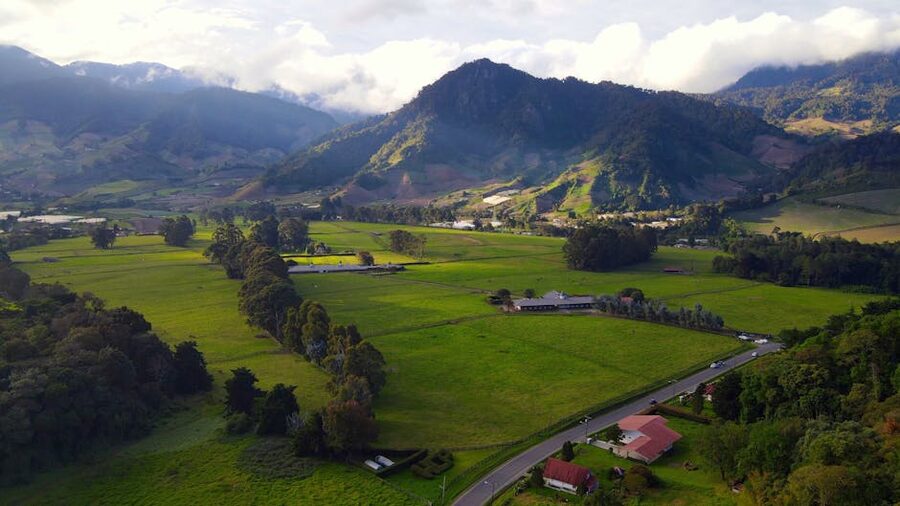
- Boquete in the Chiriquí highlands: short flight to David then a 45-minute bus or shared van up to Boquete. Cool mountain town, coffee farms, the Volcán Barú overnight if you’ve still got the legs (you can see both oceans from the summit on a clear morning). Better food than Bocas, fewer hangovers.
Day 14 is your transit back to Panama City and out. Build at least a half-day buffer; weather cancellations on the small Caribbean flights are common.
What to skip if pressed: Lake Atitlán is the most cuttable on this route. Brutal but true. If you’re committed to the multi-country trail, two nights in Antigua plus a quick day-trip to Pacaya gets you the Guatemala flavour without the lake detour. The time saved goes to a third dive day on Utila, or one more day in Bocas del Toro.
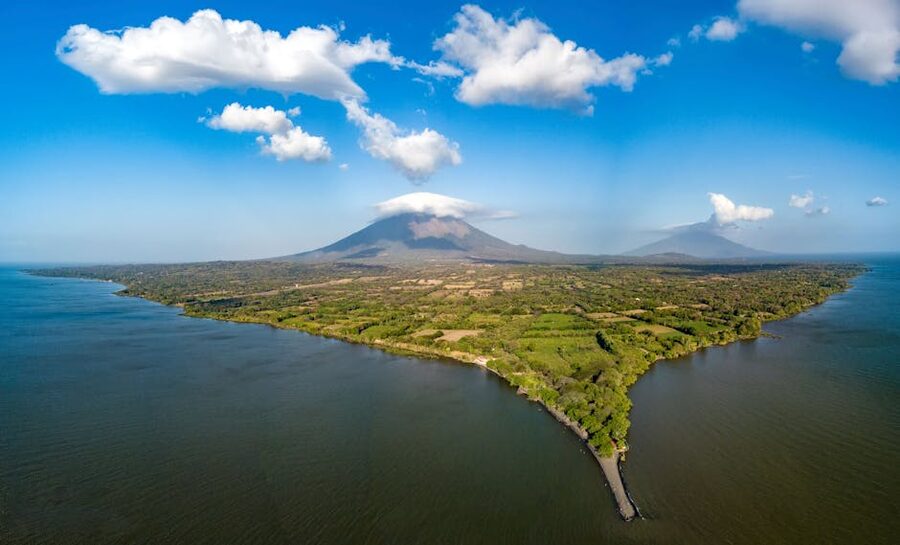
If you have three weeks: add Ometepe Island in Nicaragua between the Bay Islands and Panama, or add four days on the Caribbean coast at Caye Caulker, Belize before crossing into Guatemala. Both are excellent. Both are easier to fit when you’re not racing.
How to Fly In and Out
The cheapest entry points from the US are Guatemala City (GUA), San José Costa Rica (SJO), and Panama City (PTY). All three are well-connected to Miami, Houston, Atlanta, and Newark with direct flights from most major hubs. Sample one-way fares from the US east coast in shoulder season hover around USD 250 to 400 for any of the three. Round-trip averages USD 450 to 700.
San Pedro Sula (SAP) in Honduras and Belize City (BZE) work for specific itineraries but are usually USD 100 to 200 more expensive than the big three. Use them only when they save you a day of overland travel, which is sometimes the case (SAP if you’re starting on Roatán, BZE if you’re going Caye Caulker first).
Open-jaw flights are your friend. Flying into GUA and out of PTY (or vice versa) costs about the same as round-trip into one airport, but saves you a day of backtracking. Always price open-jaw before booking round-trip. Skyscanner’s “multi-city” search is the fastest way to compare. The big three local carriers, Avianca, Copa, and Aeromexico, all offer multi-city fares without surcharge.
Border Crossings, Buses, and the CA-4 Visa
If you’re doing Itinerary C, the border crossing matters. The CA-4 is a unified visa zone covering Guatemala, Honduras, El Salvador, and Nicaragua. One 90-day stamp on entry into any of the four covers you for all of them. You don’t get a new stamp at internal CA-4 borders, just an exit and re-entry record. Read the full CA-4 explainer before you fly.
Belize, Costa Rica, and Panama are not in the CA-4. Crossing into any of those gives you a fresh stamp (typically 30 to 90 days depending on nationality). Crossing back into a CA-4 country resets your CA-4 clock. This matters most if you’re trying to stay in the region longer than 90 days.
The land crossings on Itinerary C are El Florido (Guatemala-Honduras), which is run by Hedman Alas and is straightforward. Las Manos (Honduras-Nicaragua) and Peñas Blancas (Nicaragua-Costa Rica) are slower and more chaotic; Tica Bus handles both for you on through-services. Paso Canoas (Costa Rica-Panama) is the busiest in the region and can take two to three hours on a bad day. Always carry your passport, a printed onward ticket, and proof of accommodation at the first stop in the new country. Some officers ask. Most don’t.
For long-distance buses, the operators worth knowing by name:
- Tica Bus: the regional standard. San José to Managua to Tegucigalpa to Guatemala City as one long route. Comfortable enough; book online a day ahead.
- King Quality: Tica Bus’s fancier sibling. Reclining seats, AC, snacks. About 20% more.
- Hedman Alas: Honduras specialist. The only operator running direct Antigua-Copán-San Pedro Sula service. Reliable.
- Pullmantur: Honduras-Guatemala premium service.
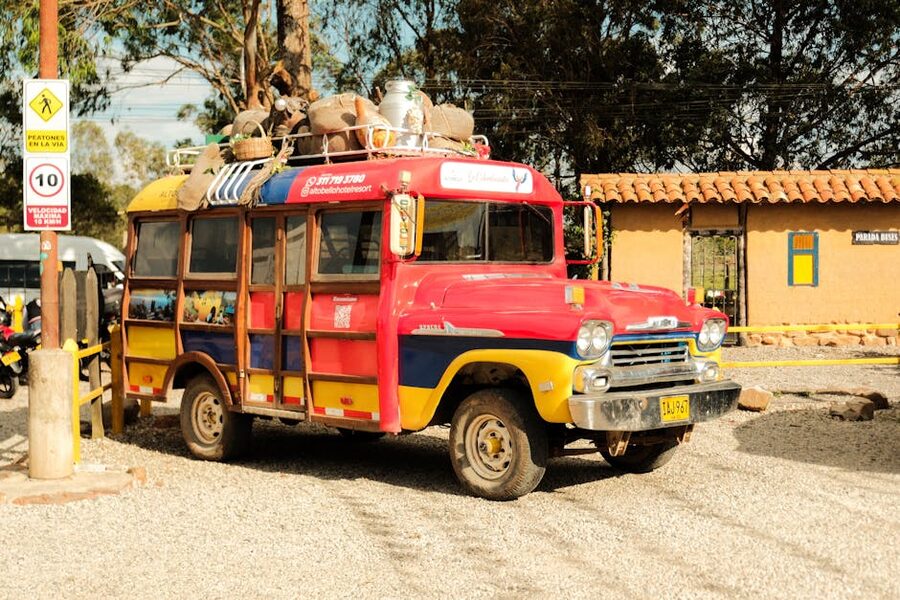
- Local camionetas (chicken buses): repurposed US school buses, painted, decorated, and packed. About a third the price of tourist shuttles. Slower. Less predictable. Sit toward the front; the back gets bumpy on dirt roads.
Tourist shuttles (the white twelve-seater vans) run between every major tourist node and are the easiest option for short hops like Antigua to Lake Atitlán, La Fortuna to Monteverde, or Granada to Ometepe. They cost more than chicken buses but they leave on time and they drop you at your hostel door.
Currency, Cards, and Why It Doesn’t Matter Much
You’ll deal with multiple currencies on Itinerary C and exactly one on either Itinerary A (Guatemalan quetzal, Q) or Itinerary B (Costa Rican colón, ₡). Costa Rica also accepts USD widely; quetzals you can really only spend in Guatemala. Across the region:
- Guatemala: quetzal (Q). Roughly Q7 to USD 1. Cards work in cities, cash needed at lake villages and rural towns.
- Honduras: lempira (L). Roughly L25 to USD 1. USD widely accepted in tourist areas, especially Roatán and Utila.
- Nicaragua: córdoba (C$). Roughly C$36 to USD 1. USD accepted in Granada, San Juan del Sur, Ometepe.
- Costa Rica: colón (₡). Roughly ₡520 to USD 1. USD accepted everywhere; many prices are quoted in dollars.
- Panama: balboa, but the actual cash currency is USD. The “balboa” exists only as coins.
- Belize: Belize dollar (BZ$). Pegged at BZ$2 to USD 1. Both circulate freely.
- El Salvador: USD since 2001. Bitcoin is technically legal tender; nobody actually uses it.
The honest summary for an itinerary planner: bring USD in cash for buffer, use ATMs at the airport on arrival in each country to pull local currency for small purchases, and use a no-foreign-fee card (Wise, Charles Schwab) for hotels and tours. ATMs in cities are reliable. ATMs in lake villages and on the islands are sometimes broken. Get cash before you leave a city.
Tipping: 10% is standard at restaurants if not already added (often it is, look for “10% servicio” on the bill). Nothing for taxis. USD 10 to 15 per day for tour guides on multi-day trips like Acatenango.
Packing for Three Climates in One Trip
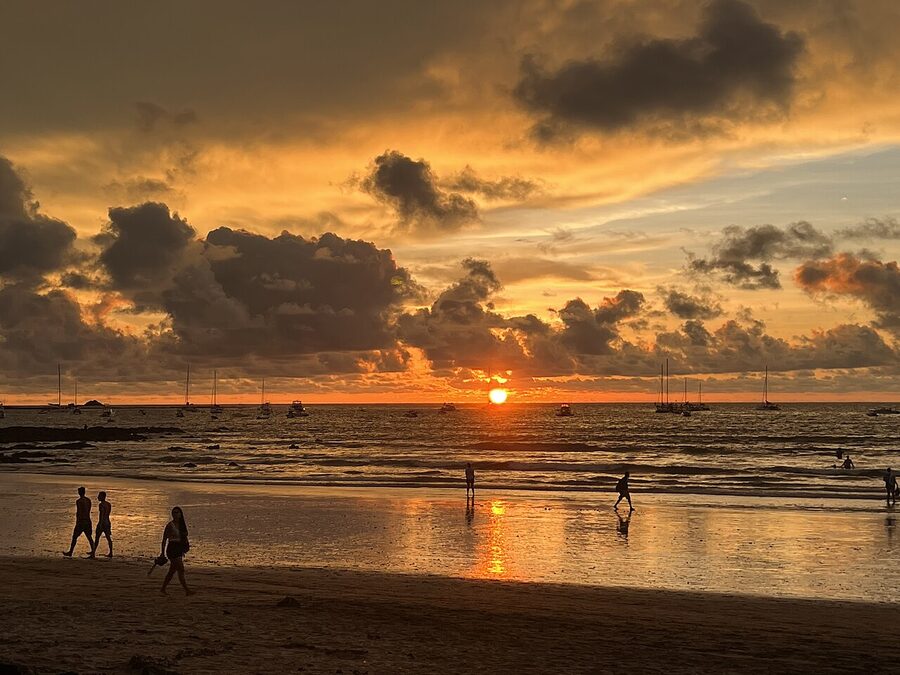
Central America’s geography makes packing slightly weird. You’ll be at sea level on the Caribbean, at 1,500m in cloud forest, at 3,600m on Acatenango if you do that hike, and at the beach on the Pacific. The temperature swing across one day can be 25 degrees Celsius.
The honest packing list:
- One warm layer (fleece or wool jumper). Highlands at night get cold. Cloud forest is permanently cool.
- One waterproof shell. Wet season runs roughly June to October on the Pacific side, May to January on the Caribbean. Even in dry season afternoon thunderstorms happen.
- Hiking boots or trail runners. Cobblestones in Antigua, mud in Monteverde, lava rock on Pacaya.
- Quick-dry T-shirts and shorts. Cotton stays wet; pack synthetics or merino.
- Swimwear and one set of beach clothes. Three of the routes hit at least one beach.
- Mosquito repellent with DEET (30%+). Dengue and Chikungunya are endemic; both are mosquito-borne. Wear long sleeves at dusk.
- A power bank. Lanchas don’t have outlets; tour days are long.
- A copy of your passport (paper, not just on your phone). Some officers want to see one when you’ve left the original at the hotel.
What you don’t need: a sleeping bag (for Acatenango, the outfitters provide them), heavy jackets (the warmest you’ll get is a fleece plus shell), or formal clothes. Central America is the most casual region you’ll travel in.
Safety, Honestly
The State Department maintains country-specific advisories that are worth reading before you go. The current US advisories rate Costa Rica and Panama at Level 2 (exercise increased caution, the same level as France or the UK), Guatemala and Belize at Level 2 to 3 depending on region, and Honduras and El Salvador at Level 3 in some areas. The UK FCDO has a similar tiered system.
What that translates to on the ground: the cities are where the crime is. Guatemala City, San Pedro Sula, Tegucigalpa. Tourist towns and rural areas across the region are lower-risk than mid-sized US cities. The chicken-bus route from San Pedro Sula to La Ceiba has had armed robberies in the past few years; take Hedman Alas instead. The Cahuita-Limón corridor on Costa Rica’s Caribbean side has had a spike in petty theft; don’t leave valuables on the beach. Bocas del Toro nightlife has had spiking incidents; watch your drinks. None of this is unique to Central America.
Practical rules that actually work: take Uber after dark in cities (it’s available in San Salvador, San José, Panama City, and some parts of Guatemala City). Don’t flash phones on the chicken bus. Don’t walk the malecón in Tegucigalpa or Comayagüela at night. Use ATMs inside banks during business hours. Keep your passport in the hotel safe and carry a paper copy. Tell a friend at home your itinerary. The official US advisory is at travel.state.gov and the UK equivalent at gov.uk/foreign-travel-advice.
Solo female travellers do all three routes regularly and report the same advice everyone else gives: stay aware, dress unremarkably, don’t walk alone after dark in cities. The hostel network is dense across the region and most hostels are safe. The risk profile in tourist towns is low; the risk profile in unfamiliar urban neighbourhoods is real.
When to Go
The dry season runs roughly December to April (locals call it verano, summer, even though it’s the northern hemisphere winter). This is also the high season. Hotels charge 30 to 50% more, popular tours sell out, and Christmas and Easter are particularly bad. The weather is dependable: blue skies in Antigua, clear views of Arenal, calm seas on the Pacific.
The wet season is May to October on the Pacific, June to November on the Caribbean. Afternoon thunderstorms most days, but mornings and evenings are usually clear. Hotels are 30 to 40% cheaper, tours run with smaller groups, and the landscape is greener. The trade-off is that volcanoes are often clouded in, beach days are coin-flips, and unsealed roads (notably to Semuc Champey and parts of Bocas) can become impassable.
The shoulder months (May, June, October, November) are the sweet spot. You’ll get some rain. You’ll also get cheaper prices, fewer crowds, and most days that are fine for hiking. November is my pick for first-timers: the Caribbean rain is winding down, the Pacific dry season is starting, and prices haven’t fully spiked yet.
Hurricane season runs June to November and primarily affects the Caribbean coast, the Bay Islands, and Belize. Hurricanes large enough to ruin a trip are uncommon (one to three a year hit the region) but they do happen. Itinerary B is the most weather-resistant of the three; Itinerary C the most exposed.
Budget by Itinerary
Mid-range, two people, all-in (flights from US east coast, mid-tier hotels, tours, food, internal transport):
- Itinerary A (Guatemala focus): USD 1,800 to 2,800 per person for two weeks. The cheapest option. Tikal flights and Acatenango outfitter are the big-ticket items.
- Itinerary B (Costa Rica focus): USD 2,800 to 4,500 per person. The most expensive. Tours and accommodation in Manuel Antonio drive it up.
- Itinerary C (Gringo trail): USD 2,200 to 3,500 per person. Mid-range. The flights between Roatán and Panama City eat the savings from cheaper accommodation.
Backpackers do all three for USD 800 to 1,400 per person plus the international flight by staying in dorms (USD 8 to 18/night), eating at comedores (set lunches around USD 4 to 6), taking chicken buses, and skipping the optional tours. It’s a different trip but it works. Higher-end (boutique hotels, private guides, internal flights) lands at USD 4,500 to 7,000 per person and gets you the flagship experiences without the rough edges.
The One-Country Argument
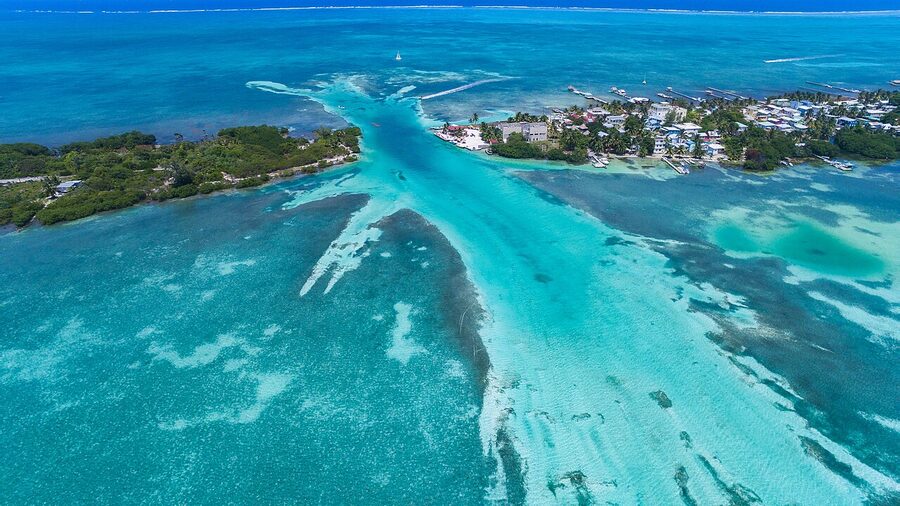
If this is your first trip to Central America, my honest pick is Itinerary A. Spend two weeks in Guatemala. Come back later for Costa Rica, or for the gringo trail, or for the more obscure stuff (El Salvador’s surf coast, the Bay Islands proper, Belize’s Cayo District). The region rewards repeat visitors more than almost anywhere else I’ve travelled. You can spend three weeks in Costa Rica alone and still not see all of it. You can spend a month in Guatemala without leaving the highlands.
The travellers who come back happiest are the ones who didn’t try to “do” Central America in two weeks. They picked one country, met some people, learned some Spanish, drank some coffee at the source, and came home with stories. Two weeks is long enough for one country. It’s not long enough for two and a half. The math is what it is.
If you’re set on multi-country anyway, Itinerary C is the right shape. Just know going in that the gringo trail is a sampler plate, not a sit-down dinner. You’ll see the highlights of three countries and miss the depth of any of them. That’s a fair trade for a lot of people. It just isn’t the only one.
Whichever route you pick, book the international flights first, the long-distance bus tickets a day or two ahead, and most hotels two to four weeks out. Tikal sunrise tours, Acatenango overnights, Manuel Antonio park entry, and dive courses on Utila or Roatán all benefit from advance booking, especially in dry season. Everything else you can sort on the ground.

.jpg)