
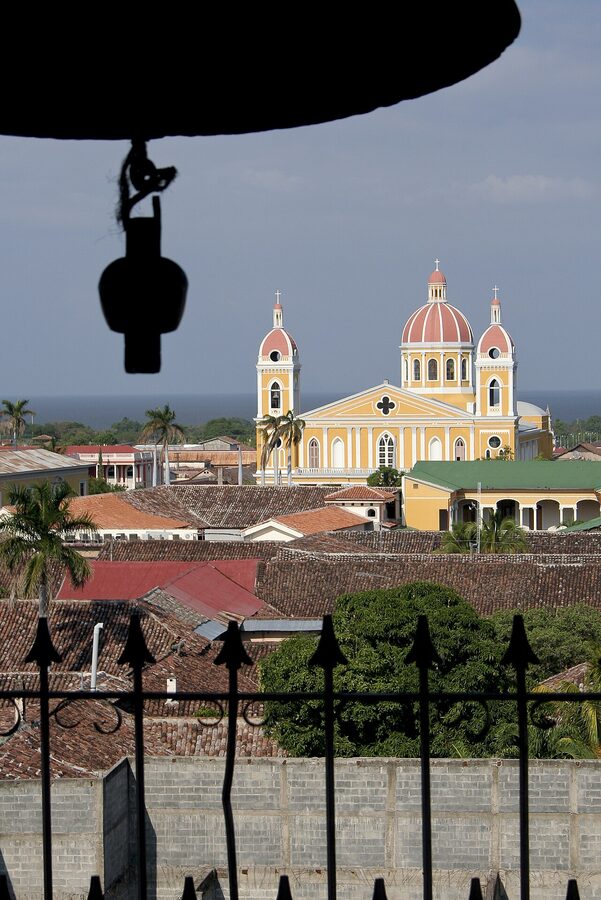
The first time pirates sailed up the Río San Juan, crossed Lake Nicaragua, and put Granada to the torch, it was 1665, and the man holding the match was Henry Morgan. He came back, with help, and burned it again three years later. The French got their turn in 1685. The American filibuster William Walker, on his way out of the country in 1856, set the city alight one final time and left a sign nailed to a wall reading “Aqui fue Granada” (Here was Granada). The cathedral you see on Parque Central, the bright canary-yellow one that nobody ever stops photographing, is the fourth or fifth one to stand on that exact patch of ground. The bones of the previous ones are still down there.
Granada was founded in 1524 by Francisco Hernández de Córdoba, the same conquistador the currency is now named after, and the date matters because it makes Granada one of the oldest continuously inhabited Spanish cities anywhere in the Americas. The city has been burned down so many times that calling it “well preserved” is genuinely funny, but the grid that Córdoba laid out in his first season is the grid you walk today, and the colonial-era buildings that survived (or got rebuilt in the same style afterwards) make it the most photogenic city in Nicaragua by an embarrassing margin. It is also where almost every traveller in the country starts, ends, or both.
I have been through Granada three times now, two of them long enough to get sick of it. What follows is the practical version: the colonial centre and which churches warrant the climb, the pedestrianised street everyone hates and everyone walks anyway, the volcano day trips (Mombacho or Masaya is a real choice), the 365 islets that sit just off the lakeshore, the artisan villages on the ridge, where to eat (one nonprofit run entirely by deaf staff is worth the visit alone), where to sleep at every budget tier, what it costs in córdobas (C$ or NIO), and the two land borders, Peñas Blancas south to Costa Rica and Las Manos north to Honduras.
In This Article
- Why Granada is worth three days (and why you should not give it more than five)
- Parque Central and the cathedral: the obligatory first walk
- Iglesia de la Merced: the climb you actually came for
- Calle La Calzada: the love-hate street
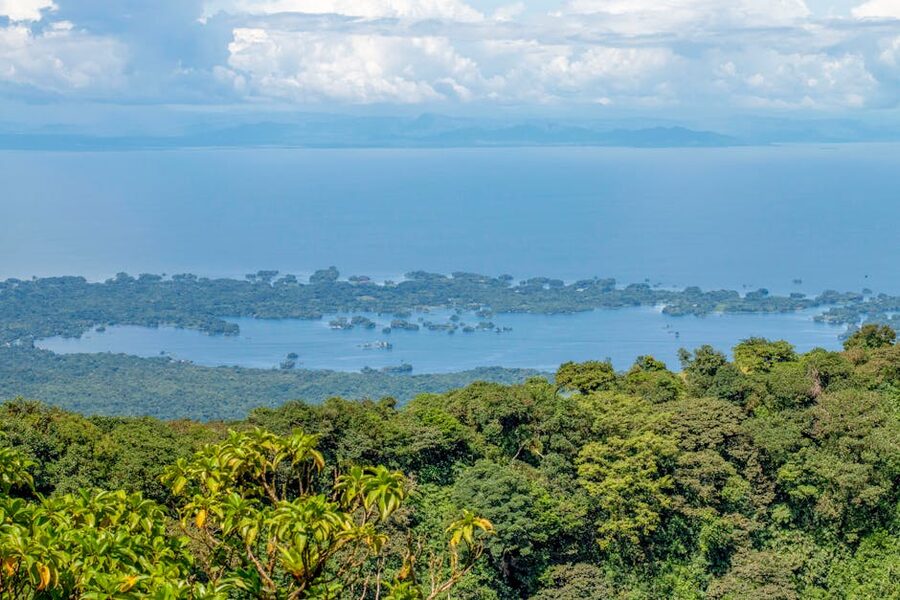
- Las Isletas de Granada: the volcano-blast archipelago
- Volcán Mombacho: the cloud forest right behind town
- Volcán Masaya at night: the lava lake worth the night drive
- Catarina, the Pueblos Blancos, and the Mirador
- Where to stay: Granada by budget
- Boutique and high-end
- Mid-range
- Hostels and budget
- Where to eat: a short opinionated list
- Getting to Granada (and from Granada)
- From Managua airport
- From San Juan del Sur and the Costa Rica border
- From the Honduras border
- Within the country: Rivas and the south
- When to go and what it actually costs
- Safety and what to know before you go
- One last thing
Why Granada is worth three days (and why you should not give it more than five)
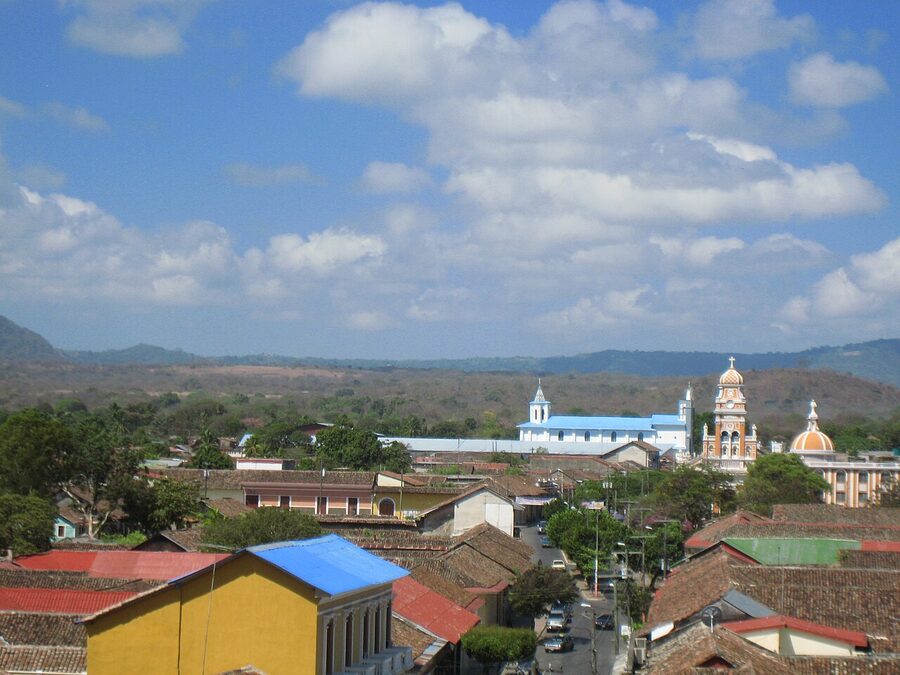
Three days lets you climb the bell tower of La Merced, walk Calzada once at lunch and once at dusk, take a half-day kayak out to Las Isletas, and bookend the trip with one volcano day (Masaya at night is the headline, Mombacho the daylight alternative) and an afternoon up at Catarina overlooking the Apoyo crater. That is the city plus the local highlight reel and you will not feel cheated.
Five days is the upper limit. By day four the touts on Calzada start to feel personal, the same kids will recognise you, the same horse-and-carriage operators will keep cycling past your café table, and you will hear the same recorded clip-clop tourist soundtrack three times an hour. Granada is small. It is also, by some distance, the most touristed spot in the country, and the hassle factor is the highest you will encounter anywhere in Nicaragua. After three days I always want a beach.
If you want to stretch a Granada base, the Apoyo crater lake is a 25-minute taxi away and many travellers move there for two or three nights of swimming rather than ekeing more days out of the centre. Lakeside hostels (Paradiso runs shuttles from Granada) sell day-pass-with-shuttle for around C$450 if you just want a long lunch and a hammock.
Parque Central and the cathedral: the obligatory first walk
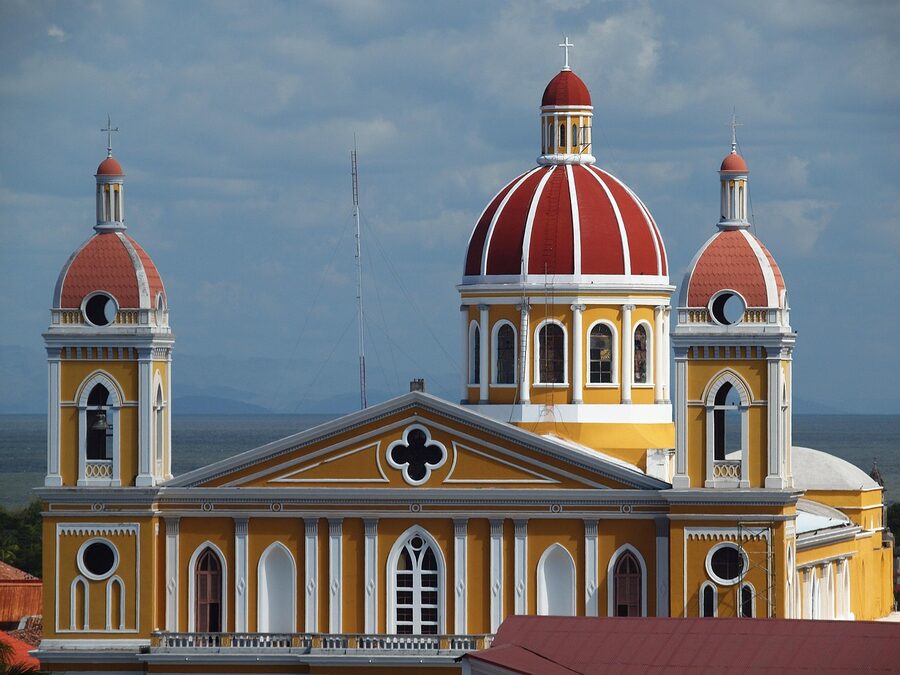
Everyone starts at Parque Central, formally called Plaza de la Independencia, the four-block square that has been the centre of the city since 1524. The Catedral de la Inmaculada Concepción de María sits on the east side, the one everyone calls “la catedral” or “the big yellow church”. The current building dates from 1583 in foundation but has been rebuilt repeatedly, most recently after Walker burned it in 1856. You can usually walk inside between Mass times for free; the interior is plainer than the facade suggests, and the dome is the visual draw.
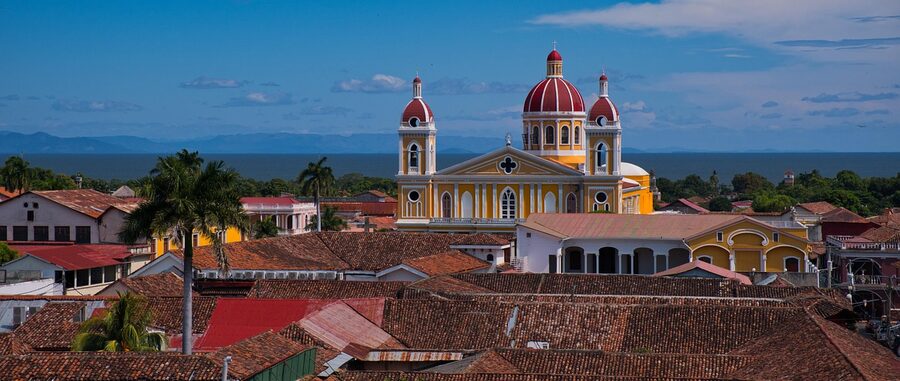
The square itself is a working square, not a museum. Locals come to eat vigorón (banana-leaf-wrapped yuca, chicharrón, and pickled cabbage, Granada’s signature street food, around C$80 from the women with the white tablecloths), wait for the bus, sell tours, or sit on the benches under the mango trees while the horses clop past. Try at least one vigorón. They are messy. Three sides of the square also hold the Palacio Episcopal, the old Casa de los Tres Mundos (small cultural centre, free, worth ten minutes), and the Antiguo Convento de San Francisco one block north.
Iglesia de la Merced: the climb you actually came for
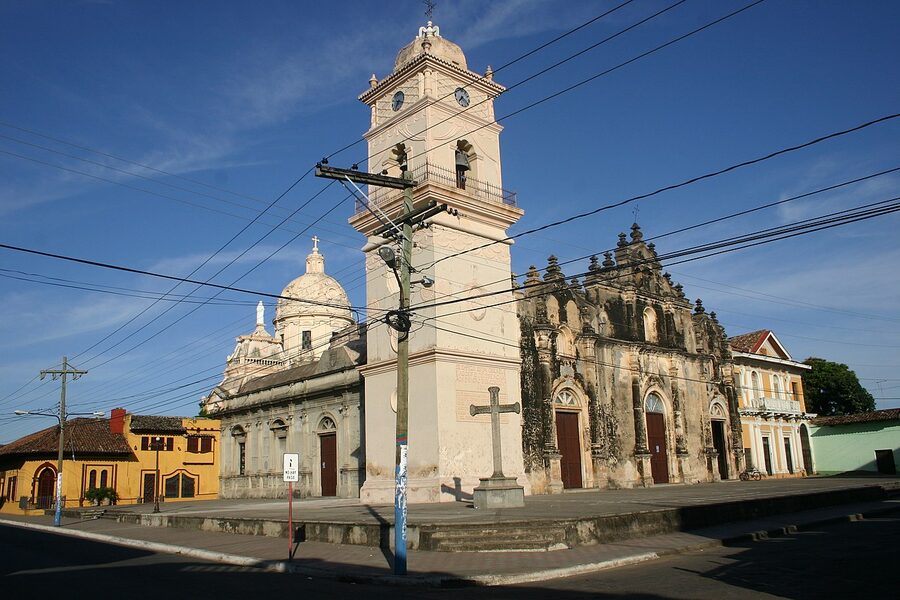
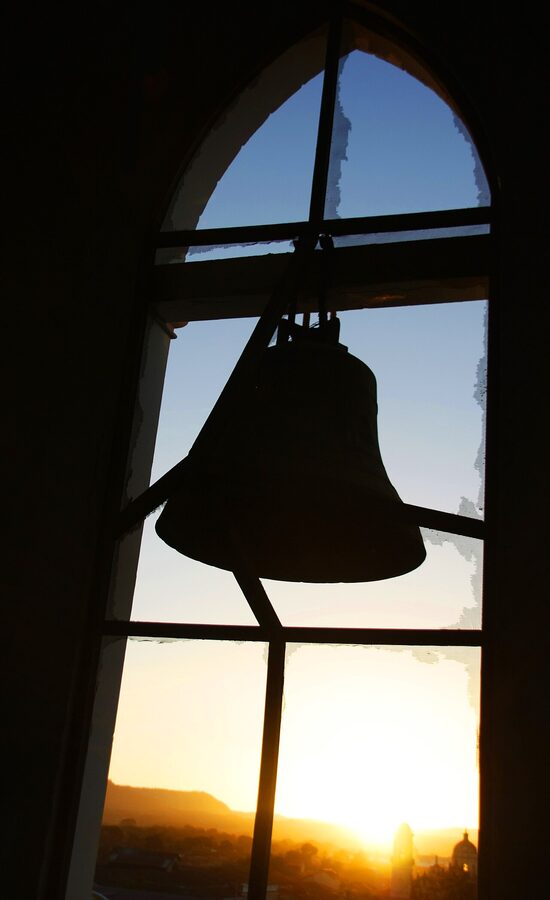
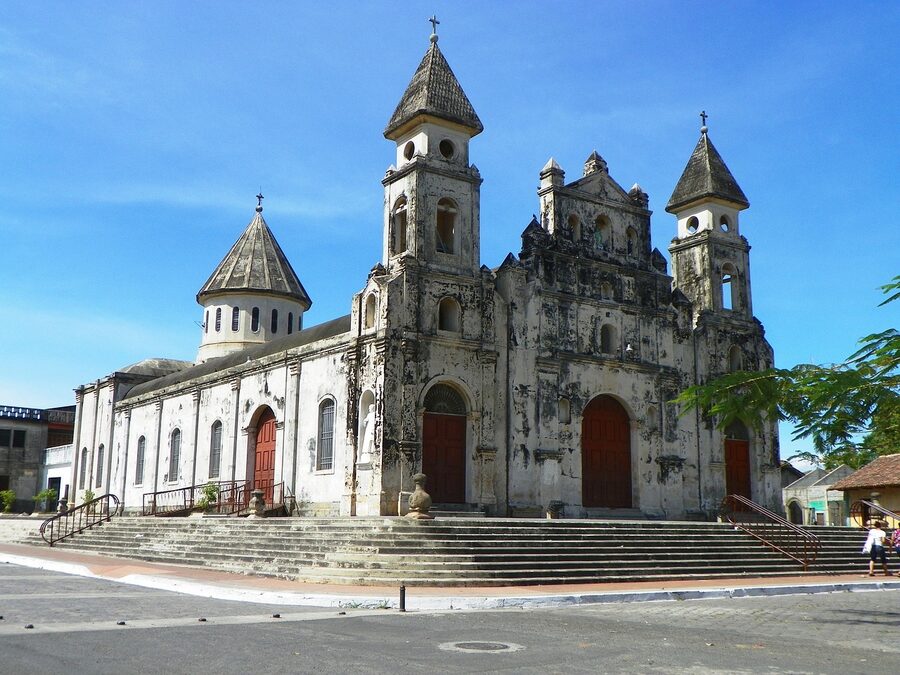
If you only climb one bell tower in Granada, climb this one. The Iglesia de la Merced sits three blocks west of Parque Central and dates from 1539, which makes it one of the oldest churches still standing in the city. William Walker, predictably, set fire to it in 1856; what stands today is the partial reconstruction, with the burned-out original facade preserved as part of the look. You can usually wander inside in the afternoons. The reason to come is the bell tower.
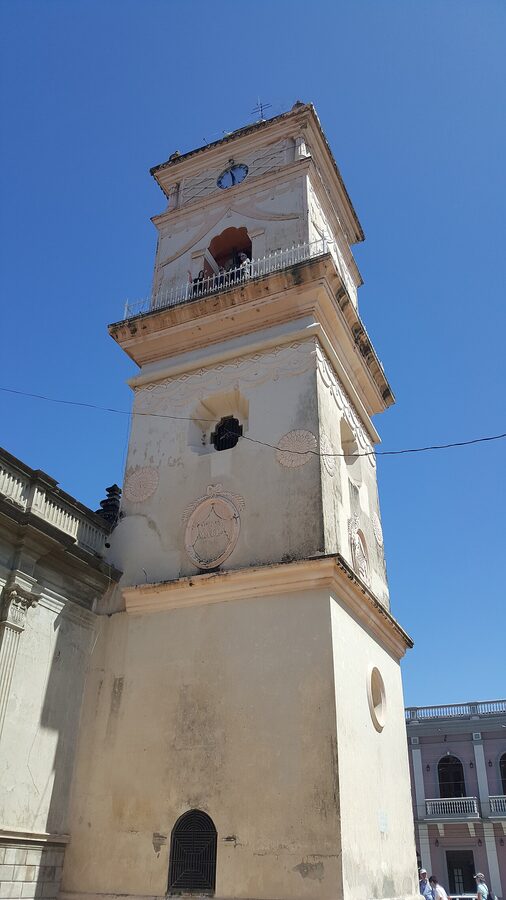
Entry runs C$70 to C$100 depending on who is collecting at the door, and the tower opens roughly 8am to 5:30pm; closing time is a polite shrug. Cash only, in córdobas. The climb is two flights and a narrow spiral; the platform at the top is small enough that on a busy sunset day you queue for the position with the cathedral dead-centre. Go at 5:30, not midday.
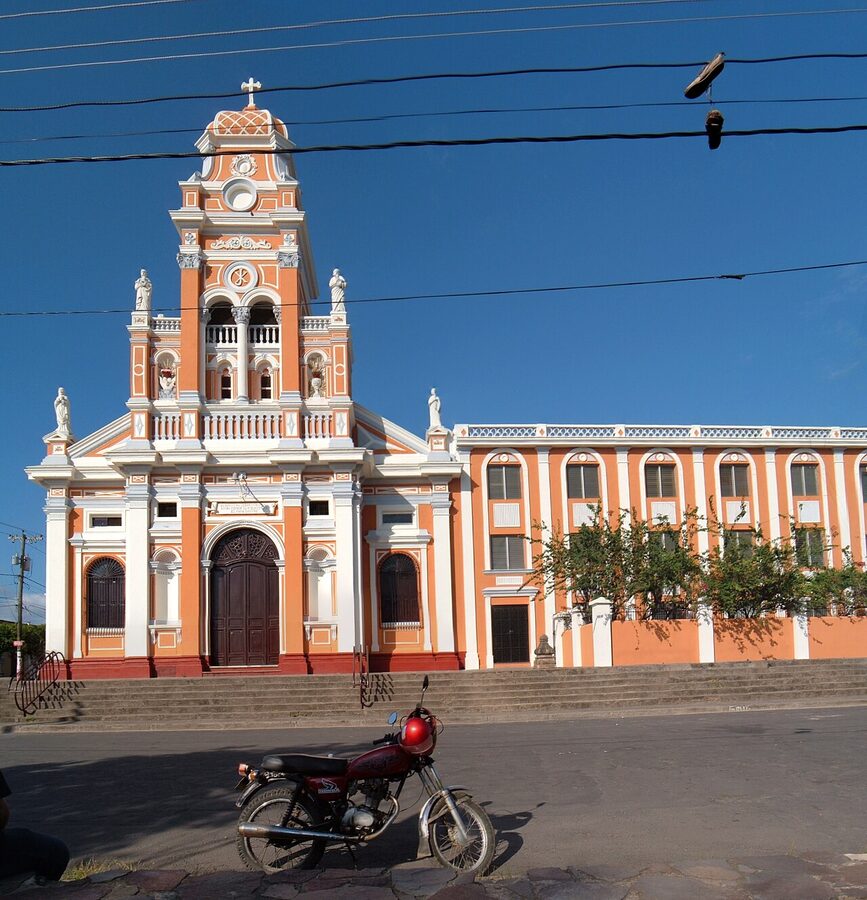
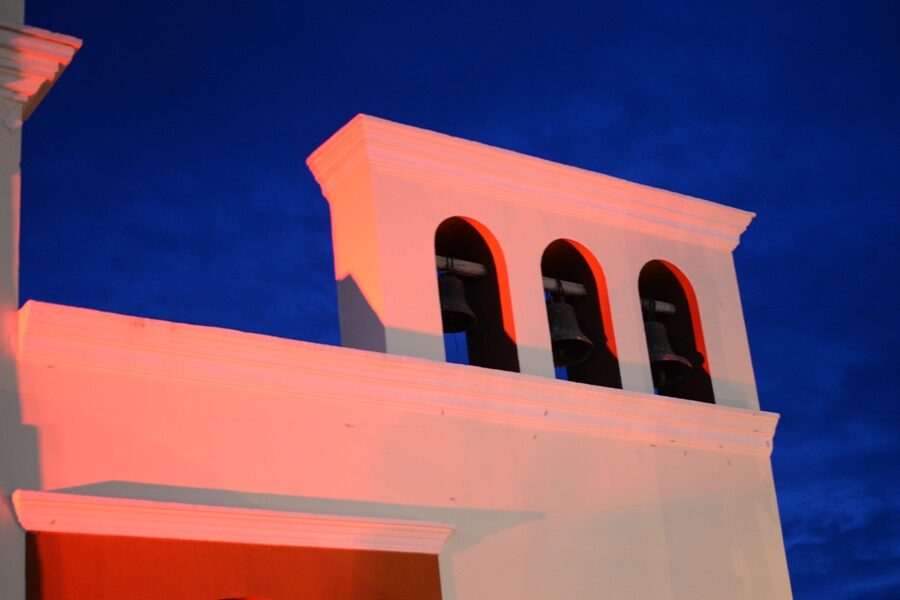
Two other churches are worth a stop. Iglesia Xalteva, four blocks west of La Merced toward the lake, is the prettiest of the smaller ones and usually empty; the original was built around 1574 and the current building is mid-19th-century. And the old Convento San Francisco one block north of Parque Central, set inside a restored 16th-century convent, holds the city’s only proper museum, with a collection of pre-Columbian basalt statues from the islands of Lake Nicaragua and a small but genuinely interesting display on the Walker era. Entry is C$80.
Calle La Calzada: the love-hate street
You will hear Calle La Calzada, the pedestrianised street running from the south side of Parque Central down to the lakefront, before you see it. Nightlife strip, tourist-trap strip, and best-people-watching strip, all on the same five blocks. Some travellers love it. Some hate it. Fine for one dinner and one breakfast.
Both sides are lined with restaurants, most with tables spilling onto the cobbles, most with someone at the door asking if you are hungry. Prices run 30 to 50 percent above what you pay one street over and the food is rarely better. Breakfast is the exception: the touts are not awake, the restaurants have set early-bus tables, and the first coffee of the day on Calzada with the cathedral two blocks behind you is one of the small rituals.
What I order: huevos rancheros at Garden Café, three blocks down Calzada (C$160, leafy courtyard), or a plato típico of gallo pinto, fried plantain, queso frito, and tortilla at the smaller spots for C$110. Coffee is universally good; a cortado is C$50. By 6pm the touts come on, by 9pm the music. Bars at the lake end skew younger and louder; the ones near the square are quieter. The cigar sellers and the kids selling roses are persistent. None of it is dangerous, just constant.
Las Isletas de Granada: the volcano-blast archipelago
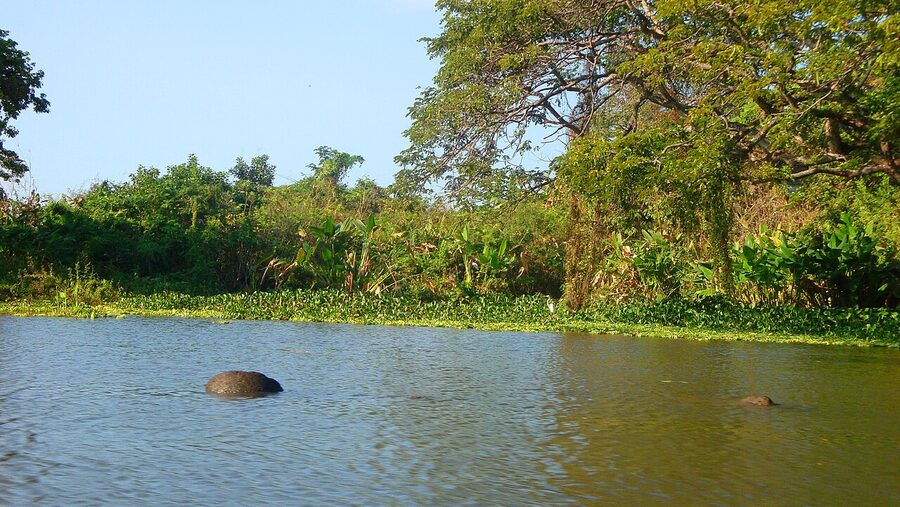
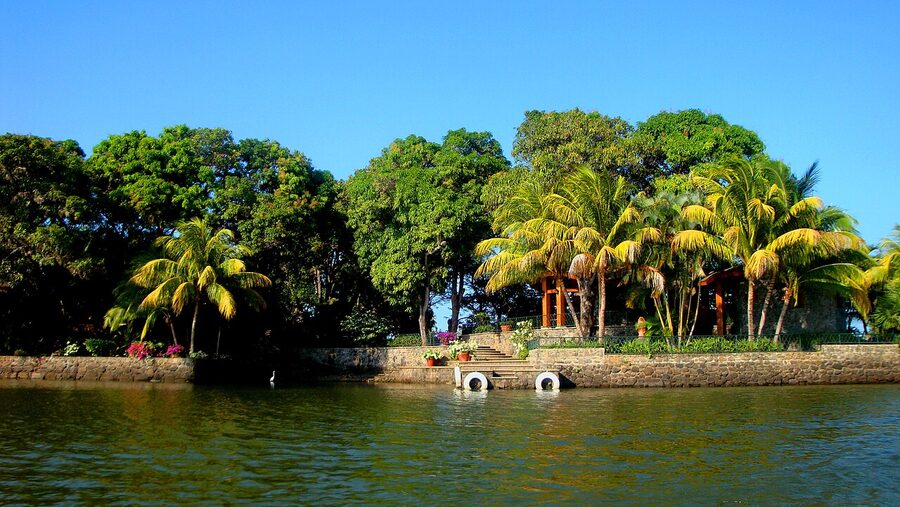
What nobody quite explains until you see it is that the Isletas are real volcanic rock, not silt islands. When Mombacho’s flank collapsed it threw the shoulder of the volcano into the lake; the boulders that landed in shallow water are now the islets. Vegetation grew on top. Mangroves and tropical hardwood grew in. Local families bought the bigger ones and built weekend houses. Around 365 today (the local rounding is “one for every day of the year”, roughly right) and the standard tourist boat trip loops through maybe forty.
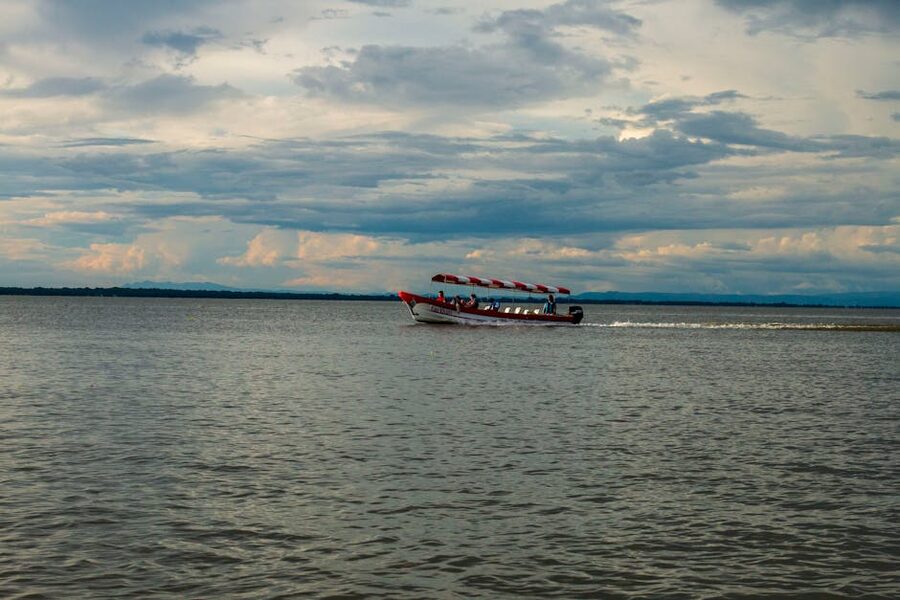
Two ways to do it. By boat, you walk to the Cabaña Amarilla launch (1.5km south of Parque Central, taxi C$60), find the queue of pangueros (boat captains) at the pier, and negotiate a private boat for around C$900 to C$1,200 for two hours, or pay C$300 per person to join a shared trip. The boats stop at one of the inhabited islets that has a small dock-bar, you have a Toña or a fresco, you keep going. There is a small fort, the Castillo de San Pablo, on one of the islets, originally built in 1784 to fight off pirates coming up the Río San Juan, and most tours stop there.
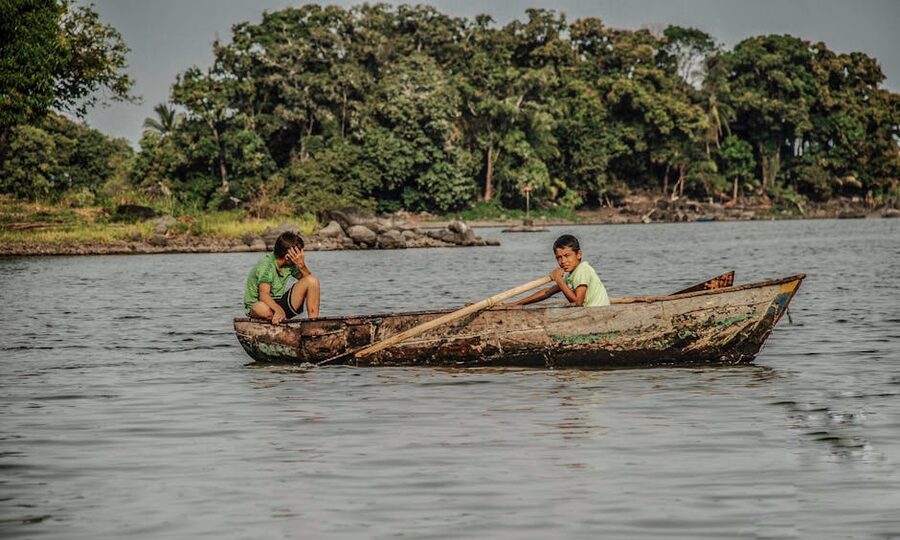
By kayak, operators rent sit-on-top doubles for around C$600 for three hours; you paddle the closer islets at your pace. Better than the boat if you have any kayak experience and the lake is calm; the trade winds funnel choppy water through the valley by mid-afternoon, so go in the morning. Overnight options exist on a couple of the inhabited islets (Casa Marimba, Paradiso) with basic dorm beds C$700 to C$1,400 a night.
Volcán Mombacho: the cloud forest right behind town
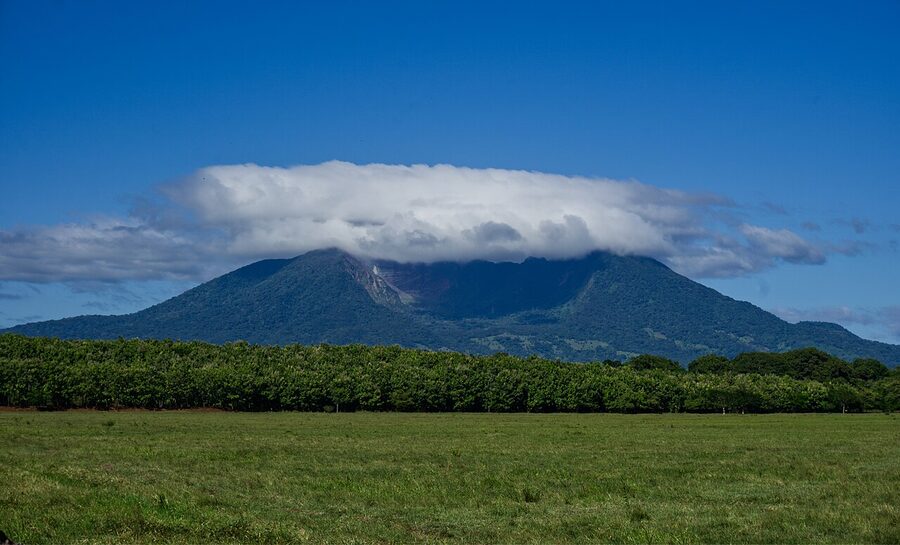
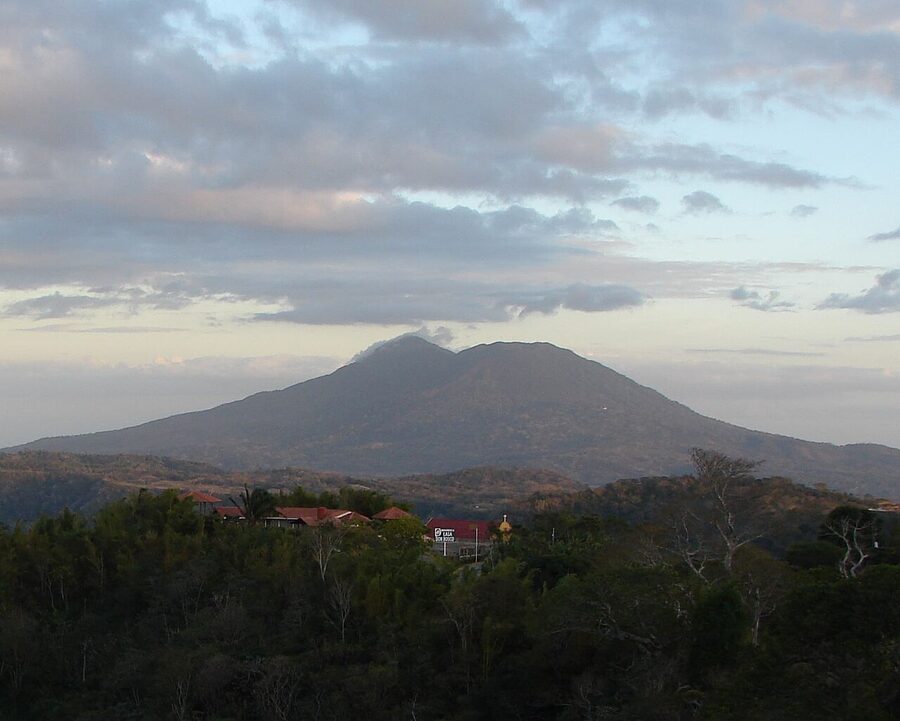
Mombacho rises 1,344m straight up behind Granada and is the green peak you can see from any rooftop in town. It is dormant. Not extinct, not active, dormant; the volcano vents minor fumarole gas from a couple of the older crater rims and that is the extent of the activity. What it offers is a cloud forest hike (three short marked trails: Sendero El Cráter, Sendero La Puma, and the longer Sendero El Tigrillo), a coffee finca tour, and a panorama across the Isletas to the lake from the upper viewing platform.
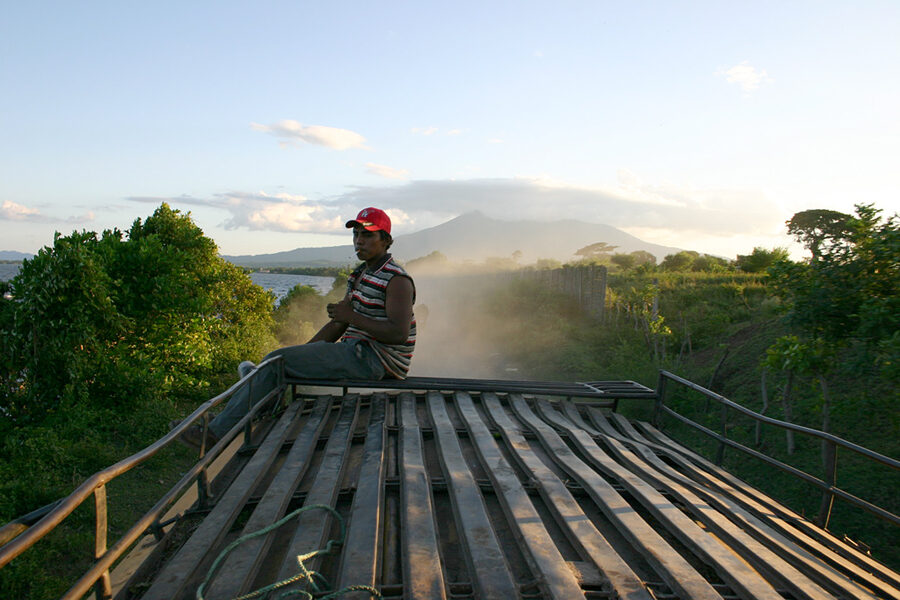
How to get there. The reserve gate is at the base of the volcano, 25 minutes south of Granada by taxi (C$300 each way, agree the price first). From the gate you take an open-back 4×4 truck up the access road to the upper visitor centre at 1,150m; the trucks run roughly hourly, cost C$650 round trip, and are the only way up. Independent walking up the access road is forbidden. Once at the top, the three trails are short (Sendero El Cráter is 2km loop, the others longer) and well marked, with a guide required for El Tigrillo (around C$300 plus tip; the others you can do solo).
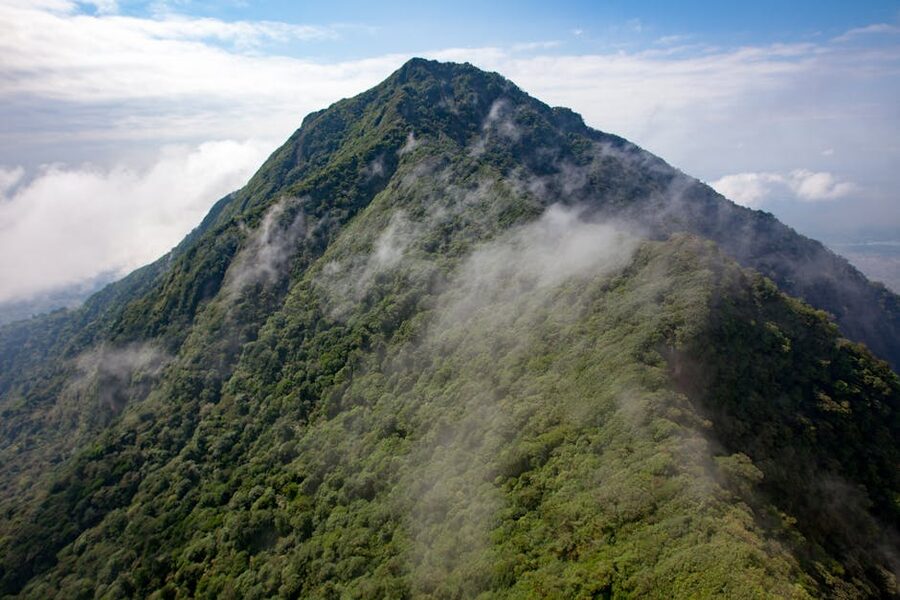
The coffee finca on the slope is Café las Flores; their half-day tour (C$1,400) covers harvest, wet-process washing, drying patios, and a tasting where you can taste cup-to-cup the difference between morning hand-picked and lower-altitude export beans. The tour is genuinely good. Combined Mombacho-and-finca packages from Granada hostels run around C$2,000 including the truck up the volcano, the trail, the finca tour, and the transfer back; the sensible way to do both in one day.
Volcán Masaya at night: the lava lake worth the night drive
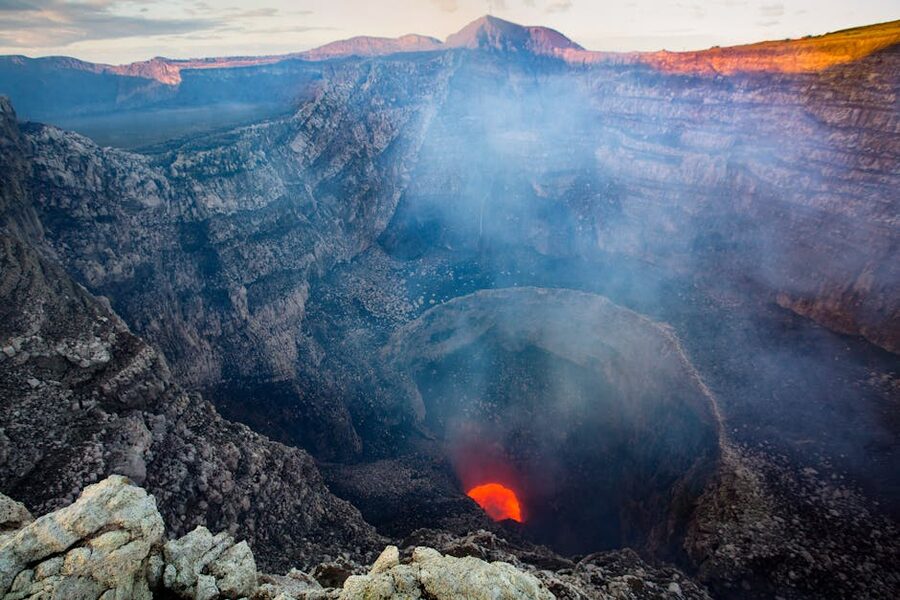
If you do one volcano from Granada, do this one. The Santiago crater of Volcán Masaya is one of fewer than ten places on the planet where you can stand at the rim of an open-vent lava lake and watch the molten rock rolling around, fifty metres below your boots. It is roughly 30 minutes west of Granada by van. The whole experience, including transit, is about three hours. The actual time at the rim is twelve to fifteen minutes. And it is genuinely one of the strangest things you can do in Nicaragua or anywhere else.
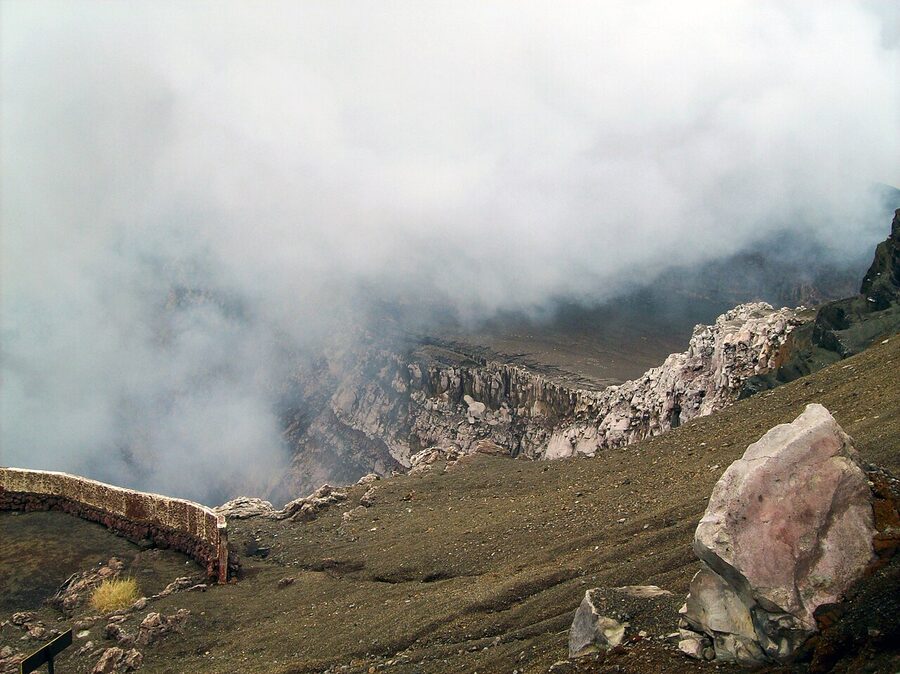
How it works. Almost every Granada hostel runs the night tour. Pickup around 4pm, half-hour drive, vehicles park near the rim and you queue (rangers limit groups to about thirty for fifteen minutes per group on safety grounds because the gas plume can shift). When your group is up, you walk fifty metres to the rim wall, and there it is: an open shaft going down into the volcano with a pulsing red lake at the bottom, hissing, throwing the occasional small fountain. Phones do not really capture it; just look. C$1,300 to C$1,500 from Granada including transport and park entry.
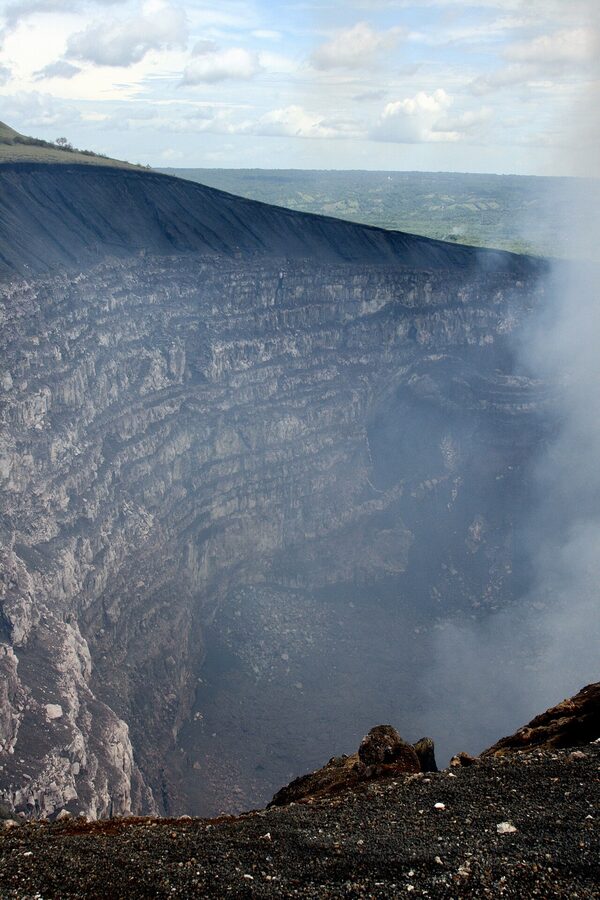
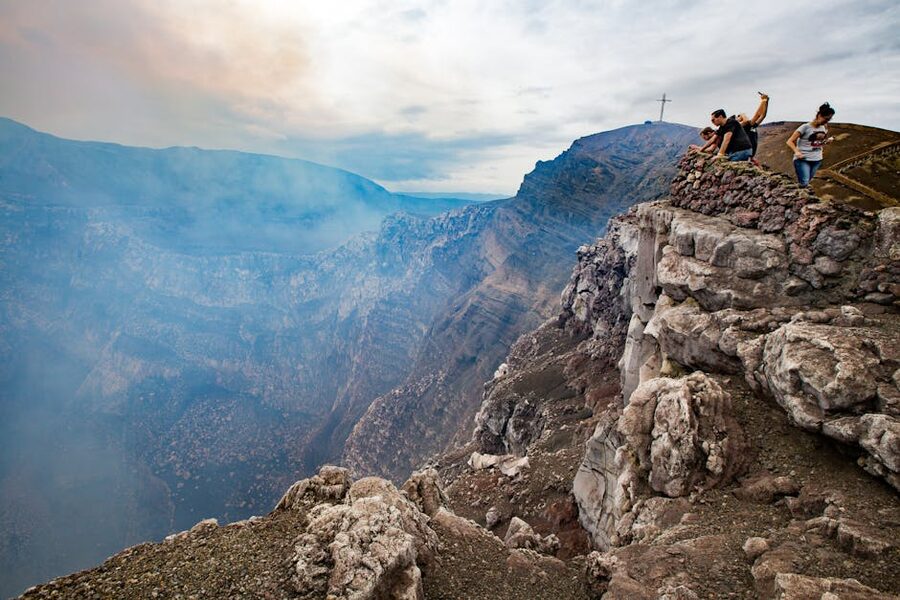
What about Masaya in daylight? Open 9am to 4:45pm, entry around C$80, drive your own vehicle to the rim and walk the trail loops. No lava, just the gas plume and the scarred basalt around it. Pick night.
Catarina, the Pueblos Blancos, and the Mirador
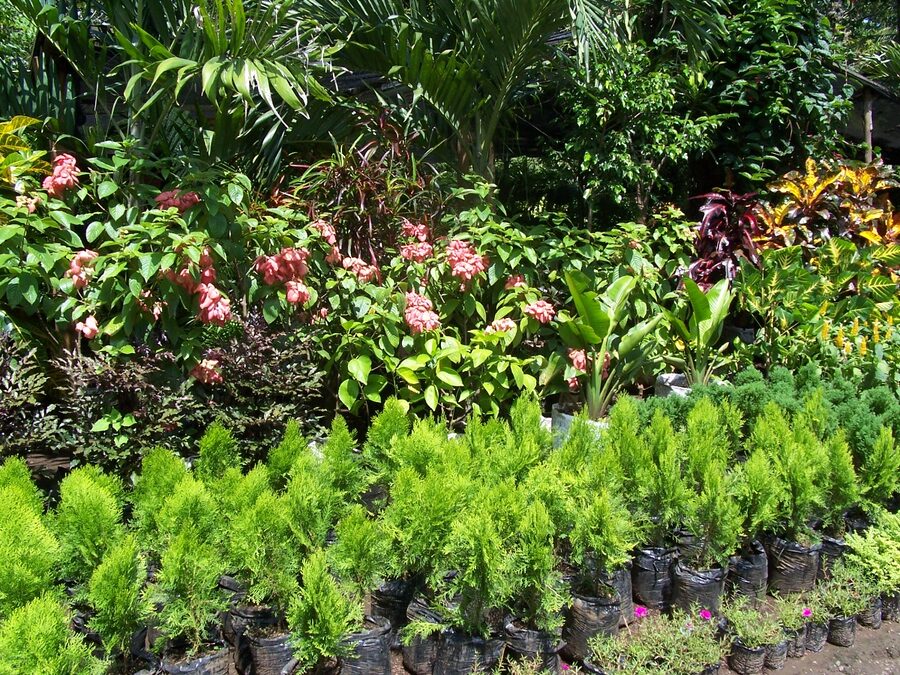
Halfway between Granada and Managua sits a cluster of small artisan villages collectively called the Pueblos Blancos, the white towns, traditionally whitewashed and each with a craft. The four worth looping through are Catarina (flowers, ceramics, and the famous viewpoint over Apoyo), San Juan de Oriente (pre-Columbian-style pottery; this is the village to buy serious pieces from, prices are negotiable, expect to spend), Diriá (basketwork and another lookout), and Masatepe (cane and wicker furniture, more for browsing). It is a half-day or full-day loop from Granada, around 25 to 40 minutes from town.
The Mirador de Catarina is the one not-to-miss stop. It sits on the rim of the Apoyo crater and gives you a full panorama: Mombacho on the right, the Apoyo lake straight down, Granada visible in the distance to the southeast, and a clear day will show you all the way to Lake Nicaragua. Entry is around C$30. There are coffee shops, a guy with a parrot who will charge you C$50 to take a photo (the parrot is fine; the photo is fine), and on weekends a marimba band. Time it at sunset, full stop.
How to do the loop. A taxi from Granada runs the full circuit (Catarina, San Juan de Oriente, the Mirador, the Masaya artisan market) for C$1,800 to C$2,200 round trip with stops; the easy way. Public chicken bus is C$30 to Masaya plus another C$30 to Catarina, but you lose two hours between villages on local transport. The half-day tour-operator runs from Granada are around C$900 per person.
Where to stay: Granada by budget
Granada’s accommodation map is small and walkable: boutique within four blocks of Parque Central, mid-range around Calzada and the streets just south, hostels mostly between the square and the lakefront. Some places quote in dollars; pay in córdobas if you have them.
Boutique and high-end
Hotel Plaza Colón is the obvious splurge. It sits directly on the north side of Parque Central, the rooms wrap around a colonnaded courtyard, the upper-floor balconies open straight onto the cathedral view, and the pool is one of the nicer ones in the centre. From around C$3,800 a night for a standard double, more for the cathedral-view rooms. Worth it if you want the view; if you do not specifically want the view, the next two below are better value.
Tribal Hotel is the design-forward option, six rooms, set in a converted colonial townhouse three blocks west of the square. It is run more like a private home than a hotel; the courtyard pool, the textile-and-wicker palette, and a proper breakfast spread put it at the higher end of the centre. Prices land around C$5,500 to C$8,000 a night. They take direct booking through their site. They do not have a Booking.com listing, which tells you something about the sort of place it is.
Hotel Casa San Francisco is the most consistent of the colonial-house mid-boutique options, two blocks north of the square next to the convent of the same name. The courtyard, the small pool, the rooftop terrace with its view across the rooftops to Mombacho. From around C$2,800 a night. They will hold your bag if you arrive early, which more than half of all Granada hotels actually will not.
Mid-range
Hotel Dario is the most central of the mid-range colonials, sitting right on Calzada itself, two blocks from the square. The location is the trade-off; the central balconies are noisy from about 8am as the street-touts and the breakfast cafés crank up. From around C$2,000 a night. Ask for a room set back off the street if you can.
Hotel con Corazón is the social-enterprise pick; it is a non-profit colonial-house hotel where the proceeds fund local children’s education programs. The rooms are simpler than the price suggests but you are paying for the cause as much as the comfort, and the courtyard, the breakfast, and the location three blocks west of Parque Central are all genuinely good. From around C$2,200 a night.
Hotel Patio del Malinche is the third sensible mid-range option, a colonial-house conversion with a deeper courtyard and a small pool, a couple of blocks south of Calzada. From around C$2,200 a night. Quieter than Dario; not as central as Plaza Colón.
Hostels and budget
Selina Granada (now branded as Socialtel Granada under the new owners) is the big party-leaning hostel-and-coworking option, three blocks south of Calzada. Pool, bar, decent dorms, work-friendly café area, a constant turnover of long-trip travellers. Beds from around C$650 a night, privates from C$2,000. It is loud. Do not book the dorm next to the pool unless you genuinely do not care.
Of the smaller hostels, Hostal de Boca en Boca and Hostal Azul are both reliable cheaper options around the C$400 to C$550 dorm-bed mark, both within four blocks of Parque Central, both more low-key than Selina. Oasis, on the lakeside end of Calzada, has been the long-running backpacker default for years; the dorms are basic, the pool is decent, and the bar runs late.
Where to eat: a short opinionated list
The scene splits into three layers: the Calzada tourist strip (avoid for dinner, fine for breakfast), the side-street local places (gallo pinto and grilled meat, much cheaper, always honest), and a handful of genuinely good independents that survive on word of mouth.
El Garaje, two blocks west of Calzada, is the perennial expat-and-traveller breakfast. Short menu of well-executed sandwiches, salads, and the best brunch eggs in the city; mains around C$220. Cash only.
El Zaguán, around the corner from the cathedral, is the steak place. Nicaraguan beef is mostly grass-fed and the parrillada (grill plate) is the city’s standard high-end meat dinner; two-person plates with three cuts and sides around C$900. Reservations sensible Friday and Saturday.
Café de las Sonrisas is the one nobody should skip even if you are not hungry. Café and hammock workshop run entirely by deaf staff, with the workshop training deaf apprentices on a paid scholarship. The pictographic menu means you order by pointing; the staff will correct your sign-language attempts with grace. Plato típico fare around C$140. The point is the place. The hammocks are on sale at the back.
El Tercer Ojo, half a block south of the cathedral, is the vegetarian and lighter-eating option, done well, with a proper attempt at non-pizza non-falafel international plates. Mains around C$200. Pleasant courtyard. The Garden Café on Calzada is the big-name brunch place; leafy courtyard, half-Nicaraguan half-international menu, mains C$220 to C$320. It is fine. Reliable. Busy at brunch.
For street food, the women selling vigorón around Parque Central in the late morning are the move (C$80, wrapped in a banana leaf). Fritanga stalls (smoking BBQ with rice, beans, plantain, fried cheese, your choice of grilled meat) at the corner of Calzada and Calle Atravesada serve C$180 plates from 5pm and run late.
Getting to Granada (and from Granada)
Granada has no airport and no long-distance bus station that’s of any consequence. You arrive from one of three places: Managua’s Augusto C. Sandino airport, San Juan del Sur on the Pacific surf coast, or one of the two land borders bookending the country.
From Managua airport
One hour, 45 to 60 minutes if traffic is kind. Three options. Private taxi from the airport, C$700 to C$900 negotiated at the official taxi desk in arrivals; settle the fare before getting in. Shared shuttle, around C$540 per person, runs on demand. Public chicken bus is cheapest at C$45 but requires a taxi first to the UCA terminal and an express from there; total time around two hours. If you arrive late, taxi or shuttle.
From San Juan del Sur and the Costa Rica border
From Costa Rica, the crossing is at Peñas Blancas, the busiest of the two Nicaragua-Costa Rica border posts. Tica Bus and Transnica run direct San José to Managua and Granada services that handle the crossing for you; six to nine hours depending on the queue. Independent travellers cross on foot, bus from the Nicaragua side to Rivas (the regional transport hub), and connect from Rivas to Granada (90 minutes, C$80). San Juan del Sur is 40 minutes south of Rivas on the same chicken bus connection in reverse.
From the Honduras border
The border with Honduras is at Las Manos in the north. No direct service to Granada, so route via Managua: chicken bus or shared minivan from the border to Esteli, onward to Managua’s Mayoreo terminal, then bus or taxi. Tica Bus runs Tegucigalpa-to-Managua services that handle the border for you. Ten to twelve hours total for the full Tegucigalpa-to-Granada day; the CA-4 visa unity (Honduras, El Salvador, Guatemala, Nicaragua share a single 90-day stamp) means no visa fees, just the small $13 entry tax.
Within the country: Rivas and the south
From Granada the most useful onward direction is south. The express bus to Rivas runs from a small terminal off Parque Central about every two hours from 6am to 6pm, costs C$100, and takes 90 minutes. From Rivas you can connect to San Juan del Sur (C$30, 40 minutes, runs every hour), to the San Jorge ferry pier for the Ometepe ferry (C$30, 25 minutes), or to the Costa Rica border at Peñas Blancas (C$50, 90 minutes). For Managua, the express runs every hour from the same Granada terminal, takes 70 minutes, and costs C$80. For León, the country’s other colonial gem, you change buses in Managua; expect a four-hour day.
When to go and what it actually costs
Granada has two seasons. Dry season, November through April, is the peak; reliably hot and sunny, daytime highs in the low 30s Celsius, the lake glassy in the morning, the volcano views clear most days. This is when most travellers come. Hotel prices peak around Semana Santa (the week before Easter) and Christmas-New Year. The downside is heat; March and April are the hot months and afternoon temperatures can hit 38 to 40°C in the city. The cathedral courtyard is your friend.
Wet season, May through October, is cooler (high 20s) but rainy; expect a heavy late-afternoon storm most days that lasts an hour and clears. Mornings are usually fine. The land is greener, the Mombacho cloud forest is at its lushest, and prices on hostel beds and mid-range hotels drop 15 to 25 percent. October is the wettest month and the only one I would actively avoid; the road into the Mombacho reserve and the access to some of the Isletas tour piers can be muddy and intermittently closed. June, July, and September are the sweet spot of the green season for value.
Cost-wise, Granada is the most expensive city in Nicaragua but still deeply cheap by regional standards. Hostel dorms run C$400 to C$650, mid-range doubles C$1,800 to C$2,800, boutique doubles C$3,500 upward. A plate at a local fritanga is C$180, a Calzada restaurant meal C$280 to C$420, a Toña C$45 to C$60. The big paid activities (Masaya night tour C$1,300 to C$1,500, Mombacho with the 4×4 truck C$650 round trip plus park entry, Isletas boat tour C$300 shared or C$900 to C$1,200 private, kayak rental C$600 for three hours) all add up but none individually break the budget. A modest backpacker does Granada on around C$1,400 a day, a mid-range traveller around C$3,800, and a boutique-tier visitor with private tours around C$8,500.
Safety and what to know before you go
Granada is one of the safer destinations in Central America in absolute terms. Pickpocketing is the main thing to watch for, mostly on Calzada in the evenings, mostly the standard busy-street stuff: front pockets, no flashy phones in your hand, a daypack with the zip toward your back. Walking the centre at night is generally fine; the streets out toward the bus terminals and into the western neighbourhoods get quieter and I would take a taxi after 10pm. The taxis are cheap, around C$50 across the centre, and the drivers are mostly fine; agree the price before you get in.
The country has been under an authoritarian Sandinista government since the 2018 protests; tourists are not the target and you will go through ordinary border procedures, ordinary check-ins, and ordinary bus rides. What you should not do: post anti-government content on social media while in the country, attend anything that looks like a public political gathering, bring a drone (they will confiscate it at the land border, and yes, they search every bag), or speak loosely about the politics with strangers. The US State Department currently rates Nicaragua at Level 3 (reconsider travel) primarily on the wrongful-detention risk; the UK’s FCDO guidance is less restrictive. Both are worth reading once before you book.
Currency: córdobas (C$, NIO). Trade rate has been around 36 to 37 córdobas to the US dollar for years (the government keeps it pegged with a slow crawl). Most centre-of-Granada hotels and tour operators will accept dollars; almost no one in the local economy will. Pull córdobas from any bank ATM; LAFISE and BAC have the cleanest ATMs. The C$ symbol can confuse with Canadian dollar; locals always use the word “córdoba” in conversation. Spell it out the first time you say it. Pay in cash for almost everything; cards work in mid-range and boutique hotels and a handful of restaurants but transactions outside that range are cash.
Health: tap water is officially treated but I would still drink bottled (a 5L bottle is C$45 at any pulpería). Mosquitoes are not bad in Granada itself but worse out at the Isletas; dengue is around. Yellow fever vaccination is not required for entry from most countries but check the latest at the INTUR (Nicaragua Tourism Institute) site or your country’s travel-health page.
Language: Spanish, with English in tourist-facing places (hotels, dive shops, the better restaurants). A surprising number of restaurant staff on Calzada speak decent English. A few words go a long way. Buenos días, gracias, ¿cuánto cuesta? are the basics. Nicaraguans in Granada are warmer and more patient with broken Spanish than almost anywhere else in the region; get the basics out and they will help you with the rest.
One last thing
Granada will be the easy part of any Nicaragua trip. It is the soft landing, the photogenic colonial overture, the bell-tower-and-cathedral postcard. The country gets harder and stranger and more interesting from here. The volcano boarding in León, the twin volcanoes of Isla Ometepe, the Caribbean Creole drift of the Corn Islands, the river-and-jungle Solentiname run, none of it is in this guide and all of it is within 12 hours of where you are reading this.
If Granada is the only stop you make, you will have seen the most photographed two square kilometres in the country and you will leave thinking it was the trip. If Granada is the first stop, you will leave thinking it was the warm-up. Both are right. Both are the city doing the thing it has done for five hundred years, which is to be the place where people arrive in Nicaragua, take a breath, look at the cathedral, and figure out the rest from there.


.jpg)

.jpg)