
Bocas del Toro is Panama’s Caribbean side, and that fact does most of the work in shaping a trip here. It is the only major island destination in the country outside of San Blas, the closest beach scene to the Costa Rica border, and the place every Panama itinerary points to when the question is “where do I get on the water?” It is also more expensive than most of Central America, more chaotic than the brochures admit, and split between two completely different holiday personalities living on islands a 5-minute boat ride apart.
I went into Bocas expecting the postcard. I got the postcard, but I also got Bocas Town at 1am with reggaeton bouncing off the bay and a queue at the ATM, and a stretch of empty white sand on Isla Bastimentos the next morning where the only sound was the surf. Both are real. Both are the same archipelago. Choosing where to sleep matters more here than almost anywhere I have visited in the region.
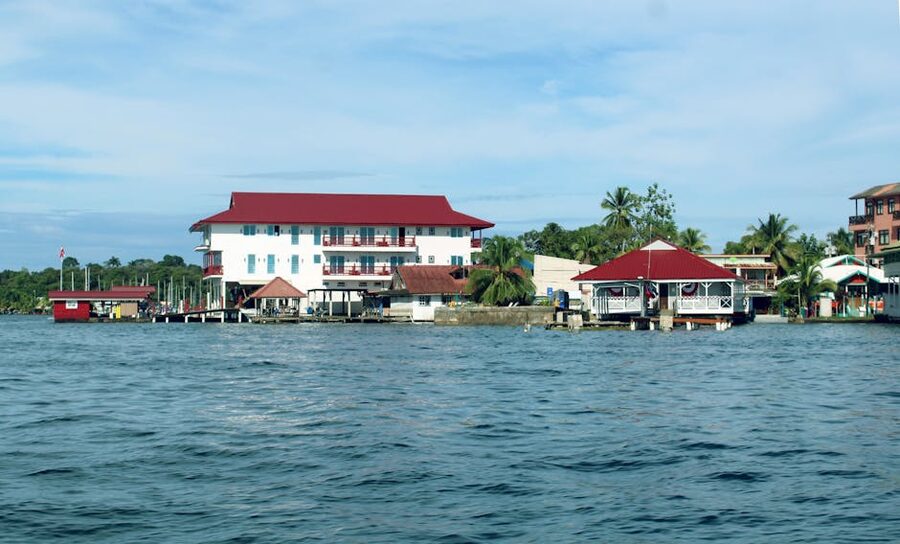
This is the practical version of the trip. Where each island actually fits, what to skip on Isla Colón unless you came to party, why Bastimentos and Carenero are usually the better call once you are over thirty, and how to put it all together without burning two days on travel logistics that you could have planned around in advance.
In This Article
- Should You Even Go to Bocas del Toro?
- The Quick Geography
- Isla Colón and Bocas Town
- Starfish Beach and Boca del Drago
- Playa Bluff and Paunch
- Isla Bastimentos: Where to Go When Bocas Town Wears Thin
- Red Frog Beach
- Wizard Beach and Old Bank
- Isla Carenero: The Quiet Compromise
- Cayo Zapatilla and the Day-Trip Tour
- Snorkelling, Diving, and Surf
- When to Go
- Where to Stay, by Island
- Bocas Town (Isla Colón)
- Isla Bastimentos
- Isla Carenero and Solarte
- Where to Eat
- Getting to Bocas del Toro
- Money, Safety, and the Caveats
- How Long to Spend
Should You Even Go to Bocas del Toro?
This sounds like a strange question to lead with on a travel guide, but it is the right one. Bocas divides travellers more than anywhere else in Panama. People who came for a 20-something backpacker week tend to love it. People who arrived expecting a Caribbean island getaway and got dropped into a building site sometimes leave annoyed. Both versions of Bocas are legitimate. They just live on different islands.
Bocas works for you if you want at least one of: cheap-ish island Caribbean access without flying to San Blas, a party scene that genuinely runs every night of the week, surf breaks within 20 minutes of where you sleep, a relaxed dive scene with PADI courses cheaper than most of the Caribbean, or a low-key chocolate-farm-and-sloths jungle vibe on Bastimentos. Bocas does not work for you if you wanted pristine empty beaches like the Yucatán or San Blas (the water around Isla Colón is busy and not always clean), if you are short on time and trying to tick a “Caribbean Panama” box (it is a long way from Panama City and the weather is unreliable), or if you want consistent dry-season sun. The Caribbean side does not follow the rest of the country’s seasons. More on that below.
The Quick Geography
Bocas del Toro is both a province and an archipelago in northwestern Panama, hard up against the Costa Rica border. Nine main islands. Hundreds of smaller cayos and islets. You will almost certainly only spend time on three or four of them.
The five that matter for visitors:
- Isla Colón: the main island and the only one with a town, an airport, and a road network. Bocas Town is here. So is the only ATM you can rely on.
- Isla Bastimentos: the second-most-visited island, much quieter than Colón, home to Red Frog Beach, Wizard Beach, and the local village of Old Bank.
- Isla Carenero: tiny, walkable end-to-end in 25 minutes, sits 200 metres off Bocas Town across the channel.
- Isla Solarte: smaller still, mostly jungle, a few lodges. The famous Hospital Point snorkel sits just off it.
- Cayo Zapatilla: the postcard. Two uninhabited national-park islands an hour’s boat ride east, with the kind of beaches the rest of Bocas does not have.
Boats run constantly between Colón, Bastimentos, and Carenero. The water taxi is the bus system here. Isla Colón is the only one you can drive on, and even there most travellers default to walking, biking, or taking the colectivo public bus.
Isla Colón and Bocas Town
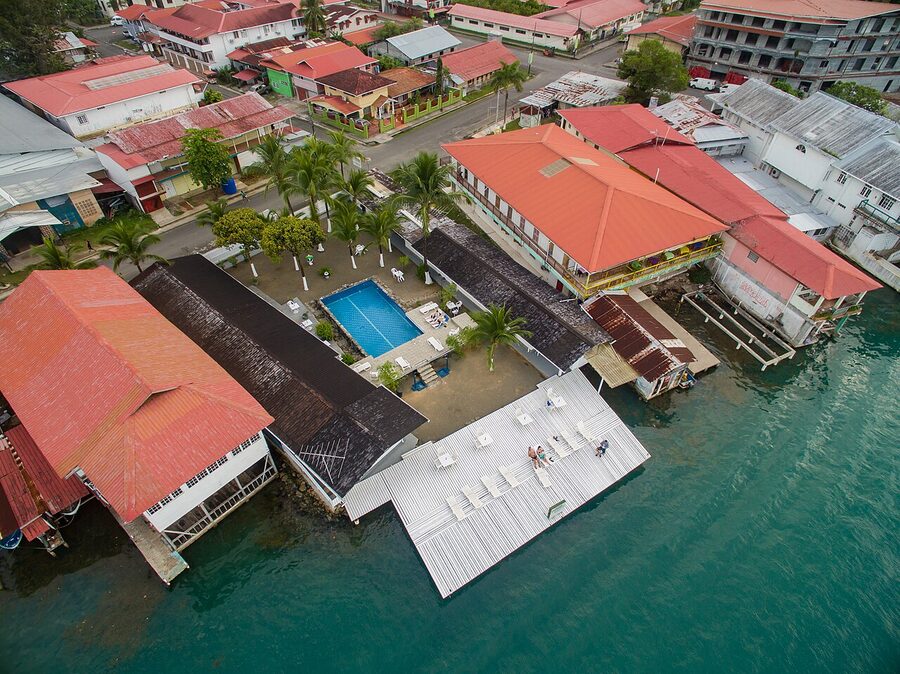
If you book Bocas without thinking about it, you end up here. Bocas Town is the transport hub: the airport, the ferry from Almirante, the only meaningful concentration of restaurants, ATMs and tour operators all live on this one strip on Isla Colón. It is also where the party lives. Both facts matter.
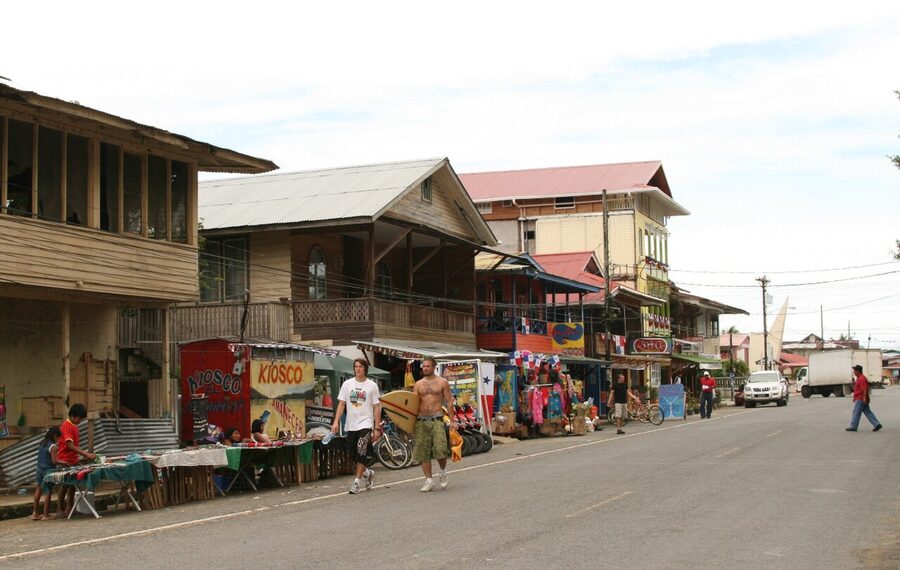
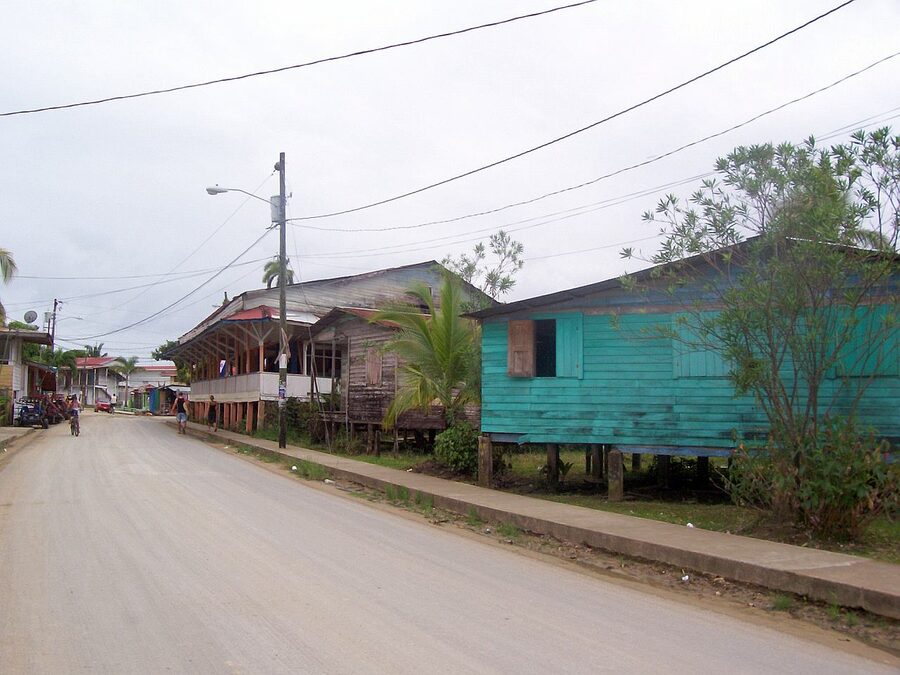
The town itself is two main streets running parallel to the water, lined with surf shops, supermarkets (there are a startling number of these for a town this small), tour booths, and bars built out over the bay on stilts. Walking the strip end to end takes 12 minutes. You can do everything practical in town in a morning.
The catch is sleeping. Bocas Town is loud. Music kicks off in the late afternoon and runs until 2 or 3am every night, not just weekends, and “Filthy Friday” turns the whole strip into a mobile bar crawl every Friday afternoon through evening. If you want that scene, this is where you stay. If you do not, plan accordingly. There are no swimmable beaches in town itself: the water around the docks is busy with boats and not particularly clean. You come into town for food, tours, ATMs, and onward boats, and you leave again for the actual beaches.
Starfish Beach and Boca del Drago
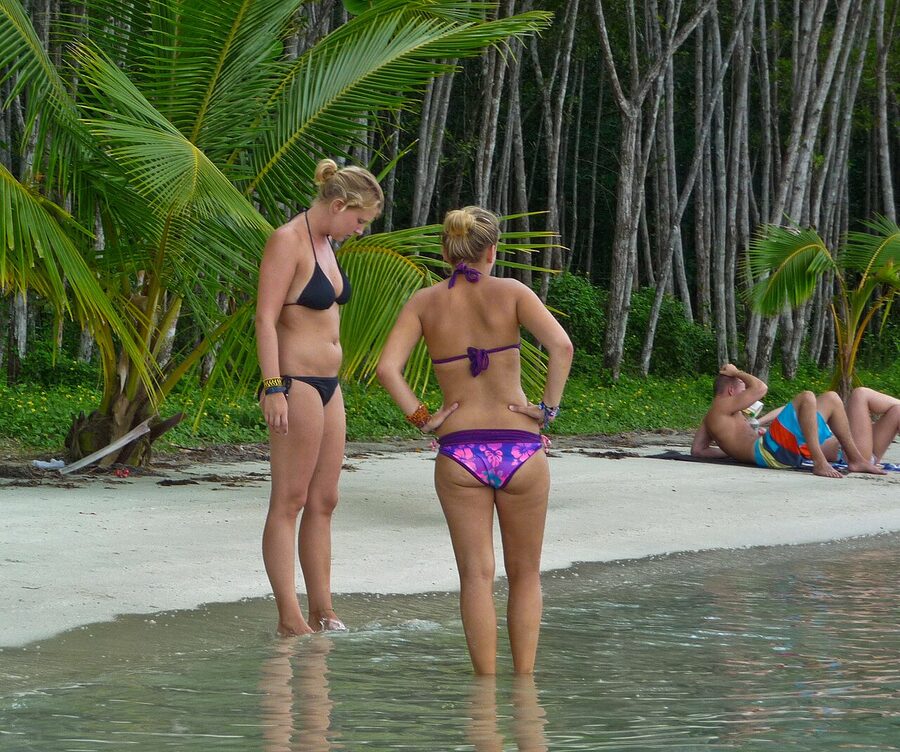
The day trip everyone does. Boca del Drago sits at the northwestern tip of Isla Colón, about 20 minutes by colectivo from Bocas Town. The bus leaves from the central park; it costs a few dollars one way and runs roughly hourly during the day. Buy a one-way ticket only because there are two competing companies and your return ticket only works on the company you bought from. From Drago Beach itself you walk about 20 minutes north along the coast to reach Starfish Beach, the main draw, named after the very large orange starfish that live in the shallows.
The shallows are calm and warm and you can wade in and see them under a foot of water. There are signs everywhere in English and Spanish asking visitors not to lift them out of the water. Plenty of people ignore the signs anyway. Do not be one of them: starfish breathe through gills on their underside and lifting them suffocates the animal in minutes. Drago Beach itself, the one before Starfish, is quieter and just as nice for swimming and lunch at the row of comedores (basic family-run restaurants) along the sand.
Playa Bluff and Paunch
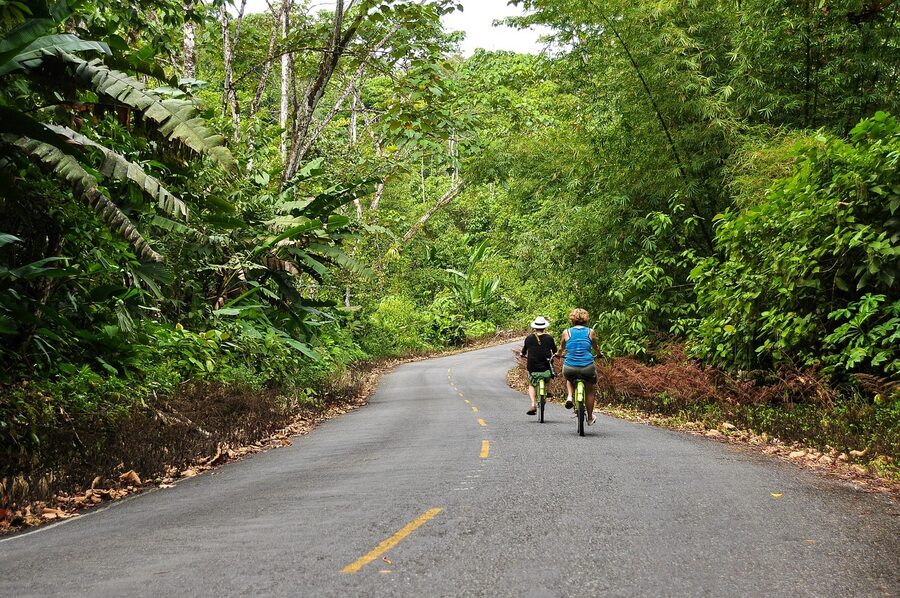
The east coast of Isla Colón faces the open Caribbean, and that is where Bocas’s surf lives. Playa Bluff is the headline: a long, broad, mostly empty beach about an hour’s bike ride or 20 minutes by taxi from Bocas Town. The waves at Bluff are powerful, the rip is real, and most of the year it is not a place to swim casually. From December through April the swell is consistent and the local surf community shows up.
Closer to town, Playa Paunch (sometimes called Punch) is a reef break popular with experienced surfers because you can walk in from the road. Black Rock, on Isla Carenero, gets soft consistent waves and is the spot most surf schools use for beginners. If you have never surfed before and want a lesson, you start at Black Rock, not Bluff.
Isla Bastimentos: Where to Go When Bocas Town Wears Thin
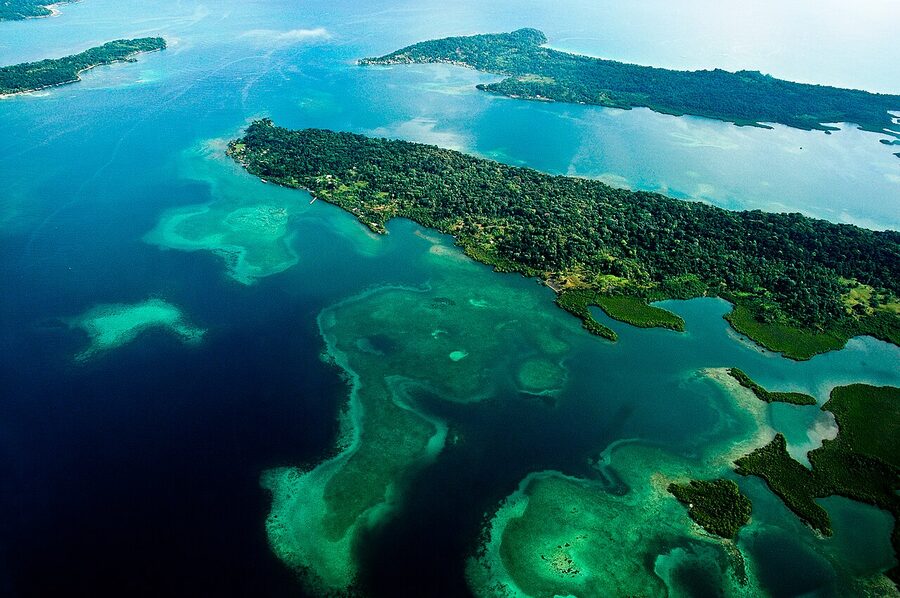
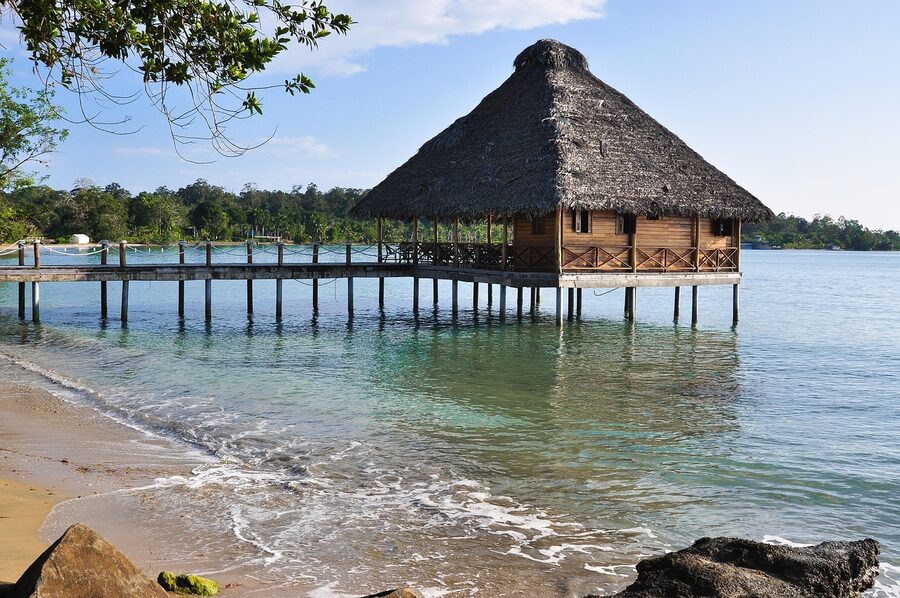
If you have read this far and the Bocas Town description is making you nervous, Bastimentos is the answer. It is the second-largest island in the archipelago, and you can reach it from Bocas Town in 10 minutes by water taxi for around $4-6 per person. There are no cars on Bastimentos. The main village, Old Bank, is connected by footpaths only. Most accommodation is overwater bungalows, jungle cabins, or small lodges, and the loudest sound after 9pm is usually the rain on a tin roof.
The Afro-Caribbean culture is far stronger here than on Colón. People in Old Bank speak a Caribbean Creole alongside Spanish and English; you will hear “yes mon” and “no problem” used in the same conversation as “buenos días” and “qué pasó” (what’s up). It is one of the more linguistically interesting corners of Central America.
Red Frog Beach
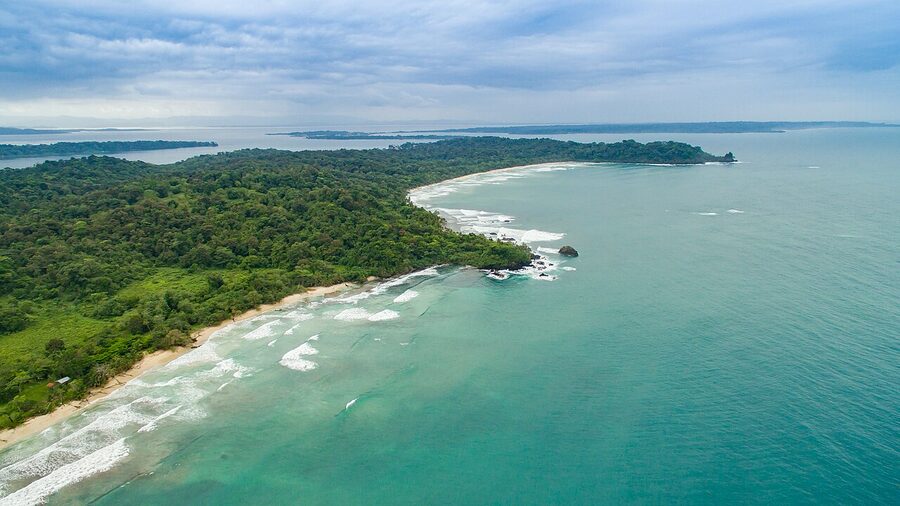
Red Frog is the most famous beach on Bastimentos and the easiest day trip from Bocas Town. Water taxi to the marina at the north end of the island, pay the entry fee, walk 10 minutes through the trees, and you are there. The beach is a long arc of pale sand backed by jungle, and the surf rolls in heavy enough that swimming is best near the lifeguarded section in the middle. If you walk south down the beach for 20 minutes you will be alone within five.
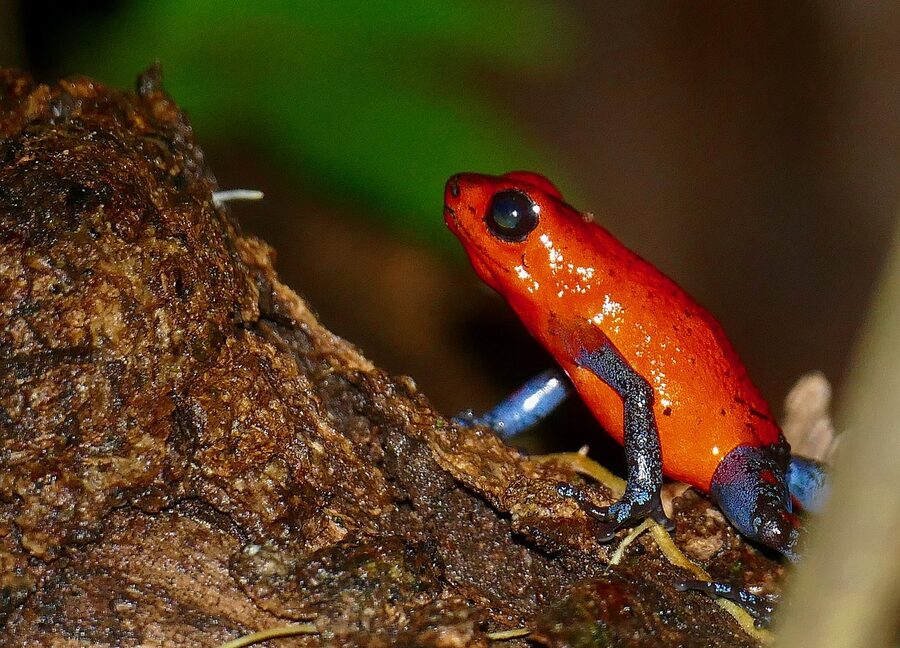
The name comes from the strawberry poison-dart frog (Oophaga pumilio), a tiny bright-red-and-blue amphibian that lives in the leaf litter under the trees behind the beach. The walk to the beach is the easiest place to see them. Look on the path between the marina and the sand. The local kids selling crafts at the path entrance will sometimes show you one for a tip.
Wizard Beach and Old Bank
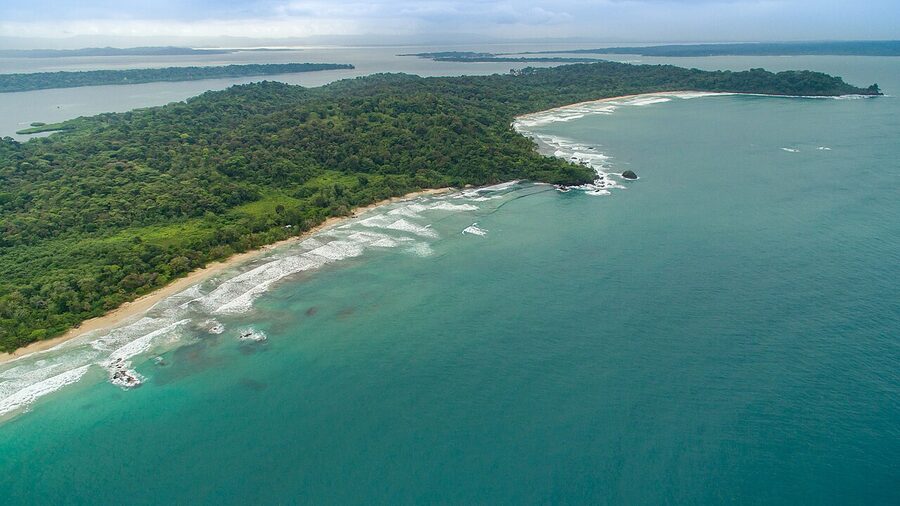
Old Bank is the main village on Bastimentos. Brightly painted wooden houses on stilts, dogs sleeping in the shade, a few small comedores (basic eateries) where you can get a $5-7 fish-rice-and-beans plate. From Old Bank you can walk to Wizard Beach in about 25 minutes through the jungle. It is unmarked in places. Ask in the village if the path is clear because it floods badly in heavy rain.
Wizard is wilder than Red Frog: the surf is bigger, there is no marina, no lifeguard, and rarely any other people. It is also a great place to spot sloths in the canopy on the walk in. Look up. They do not move much, which is the whole point. Old Bank itself is also good for sloths: a couple sleeping in the trees right on the village waterfront most days.

Isla Carenero: The Quiet Compromise
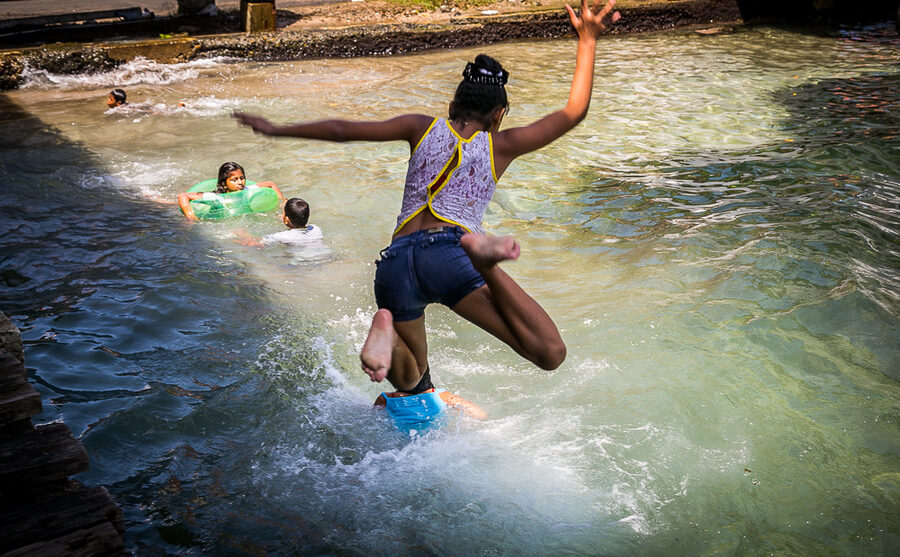
Carenero is so close to Bocas Town that you can see it from any rooftop, but functionally it is a different planet. Five-minute water taxi from the main dock, $1-2 per person. The whole island can be walked end to end on a single sandy footpath in about 25 minutes. There are no cars, a handful of restaurants, a few hotels, and Black Rock surf break at the north end.
This is the smart compromise if you want quiet but you do not want to be cut off. You can have breakfast on Carenero, water-taxi to Bocas Town in 5 minutes for the dive shop or the ATM, and water-taxi back at midnight without hassle. Bibi’s on the Beach is the standard lunch spot: a wood deck over shallow water where you can wade out from your table to cool off between courses. Aqua Lounge, on the same island, is the famous floating dock-bar with cut-out swimming holes and a dive board. It sounds gimmicky and it is, but it is also genuinely fun for an afternoon.
Cayo Zapatilla and the Day-Trip Tour
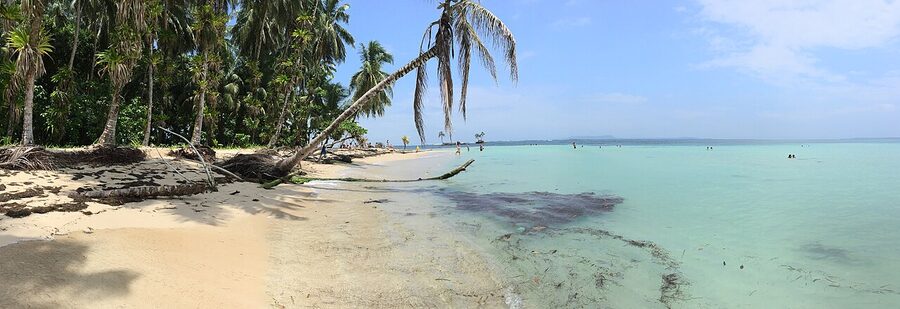
If you have only one full day for tours, do this one. Cayo Zapatilla is two small uninhabited national-park islands an hour east of Bocas Town by speedboat. They sit inside the Bastimentos National Marine Park and look exactly like the cliché Caribbean beaches the rest of Bocas does not deliver: white sand, palm trees, calm shallow water, mangrove edges with juvenile reef fish.
The standard tour bundles Zapatilla with Dolphin Bay (where bottlenose dolphins live full-time and sightings are reliable), Cayo Coral for snorkelling, and a stop at Hospital Point off Isla Solarte. It runs 6 to 8 hours, costs roughly $25-35 USD per person depending on the operator and the season, and almost every booth on the strip in Bocas Town sells the same itinerary. Tours leave around 9-9:30am. Bring sunscreen, a hat, water, and a dry bag for your phone, because the boat will get wet and there is nowhere to buy any of these things on the islands.
One thing to know: there is a $10 USD national park entry fee on top of the tour price for Zapatilla itself. Most operators do not include it in the quoted price. Ask before you book.
Snorkelling, Diving, and Surf
Bocas is not the Bay Islands. Visibility is shorter than Utila or Roatán, the wall dives are absent, and you are not going to see whale sharks. What Bocas does have is healthy soft coral, plenty of reef fish, easy entry, and dive courses that come in noticeably cheaper than other Caribbean PADI destinations. Open Water certification typically runs $300-380 USD for the 3-4 day course, and a two-tank fun dive day is about $80-95.
The main dive shops everyone mentions: La Buga Dive and Surf, on the main strip in Bocas Town, also runs a popular waterside cafe and is a reliable starting point for new divers. Bocas Dive Center (the locals call it Eddie’s place) is the long-running operator favoured by experienced divers and instructors going through advanced certifications. Bocas Diving Pirates is a smaller operation with a younger crowd and generally lower prices on fun dives. Verify pricing on the day; the offers move around.
Best months for diving are February to April and September to October: visibility opens up to 15-20 metres, currents calm down, and the water is warmer than feels reasonable. November to January and May to August are still divable, but visibility drops to 5-10 metres on bad days and dive shops sometimes have to cancel the outer sites.
For surf, the season runs roughly December through April on the Caribbean, with the cleanest swell typically in December and January. This is the inverse of the rest of Panama: dry season elsewhere is wet season here, and Caribbean wave season runs through what most of Central America calls verano (summer/dry season).
When to Go
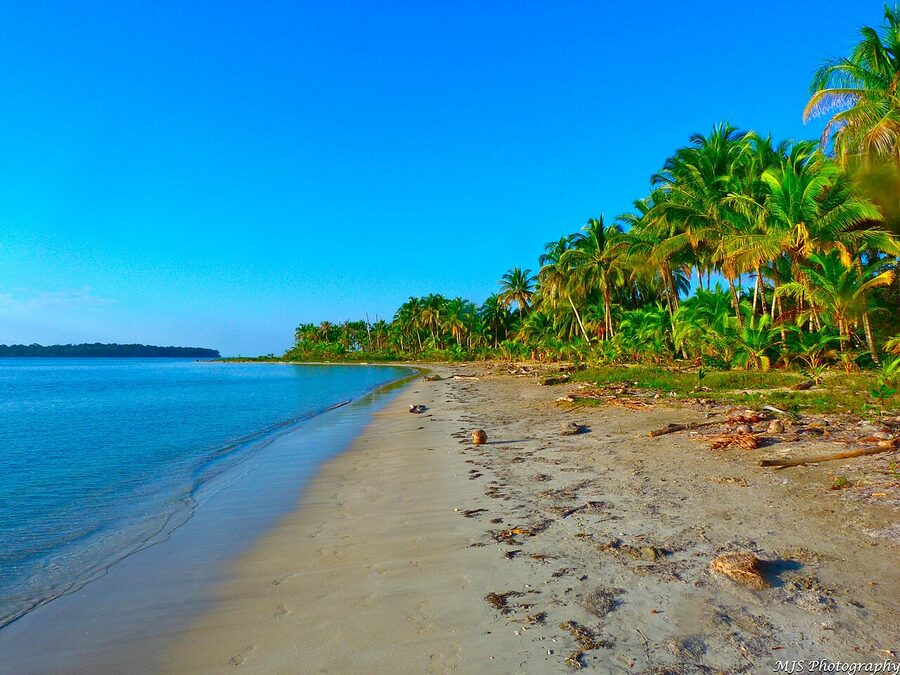
This is where Bocas catches a lot of first-timers off-guard. Panama’s Pacific side and the central highlands run a clean dry season roughly mid-December to mid-April. The Caribbean side does not. Bocas gets rain almost year-round, and the only properly drier windows are February to April and September to October. Those are the months to aim for if you want consistent sun.
The wettest months are usually November to January and June to August, when you can lose entire days to torrential rain. It does not stop you doing things (locals carry on regardless and most tours run rain or shine), but flat grey light makes the photographs of Cayo Zapatilla you came for impossible. The archipelago averages well over 3,000mm of rain a year. For comparison, Seattle gets about 1,000mm.
Hurricane risk is low because Panama sits south of the main Atlantic hurricane track, but tropical storms still bring heavy weather June through November. The good news is that Bocas is rarely too hot. Highs sit around 28-30°C year-round and the trade winds keep the islands cooler than mainland Panama. Bring a light rain layer regardless of when you go, because what looks like a clear morning can be a downpour by 3pm. That is just the Caribbean.
Where to Stay, by Island
The single most important call you make in Bocas is which island to sleep on. I would split four-plus nights across two islands minimum: one night or two in Bocas Town for logistics and food, then move to Bastimentos or Carenero for the rest. Not the other way around. End on the quieter island and you leave Bocas in a good mood. End in town and you leave tired.
You will see almost every recommendation list mention The Bocas Inn, a classic colonial-style hotel right on the bay in Bocas Town. It is one of the older established places and the prices reflect that. For more options across the archipelago, the where to stay archive has the full picture; below is what I would book for each island.
Bocas Town (Isla Colón)
Best for: arrival night, party crowd, anyone who wants amenities at the door.
- Hotel Bocas del Toro: central, on the water, cottage-style rooms with a downstairs restaurant patio. Aircon takes care of most of the noise once the doors are shut. Check rates on Booking.com.
- Tropical Suites Hotel: the upscale option in town, balconies over the water, full kitchens. About as quiet as Bocas Town gets, which is to say not very. Check rates on Booking.com.
- Divers Paradise Boutique Hotel: small, modern, popular with the dive crowd. Check rates on Booking.com.
Isla Bastimentos
Best for: anyone over thirty, anyone who wants quiet, jungle-and-beach travellers.
- Selina Red Frog: the budget social option, a Selina-branded property right next to Red Frog Beach. Pool, restaurant, social vibe without being a club. Check rates on Booking.com.
- Red Frog Beach Island Resort: the splurge. Villas with private pools, several restaurants, a full marina. Best for couples and families looking for a self-contained week. Check rates on Booking.com.
- La Loma Jungle Lodge and Chocolate Farm: rustic eco-lodge tucked into the jungle on the western side of Bastimentos with a working cacao plantation. Limited opening days, books up early. Check rates on Booking.com.
- Casa Cayuco: small all-inclusive eco-lodge on the southern coast of Bastimentos, far from everything. Closes seasonally so check dates. Check rates on Booking.com.
Isla Carenero and Solarte
Best for: travellers who want quiet but not isolation, surf-school students, divers.
- Aqua Lounge: dock-hostel and floating bar combined, the cheapest social option on Carenero. Loud during party hours, quiet most of the rest. Check rates on Booking.com.
- Bambuda Lodge: forest lodge on Isla Solarte with a pool, social common area, and reliable boat shuttle to Bocas Town. Mid-range pricing. Check rates on Booking.com.
- Sol Bungalows: small overwater bungalow operation on Solarte. The “wake up over the water” experience without paying San Blas prices. Check rates on Booking.com.
Where to Eat
Food in Bocas is better than people expect, but the names worth knowing are concentrated. A few spots come up in nearly every recommendation list and held up when I tried them.
In Bocas Town (Isla Colón): La Buga Dive and Surf doubles as a cafe right on the water and the falafel burger is a local fixation. El Ultimo Refugio is the small upscale option, an oceanfront table with a short menu that changes weekly; reservations are a good idea. Captain Caribe is the burger spot everyone returns to. Falafel Bocas is a tiny Israeli kitchen with the best vegetarian food in town. Ciao Pizza, off the main strip in Big Creek, does proper wood-fired pizza on a thin crust; worth the cycle out.
On Bastimentos: Sea Monkey in Old Bank is the standout, a small kitchen with Asian and Mexican-leaning brunch and lunch right on the water. Roots Restaurant in Old Bank is the local Caribbean option: rondón fish stew, coconut rice, fried plantain, the whole lineup at Caribbean prices.
On Carenero: Bibi’s on the Beach is the lunch spot. Tiny menu, big portions, water table.
Across all of Bocas the basics are solid: a comedor lunch with a fish-rice-beans plate runs $5-8 USD, a beer in town is $2, a craft beer at Bocas Brewing on Isla Colón is $3.50 in happy hour, and a cocktail at one of the dock bars sits around $5-7. Tap water is theoretically drinkable, but the locals do not drink it and most hotels provide refilled jugs.
Getting to Bocas del Toro
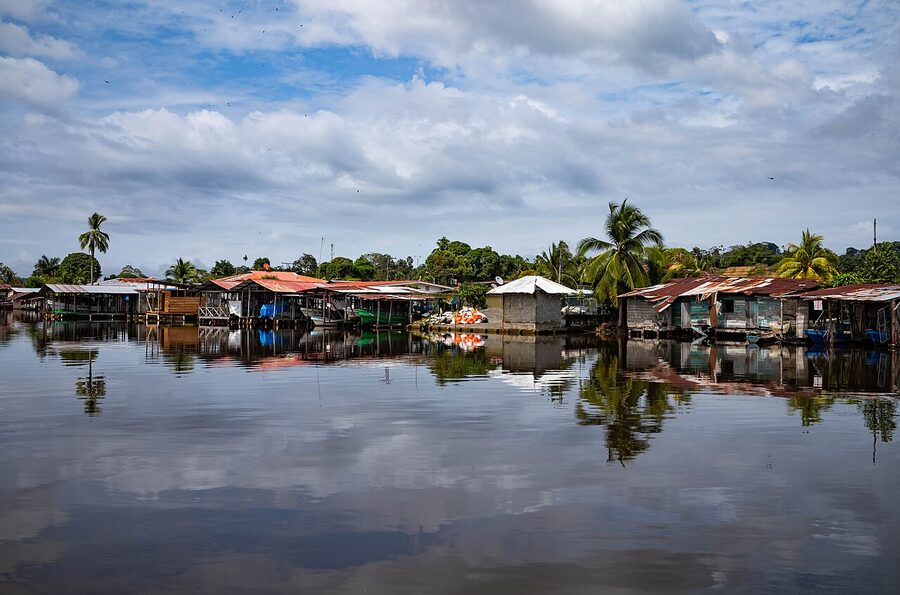
Three ways in. Pick based on time and budget.
By air: Air Panama runs a daily flight from Panama City’s Albrook airport (PAC, not the international Tocumen) to the small Bocas del Toro Isla Colón airport (BOC). The flight is about an hour. Tickets typically run $150-220 USD round trip if you book a few weeks out, sometimes much more last-minute. The plane is small and the baggage allowance is tight; check before you fly. This is also the quickest way out: getting back from Bocas to Panama City by land is a 12-hour overnight slog, while the flight is the same hour back.
Overnight bus plus water taxi via Almirante: the backpacker route. Buses run from Panama City to Almirante on the Caribbean coast for around $28-35 USD. Departures are mostly evening for an overnight arrival around 6-7am. From Almirante it is a 5-minute taxi (or 15-minute walk) to the water taxi pier, then a 30-minute boat ride to Bocas Town for $6 one way or $10 round trip. Two operators: Bocas Marine Tours and Taxi 25. Both run roughly every 30 minutes from 6am to 6:30pm. This is cheap but it is a long night.
From Costa Rica via the Sixaola border: if you are coming from Puerto Viejo or Cahuita on the Caribbean side of Costa Rica, this is the smoothest crossing in either direction. Shuttles from Puerto Viejo run about $32-40 USD per person and include the whole package: van to the Sixaola border, walk across to Guabito on the Panama side, van to Almirante, water taxi to Bocas Town. Door to door it is about 4-5 hours including immigration. Public bus is also possible but adds at least two hours and the saving is marginal.
From Boquete or David: if you are coming from David on the Pacific side or up in Boquete, daily shuttles run direct to Almirante for $25-35 USD. Around 4-5 hours. Some private transfers will charge $150-200 for a full minivan, which becomes worth it for groups of three or four.
One practical note: there is no Uber in Bocas. There are taxis on Isla Colón and they charge fixed rates by zone, posted at the central park. Anywhere else in the archipelago, the water taxi is your taxi.
Money, Safety, and the Caveats
The currency is the US dollar. Panama has its own notional currency, the balboa (PAB), which exists in coin form and is pegged 1:1 to the USD, but the paper money in your wallet will be standard US dollars. This makes Bocas easy for North American visitors and slightly more expensive than people expect. Plan for prices closer to Caribbean island norms than to Honduras or Nicaragua: a bed in a basic hostel is $15-25 a night, a private room in a mid-range hotel is $80-140, a sit-down restaurant dinner with a beer is $20-30 per person.
ATMs are limited to Bocas Town and they sometimes run out of cash, especially on Sundays and Mondays. Pull what you need for the week when you arrive. Many smaller restaurants and tours are cash-only, particularly on Bastimentos and Carenero where bank presence is essentially zero.
On safety: Bocas is generally fine. Petty theft is the only real concern: leave nothing on the beach when you swim, lock your room, do not flash phones at night in town. The US State Department travel advisory for Panama rates the country as Level 2 (“exercise increased caution”), but most of that warning is about specific border regions on the Pacific side, not Bocas. Walking solo at night in Bocas Town is fine in the lit central blocks; out by the airport or down dark side streets, take a taxi. Drugs are openly offered to tourists in Bocas Town. If that is not your scene, a polite “no, gracias” works fine.
One thing to know about the wider region: Panama, Costa Rica, and Belize are not part of the CA-4 visa zone (Honduras, El Salvador, Guatemala, Nicaragua). That means crossing into Costa Rica from Bocas is a real border crossing with separate stamps in and out, not just a checkpoint. Pack your passport. If you are heading on, the Sixaola crossing is the most painless I have used in Central America.
How Long to Spend
Three nights is the minimum. Four to five is the sweet spot. A week works if you are diving or learning to surf, otherwise you will run out of new things on day six. Two weeks is too long unless you are slow-travelling: Bocas does not have the geographic depth of Costa Rica or the neighbour-hopping potential of mainland Panama to fill that much time without repetition.
If you have only three nights, I would do: night one in Bocas Town to arrive and set up dives or tours, night two and three on Bastimentos or Carenero. If you have five, add the Cayo Zapatilla day trip and a day at Playa Bluff. If you have a week, add an Open Water dive course or a multi-day surf camp.
And if Bocas does not work for you, the best alternative on the Caribbean is heading north into Costa Rica’s Caribbean coast (Puerto Viejo and Cahuita), which has cheaper food, a similar vibe, and arguably better beaches. Or going west into Boquete and the cool-mountain-coffee side of Pacific Panama, which is the climatic opposite of Bocas in every way and a useful contrast on the same trip.
Bocas is not Panama’s best destination. It is, however, the most accessible piece of Caribbean Panama by a long way, and on a sunny week with the right island pick it lives up to the postcards. Just go in knowing which version you are signing up for.


.jpg)


_(52373289570).jpg)
.jpeg)

.jpg)
.jpg)

