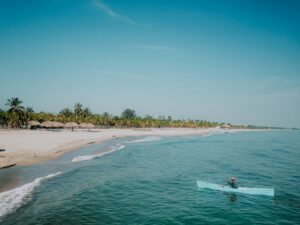
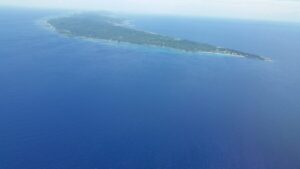
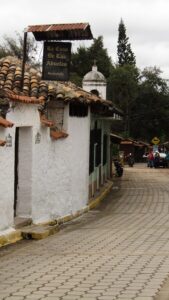
Pick Utila if you want to dive. Pick Roatán if you don’t. That’s the entire decision compressed into one sentence, and most travel guides bury it under sections about tropical paradise and laid-back island vibes. The two islands sit forty miles off Honduras’s north coast, both inside the Mesoamerican Barrier Reef, and most travellers visit one and skip the other.
Utila is the smaller, scruffier, cheaper, more backpacker-leaning of the Bay Islands. It is famous for one thing: the cheapest PADI Open Water certification in the world. Open Water courses start around US$300 and include 4 to 5 nights of basic dorm accommodation at the dive school. In the US that same course is $550-650; in Europe £500-700. If you’ve been thinking about learning to dive, Utila is where you do it, and the rest of the island is a bonus. Roatán has fancier resorts, more developed beaches, direct flights from the US in winter, and prices to match. If you don’t dive at all, the case for Utila gets thin. The beaches in Utila town are fine but not the postcard kind, and the case for Roatán is stronger if you want a beach holiday.
The other reason to pick Utila over Roatán is the whale sharks. Utila sits on the migratory path of Rhincodon typus and you have a real (if small) chance of swimming with one between March and May, and again from August to September. Roatán technically has them too but sightings are rarer.
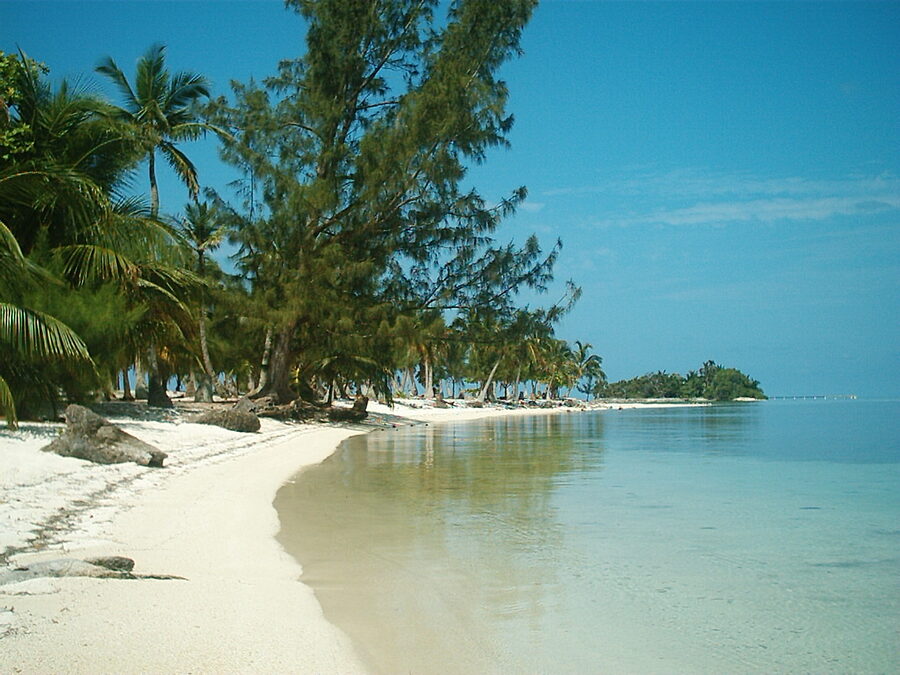
What follows is the practical version. How to get there, which dive shops are worth your money, where to stay if you’re not on a dive package, what to do above water, and what to skip. Prices are in lempiras (L) where things are priced locally and US dollars where they’re priced in dollars; the island runs on both.
In This Article
- Getting to Utila
- Ferry from La Ceiba
- Ferry from Roatán
- Flying directly to Utila
- Utila Town and getting around
- Diving in Utila: the short version
- Choosing a shop
- Whale sharks
- Where to stay if you’re not on a dive package
- What to do above water
- Water Caye day trip
- Neptune’s Beach Bar
- Pumpkin Hill
- Chepes Beach and Bando Beach
- Jade Seahorse and Treetanic Bar
- Nightlife
- Eating on Utila
- What’s overrated
- When to go
- Practical odds and ends
- Is Utila worth it?
Getting to Utila
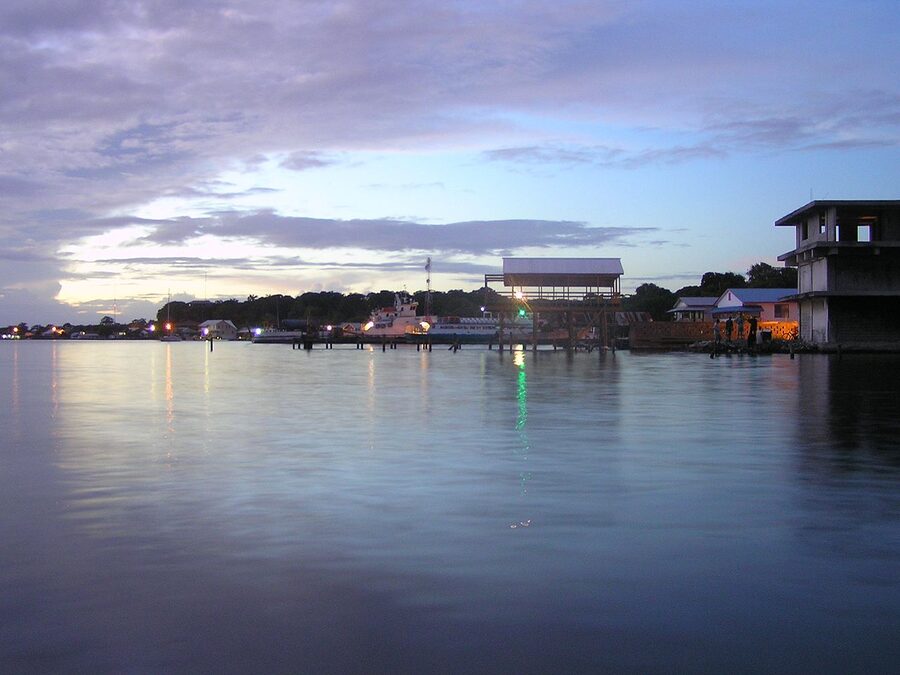
Two routes. Either you take the ferry from La Ceiba on the mainland, or you fly in via Roatán and take the ferry across between the islands.
Ferry from La Ceiba
The Galaxy Wave and Dream Ferries run between La Ceiba and Utila daily, multiple crossings a day, in roughly an hour. La Ceiba is the gateway port for the Bay Islands, three hours by Hedman Alas coach from San Pedro Sula where most international flights land. The ferry costs around 800L one way (10% off if you book online), plus a 35L island tax paid in cash at the port. Bring cash; the port shops are cash only.
Online tickets are non-refundable, so if your plans are loose, the port window on the day is safer. Ferries usually only sell out around Honduran national holidays, especially Semana Santa (the week before Easter) and Semana Morazánica in early October.
Motion sickness varies. The morning crossing tends to be smoother than the afternoon, and the return leg from Utila is often choppier than the outbound. If you’re prone, take a Dramamine half an hour before boarding. The VIP or First Class upgrade is roughly $5 more and gets you the air-conditioned upper deck.
Ferry from Roatán
One direct ferry leaves Roatán for Utila daily at 14:00 (14:15 on Saturdays). Same price, same hour-long crossing. There’s a second crossing that goes via La Ceiba and takes much longer; avoid it. From the Roatán airport, a taxi to the municipal dock runs around US$20.
If you miss the ferry, CM Airlines runs small charter planes between the islands. Faster, more expensive, not for the nervous; the planes are small and the runway in Utila is, charitably, a strip of concrete.
Flying directly to Utila
Possible but rarely worth it. The Utila airstrip (UII) takes occasional flights from San Pedro Sula via CM Airlines, sometimes two or three a week with no fixed schedule. Most travellers find it cheaper and more reliable to fly into Roatán (RTB) or San Pedro Sula (SAP) and ferry in.
Utila Town and getting around
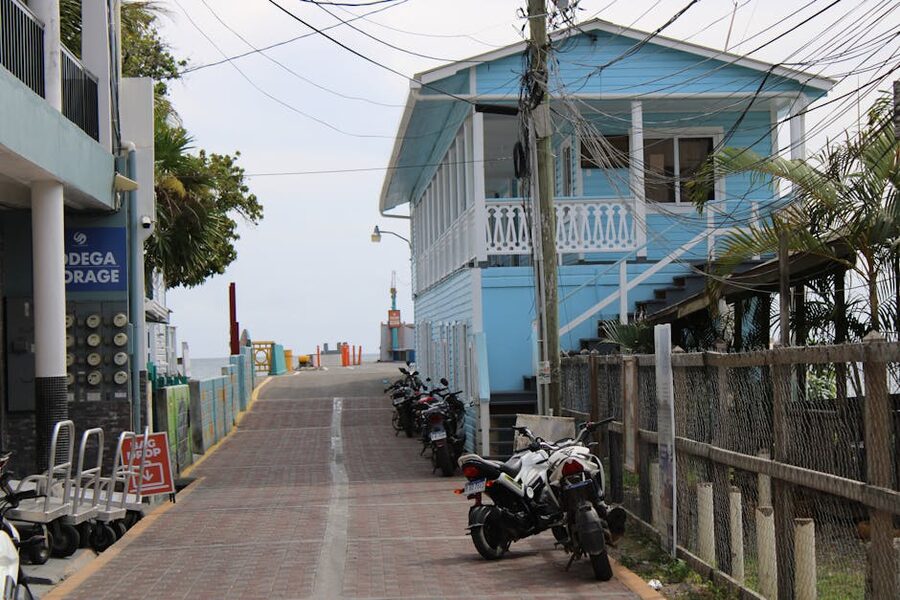
The town locals call East Harbour, but everyone else calls Utila Town, hugs the southeast corner of the island around a sheltered bay. Roughly 4,000 people live here year-round, a chunk of them expats from the US, Canada, and Europe who came to dive and never left. There are no cars; tuk-tuks, scooters, ATVs, golf carts, and a lot of walking.
Almost everything you’ll need sits on a single road, called Main Street, that runs along the bay. Dive shops, hostels, restaurants, two ATMs, a couple of supermarkets, the ferry dock. You can walk it end to end in about thirty minutes. There’s no proper sidewalk, so you walk on the road dodging tuk-tuks. It works.
For trips outside town (Pumpkin Hill, the airport, the further beaches), you’ve got options. Tuk-tuks zip up and down constantly; a ride from town to Bando Beach runs about 30L per person. Pay in lempiras when you can. They’re cash only. Confirm the price before you get in.
Renting an ATV, scooter, or golf cart from Roneey’s Rentals (sometimes spelt Rooney’s) gets you around the island at your own pace. A four-person electric golf cart runs around $60 a day; scooters are $25-30. Pay the deposit ahead via WhatsApp, the rest on pickup. Card payments across the island carry a 5-6% surcharge, so expect to handle most things in cash.
The official currency is the lempira (L, sometimes HNL), but on Utila US dollars are accepted almost everywhere because so much of the dive economy runs in dollars. Smaller comedores (basic eateries) and tuk-tuks prefer lempiras and you’ll get a better rate paying in local. Exchange sits around 25L to the dollar. Two ATMs in town: one across from the ferry dock, one further south on Main Street. Both occasionally run out during peak weeks. Bring a few hundred dollars in clean US bills as backup.
Diving in Utila: the short version
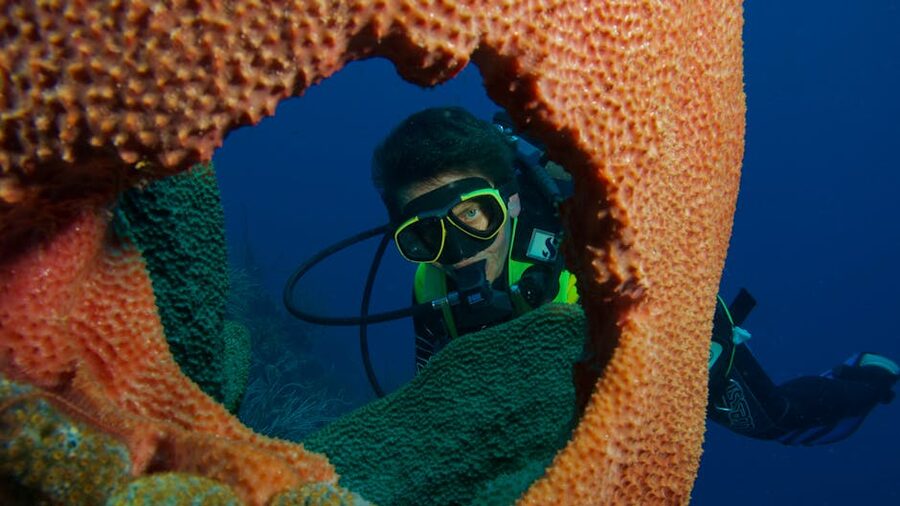
Utila has roughly a dozen dive shops, almost all clustered along Main Street within a five-minute walk of the ferry dock. Bay Islands shops come and go, but the well-established names in 2026 are Utila Dive Centre, Bay Islands College of Diving, Underwater Vision, Alton’s Dive Center, Captain Morgan’s, and Cross Creek. Each has its own personality.
The Open Water from scratch costs around $300-360 over four days: day one classroom theory, day two swim test and confined water skills in the shallows, days three and four out on the boat for four open water dives that build to 18 metres. Most schools include 4-5 free dorm nights and two free fun dives. Class sizes run 3 to 10. You’ll be out of the water by mid-afternoon and most evenings end early because diving makes you tired in a way nothing else does.
A few practical things the brochures don’t shout about:
- Free dorms vary wildly. Some are clean, fan-cooled, four-bunk rooms with lockers; others are cramped 8-bed rooms with no security. Private rooms run $40-70 a night with the diver discount and supply is tight. Couples should book ahead.
- Standard travel insurance covers recreational diving to 18 metres. If you continue to Advanced (30 metres), check your policy or buy a stand-alone dive cover.
- Don’t fly within 24 hours of your last dive. Most policies require this and it voids your coverage if you skip it.
- The hyperbaric chamber is at Bay Islands College of Diving. The only chamber on the island.
About the Utila Upsell. Once you finish Open Water, your instructor will suggest the Advanced (3-4 days, around $300, gets you to 30 metres and adds a wreck dive and a night dive). They get paid on sign-ups, so the pitch is real, but the instructors I’ve met believe it’s worth it. The call comes down to time. Two weeks on the island, do it. Four days total, skip it.
Choosing a shop
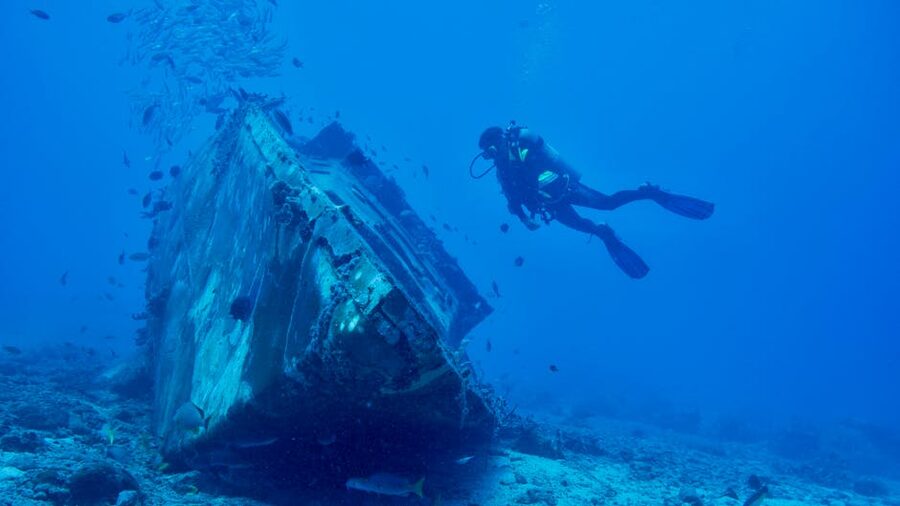
Avoid deciding before you arrive unless you need a private room. Walk the strip the morning after you land. Stop into three or four shops, ask about class sizes, look at the boats, ask how often the equipment is serviced. Underwater Vision has a good reputation among learners. Bay Islands College of Diving is more popular with experienced divers and divemaster trainees, and has the hyperbaric chamber on site. Alton’s is on the water at the western end of the bay. Captain Morgan’s leans budget. Each has its types.
If a friend has already pointed you at a shop, message them on WhatsApp ahead. Google reviews mislead because most are from learners who did one course at one shop and have nothing to compare against.
Whale sharks
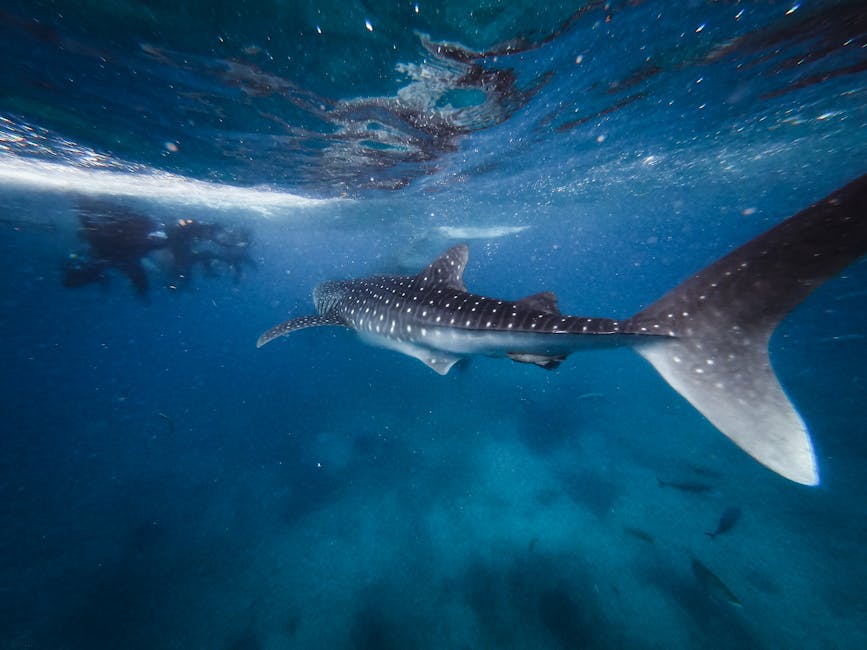
The whale shark is the headline act and a chunk of Utila’s reputation. They pass through the deep water off the north coast in measurable numbers between March and May and again from August to early October. Sightings outside those windows happen but are rarer.
The Whale Shark and Oceanic Research Center (WSORC) on Main Street tracks sightings, runs ocean safaris in peak periods, and is where to head first to maximise your odds. They post current sighting boards in the office. Dive shops also run last-minute trips when one is spotted; if you’re already on a course, ask to be on a standby list.
A few honest notes. Whale shark encounters in Utila are mostly snorkelling, not diving, because the sharks feed near the surface filtering plankton. You jump off the back of the boat with a mask and try to keep up. The shark moves, so the actual encounter often lasts less than a minute. Even in season, two thirds of trips don’t find one. If a confirmed sighting is the whole reason for your trip, give yourself five days minimum and book during the March-May window.
Where to stay if you’re not on a dive package
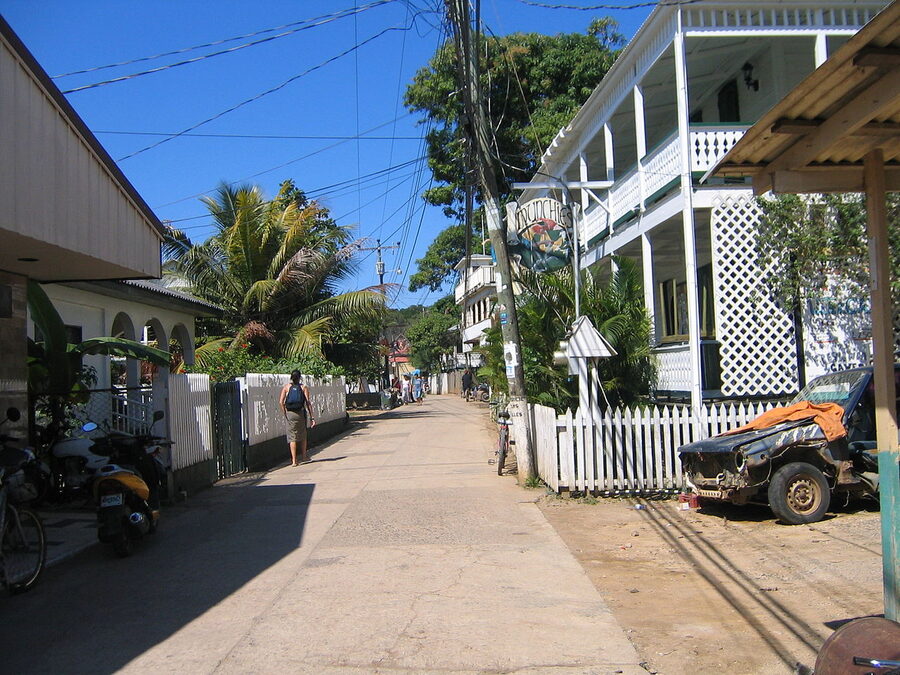
If you’re diving, the dive school accommodation is cheapest. If you’re not, or dorms aren’t your thing, here’s where to actually stay.
- Manurii Boutique Hotel sits 100 metres back from Main Street with a pool and gardens. Short walk from the dive shops, far enough from the road to be quiet. Standard doubles up to apartments with kitchenettes. Good for couples on a non-diving holiday.
- Utila Lodge is the long-running diver-leaning hotel with its own dive operation downstairs and rooms upstairs. Simple, clean, breakfast included, and the wooden dock out back is the best sunset spot on the island.
- The Odyssey Resort on the eastern end of Main Street is one of the newer builds with modern rooms, kitchen options, and a quieter location away from the bar strip.
- Sea Eye Hotel sits on The Point, the southeast corner of the island, with a private beach (Bando Beach) attached. Short tuk-tuk from town. Best for a family.
- Coral Beach Village Resort is a boat ride from town on Neptune’s beach. You’re committing to a shuttle every time you want to go into town, but the beach is the prettiest on the island.
- Hamaca Hostel and Mango Inn are the budget hostels worth knowing. Mango Inn doubles as accommodation for Utila Dive Centre and has a pool.
The honest take. Non-dive-school accommodation on Utila is pricier than the equivalent on the Honduran mainland, and supply is tight from December to February. Book a few weeks ahead in high season.
What to do above water
Water Caye day trip
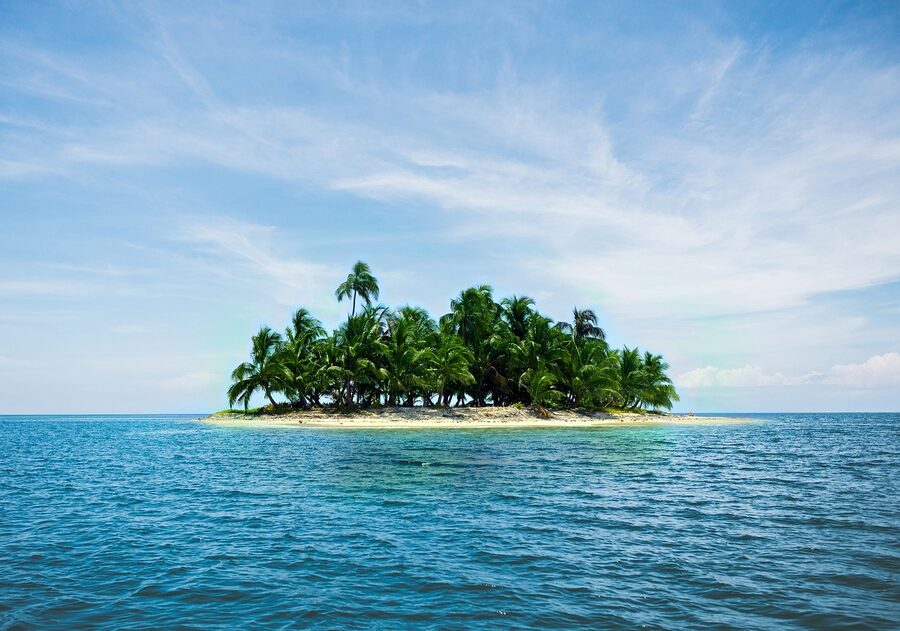
Water Caye is a tiny, mostly uninhabited island about 30 minutes by speedboat from Utila Town, and the day trip is the single best non-diving thing you can do here. Round-trip boat runs $20-25 per person via Bush’s Bay Island Charters or SunBliss Tours; snorkel gear hire is $5 extra. Operators set a minimum group; book early in your stay so you’ve got buffer days if weather turns.
You get a half-day on a small island with crystal water, decent snorkelling on the reef on the north side, basic toilets, and nothing else. Bring sunscreen, water, food, drinks. Most operators will lend you a cooler. Entry on the rocky north side is sharp; pack water shoes if you’ve got them.
Neptune’s Beach Bar
Neptune’s is a beach bar and restaurant in Coral Beach Village, accessible only by boat. The boat leaves from a dock behind Chepes Beach hourly through the day; round-trip is around 100L paid when you settle your tab. Don’t miss the last boat back (around 16:00 or 17:00).
What’s on offer: a long dock to jump off, hammocks, picnic tables, snorkelling that’s reportedly the best on the island, and a kitchen doing very good fresh fish. Tuna tower is the order. The easiest good day on Utila.
Pumpkin Hill
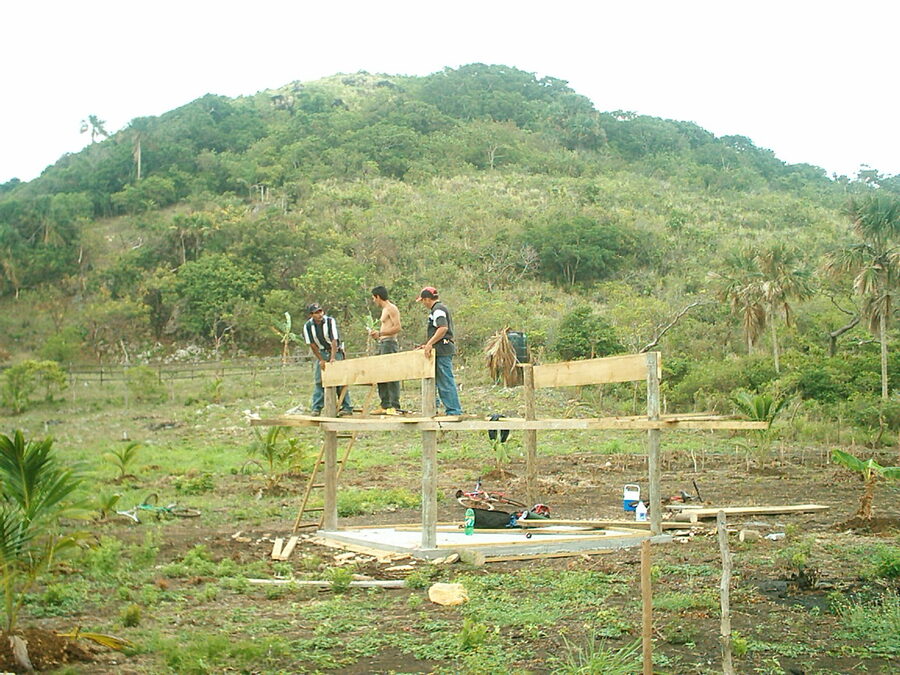
Pumpkin Hill is the highest point on Utila. You can drive an ATV or golf cart most of the way and hike the last stretch. The trail’s rugged enough that flip-flops won’t cut it; wear sandals with grip, bring water, go in the morning. Rockies Bar at the start of the final trail serves cold drinks; pair the climb with a beer there on the way back down.
Chepes Beach and Bando Beach
Two town beaches at opposite ends of Main Street. Chepes is the public one at the western end, with palapa tables in the shallow water, drink vendors, and the main local hangout vibe. The water isn’t crystal, the sand isn’t powder, but it’s free. Bando, at the southeast tip, is the private beach attached to Sea Eye Hotel. Pay a small entry fee at the bar (or stay there) for clean sand, calm water, loungers, bathrooms. Bando is the better beach; Chepes is the better people-watching. Pumpkin Hill Beach on the north coast catches plastic on the wrong tides; for a clean swim head to Bando, Neptune’s, or Water Caye.
Jade Seahorse and Treetanic Bar
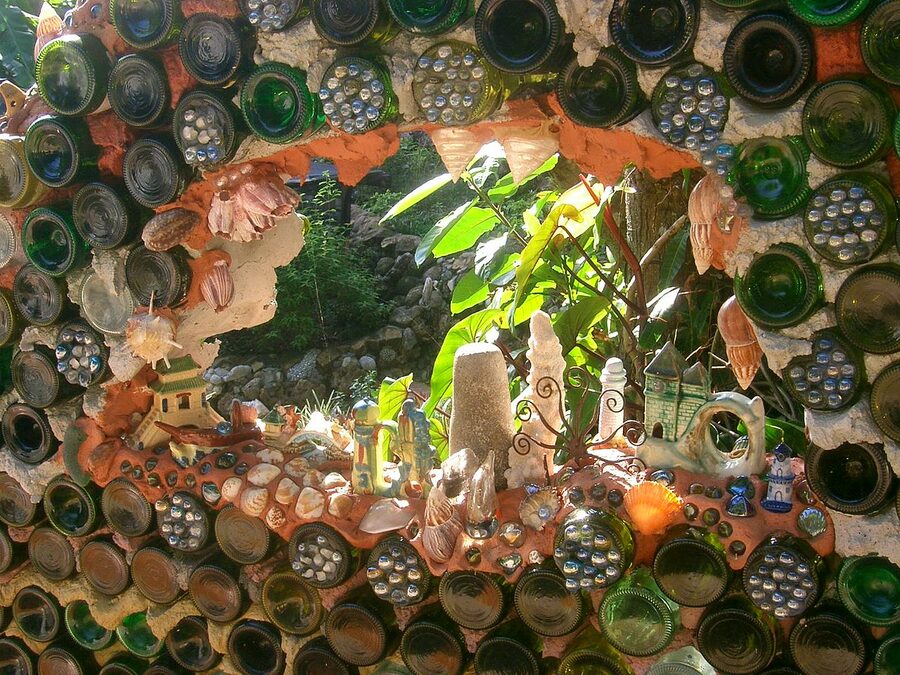
The Jade Seahorse on Lozano Road is a mosaic art installation built up over decades by Neil Keller out of bottle ends, ceramic shards, and found materials. A small entrance fee gets you wandering for an hour, and there are cabanas to rent if you want to sleep inside the art. The Treetanic Bar inside opens evenings and is one of the stranger drinking spots in Central America.
Nightlife
Utila’s reputation as a party island is real. The dive crowd is young, divemaster trainees are working on their cert for months at a stretch, and Tuesday nights at Tranquila are an institution. Skid Row, Treetanic, La Cueva, and Huffy’s are the other regulars, mostly at the western end of the bay near Chepes Beach. Stay east of the ferry dock if early dive mornings matter; west if the bars are the draw.
Eating on Utila
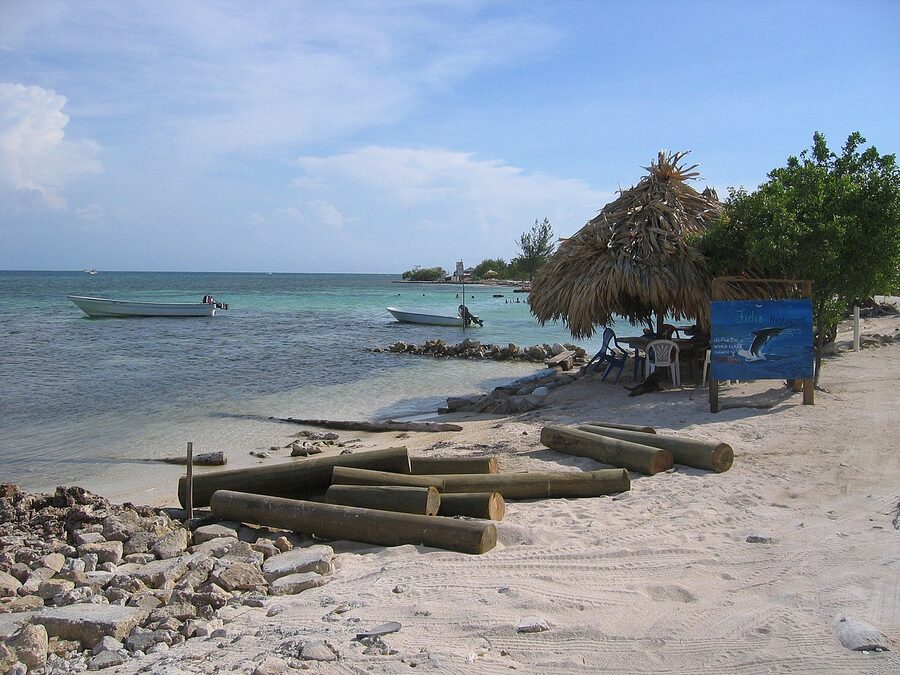
For a small island, the food is better than it has any right to be. Cash preferred almost everywhere; cards carry a 5-15% surcharge.
- Mango Tango on Chepes Beach is the date-night spot: waterfront tables, daily specials, sweet-potato-and-blue-cheese ravioli that people remember. The only place I’d call worth a reservation.
- RJ’s is the home-cooked plate place. Pick a protein (fish, chicken, pork), they pile rice, beans, salads, and bread alongside.
- The Pelican does Thai food and pasta on a small island in the Caribbean. Sounds wrong, works.
- Mama Rosa’s is the baleadas institution. A baleada sencilla (a flour tortilla folded around mashed beans, crema, and cheese) runs 15-20L; meat fillings 40-60L. Lobster baleadas around $7.
- La Casita next door does similar food at similar prices. The wait can be punishing.
- Pink Flamingo is the best breakfast on the island. Hammocks over the water at the back, smoothie bowls, full plates. Bring cash.
- Josie’s opens early for pre-dive coffee and bagels. Cash only, lempiras or dollars.
- Camilla’s Bakery is the morning croissant place; the same kitchen turns into Pizza Nut at 17:00.
For self-catering, Bush’s Supermarket is the main grocery and takes card without surcharge. A fruit and veg stall called Veggies and Fruits Escobar east of the ferry dock is usually the best-stocked.
What’s overrated
The Iguana Research and Breeding Station protects the endangered Utila spiny-tailed iguana, and the conservation work is real, but as a destination it’s a 15-minute walk-through. If you care about reptile conservation, swing by; if not, you’re not missing much.
The Utila Chocolate Company gets guidebook love but opening hours are erratic at best (often a few hours, a few days a week). If you’re already passing on an ATV, peek in. Don’t make a special trip.
When to go
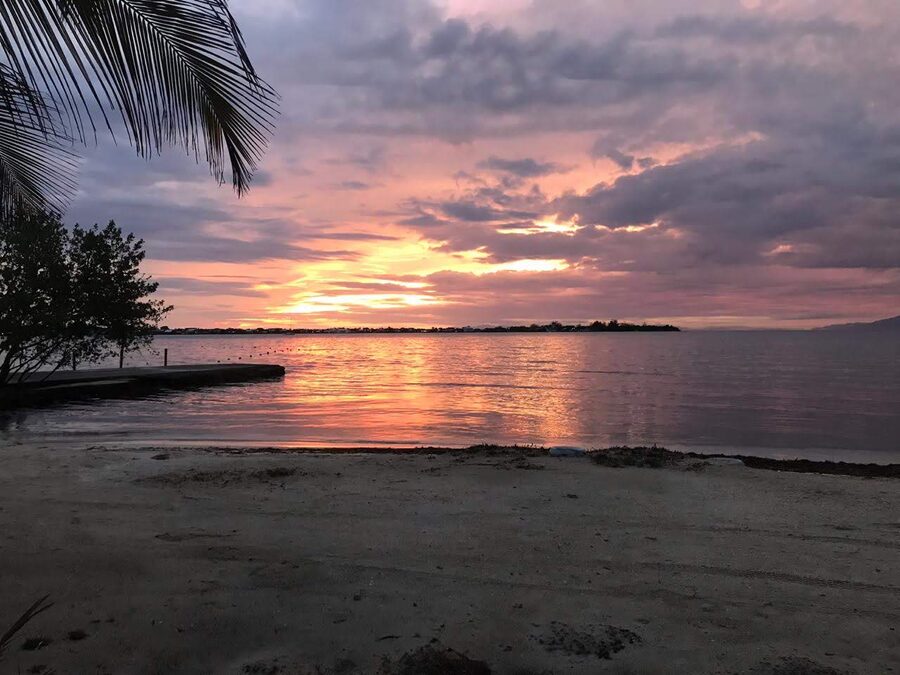
The Caribbean coast of Honduras runs counter to the rest of Central America. The local rainy season is roughly late September through February, which awkwardly overlaps with regional high tourist season. December and January can be wet for days at a stretch. February to August is the more reliable dry stretch, with the hottest months May through August.
Hurricane season runs June to November, but Utila is far enough south that direct hits are rare. The Bay Islands tend to get the edges of storms rather than the eyewall. Watch the forecasts in September and October.
The whale shark windows of March to May and August to early October are the sweet spots for combining good weather with a real shot at the headline animal. April is probably the single best month.
Avoid Semana Santa (the week before Easter) and Semana Morazánica (the first week of October) unless you book ahead; both are Honduran holiday weeks and ferries, dive courses, and prices all jump.
Practical odds and ends
- Safety: Utila is one of the safer parts of Honduras — small island, tight community, low petty crime. The hyperbaric chamber at Bay Islands College of Diving is a real island asset and is worth knowing about if you’re diving deep or doing your Open Water. The US State Department Honduras advisory and the UK FCDO Honduras page are worth checking before you fly; the broader country guidance is the relevant context, not Utila-specific anything.
- Language: Spanish is official but English is the day-to-day language on Utila. Most locals speak Bay Islands English (a Caribbean Creole) among themselves. Spanish helps in the comedores; pidgin English helps everywhere else.
- Power: US-style two-pin sockets, 110V. No adapter needed from North America.
- Wi-Fi: Most accommodation has it; speeds vary. Tigo and Claro SIM cards are cheap and available at any tienda.
- Mosquitoes and sand flies: Both are real and the sand flies are the worse of the two. Pack DEET, ideally Picaridin too, and reapply. Bites itch for a week.
- Sunscreen: Reef-safe matters here; the Mesoamerican Reef is right under you.
- Onward travel: Ferry back to La Ceiba, then Hedman Alas to San Pedro Sula for international flights, or a Roneey shuttle to Lago de Yojoa or further into Honduras. If Roatán is next, the direct ferry runs daily. The Honduras articles archive covers the rest.
Is Utila worth it?
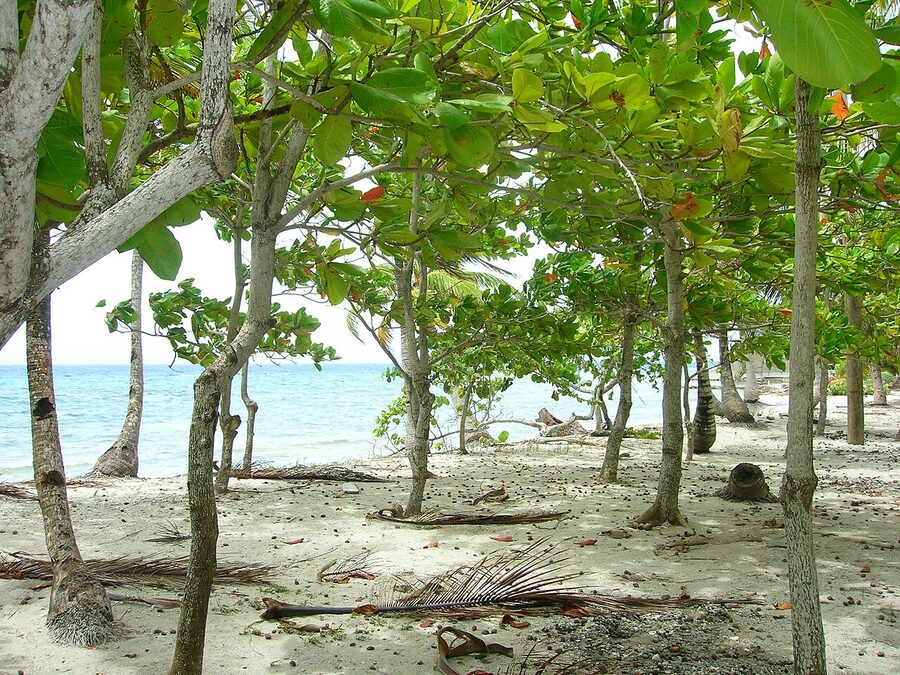
If you came looking for “the Caribbean island where I’ll lie on a perfect beach for a week and eat lobster”, no. Roatán does that better, and so do Belize’s cayes. Utila’s beaches are okay. Its sand is okay. Its turquoise water is real but not the postcard kind.
If you came to learn to dive, do an Advanced, see a whale shark, party with other divers in their twenties, or pad out a Central America trip with a few weeks of cheap underwater time, Utila is one of the best values on Earth. Five days will get you Open Water certified plus a couple of fun dives, a Water Caye day trip, decent meals, and enough hammock time to feel like a holiday. Two weeks lets you do Advanced and still drink rum at sunset on a wooden dock.
Most travellers I’ve met who came for four days stayed for ten. That tells you most of what you need to know.