
If you’re flying into Honduras, your plane probably lands here, and you have a few hours to a few days to figure out what to do with the city before moving on. That’s San Pedro Sula in one sentence. Not a postcard, not a destination most travellers list, but a working port-and-industry city of around a million people that happens to own the international gateway to everywhere else in the country worth going to.
Most guides skip it or apologise for it. I’d rather just give you the practical version: how to get from SAP airport to Roatán, Utila, Copán, or Tegus without losing a day; where to sleep that’s safe and convenient; what’s actually worth seeing if you have time to kill; and the safety conversation, plainly, because pretending it doesn’t exist would be insulting.
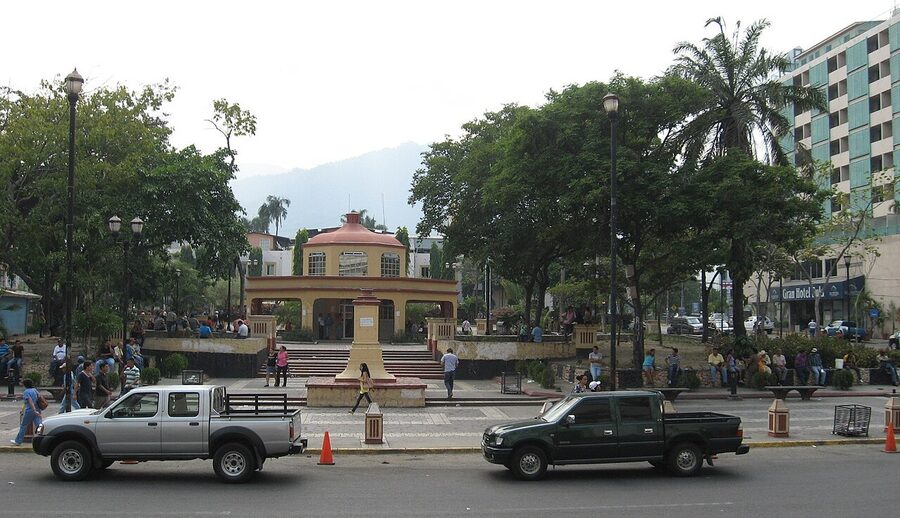
Two things to know before you book anything. First, this is the biggest air gateway to Honduras, busier than the capital’s airport in Comayagua and the only practical entry point if you’re heading for the Bay Islands. Second, the city’s reputation as a homicide capital is a decade-old framing that the current numbers don’t support. They’re not great, but they’re not 2013 either, and the reputation has lasted longer than the conditions that earned it.
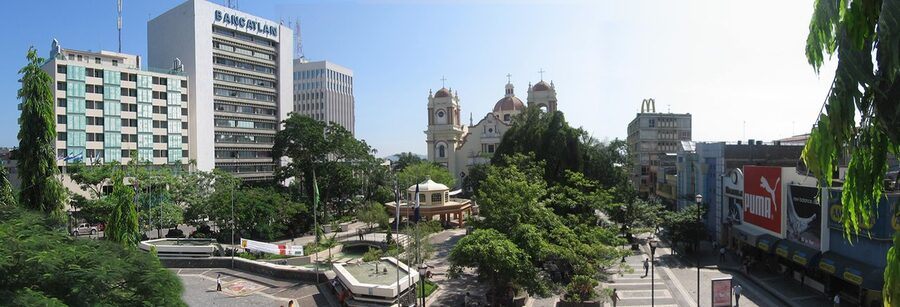
The shorthand answer for most travellers is one or two nights, max. The longer answer takes a bit more unpacking. If you have a morning layover, you can stay at the airport, eat a baleada, and move on. If you have a full day, the centro and Mercado Guamilito are worth a half-day. If you have two days, drive south to Lago de Yojoa, which is genuinely the most surprising thing in the whole region. If you have three days and you wanted that long in San Pedro Sula specifically, I’d push back and ask why you don’t have three days in Copán Ruinas instead.
In This Article
- Is San Pedro Sula safe? The honest version
- Neighbourhood-level guidance
- Getting in and out: the airport
- SAP to Roatán
- SAP to Copán
- SAP to Tegucigalpa
- Airport ground logistics
- Where to stay
- Hilton Princess San Pedro Sula
- Real InterContinental San Pedro Sula
- Hyatt Place San Pedro Sula
- Holiday Inn Express San Pedro Sula
- Hotel Copantl
- Where not to stay
- What to actually do with your time
- Catedral San Pedro Apóstol and Parque Central
- Mercado Guamilito
- Museo de Antropología e Historia
- Lago de Yojoa: the day trip you didn’t know you wanted
- Cusuco National Park
- What to skip
- Eat the local food, not the imported stuff
- Money, weather, language, and the small stuff
- One night, two nights, or skip it entirely
- Onward connections at a glance
Is San Pedro Sula safe? The honest version
You can’t write about San Pedro Sula without addressing the safety question, so let’s do it first and properly.
San Pedro Sula held the unfortunate distinction of being the world’s most homicide-prone city for several years in the early 2010s, peaking around 2011-2014. Those numbers were real and they were terrible. They are also no longer current. Honduras has had one of the steepest drops in violent crime in the Western Hemisphere over the past decade, and SAP has fallen out of the top global homicide rankings entirely. The country’s overall homicide rate dropped from peak levels above 80 per 100,000 to 23.2 per 100,000 in 2025, according to the latest InSight Crime homicide round-up, with the country posting one of the largest declines in the region two years running. That’s still high. It’s also unrecognisable from the headlines you remember.
What this means for a traveller passing through is more useful than the macro number. It means: stick to the right neighbourhoods, take Uber after dark, and don’t take public buses that aren’t intercity coaches. The risk profile is petty crime, opportunistic theft, and the occasional mugging in the wrong area. Random gun violence against foreigners in tourist neighbourhoods is genuinely rare. The current US State Department advisory is at Level 3 (Reconsider Travel) for all of Honduras due to crime, and the UK FCDO advisory says the same thing in different words. Read both before you go. Both lean cautious by design.
Neighbourhood-level guidance
This is where blanket advisories fail people. San Pedro Sula has zones that are genuinely fine and zones that are genuinely not, and they’re not always next to each other.
Fine in daylight, take Uber after dark:
- Centro around Parque Central, Catedral San Pedro Apóstol, and Mercado Guamilito. Busy with locals, plenty of foot traffic, no problem 9am-5pm. Don’t linger past dusk.
- Colonia Trejo, immediately southwest of centro. Mid-range residential, where a lot of nicer hotels and Airbnbs sit, walkable in pockets.
- Yoro neighbourhoods near City Mall and Multiplaza Mall on the south side. Modern, gated, very car-dependent, but the area itself is fine and is where most international chain hotels are clustered.
- Boulevard del Sur, the main commercial avenue out toward the airport. Day or night, fine to drive on. Don’t walk it; nobody walks here.
Avoid, particularly after dark:
- Chamelecón, on the southern edge of the city. Long-standing gang territory and not somewhere you’d ever have reason to go anyway.
- Rivera Hernández, on the eastern edge. Same story. The Honduran government has run repeated state-of-exception security operations here.
- The Gran Central Metropolitana bus terminal area at night. The terminal itself is fine when you’re inside it during daytime hours catching a bus; the surrounding blocks empty out and become rough after dark. If your Hedman Alas bus arrives late, take a hotel taxi, not a street one, and ride straight to wherever you’re sleeping.
- Comayagüela-style “old market” stretches, particularly the railway-adjacent stalls. Globotreks and Nomadic Backpacker both wandered through and reported them as fine in daylight if you’re not flashing valuables, but I wouldn’t make it the centrepiece of an itinerary.
Two practical rules that locals will give you the second you ask. Take Uber, not street taxis. Uber works across SAP, the prices are reasonable (a ride across the city is L150-300, an airport pickup L200-350), and the driver is logged. Stay in a hotel with a guarded entrance. Most decent ones have guards anyway. Pay the extra L500 a night for the chain over the cheap independent and don’t second-guess it.
Getting in and out: the airport
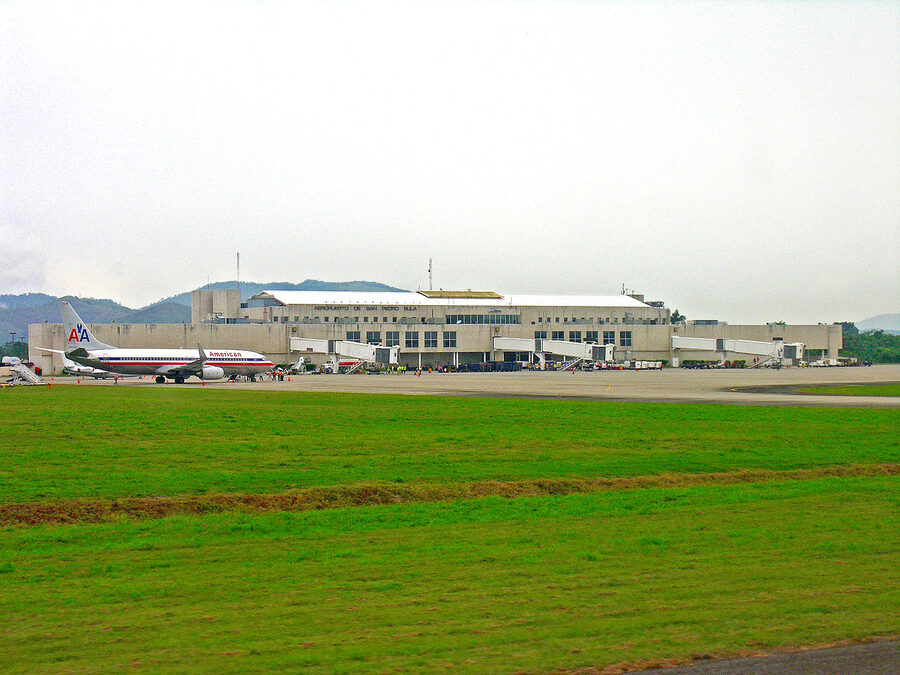
The airport is Aeropuerto Internacional Ramón Villeda Morales (IATA code SAP), 11km east of the city in La Lima. It’s small, modern enough, and the busiest international airport in Honduras. United flies seasonal direct from Houston; American is daily from Miami; Delta runs Atlanta; Spirit operates the cheap routes from Fort Lauderdale, Houston, Orlando, and New Orleans; Avianca and Copa cover the regional hubs (San Salvador, Guatemala City, Panama City). Aerolíneas Sosa and CM Airlines run the puddle-jumpers to Roatán, La Ceiba, and Tegucigalpa.
SAP to Roatán
This is the route most travellers actually need. Two options. Aerolíneas Sosa and CM Airlines run multiple daily flights from SAP to Roatán’s Juan Manuel Gálvez airport (RTB). The flight is forty minutes; the ticket is usually L1,500-2,500 one way if you book a few days out. Schedule yourself a buffer of at least 90 minutes between your incoming international flight and the onward Roatán flight, because both airlines occasionally cancel and reroute and the ground transfer between gates is straightforward but not instant.
Alternative for divers and the tight-budget crowd: drive or shuttle to La Ceiba (about 3 hours east on the CA-13 highway) and take the Galaxy Wave ferry across to Roatán’s Coxen Hole or to Utila. The ferry costs L800-1,100 and runs daily. This makes sense if you’re heading for Utila, where there are no commercial flights and you have to get to La Ceiba anyway.
SAP to Copán
Hedman Alas runs a daily premium coach from a private terminal near the airport directly to Copán Ruinas. It’s the easiest connection in the country: 3 hours, air-conditioned, security-screened, snacks included, around L800-1,100. Buy ahead online if you can. The same operator runs to Tegucigalpa and onward to Antigua, Guatemala. Copán Ruinas itself is the only realistic Mayan site in Honduras and is worth at least one full day plus an overnight; Hedman makes the connection painless.
SAP to Tegucigalpa
If you want the capital, you have two options. Cheapest is the highway: 4 hours by El Rey Express coach from Gran Central Metropolitana terminal, hourly departures, L350-500. Faster is the SAP-TGU short flight (Aerolíneas Sosa, around 50 minutes, L1,500), but the time savings disappear once you factor in airport transfers. The drive south is actually the more interesting option because it goes past Lago de Yojoa, which is reason enough to break the trip in half. Tegus is a city, not a postcard, but two days there is genuinely interesting if you’re already going.
Airport ground logistics
Uber works at SAP. You can request a ride from inside the terminal, walk out the curb to the designated rideshare pickup, and you’re gone for L200-350 to most of the city. Real and InterContinental and Hyatt Place are the closest hotels (under 15 minutes). Centro is 25-30 minutes. Hedman Alas’s private terminal has its own shuttle from the SAP arrivals area. Many hotels offer free or low-cost airport transfers; ask when you book.
Where to stay
San Pedro Sula’s accommodation logic is dictated by the airport. The closer you are to SAP, the simpler the layover. The closer you are to centro, the more you can actually walk somewhere useful. Most travellers default to the airport-side cluster, which is the right call if you’re transiting; centro is better if you have two days and want to see the city itself.
Hilton Princess San Pedro Sula
The chain pick most reliably recommended. Located out by the City Mall and Multiplaza area, around 15-20 minutes from the airport, in one of the safer parts of the modern south side. Pool, decent restaurant, generous breakfast, and the hotel runs its own airport shuttle. Bookable on Booking.com at around L2,800-4,000 a night for a standard room. If you want one frictionless night before flying onward, this is it.
Real InterContinental San Pedro Sula
Slightly larger property, a few minutes further south on Boulevard del Sur, also in the City Mall corridor. 149 rooms, full business amenities, the pool that anyone in SPS heat will appreciate, and a noted breakfast buffet. Booking.com listing. Prices run L3,000-5,500 depending on season. If the Hilton’s full or you collect IHG points, this is the equivalent.
Hyatt Place San Pedro Sula
The newest of the three big chain options, opened a few years back, sitting between the airport and the south-side mall corridor. Smaller rooms than the Hilton or Real but a reliable Hyatt-Place product, with the pool, good wifi, and the cheaper-than-Hilton price point. Bookable here, generally L2,300-3,500 a night. Live and Let’s Fly’s blogger stayed here on a layover and rated it for exactly the use case most travellers will have.
Holiday Inn Express San Pedro Sula
The mid-range chain alternative, also in the City Mall area, frequently the cheapest of the four chains and perfectly fine for a single night. Booking link. Around L1,800-2,500.
Hotel Copantl
An older Honduran-owned property a bit west of the airport corridor. Bigger grounds (it has tennis courts and a casino, which is a sentence you don’t write often), and the setting is leafier than the chain hotels. Listed as Copantl Hotel and Convention Center on Booking. Use it if the chains are full or you want a slightly more local feel for the same money.
Where not to stay
Avoid the cheap independent hotels close to the bus terminal unless you arrive on a late Hedman Alas coach and need somewhere walkable for one night. The savings are L500-800 and you trade them for an area that gets unfriendly after dark. The chain cluster south of the city is dull, but it’s safe and quiet, and that’s what you want when you’re transiting.
What to actually do with your time
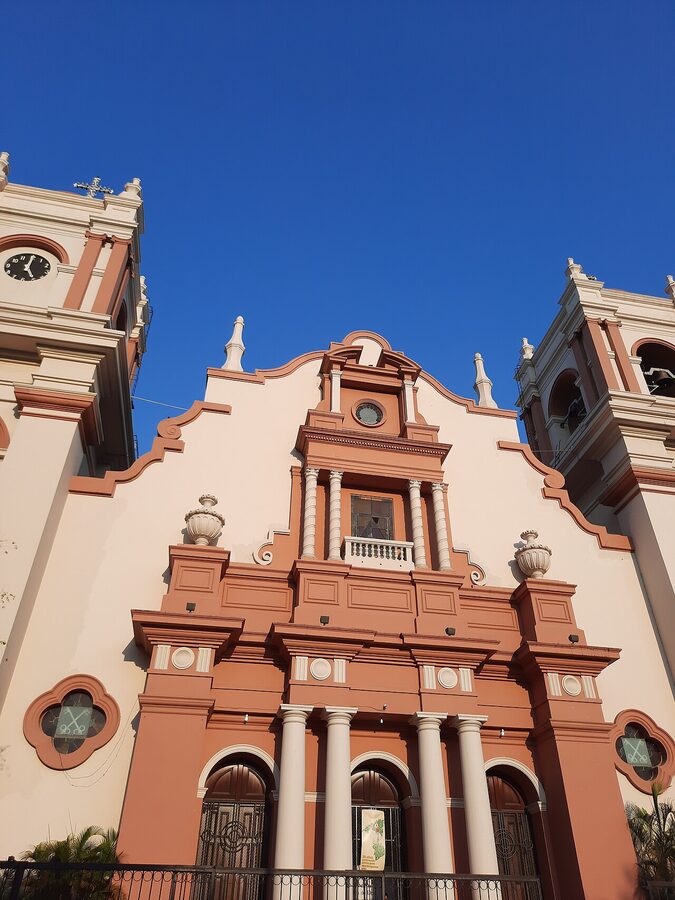
Let’s be honest. Most travellers don’t come to San Pedro Sula for the sights. You’re here because the plane lands here. But you have a half-day or a full day, and there are a handful of stops that are genuinely worth your time. In rough order of how I’d do them.
Catedral San Pedro Apóstol and Parque Central
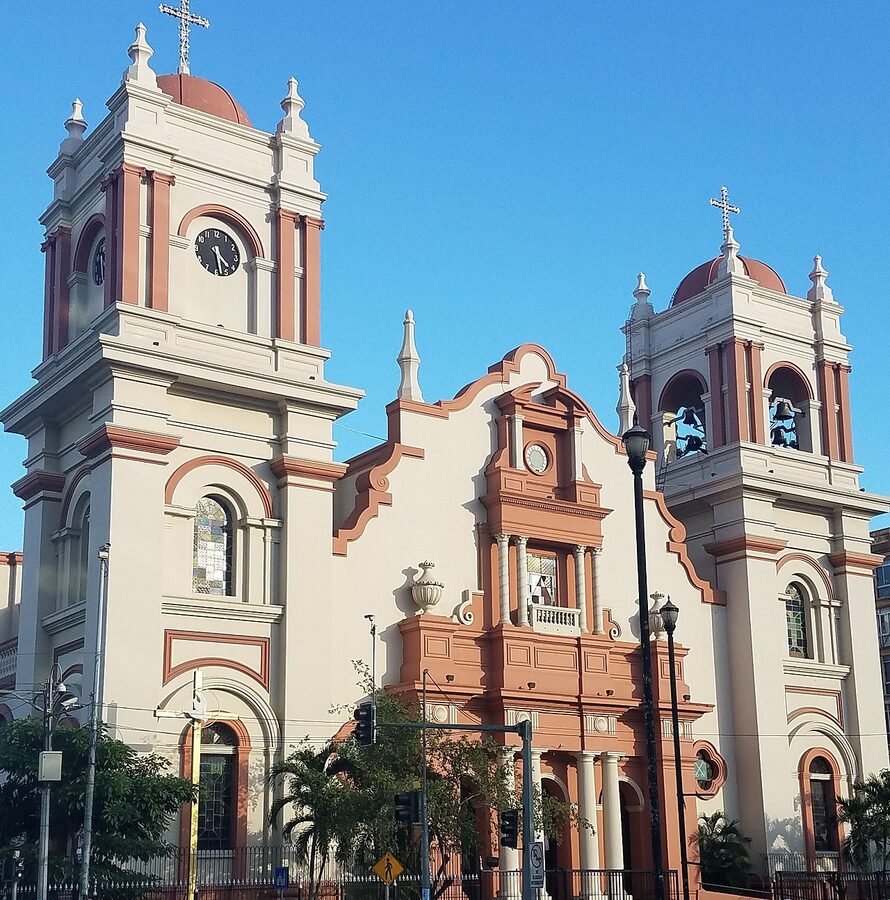
The cathedral on the east side of Parque Central is the symbol of the city, finished in 1949 in a clean colonial-revival style with twin bell towers. It is not a Granada or Antigua showstopper. It is what the centre is built around, and there’s something about a Sunday morning there, with the plaza full of families, vendors selling churros and fried plantain chips, and the general unhurried noise of a Honduran weekend, that’s worth the walk.
The square itself is officially Plaza Central, lined by the cathedral on one side and the Art Deco-ish municipal palace on the other. Sit on a bench for fifteen minutes. Watch the shoeshiners and the lottery sellers. This was Globotreks’s most enjoyed half-hour in the city and I’d back that. It’s free, it’s daytime, it’s the unselfconscious version of San Pedro Sula and the part of the city that’s genuinely friendly.
Mercado Guamilito
Six blocks northwest of the cathedral. Mercado Guamilito is a covered artisan-and-everyday-goods market that’s a cleaner, more navigable alternative to the railway-side stalls Globotreks wrote about. You’ll find Lenca pottery, leather goods (try Danilo’s Pura Piel on 18 Avenida SO if you want a serious leather purchase), Honduran coffee, embroidery from the Garífuna villages on the north coast, and a few cheap food stalls inside the market itself for a midday baleada or pollo con tajadas. Bargain politely. Prices are generally fair to begin with and Guamilito vendors are not the chase-you-down kind.
Museo de Antropología e Historia
The Museo de Antropología e Historia de San Pedro Sula is on 3a y 4 Calle, three blocks from the cathedral, and is the single most overlooked thing in the city. Pre-Columbian Sula Valley pottery (this region was Mayan-adjacent before becoming Lenca and Pipil), colonial-era artefacts, and a long ethnographic section on the founding of San Pedro Sula in 1536 by Pedro de Alvarado. Open Tuesday to Sunday, 10am-4pm, entry around L60. Most of the labels are Spanish-only; if you don’t read Spanish, the visual material still carries it.
Go here, then to Guamilito, then sit in the plaza. That’s a complete half-day in centro and frankly more than most travellers ever attempt.
Lago de Yojoa: the day trip you didn’t know you wanted
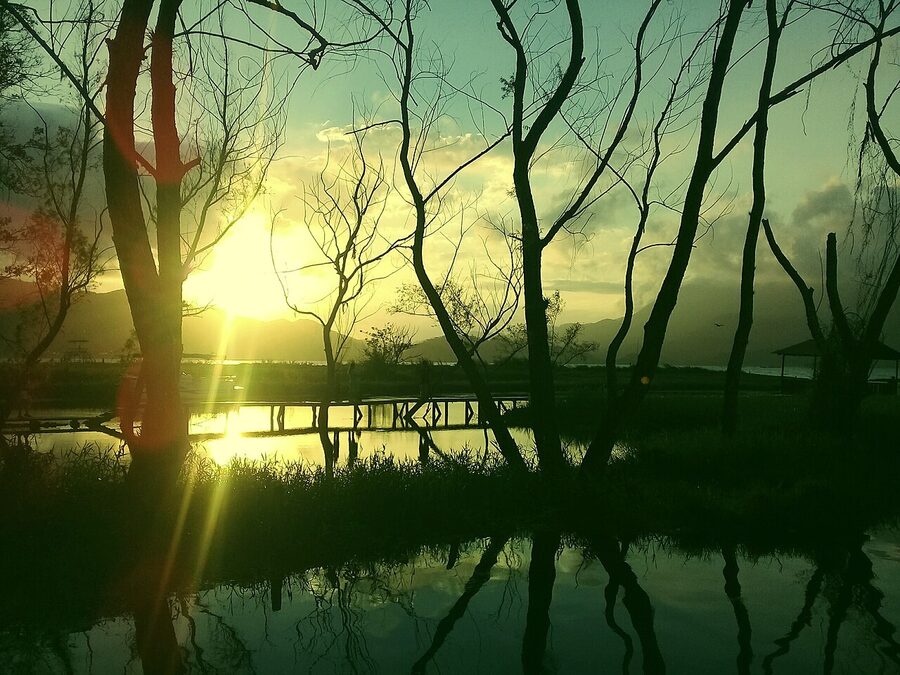
If you have a full day and don’t already have a flight booked out, take it for Lago de Yojoa. This is the part of the article where I get honest about something the city itself can’t quite deliver: Lago de Yojoa is the most rewarding thing within an easy radius of San Pedro Sula, and most travellers never know it’s there.
It’s the country’s largest natural lake, sitting in a volcanic basin between two national parks (Cerro Azul Meámbar to the east and Santa Bárbara to the west), about 90 minutes south on the CA-5 highway toward Tegucigalpa. The water is dark and still in the mornings, the shores are forested, and the lake is one of the great birding sites in Central America (over 400 species recorded). It’s also several hundred metres higher than the Sula Valley floor, which means the climate is mild instead of oppressive.
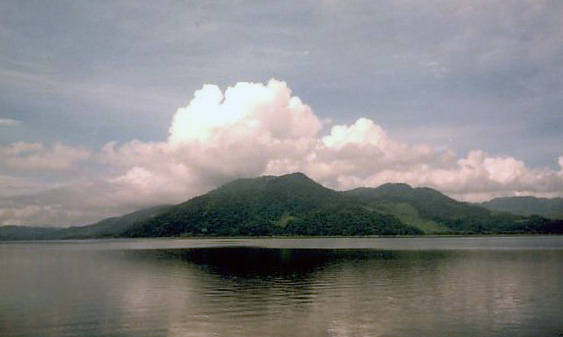
You can do Yojoa as a daytrip from SAP if you’re efficient. Drive yourself, hire a driver for the day (L1,500-2,500 round trip with waiting time, much cheaper than a guided tour), or get the southbound El Rey Express coach and ask to be let out at Pulhapanzak or Peña Blanca. The two reasons to go are the lake itself and the Pulhapanzak waterfall.
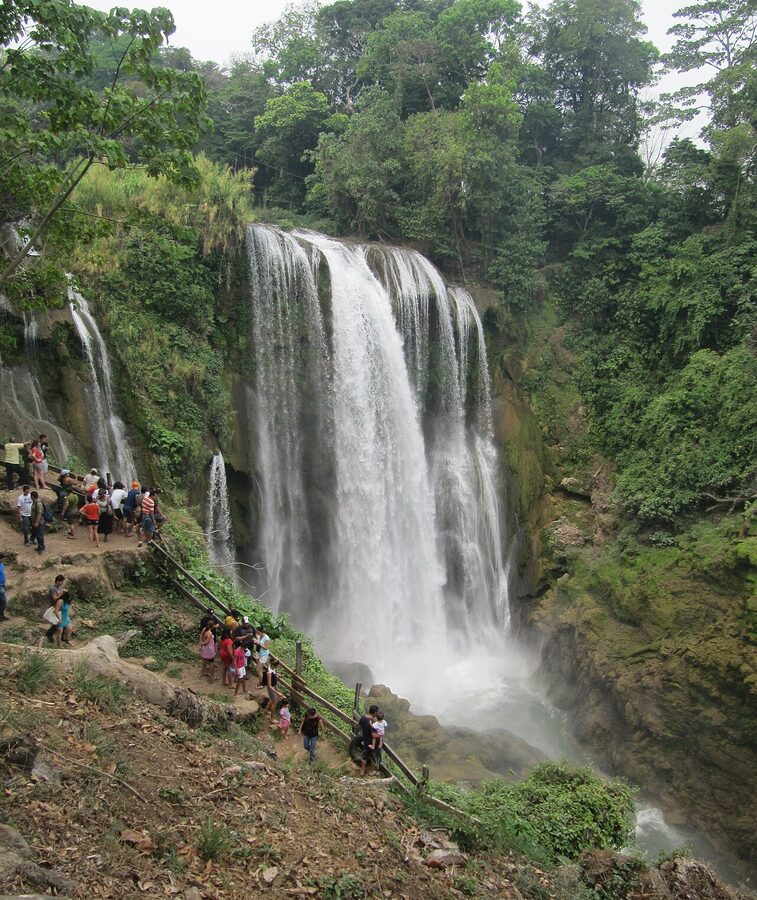
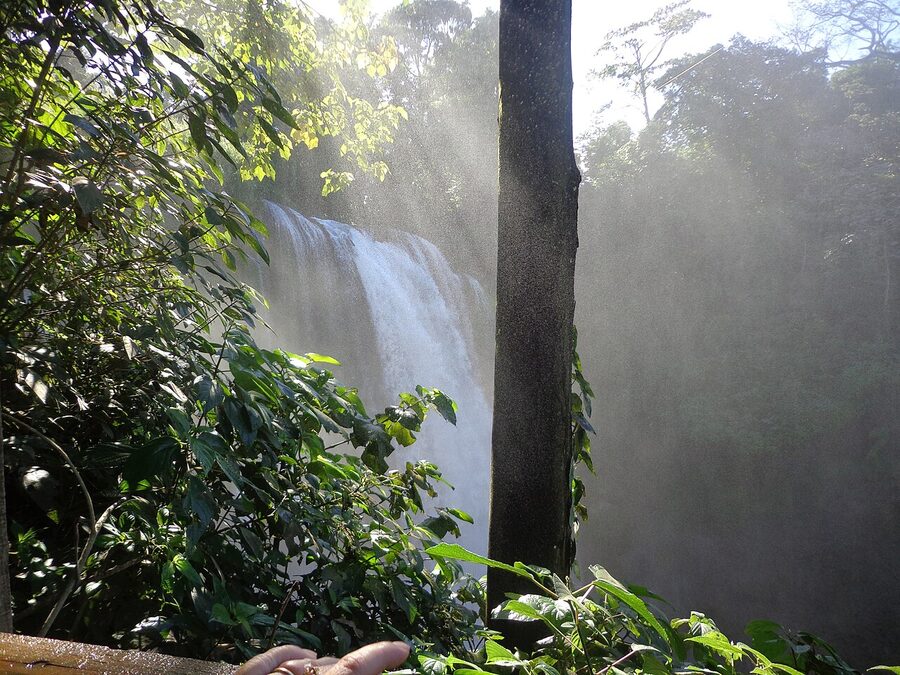
Pulhapanzak is a 43-metre waterfall in a small ecotourism park about 20 minutes from the lake. Entry is around L100. There’s a viewing platform at the top of the falls, a path down to the base, and an optional guided cave tour that takes you behind the curtain of water (L300-400, includes a guide). The cave route is wet, mildly intimidating, and the best thing of its kind I’ve done in Central America. The viewing platform alone is worth the visit if you don’t want to get soaked.
If you have the time and want a slow afternoon at the lake, D&D Brewery at Los Naranjos has been the gringo gathering point on Yojoa for years. Microbrews, decent food, cabins if you want to overnight. It’s a softer landing than anywhere in San Pedro Sula and the easiest way to get a sense of why some travellers end up extending. Casa LuzLago is another good option I’ve seen recommended on Booking, set right on the western shore.
If you only have one extra day in Honduras and you’d otherwise spend it watching cable news at the Hilton, drive south and spend it here. It is the answer to the question “is there anything actually worth doing in San Pedro Sula?”
Cusuco National Park
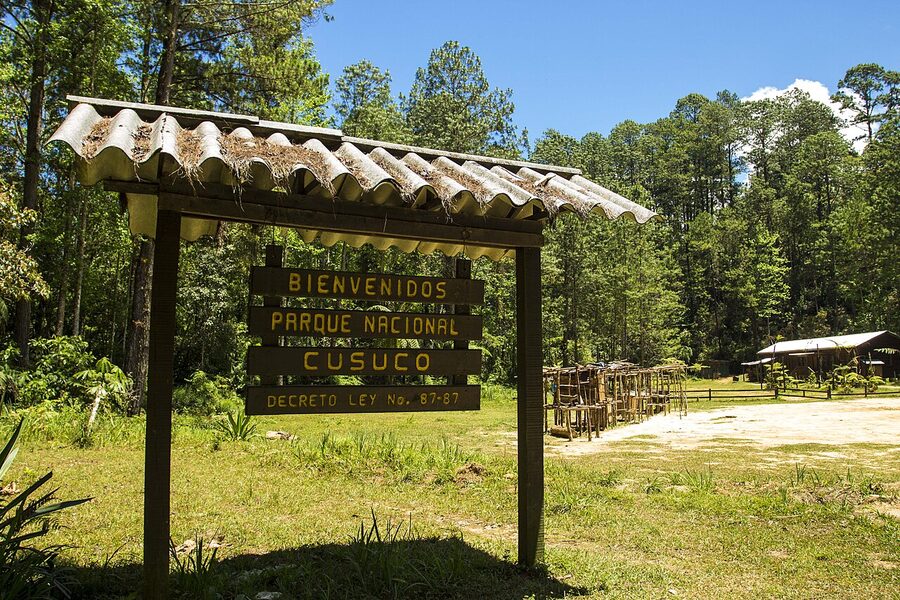
The other day-trip option, for a particular kind of traveller, is Parque Nacional Cusuco, an hour and a half west of the city in the Sierra de Omoa. Cloud forest at 2,000m, quetzals if you’re lucky, and a research station that hosts visiting scientists. Access is rough; you really want a 4×4 and a guide. If you’re a serious birder or hiker, this is a real one. If you’re transiting through SAP and looking for a single afternoon, skip it for Yojoa.
What to skip
Tripmasters mentions Angeli Gardens as a top attraction. It’s fine, it’s pleasant, it’s twenty minutes away in the foothills. It is not a reason to come to San Pedro Sula, and if you have a single afternoon to spend, Mercado Guamilito and the cathedral plaza are more interesting. The various shopping malls (City Mall, Multiplaza Mall, Altara Business Center) are perfectly comfortable air-conditioned hangouts for an hour if you need wifi or a meal between bus connections, but nobody flies to Honduras to visit a mall.
Eat the local food, not the imported stuff
San Pedro Sula has TGI Fridays, Applebee’s, Outback, Pollo Campero. They are exactly what you remember them being. Skip them. The good food in this city is Honduran, cheap, and easy to find.
Baleadas are the Honduran national snack: a thick flour tortilla folded over refried beans, crumbled queso fresco, and crema. The deluxe version (baleada especial) adds scrambled egg, avocado, and chorizo or grilled meat. They run L25-60 from a street stand, double that at a sit-down restaurant. Eat one for breakfast, eat one for lunch, eat one for dinner. The stalls around Mercado Guamilito and Parque Central are reliable. If you find one with a queue of construction workers in front of it at 7am, that’s the right one.
Catrachas are the open-faced cousin: fried tortillas topped with refried beans and grated cheese, served at any comedor (basic family-run lunch counter). They cost almost nothing (L15-30 each) and they’re the breakfast almost every Honduran I know eats most days.
Sopa de mondongo is the rougher prize. Tripe stew, slow-cooked with yuca, plantain, corn, and cilantro, served at weekend almuerzos. If the idea of tripe doesn’t put you off, this is one of the great regional soups of Central America. Go at lunch on Saturday or Sunday. Pamplona, a long-standing local restaurant on Parque Central, serves a respectable bowl. So does Don Udo’s on Boulevard Morazán, which leans a little fancier and has English menus if you need them.
Other things worth knowing: Pollo Chuco is the loose Honduran name for fried chicken with fries and plantains drenched in cream and ketchup, more indulgent than it sounds and exactly the right thing after three Salvavidas beers. Pollo Hondureño and Power Chicken are the home-grown chains and they hold up. Las Carnitas in Zona Viva does grilled meats with the kind of open-air patio you want in Honduran heat. Tre Fratelli handles Italian if you’ve been on the road too long. None of this is the reason to come, but all of it is good and most of it is L150-300 a meal.
Money, weather, language, and the small stuff
Currency. Honduran lempiras (L). Around 25 to 1 USD historically, but check the rate the day you arrive. ATMs are everywhere in the malls and chain hotels; use those, not the standalone street ones. The L500 note is the largest in regular circulation; nobody at a baleada stand will take it without grumbling, so break large bills at a chain restaurant or a supermarket first. Cash is essential. Card is fine at hotels and chain restaurants and useless almost everywhere else.
Weather. The Sula Valley is hot and humid year-round. December to April is the dry season and the most comfortable, with daytime highs around 30°C. May to November brings the rains, often as short heavy afternoon storms; June to October overlaps with hurricane season. The 2020 Eta and Iota storms flooded the Sula Valley badly, and there’s still talk in the city about how recovery went. Hurricanes proper are uncommon but the rainy season can stop traffic for an afternoon.
Language. Spanish is the only language widely spoken. Hotel desks in the chains will speak some English, taxi drivers and Uber drivers usually won’t. A handful of basic phrases (¿Cuánto cuesta? for “how much,” gracias, dónde, the numbers up to ten) goes a long way. Honduran Spanish is friendly and not particularly fast.
SIM cards and data. Claro and Tigo have the best coverage. Pick up a tourist SIM at a counter near the airport arrivals exit; bring your passport. Around L200-300 buys 4-7 days of data, which is what you want before you leave the airport so you can call an Uber and pull up Google Maps to whichever hotel you’ve booked.
Tap water. Don’t drink it. Bottled water is sold at every pulpería (corner shop), every gas station, every supermarket. Use it for brushing teeth too if you’re cautious.
Tipping. 10% is standard at sit-down restaurants if service charge isn’t already on the bill (it usually isn’t). Round up the Uber. Tip a few lempiras to anyone who’s offered to watch your car, which they will.
One night, two nights, or skip it entirely
Here’s the practical decision tree.
If your onward flight is the same day: Stay at the airport. Eat a baleada at the SAP food court. Don’t bother with town. The transit-time savings are real and the city itself isn’t going to convert you in three hours.
If you have one night: Sleep at the Hilton, Real, or Hyatt out by the south-side mall corridor. Order in or eat at the hotel. Fly out the next morning. The other things are interesting but not interesting enough to justify the centro detour with a flight to catch.
If you have one full day: Use the morning for centro: Catedral San Pedro Apóstol, Mercado Guamilito, the Museo de Antropología. Eat baleadas. Be back at your hotel by mid-afternoon. Fly out the next morning.
If you have two days: Spend day one in centro, day two driving south to Lago de Yojoa and Pulhapanzak. This is the best version of San Pedro Sula and the one most guides won’t write because the city itself isn’t quite enough.
If you have three or more days: Take a hard look at why you’re not in Copán Ruinas, Roatán, or Utila instead. Copán is 3 hours by Hedman Alas; Roatán is a 40-minute flight away; Utila is 3 hours plus a ferry. SAP is your gateway to all of them and you don’t have to spend the days here just because you’re flying through.
Onward connections at a glance
The reason most people are in SPS in the first place. Quick reference for getting out.
- Roatán: Aerolíneas Sosa or CM Airlines from SAP, daily, 40 min, L1,500-2,500. Full Roatán guide.
- Utila: Drive 3 hours east to La Ceiba, then Galaxy Wave ferry, daily, L800-1,100 total. No commercial flights direct. Utila guide.
- Copán Ruinas: Hedman Alas premium coach from SAP, daily, 3 hours, around L800-1,100. Connects onward to Antigua, Guatemala. Copán Ruinas guide.
- Tegucigalpa: El Rey Express coach from Gran Central terminal, hourly, 4 hours, L350-500. Or short flight, 50 min, L1,500. Tegus guide.
- La Ceiba: Catisa-Tupsa or Diana Express coaches from Gran Central, hourly, 3 hours, L200-300. Onward to Utila and Roatán by ferry, or Pico Bonito for the rainforest.
- Antigua, Guatemala: Hedman Alas direct coach via the El Florido border, around 8 hours including the crossing.
- San Salvador: Tica Bus or Pullmantur, around 7 hours including the El Amatillo border crossing.
- Managua, Nicaragua: Tica Bus, overnight, around 12 hours via Las Manos border.
The thing to remember about San Pedro Sula is that it doesn’t owe you a postcard. It owes you a working airport, a few decent hotels, baleadas at a stall outside the cathedral, and a road south that lands at one of the best lakes in Central America. On those terms, it delivers. Treat it like the gateway it is, not the destination it isn’t, and you’ll get on fine.
_(28822288850).jpg)


