Most travel blogs tell you to skip Tegucigalpa. Fly into San Pedro Sula, head straight to Copán or the Bay Islands, give the capital a hard pass. That advice isn’t wrong, exactly. Tegus is rough around the edges and there’s no postcard-cute colonial centre. But it’s also lazy, and if you’re already passing through, two days here is genuinely interesting in a way the islands aren’t.
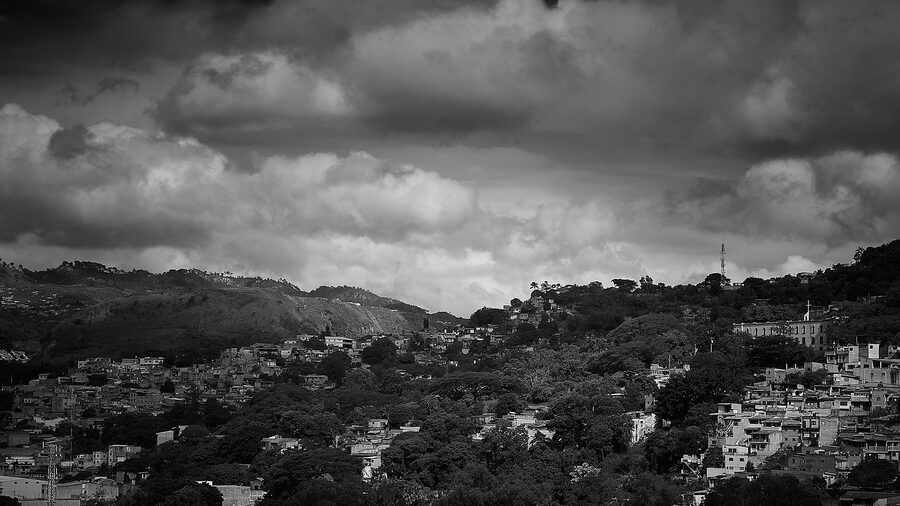
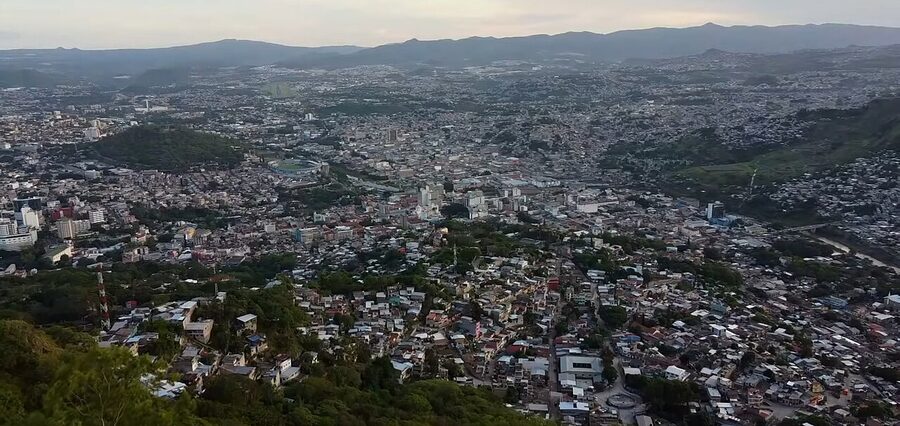
You don’t come for beauty. You come for the way a 400-year-old silver-mining town sprawls up the sides of a mountain valley with church spires and concrete towers stacked at every angle. You come for the hilltop Cristo statue that’s bigger than the one in Rio. You come for baleadas at a nameless stall outside the cathedral that locals queue at on Sunday mornings. And you come because the rest of Honduras starts here, whether you like it or not.
What follows is the practical version. Where to stay (Colonia Palmira, Las Lomas, La Leona; not Centro after dark, never Comayagüela). What to actually do (Basílica de Suyapa, El Picacho for the city view, the cathedral and Plaza Morazán in daylight, MIN museum, a Sunday in Valle de Ángeles). How to move around (Uber and InDriver, not street taxis). And the safety conversation, plainly, because pretending it doesn’t exist would be insulting.
The capital sits at around 1,000m, which means a mild climate that surprises people who think of Honduras as universally hot. Daytime highs run 25-28°C in the dry season (November to April), a few degrees warmer and very rainy from May to October. You don’t need air conditioning. You do need a light jacket if you’re going up to El Picacho at night.
One thing to know up front, since it informs everything: Honduras is part of the CA-4, which means Honduras, Guatemala, El Salvador, and Nicaragua share a single 90-day visa stamp on entry. If you’ve already done time in Guatemala or El Salvador, the clock is already running. Belize, Costa Rica, and Panama are separate. The full Honduras country hub covers the entry/exit logistics in more depth.
In This Article
- Is Tegucigalpa safe? The real version
- Where to stay
- Colonia Palmira and Boulevard Morazán
- Las Lomas / Lomas del Mayab
- La Leona
- Centro Histórico
- Things to do in two days
- Plaza Morazán and the cathedral (morning)
- Museo para la Identidad Nacional (MIN)
- Iglesia La Merced and the old quarter walk
- El Picacho, the Cristo, and the city view
- Basílica de Suyapa
- Museo del Hombre Hondureño and the Old Presidential Palace
- Eat well in Tegus
- Day trips: Valle de Ángeles, Santa Lucía, La Tigra
- Valle de Ángeles
- Santa Lucía
- Parque Nacional La Tigra
- Getting in, around, and out
- Flights and the airport
- Bus connections
- Currency, ATMs, and cards
- Local transport
- When to visit
- Should you bother?
Is Tegucigalpa safe? The real version
You can’t talk about Tegucigalpa without talking about safety, so let’s get it out of the way. The city has a real reputation. Honduras went through some of the worst homicide rates in the world in the early 2010s, and the headlines stuck even after the numbers came down significantly. The current picture is more nuanced.
The version no one writes down is this: street crime against tourists is a real risk, but it’s manageable if you behave like an adult. Most foreign visitors who get into trouble in Tegus do so because they walked somewhere they shouldn’t have, took a cab off the street, or showed off cash. The locals you’ll meet at the airport, your hotel desk, or in any conversation with someone who lives here will give you the same handful of rules.
The rules:
- Use Uber or InDriver, not street taxis. This is the single most important one. Both apps work in Tegus and the prices are fine (a ride across the city is L150-300, which is cheaper than a coffee at the Marriott). The US Embassy explicitly recommends rideshare over street taxis. Don’t argue with that.
- Centro is fine in daylight, not at night. The historic centre around Plaza Morazán is busy with locals during the day and you’ll be one of dozens of foreigners wandering around. After about 5pm, it empties out and changes character. Be back in your hotel area or Boulevard Morazán by then.
- Don’t go into Comayagüela at all. Comayagüela is the twin city across the Río Choluteca. The market area (Mercado San Isidro) is technically interesting if you’re with someone local, but Rough Guides and Wikivoyage both say to spend no more time there than it takes to change buses, and that’s still the right advice.
- Stay in Colonia Palmira, Las Lomas, La Leona, or near Boulevard Morazán. These neighbourhoods are where the embassies, decent hotels, and most travellers base themselves. The other side of that coin: don’t book the cheap hostel in a barrio you can’t pronounce just because it saves you L300 a night.
- Don’t flash a phone, jewellery, or a fat wallet. Carry a small day-wallet with L500 and a copy of your passport. Leave the rest in your hotel safe.
For current advice, the UK FCDO Honduras advisory and the US State Department travel advisory are useful baselines. Both lean cautious. Read them, then talk to people who actually live in Tegus before you write the city off.
Where to stay
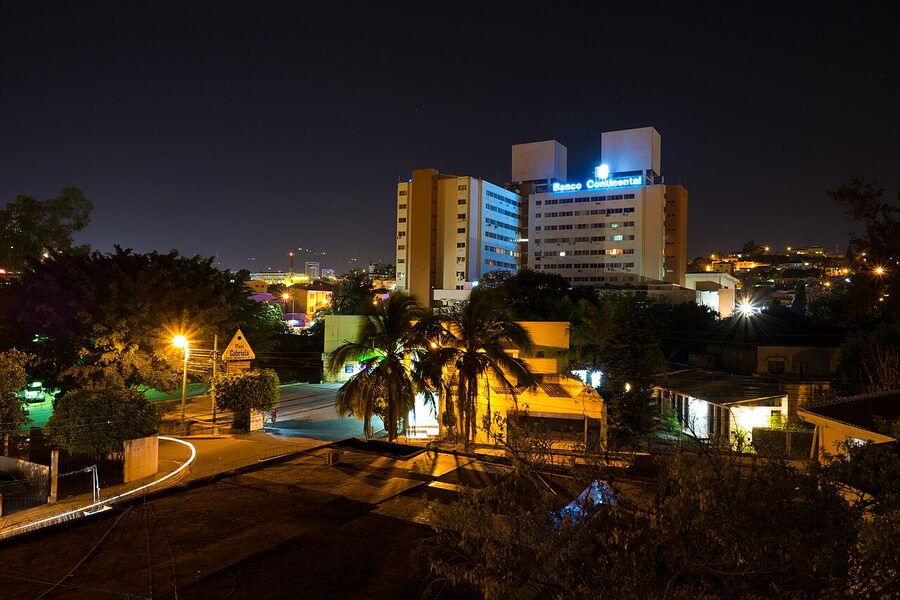
There are basically four neighbourhoods worth considering, and one rule of thumb: pay for safety. Tegus is not the city to chase the rock-bottom hostel. Pay an extra L500-800 a night to be in a neighbourhood with a guard at the gate and a 24-hour reception, and you’ll never regret it.
Colonia Palmira and Boulevard Morazán
This is the zone with the most hotels, embassies, decent restaurants, and bars. Walking on the main streets in the early evening is fine; you’ll see other foreigners and a security presence. The Marriott, Real InterContinental, and the older Hotel Honduras Maya are all here or right next to it. Mid-range options run L1,500-3,000 a night. Good pick if you have one or two nights, want a buffer of comfort, and don’t want to think too hard.
Las Lomas / Lomas del Mayab
Quieter, residential, slightly upscale. Good for longer stays of a few nights or if you’re working remotely. Less to walk to but you’re a 10-minute Uber from anywhere. Hotel Plaza Juan Carlos and several apartment-hotels sit here.
La Leona
The hill neighbourhood just above the historic centre. This is where the small backpacker scene lives. Café Paradiso, mentioned in basically every guide ever written about Tegus, is here. Hostels are cheap (L200-400 a dorm bed) and the views out over the city are some of the best you’ll get without leaving downtown. La Leona is fine in daylight; after dark, take an Uber to and from anywhere outside the immediate block.
Centro Histórico
I’d skip Centro for sleeping. There are a couple of older hotels around Plaza Morazán, and the Plaza Juan Carlos people will tell you Centro is fine. But the centre genuinely empties out after 5pm, and unless you actively enjoy walking past closed shutters and barred windows on a quiet street at 8pm to find dinner, Palmira is a better base. Use Centro as a daytime destination, not a place to sleep.
For booking, Booking.com Tegucigalpa has the cleanest inventory; Agoda’s coverage is thinner in Honduras than in Asia but has the chains.
Things to do in two days
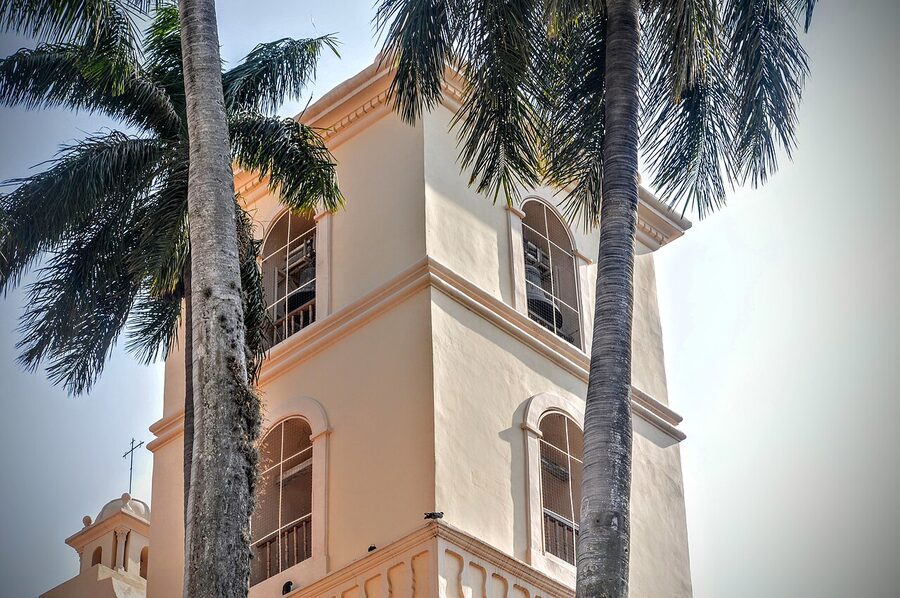
Two days is the right amount. One day is too rushed if you want to see anything past the cathedral. Three is too many unless you’re using the city as a base for La Tigra and Valle de Ángeles. Here’s what to actually do, in roughly the order I’d do it.
Plaza Morazán and the cathedral (morning)
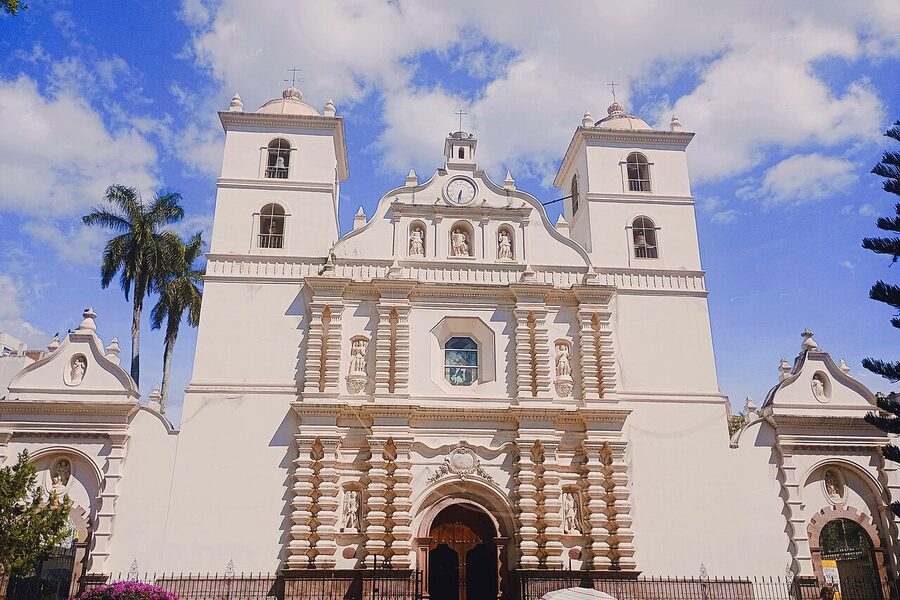
Start at Plaza Morazán, named for Francisco Morazán, the soldier-statesman who led the short-lived Central American Republic in the 1830s and is still the regional secular hero. His statue is in the middle. The plaza is shaded with trees, ringed with shoe-shiners and vendors, and chaotic in a way that’s completely fine in daylight. Sit on a bench for ten minutes and watch the rhythm.
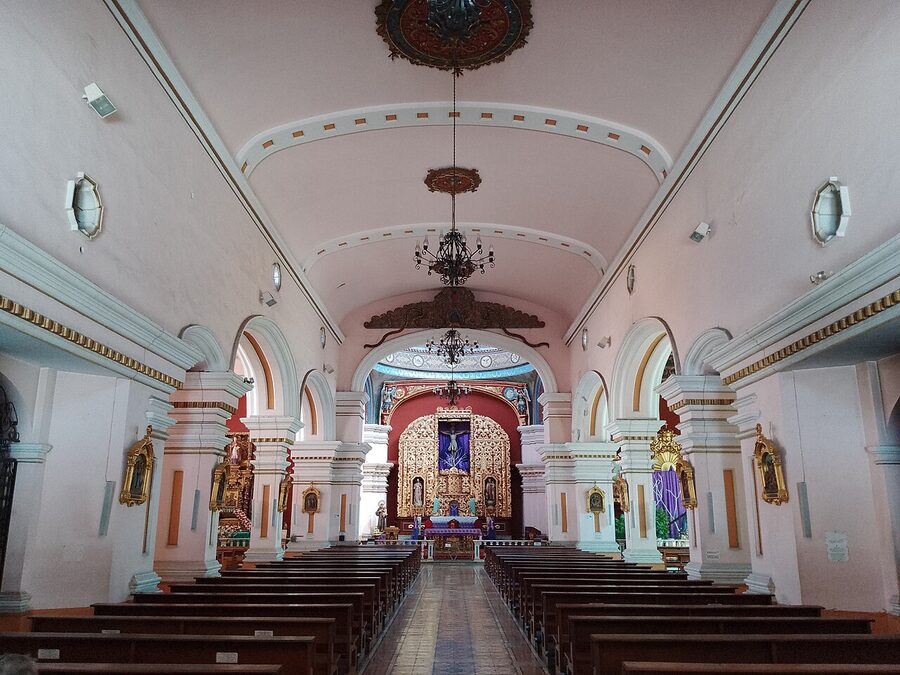
The Catedral de San Miguel Arcángel, on the eastern edge, is the city’s main church, finished in 1782. The exterior is the standard whitewashed colonial baroque; the interior is more of a surprise.
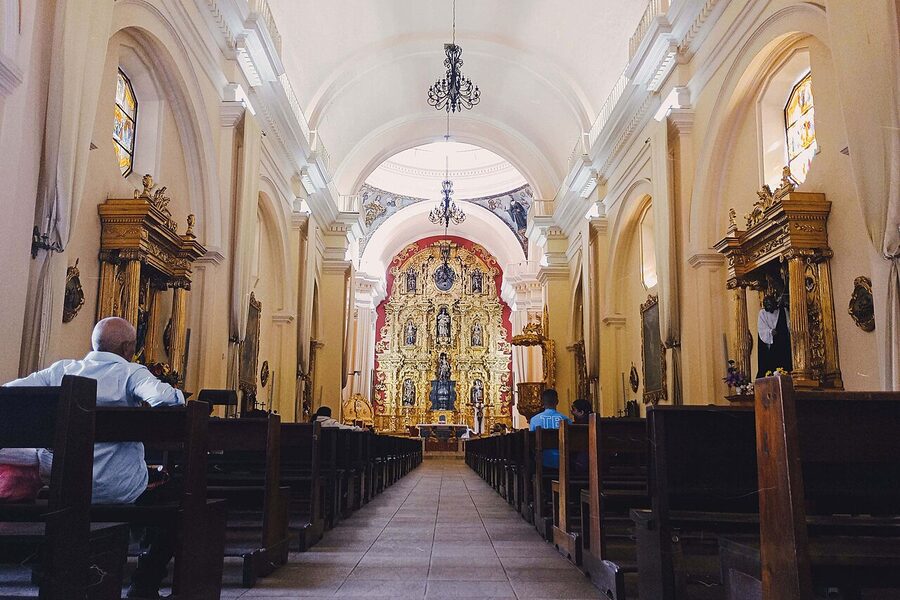
From the cathedral, walk west along the pedestrian street (called Calle Peatonal or Paseo Liquidámbar depending on the sign), past the cafés and shoe shops, until you hit Iglesia Los Dolores, a smaller white-domed church from 1732 with an extraordinary gold altar inside. The plaza in front is full of artisan stalls and food vendors. This is also where you find Mercado de los Dolores, which is the best people-watching market in the centre and where the baleada stand Baleadas Lourdes (mentioned in every recent guide) is a respected cheap-eats stop.
Museo para la Identidad Nacional (MIN)
A few blocks west of the cathedral, on the Calle Peatonal, the Museo para la Identidad Nacional is the museum to spend an hour or two in if you want context for the rest of the country. It’s housed in the old Palacio de los Ministerios building and walks you chronologically from Maya Honduras through the colonial period, independence, the banana republic era, and into the present. The highlight, weirdly, is a 3D virtual tour of Copán projected into a darkened room, which is genuinely useful if you’re heading there next. Open Tuesday to Sunday roughly 9am-5pm. Entry is around L60 for foreigners.
Across the street, the Galería Nacional de Arte is housed in a 17th-century convent and has decent pre-Columbian and colonial collections plus 20th-century Honduran painting. Not essential, but a good rainy-afternoon backup.
Iglesia La Merced and the old quarter walk
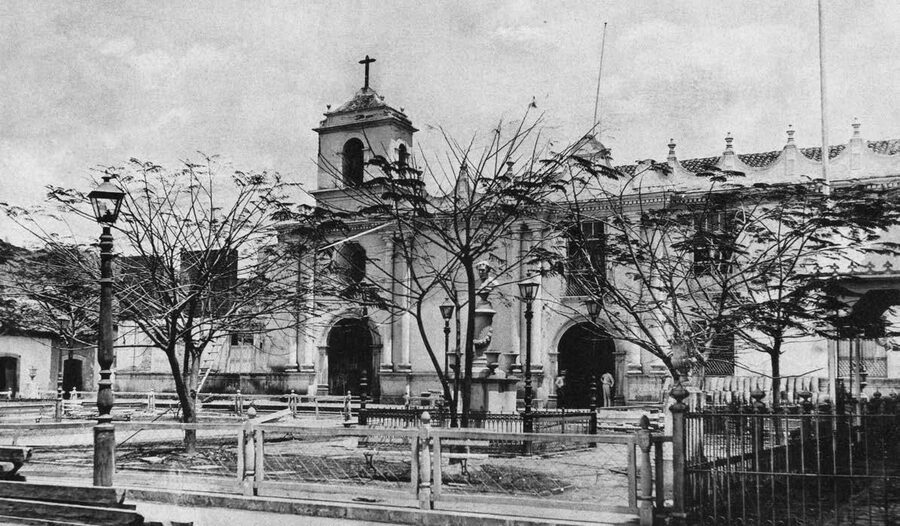
South of the plaza, Iglesia La Merced is one of the oldest religious buildings in the city, originally a 17th-century convent that later housed Honduras’s first university. From here, if you have the energy, the walk back via Calle Peatonal lands you at the Teatro Nacional Manuel Bonilla, modelled on the Plaza Athénée in Paris, restored in 2007. If the door is open, somebody at the box office will give you a quick tour for the asking. Around the corner is Parque Herrera, a small park, and the cool old Correo Nacional post office building.
That’s the historical core, knocked off in a half-day. Get an Uber out to the next stop before 4pm.
El Picacho, the Cristo, and the city view
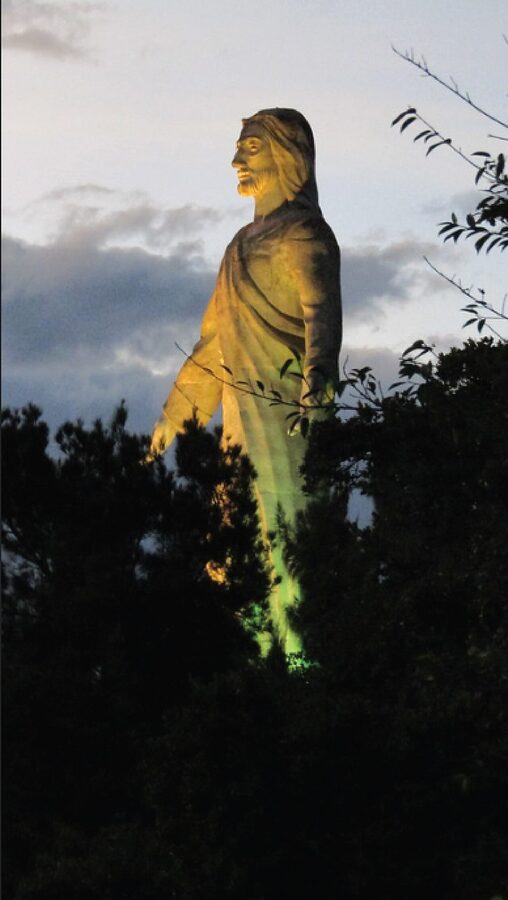
About 6km north of the centre, Parque Naciones Unidas El Picacho sits on top of Cerro El Picacho at 1,500m. The 30m white statue of Cristo del Picacho is the headline (sculpted by Mario Zamora, finished in 1998), but the actual reason to come is the panoramic view of the city below. On a clear afternoon you can trace the entire valley from up here.
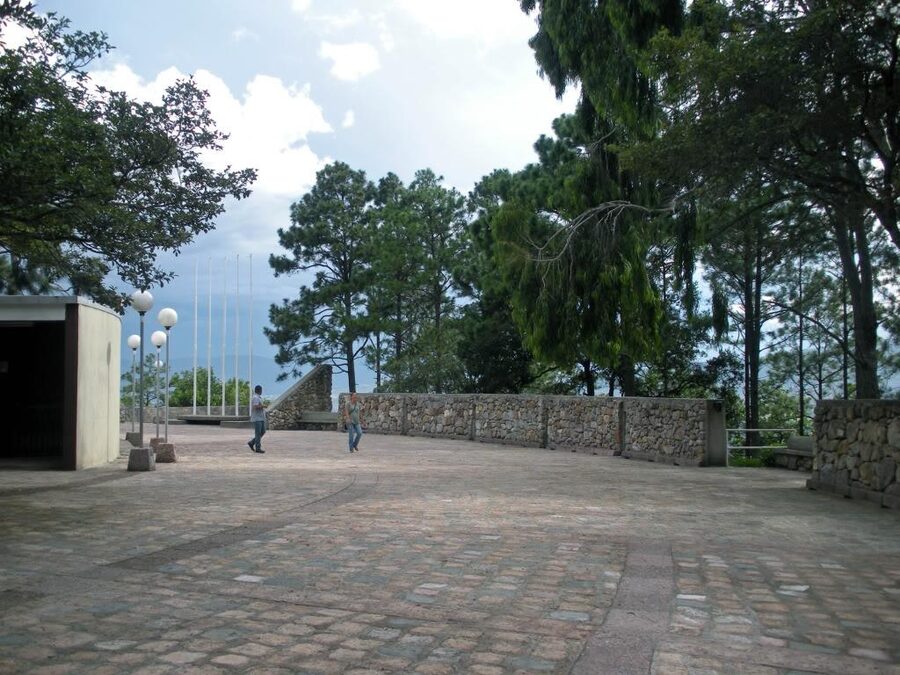
Practical: take an Uber up (around L150-200 from Boulevard Morazán). The drive is winding and uphill; don’t try to walk it from the bottom unless you’ve got a local with you. The park has a small zoo, walking trails, food kiosks, and a kitsch little replica Eiffel Tower at the cliff edge. Open daily, roughly 8am-9pm. Entrance is L60-80 with extra for the zoo.
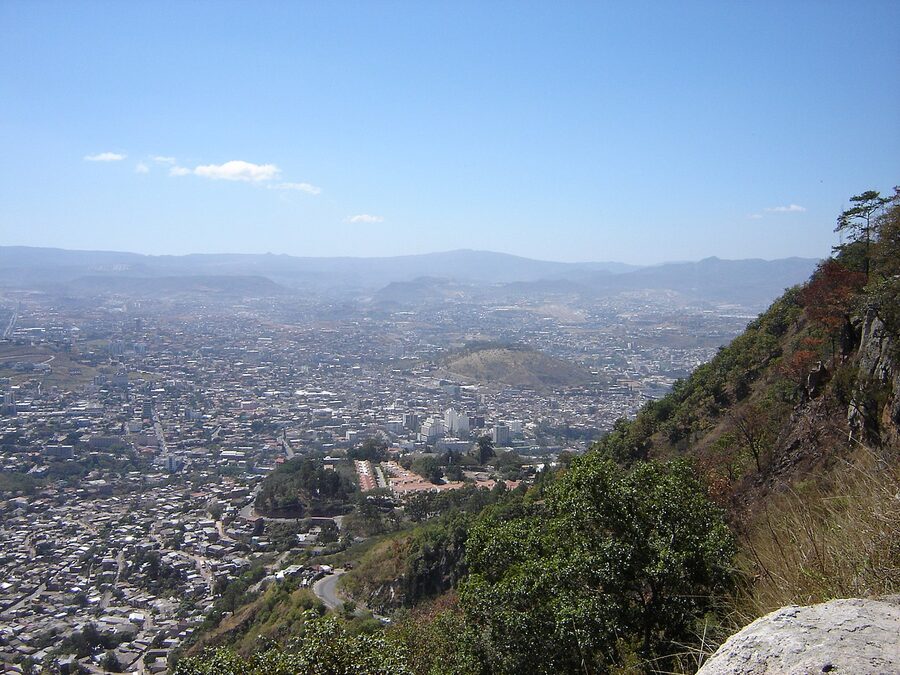
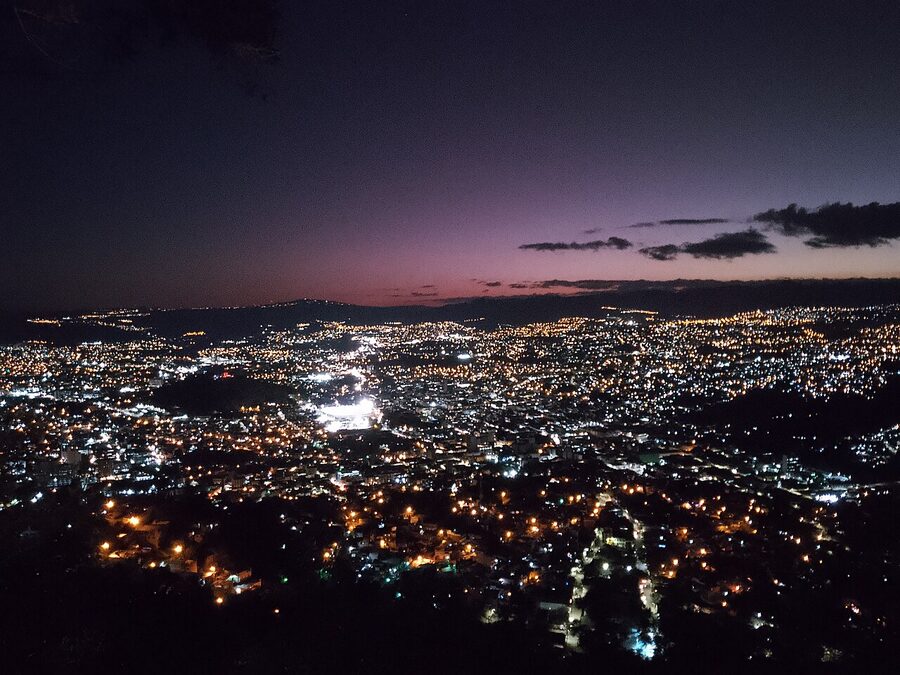
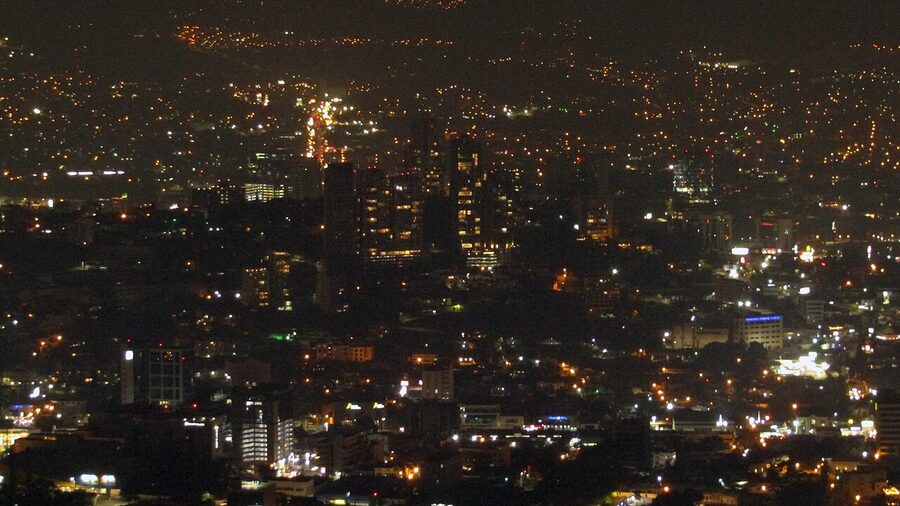
Locals come up here for sunset, then stay for the city lights. The park is genuinely safe at night (it’s gated, has security, and is a popular date-night spot). Reddit threads about Tegus mention this consistently. Pomodoro Pizza Café is a popular casual stop on the way back down with outdoor tables and a fire pit, recommended by locals on the city subreddit.
Basílica de Suyapa
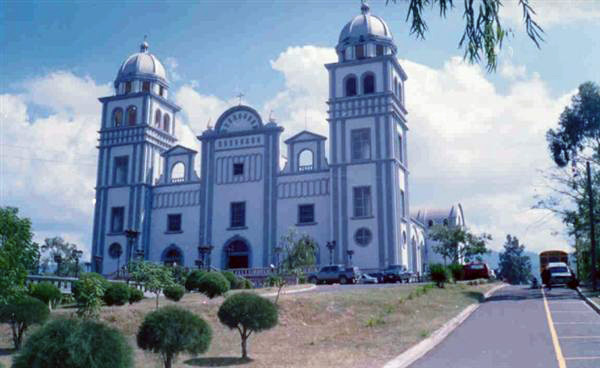
About 7km southeast of the centre, the Basílica de Nuestra Señora de Suyapa is the most important religious site in Honduras. It was built in the 1950s in a sort of austere modern-Gothic style, with two soaring white towers and big stained-glass windows. By papal decree in 1982 the Virgen de Suyapa was named patron saint of all of Central America, which makes this the regional pilgrimage destination, not just a national one.
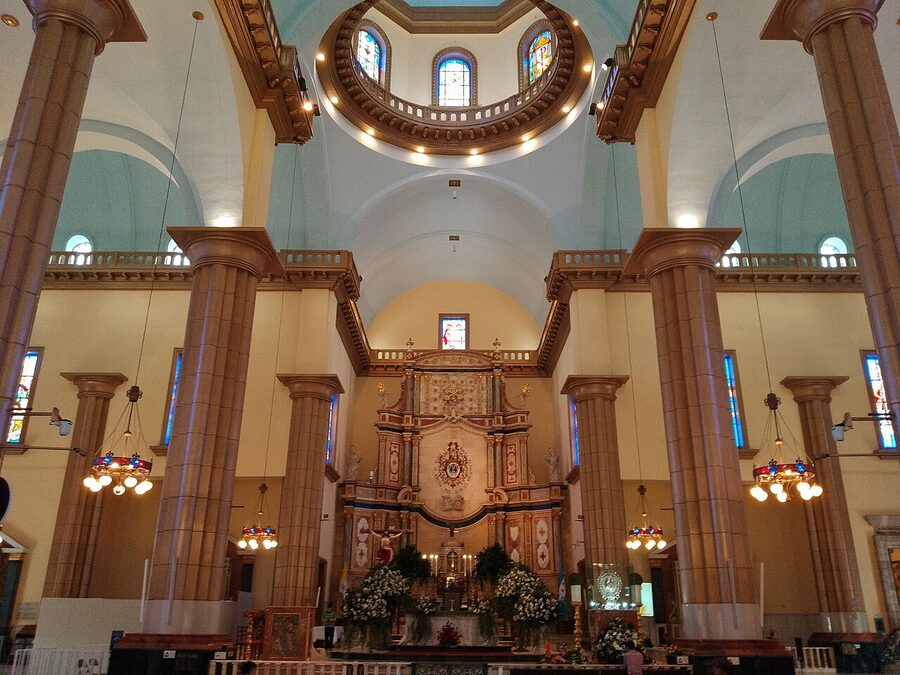
The miraculous statue at the altar is just 6cm tall. The story goes that two campesinos found it in a field in 1747, tried to sleep on it, then realised they couldn’t move it without it returning. It now lives in a jewelled case in the basilica. The neighbouring smaller chapel, the original 18th-century Iglesia de Suyapa, is where many locals say the saint actually resides.
Pilgrim festival is 3 February (lots of people, the streets become impassable). Outside that, it’s quiet. Half an hour is enough.
Museo del Hombre Hondureño and the Old Presidential Palace
Two smaller museums worth a stop if you’re a museum person. The Museo Histórico de la República in the old Presidential Palace (Antigua Casa Presidencial) is on Avenida Cervantes near the river. It’s a beautiful neoclassical building from 1919 and the displays cover Honduran political history (some patchy English signage). Reddit commenters consistently mention the old presidential palace as a quiet sleeper of a sight in Tegus, which fits.
Eat well in Tegus
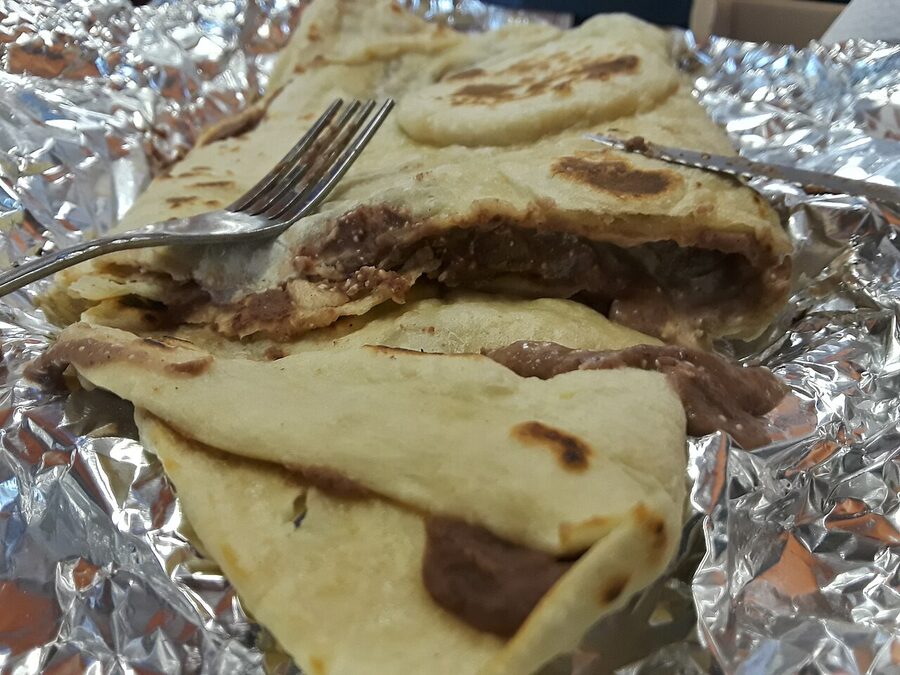
You’re going to eat baleadas in Honduras whether you plan to or not, so embrace it. They’re thick flour tortillas folded over refried beans, cheese (queso seco), and crema. The basic version (baleada sencilla) is breakfast; the loaded ones (con huevo, con aguacate, con carne) are a full meal. Expect to pay L40-90 at a stand, L100-180 at a sit-down place.
Specific places I’d send a friend, all verified from current local sources:
- Baleadas Lourdes, in Mercado de los Dolores, central Tegus. The sit-down baleada institution. Cheap, fast, busy at lunch.
- Baleadas Birichiche, near the Estadio Nacional Chelato Uclés. Lonely Planet’s pick. Does the loaded versions properly.
- El Patio, on Boulevard Morazán. Forty-plus years old, hangar-sized dining hall, draws every catracho family in the city on a Sunday. The full plato típico (rice, beans, fried plantain, grilled meat, crema, avocado, tortillas) is the move. Around L350-450 with a drink.
- El Rincón de las Sopas, near Centro Comercial Los Castaños in Colonia Palmira. Soup specialist. Sopa de mondongo (tripe) is the local thing. Vegetarians have options.
- La Crepería Tepeyac (sometimes just “La Crepería”), Boulevard Morazán. Crepes, cheesecake, Thai curries, Philly cheesesteaks. Sounds confused, isn’t. Reddit locals call it the best café in the city.
- Café Paradiso, La Leona / Barrio La Plazuela area. Café and cultural space, frequent live music and film screenings. The bohemian crowd. Good coffee.
- NiFu NiFa, near Boulevard Morazán. Argentinian parrillada (grilled-meat platters), wine, salad bar. Good for a sit-down dinner.
- La Cumbre, in El Hatillo on the way up to El Picacho. The fancy occasion restaurant; sunset views over the city. Around L500-700 a head with wine.
Tipping is 10%; some places already include it as servicio, check the bill. American chains (McDonald’s, Wendy’s, Subway, Pizza Hut) are everywhere, especially in malls. They’re not a sin if you’ve been on the road and need familiar food.
Day trips: Valle de Ángeles, Santa Lucía, La Tigra
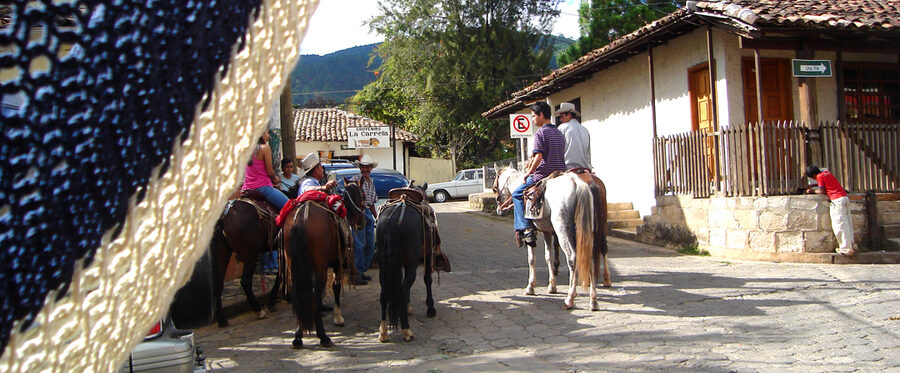
If you have a third day, this is where it goes. Valle de Ángeles is the most popular day trip from Tegus and the easiest to do without speaking much Spanish. La Tigra needs a slightly earlier start. Santa Lucía is on the same road and pairs well with either.
Valle de Ángeles
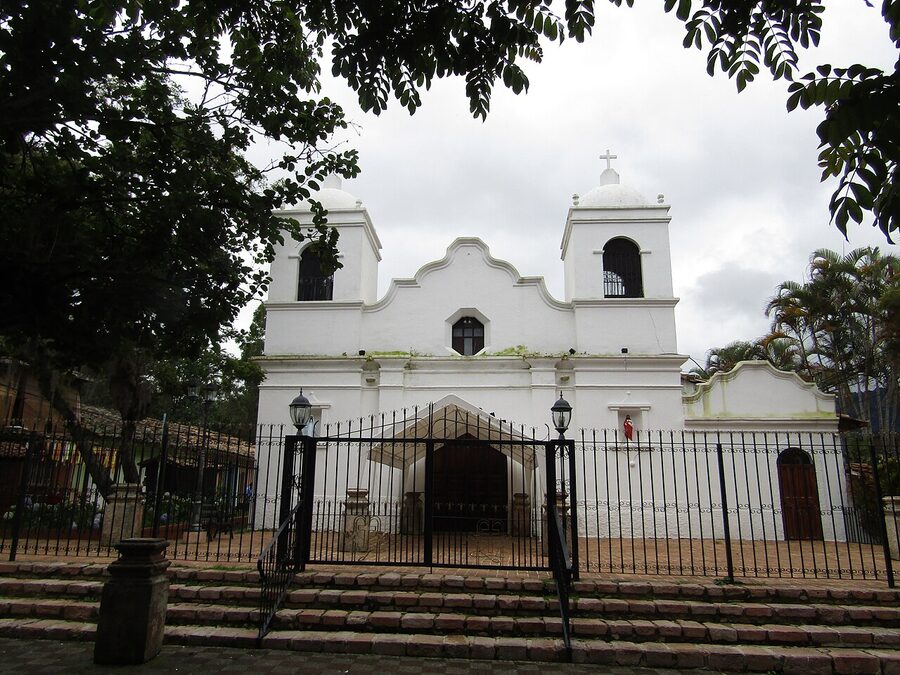
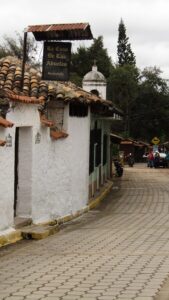
Twenty-two kilometres north of Tegus, on a winding mountain road that climbs through pine forest, Valle de Ángeles is a 16th-century mining town reborn as a craft and food village. Cobbled streets, restored adobe houses, a 200-year-old whitewashed church (Parroquia de San Francisco de Asís), and an explicit weekend market that the capitalanos drive up for.
Weekday vs weekend: I’d come on a Sunday, accepting the traffic, because the town is alive on Sundays in a way it isn’t Tuesday morning. Centro de Artesanías (the official artisan centre) is the most reliable spot for souvenirs (real woodwork, leather, painted gourds), but the smaller workshops down the side streets are where the better stuff is. Try a baleada at any street stall, then sit down for pupusas at one of the corner kitchens.
Getting there: direct buses run from the Texaco Guanacaste stop in Tegus (around L25 one way, 50-60 minutes). Uber is L350-450 and worth it if there’s two of you. The most-popular day trip from Tegus easily.
Santa Lucía
Fifteen kilometres back toward Tegus from Valle de Ángeles, Santa Lucía is a former mining town set on a steep slope with a small lagoon at the top and a cascade of tiny cobbled alleys descending to the 18th-century church Cristo Señor de las Mercedes. Quieter than Valle de Ángeles and arguably prettier. Pair the two in a single day. There’s a Spanish churros place opposite the lagoon that locals on Reddit specifically rate.
Parque Nacional La Tigra
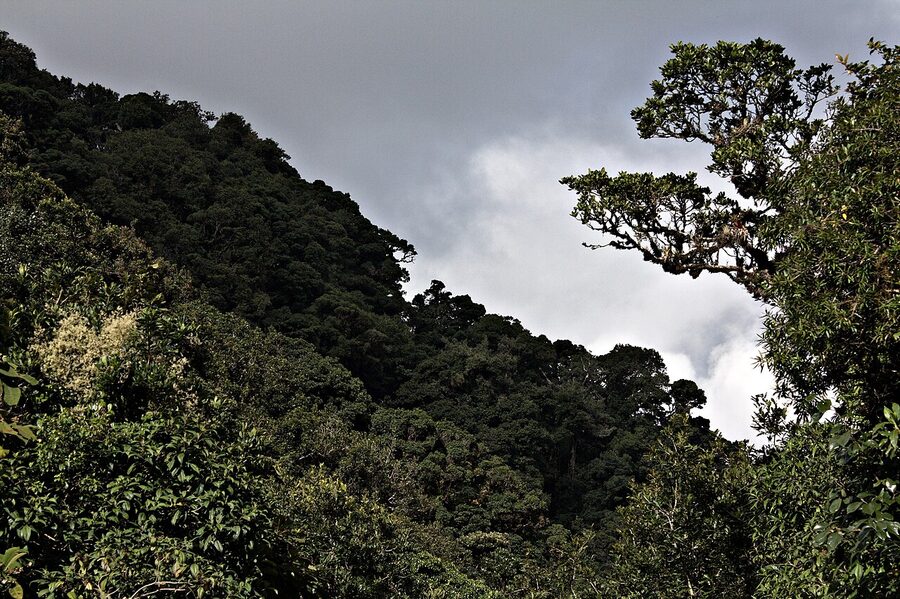
For nature, Parque Nacional La Tigra is 22km from Tegus and Honduras’s first national park, declared in 1980. Cloud forest at 2,000m, with eight marked trails from 30-minute walks to a day hike. The bird life is the main draw (350+ species recorded; resplendent quetzals are a real possibility in the dry season). White-faced monkeys and ocelots are around but mostly in the parts of the park visitors can’t reach.
Two entrances: Jutiapa (west side, easier road from the capital, fewer facilities) and San Juancito (east side, the historical mining village on the slopes, more atmosphere, slightly harder access). Entry is L60 for foreigners. Bring a light layer. Trails get muddy in the rainy season; come in dry season if you can.
Doing it as a day trip works, but staying overnight at the park’s Eco-Albergue or in San Juancito gets you on the trails at dawn when the bird life actually comes out.
Getting in, around, and out
Flights and the airport
Tegucigalpa’s airport is Toncontín International (TGU), famous in aviation circles for being one of the most challenging commercial approaches in the world. The runway is in a valley, surrounded by hills, and the descent involves a sharp banking turn. Pilots are specifically certified to fly into Toncontín. As a passenger you barely notice anything more than a brisk turn before landing.
Direct flights connect Tegucigalpa with Miami, Houston, Atlanta (seasonal), Mexico City, San Salvador, Guatemala City, San José (Costa Rica), and Panama City. From Europe you’ll connect via Miami, Houston, or San Salvador. Avianca and Copa are the regional workhorses; American and United handle most of the US routes.
The other Honduran option is San Pedro Sula (SAP), which has more international service and is the gateway for Roatán and Copán. If your itinerary is biased toward the Bay Islands, flying into SAP often makes more sense than TGU.
From Toncontín to your hotel: Uber works at the airport, but pickup logistics can be a small hassle (drivers wait outside the immediate gate area). A pre-booked hotel transfer is L500-700; airport taxis are L350-500 with a fixed-tariff system at the desk before you exit.
Bus connections
Tegucigalpa is not a single bus terminal city; different operators have different terminals, which trips up first-timers.
- Hedman Alas is the premium operator. Aircon, reclining seats, on-time. Connects Tegus with San Pedro Sula, La Ceiba, Copán Ruinas, and the Guatemala border. Their Tegus terminal is in Comayagüela near the river. Take an Uber to and from.
- Tica Bus handles international long-distance: Tegus to Managua, San José, Panama City; northbound to San Salvador, Guatemala City, and onward to Tapachula in Mexico. Their terminal is in Comayagüela; same Uber rule.
- Pullmantur runs Tegus-Guatemala City directly, slightly less premium than Hedman.
- Local chicken buses (camionetas) leave from informal stops scattered around the centre. Cheap (L7-10 a ride), packed, and not how you should be travelling between cities. Use them for short hops within Tegus only if you have a local with you.
Land borders: El Amatillo (Honduras-El Salvador, busiest), Las Manos (Honduras-Nicaragua, busiest), El Florido (Honduras-Guatemala via Copán), Agua Caliente and Corinto (other Guatemala options). All four CA-4 borders are reasonably efficient for buses; you stay on the bus, the driver takes passports, you get them back stamped.
Currency, ATMs, and cards
The currency is the lempira (L or HNL), named after the 16th-century Lenca chief Lempira who led the indigenous resistance against the Spanish. Roughly 25 lempiras to the US dollar at the time of writing, but you should ignore the conversion in your head and just learn what things cost in lempiras. A baleada is L40-80. A coffee is L30-60. A taxi across town is L150-300. A nice dinner with wine is L500-700.
ATMs are everywhere in malls and bank branches. Banco Atlántida, Banco FICOHSA, and BAC (Credomatic) all dispense to foreign cards; expect a L80-100 ATM fee per withdrawal in addition to your bank’s. Withdrawal limits are usually L5,000-8,000 per transaction. Pull cash inside the mall, never on a street-facing ATM at night.
Cards work in malls, mid-range and up restaurants, and any chain. Smaller restaurants, baleada stalls, markets, and most rural day trips are cash only.
Local transport
Within the city: Uber and InDriver are how you should be getting around. Both work well. InDriver lets you negotiate the fare, which often saves you L20-50 over Uber. Wait times are a few minutes in Palmira and Centro, longer in residential areas.
City buses cost L7-10 a ride and run from about 5am to 9pm. They cover everywhere, but they’re packed during rush hour and not really set up for someone with luggage or a backpack. Mototaxis (three-wheelers) work in some neighbourhoods at L15-30 a hop.
Don’t take a street taxi. Don’t argue with this. The US Embassy advisory, the locals on the city subreddit, and pretty much every guidebook agree: rideshare or pre-booked car only.
When to visit
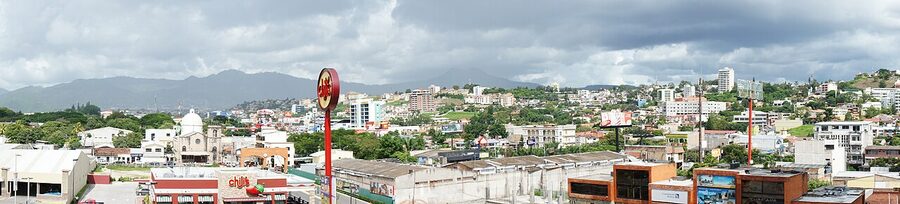
The dry season runs November to April. November and April are the sweet spots: dry, less crowded, prices are slightly lower than peak-peak. Daytime temperatures are 25-28°C, nights drop into the mid-teens (you’ll want a light jacket). December and January are the busiest because Hondurans abroad come home for the holidays; book ahead, especially around Christmas.
The wet season (May to October) brings afternoon rain, often heavy but rarely all day. Mornings are usually clear. The countryside greens up, hotel prices drop, and cultural events (Feria Juniana in June, the Suyapa pilgrimage 3 February) happen on their own schedule regardless of weather. Hurricane season runs roughly June-November, but Tegucigalpa is high enough and far enough inland that it doesn’t get the direct hits the Caribbean coast gets.
One specific date to know: 3 February, Feria de la Virgen de Suyapa. The biggest religious event of the year. Hotels near the basilica fill up; the city is louder and busier; pilgrims fill the streets around Suyapa. If you’re indifferent, plan around it. If you’re interested in Latin American Catholicism in practice, plan toward it.
Should you bother?
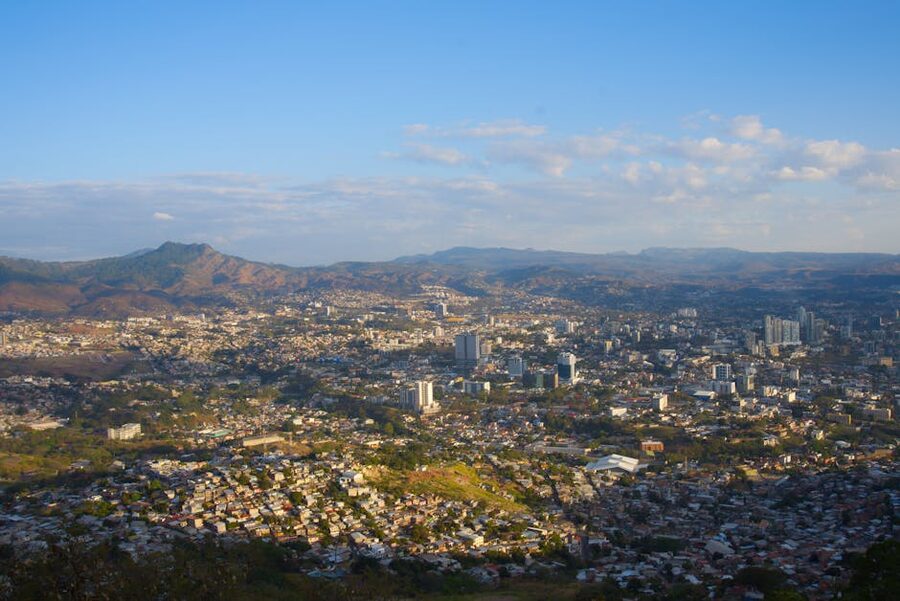
Short answer: yes, if you’re already going to be in Honduras. No, if you’re picking between Tegus and a fourth day on Roatán or in Copán Ruinas. The capital doesn’t compete with the islands or the ruins for postcard-photo value, and pretending otherwise sets people up for disappointment. What it does is give you a real, lived-in capital city with proper food, decent museums, and one of the best urban viewpoints in Central America. Two days, smart choices, and you’ll leave understanding Honduras better than you would have just hopping airports and beaches.
For broader context on the country, the Honduras travel hub covers the visa situation, money, transport between cities, and a route-planning overview. The full Honduras articles archive is the place to dive into specific destinations once you’ve got the broad strokes. And if you’re doing the classic Honduras circuit, you’ll likely move from here onward to Copán, then up the Caribbean coast for the Bay Islands, then out via the Guatemala or Nicaragua border. It’s a good route. Tegucigalpa is the start.