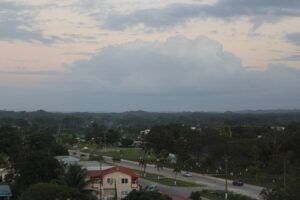
The first time I crossed into Belize from Guatemala at Melchor de Mencos, the immigration officer asked me where I was going in English, then in Belize Creole when I looked confused, then in Spanish when she realised I was a backpacker. Three languages in ninety seconds, and I hadn’t even left the booth. That mix is the country in miniature: a small, English-speaking, Caribbean-and-jungle republic wedged into Spanish-speaking Central America, and almost nothing about it lines up with what people expect.
Belize is the size of Wales, sits between Mexico and Guatemala, has a population around 400,000, and packs a barrier reef, jungle Mayan ruins, Garifuna drumming villages, Mennonite dairy farms, and pine-ridge highlands within a few hours of each other. You can swim off Caye Caulker in the morning and be looking at jungle-buried temples by sunset.
What follows is where to go, when, how long, roughly what it costs, and a few takes on what gets oversold. Most guides treat Belize as either “fly into San Pedro and drink at resorts” or “backpacker barrier reef.” Real travellers usually want the in-between, with the visa quirks and the currency oddities sorted out properly.
In This Article
- The four Belizes you actually visit
- The cayes: Caye Caulker vs Ambergris
- The Great Blue Hole, framed honestly
- The Cayo District: jungle, ruins, and ATM Cave
- Caracol
- Xunantunich
- ATM Cave (Actun Tunichil Muknal)
- Cahal Pech
- The south: Hopkins, Placencia, and Garifuna country
- Hopkins and the Garifuna
- Placencia
- Punta Gorda and Toledo
- The north: Lamanai, Orange Walk, and Crooked Tree
- Belize City and Belmopán: skip or stop?
- When to go
- How long you actually need
- Getting in (and the CA-4 trap)
- Currency: the BZD/USD peg in practice
- Languages: more than you think
- Food: rice, beans, fry jacks, and the Marie Sharp’s situation
- Costs and what to budget
- Safety, briefly and honestly
- The summary I wish I’d had
The four Belizes you actually visit
Belize splits cleanly into four zones, and figuring out which combination matches your time and budget is the whole planning game. Read the blogs and they’ll usually push you to two of these and quietly skip the others.
The cayes are the obvious one: Caye Caulker (small, slow, backpacker), Ambergris Caye with its town San Pedro (larger, more developed, family resort country), and the dozens of smaller cayes used for liveaboards and day trips. This is what most North Americans picture when they hear Belize.
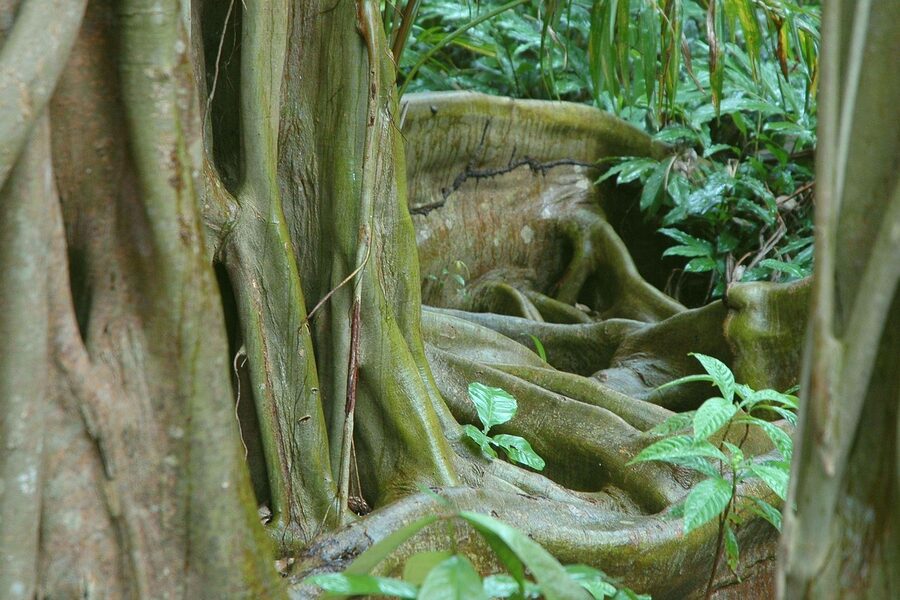
The Cayo District in the west is the jungle and ruins half: San Ignacio as the base, Mountain Pine Ridge as the highland forest, and Caracol, Xunantunich, Cahal Pech, and the Actun Tunichil Muknal cave (everyone calls it ATM Cave) within day-trip range. The Guatemalan border is right there for a Tikal day trip.
The south is Stann Creek and Toledo Districts: Hopkins as the Garifuna drumming village, Placencia as the peninsula of beach-and-snorkel resorts, and Punta Gorda as the launching point for deep-south Maya communities and Guatemala ferries. This is the half most short-trip itineraries skip and the half I’d argue hardest for if you have ten days.
The north is Orange Walk, Crooked Tree Wildlife Sanctuary, and the Mayan site of Lamanai (more atmospheric than Caracol, in my opinion). The Mexican border is here at Subteniente López, near Corozal. Most travellers blow through; worth a couple of nights if you’re a birder.
If you only have a week, the standard split is the one most itineraries use: three to four days in Cayo, three to four days on Caye Caulker or Ambergris. You’ll skim the country and miss the south entirely. With ten to fourteen days you can add Hopkins or Placencia and get a much rounder picture, including the Garifuna drumming, Belikin beer on a beach that isn’t crawling with cruise day-trippers, and at least one extra Mayan site. The accommodation guides elsewhere on this site cover the regions in detail; what follows is the country-level overview.
The cayes: Caye Caulker vs Ambergris
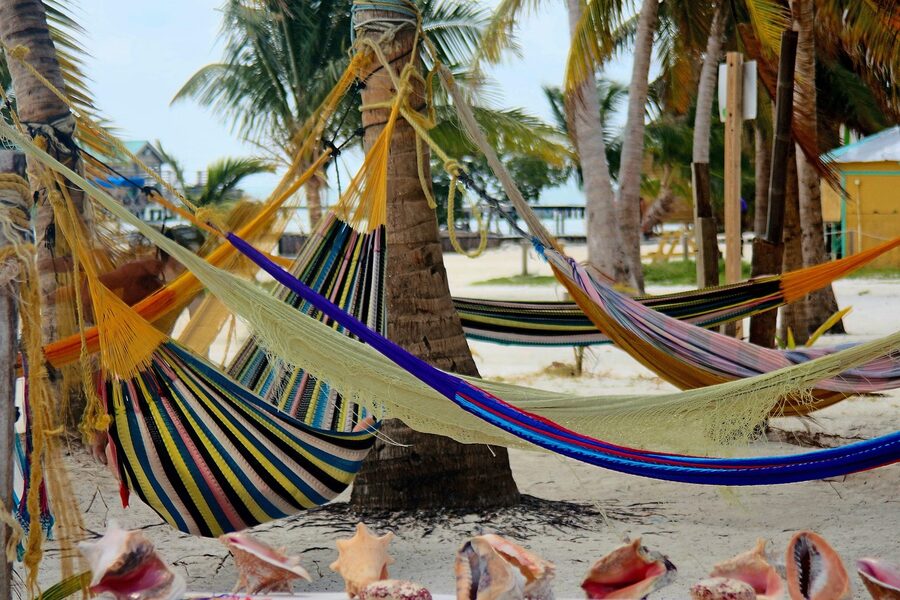
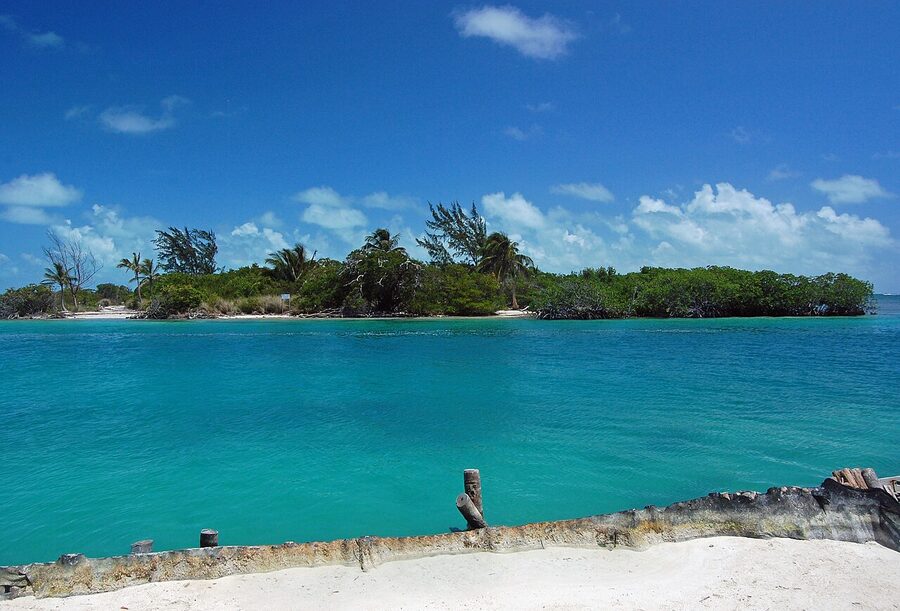
The two main cayes are sold as alternatives but they really do attract different people. Caye Caulker is small (you can walk it end to end in twenty minutes), no cars, sandy streets, painted clapboard guesthouses, and a town motto of “Go Slow” that locals say constantly and with feeling. The reef is a fifteen-minute boat ride out. The Split is the swimming hole, where the island was cut in half by Hurricane Hattie in 1961, and where the Lazy Lizard bar serves rum punch from a beach shack to a permanent crowd of sunburned backpackers and sensible Belizeans avoiding them.
Ambergris Caye is bigger, about 35 miles east of Belize City, and built around the town of San Pedro. Golf carts everywhere, more resort hotels, more dive shops, more restaurants, more tourists, more of a scene. If you’re travelling with kids or anyone who needs air conditioning to be reliable, San Pedro is the easier choice. If you want backpacker prices and ten-dollar rum, Caye Caulker.
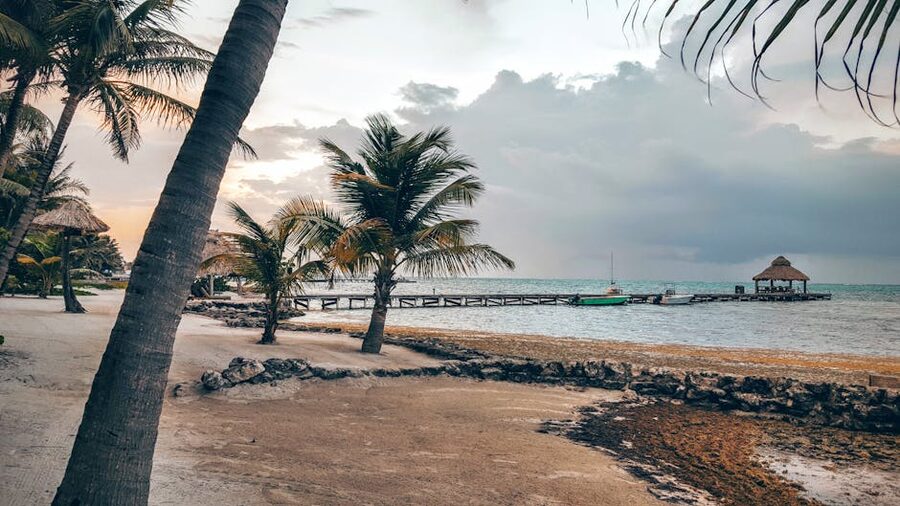
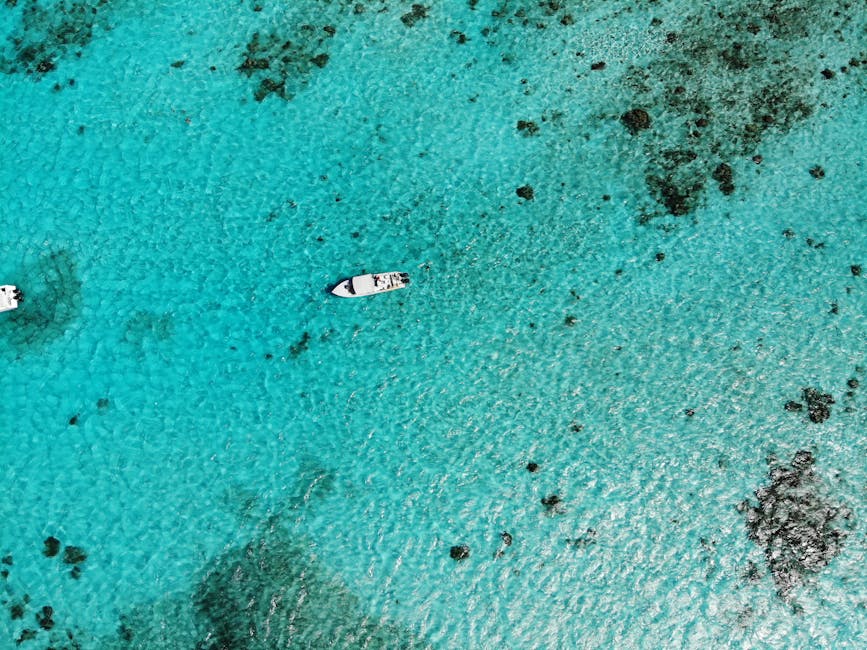
Both have access to the Belize Barrier Reef, which runs about 300 kilometres along the coast and is the second-longest in the world after Australia’s. The diving and snorkelling are world class. The stretch most operators visit from either island is the Hol Chan Marine Reserve, plus Shark Ray Alley where nurse sharks and southern stingrays swim around your fins. I went with Caveman Snorkeling Tours from Caye Caulker; the Ambergris equivalents run pricier but cover the same reef.
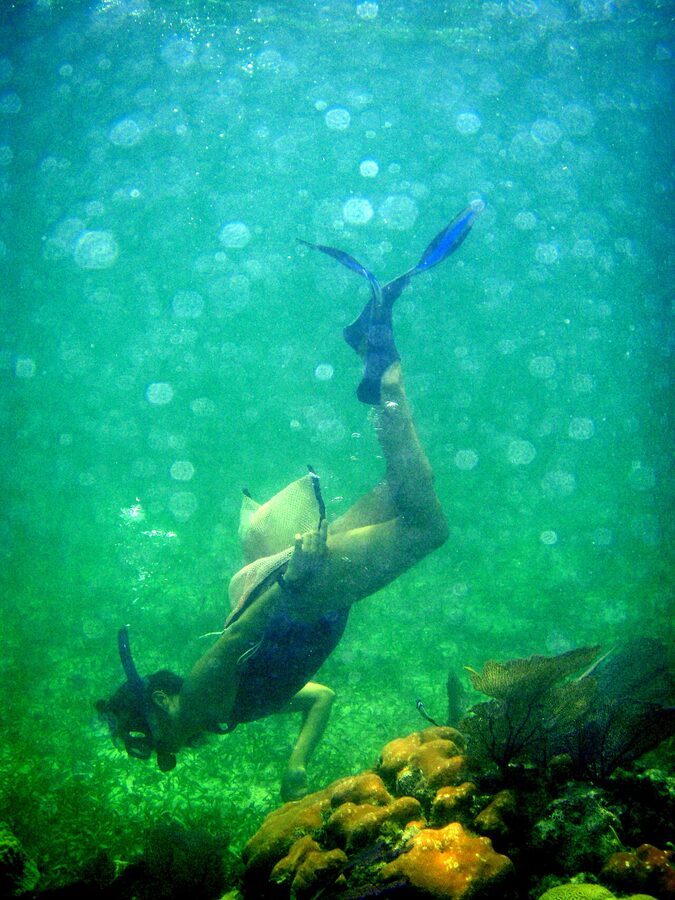
Caye Caulker prices: a snorkelling half-day runs around BZ$110-150 (US$55-75, since BZD is pegged 2:1 to USD), a basic guesthouse BZ$120-180, a Belikin at the bar BZ$5. Ambergris is roughly 30-50% more across the board. The water taxi from Belize City to Caye Caulker is BZ$42 one way with San Pedro Belize Express or Ocean Ferry Belize; Belize City to San Pedro BZ$62; between the cayes BZ$42.
The Great Blue Hole, framed honestly
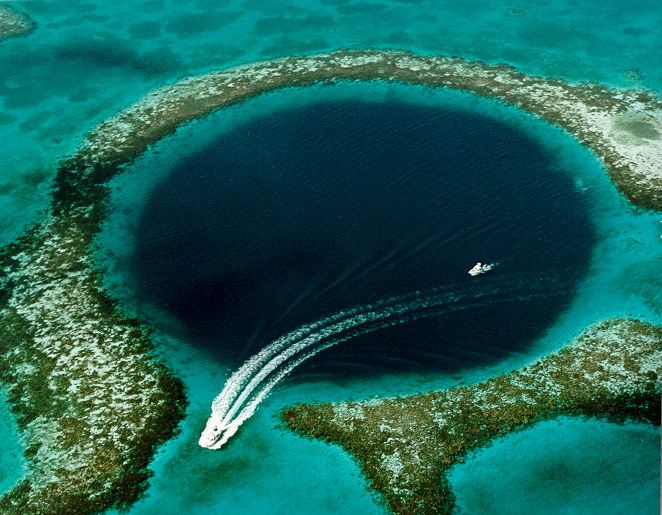
Here’s where I’m going to disagree with most guides. The Great Blue Hole is genuinely beautiful, it’s a UNESCO World Heritage Site, and the iconic aerial shot is real. The honest take, which I wish someone had told me, is that the value depends entirely on what you do there. As a scuba dive (you need advanced certification, three tanks, around BZ$650-800 from San Pedro) it’s a unique experience: stalactites at 40m down, the eerie geology of a flooded sinkhole, the reef rim. As a snorkel day trip (BZ$300-500), you’re paying mostly for a boat ride to look at a dark blue dot from the surface. The reef rim around it is fine but you can see equally good coral at Hol Chan for a quarter of the price.
If you’re a certified diver and the Blue Hole is on your list, do it. If you’re a snorkeller who’s already booked Hol Chan and Shark Ray Alley, your day will not be improved by adding the three-hour boat slog and the corresponding price tag. Skip it.
The Cayo District: jungle, ruins, and ATM Cave
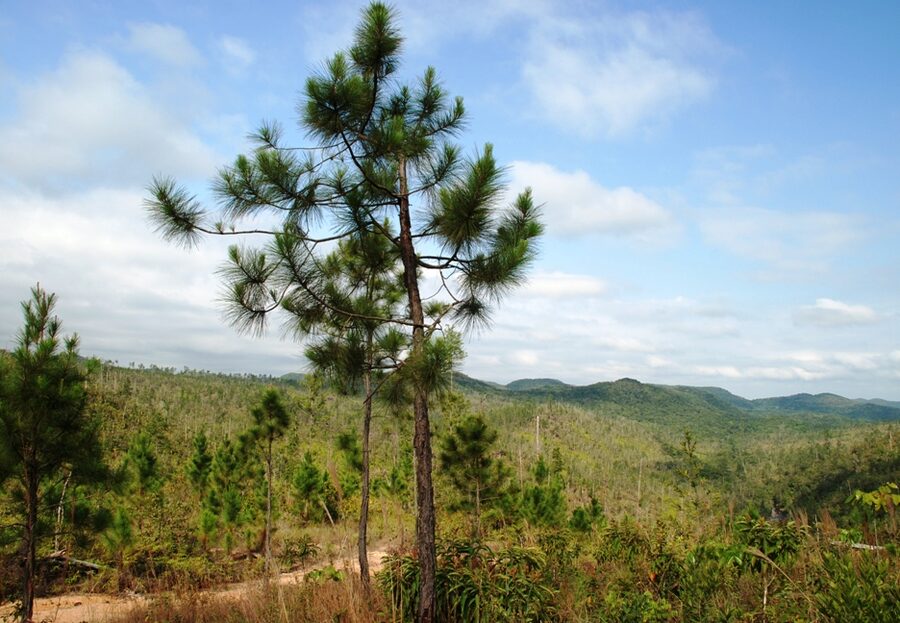
The Cayo District is the inland half of the country, two hours west of Belize City along the Western Highway (also called the George Price Highway). San Ignacio is the base; everyone else stays at jungle lodges scattered around the surrounding hills. The town itself is small, a Friday-Saturday market that’s worth showing up for, the Cahal Pech ruins on a hill above it, the Hawksworth Suspension Bridge from the 1940s as the local landmark.
From San Ignacio you can do, easily, four or five different jungle and ruins activities. The shortlist:
Caracol
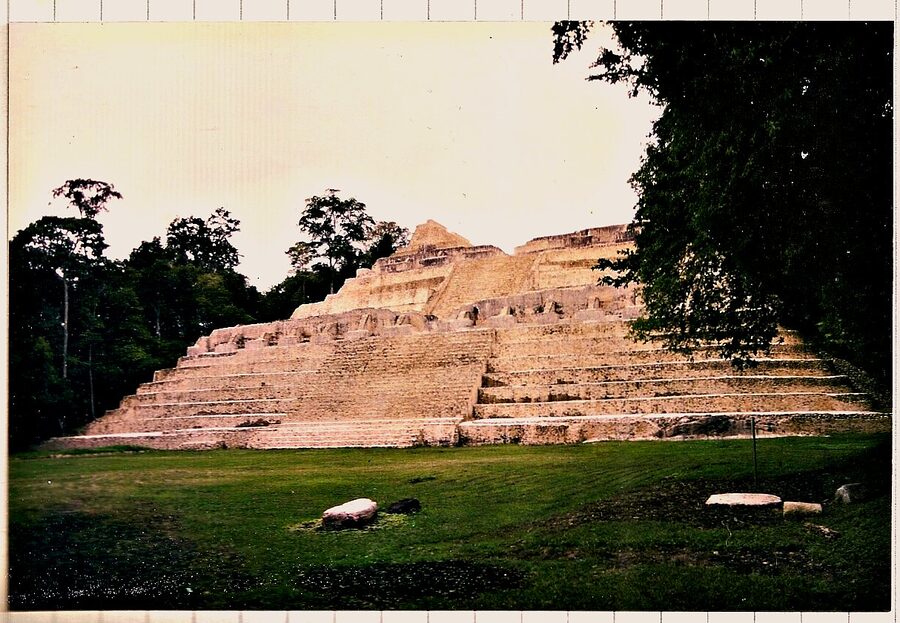
The biggest Mayan site in Belize, deep in the Chiquibul Forest Reserve, two and a half hours each way from San Ignacio over rough roads. The main pyramid Caana (“Sky Place”) is 43 metres high; from the top you can see across into Guatemala. Less restored and more jungle-buried than the Mexican sites, which is the whole point. There’s still a convoy escort along part of the route because of cross-border security history (free, but you’re on its schedule). A guided full-day trip from San Ignacio is around BZ$200-280.
Xunantunich
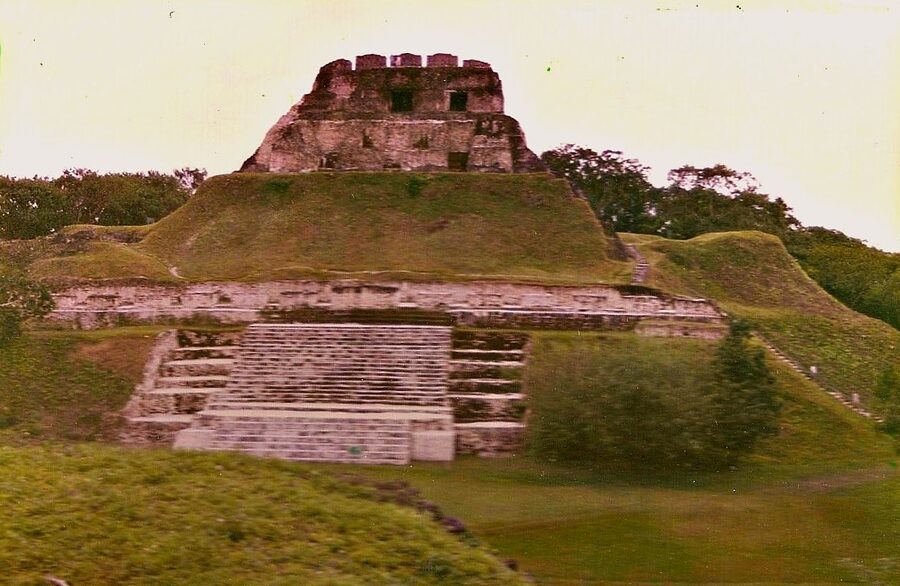
Closer (45 minutes from San Ignacio), more accessible, and the El Castillo pyramid is 40 metres tall with a remarkably intact carved frieze on the eastern side. The way you get there is half the appeal: a hand-cranked cable ferry across the Mopan River near the village of San José Succotz (tip the operator BZ$2). I’d pick Xunantunich over Caracol if you only had time for one and weren’t desperate for the deep-jungle vibe. Entry BZ$10, ferry free, taxi from San Ignacio around BZ$80 round trip.
ATM Cave (Actun Tunichil Muknal)
The strangest, most uncomfortable, most worthwhile day in Belize. You hike 45 minutes through jungle, swim into the cave entrance, then wade and clamber through chambers for two to three hours, finally climbing up onto a higher dry chamber where Mayan priests left ceremonial pots and human sacrificial remains. You stand a metre from skeletons calcified into the limestone. The “Crystal Maiden” is the famous one, a teenage girl whose remains have been there for around 1100 years.
Licensed guide only, no exceptions. Cameras have been banned since 2012 after a tourist dropped one on a skull. Expect BZ$220-300 including transport from San Ignacio, lunch, and gear. People who do ATM Cave talk about it for years afterward; people who skip it because it sounds physical are the ones who regret a Belize trip later.
Cahal Pech
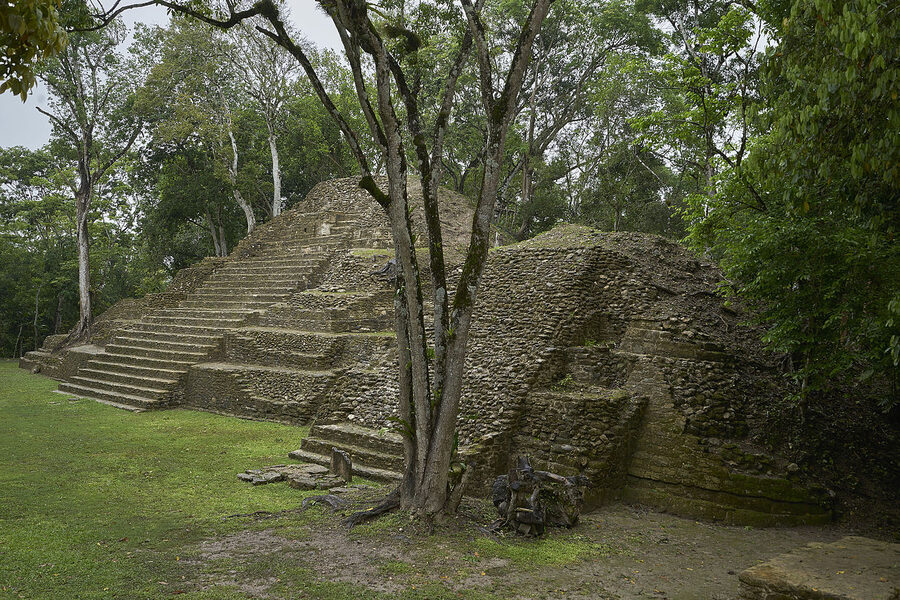
The local ruin you can walk to from San Ignacio without booking anything. Smaller, less impressive than Caracol or Xunantunich, but pretty atmospheric in late afternoon when the day-trip groups have gone and you have it to yourself. Entry BZ$10. Worth an hour, not a half day.
While you’re in Cayo, the Mountain Pine Ridge Forest Reserve and the Rio On Pools make a standard half-day side trip; the Green Iguana Project at the San Ignacio Resort Hotel is a small but well-run wildlife encounter; and any decent jungle lodge will arrange cave tubing on the Caves Branch River, either standalone or as part of an ATM combo.
The south: Hopkins, Placencia, and Garifuna country
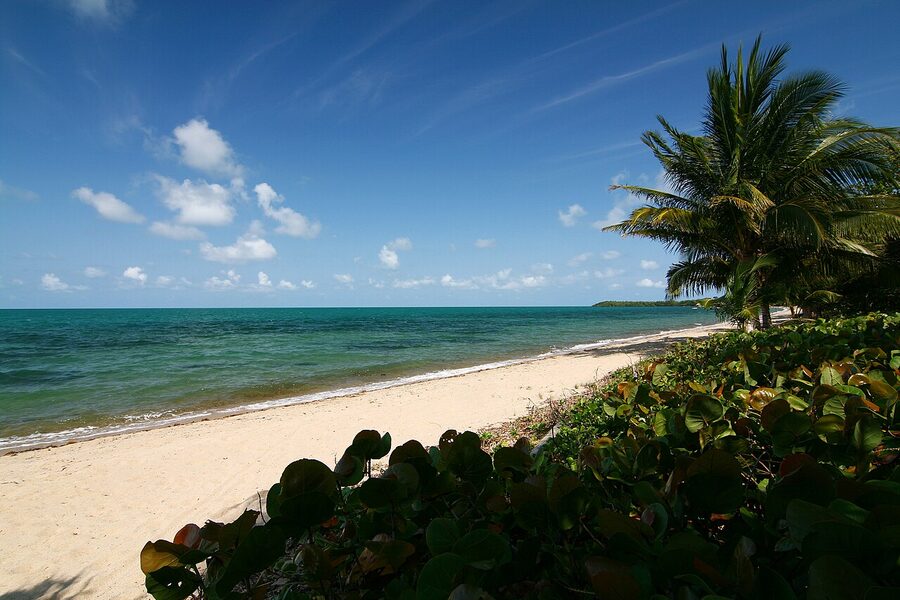
The southern coast is the Belize most short-trip travellers never reach, and it’s the half I’d argue hardest for if you can manage 10-14 days. Two main bases: Hopkins, a small Garifuna village of maybe 1,500 people on a long beach with one long road, and Placencia, a peninsula 90 minutes further south with more developed beach resorts and the launch point for snorkelling and diving the southern reef.
Hopkins and the Garifuna
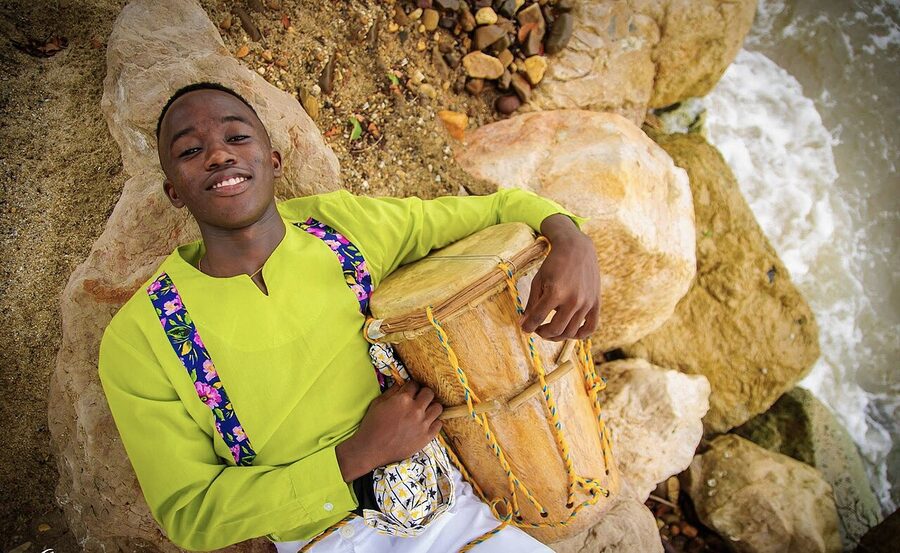
The Garifuna are descendants of West African captives whose ships wrecked off St Vincent in the 1600s. They mixed with Carib peoples on the islands, were eventually deported to Honduras, and a wave settled in Belize and the Honduran coast around 1832. The culture held tight: a distinct language (Garifuna, related to Arawakan languages), a distinct cuisine (cassava bread, hudut, the fish-and-coconut stew sere), and most visibly the drumming. UNESCO declared Garifuna language, dance and music a masterpiece of intangible heritage in 2001. Hopkins is the place to actually encounter this rather than read about it.
The Lebeha Drumming Centre in Hopkins runs lessons and evening performances; it was founded by Jabbar Lambey and a group of local drummers and it’s the real deal, not a tourist show. Go for an evening session, take a beginner lesson if you have an extra day. November 19 is Garifuna Settlement Day, one of the biggest cultural celebrations in the country, and Dangriga (just up the coast) is the heart of it.
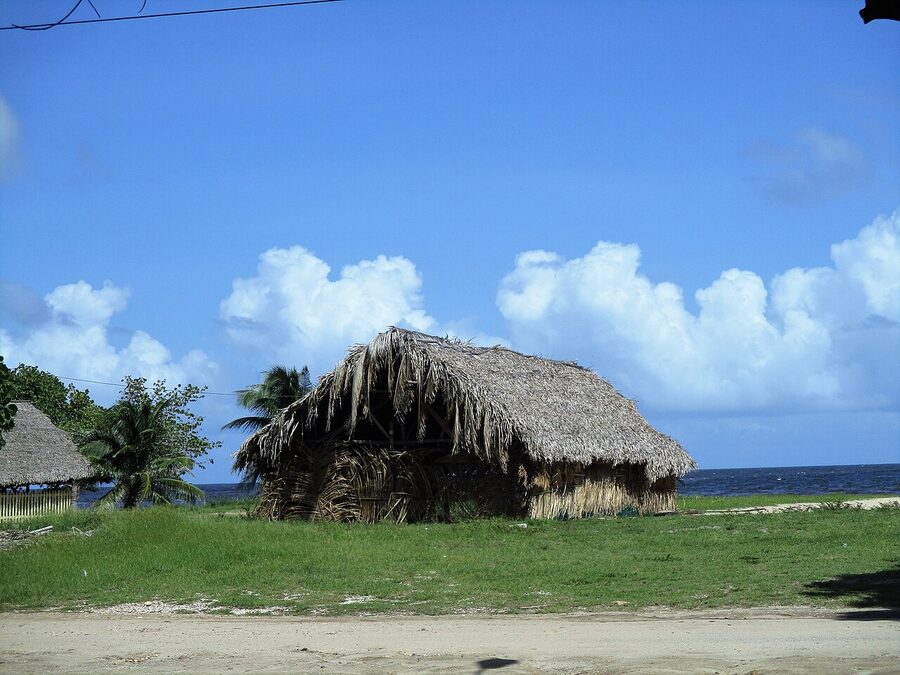
For food and a drink in Hopkins, locals will send you to Ella’s Cool Spot for casual Garifuna food, Loggerheads Bar and Grill for sundown beers, and Queen Bean for live drumming on the right nights. Hopkins is also the gateway to Cockscomb Basin Wildlife Sanctuary, the world’s first jaguar reserve. You almost certainly won’t see a jaguar (they’re nocturnal, secretive, and good at not being seen by bipeds), but the trails and waterfalls are excellent and you’ll likely see howler monkeys, agoutis, and a lot of birds.
Placencia
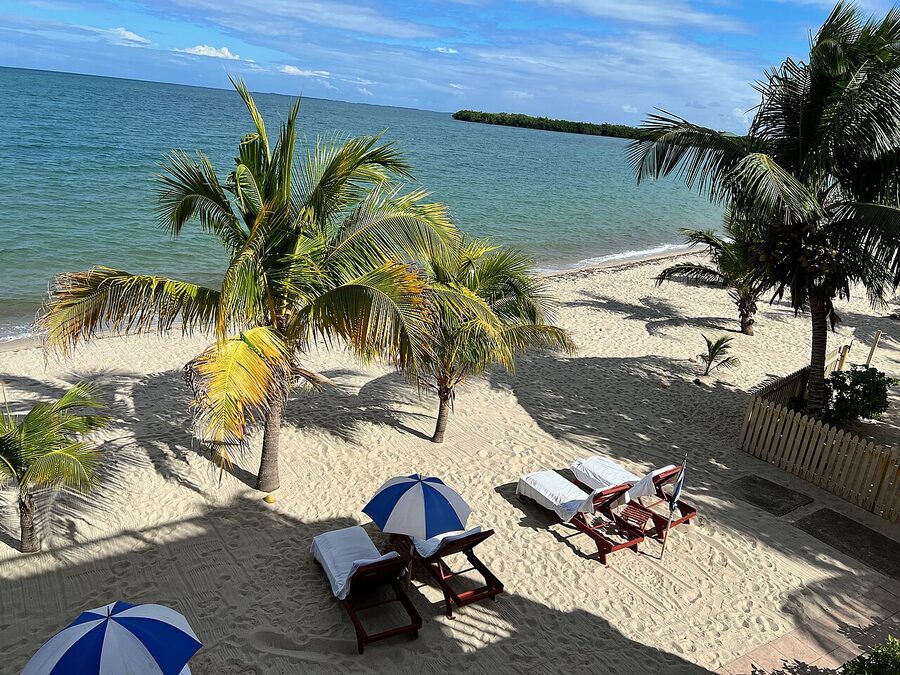
Placencia is a long thin peninsula with the village of Placencia at the southern tip and a string of resorts along the road north toward Maya Beach. It’s the easiest place in Belize to fall into “do nothing for three days” mode. Think palms, white sand, conch fritters at beach bars, and the long peninsula road that’s essentially flat. Splash Dive Centre is the long-running operator if you want to dive or snorkel from here; they run trips out to the Silk Cayes (whale shark season is March-June at Gladden Spit, just outside Placencia, and is one of the world’s better whale shark experiences if you time it right).
The peninsula has more upmarket resort options than Caye Caulker (places like Turtle Inn, Naia, Chabil Mar) and a better range of mid-range guesthouses than San Pedro. It’s also the launch point for the southernmost cayes if you want to get further off the grid. Ferries run between Placencia and Independence on the mainland for buses south to Punta Gorda, plus the Hokey Pokey water taxi if you’re trying to skip the road.
Punta Gorda and Toledo
The deep south is Toledo District, with Punta Gorda (everyone calls it PG) as its capital. This is where Belize tips most clearly into Maya country and where most cacao plantations sit, including the small farms behind Junajpu Chocolate and Eladio’s Chocolate Adventure tasting tours. East Indian Belizean food is a regional specialty (a legacy of indentured workers brought over by colonial planters); local Maya communities run cultural visits and homestays through the Living Maya Experience. Lubaantun, the Mayan site associated with the controversial “crystal skull” find of 1924, is a short drive north.
The north: Lamanai, Orange Walk, and Crooked Tree
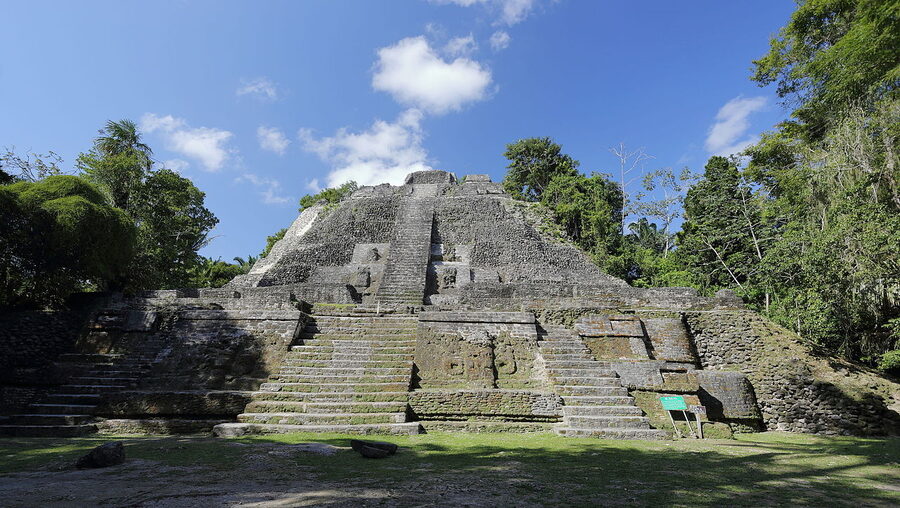
Lamanai is the Mayan site I’d quietly recommend over both Caracol and Xunantunich. It sits on a lagoon in the jungle, has three big pyramids (Jaguar Temple, High Temple, Mask Temple), and an on-site museum. The real reason to come is the river journey: the standard tour goes by boat up the New River from Orange Walk, ninety minutes through mangrove tunnels with Morelet’s crocodiles, snail kites, and jacanas. Tours from Orange Walk run BZ$200-260 with operators like Jungle River Tours and Lamanai Eco Tours.
Crooked Tree Wildlife Sanctuary, also in the north, becomes one of the best birdwatching spots in Central America during dry season as the wading birds concentrate around the lagoon: jabirus, herons, kingfishers, snail kites. November to April is the window; outside that, the lagoon disperses and the birding falls off.
For everything else relating to Belize’s geography, history, and the broader regional context including border details with Guatemala and Mexico, the country shares more with the Caribbean than with mainland Central America, and the rest of this guide explains why that matters in practice. There’s also a deeper Belize regional archive on this site that breaks the country into individual destination guides as we publish them.
Belize City and Belmopán: skip or stop?
Belize City is where you’ll fly into (BZE airport, Philip S.W. Goldson International) and ideally where you’ll leave from. The honest take on the city itself is what every travel blog says: it has a real crime problem, the historic centre is interesting for an hour and uncomfortable for any longer, and most of what’s worth seeing (St John’s Cathedral, the Museum of Belize, the Swing Bridge) you can do in half a morning before getting on a water taxi or a bus out. Don’t walk around at night. Don’t stay overnight if you can help it. The Marine Terminal area is fine in daylight, downtown beyond that you want a taxi.
Belmopán, the capital since 1970, is a very different proposition. It’s a planned inland city of about 25,000 built after Hurricane Hattie destroyed Belize City in 1961, and it’s not exactly a destination. There’s an embassy district, a market, the Guanacaste National Park just outside town, and Blue Hole National Park (different Blue Hole, this one is an inland sinkhole and a swimming hole, free to enter for Belizeans, BZ$8 for foreigners) about 20 minutes south. Most travellers transit through the bus terminal for two hours and never really see the rest. That’s about right for what’s there, but the Cayo connection (San Ignacio is 45 minutes west) makes it a logical embassy run if you need a visa for somewhere else.
When to go
The dry season runs from December through April. This is peak. The water is clearest for diving, the days are sunny and around 27-29°C, the rain mostly stops, and the prices are highest. February to April is the absolute peak; Easter week is harder to book and noticeably more expensive across the country.
The wet season is roughly June to November. Daily afternoon downpours, more humidity, hotter daytime temperatures (up to 32°C), and lower prices on accommodation. June-July are still mostly fine. September-October are the wettest months and also the heart of hurricane season, which officially runs June through November but realistically threatens Belize most in September and October. Some businesses on the cayes shut down for parts of October. If you go then, you’ll save 30-40% on hotels and have empty beaches; you’ll also live with the weather risk.
The shoulders (May, late November) are the planner’s secret. Mostly dry, mostly cheap, mostly empty. If you can be flexible, late November through mid-December and the back end of May are the best value windows.
How long you actually need
Seven days is the minimum that doesn’t feel rushed: three to four days in Cayo (one for ATM Cave, one for Caracol or Xunantunich, one for jungle wildlife or cave tubing) plus three to four days on Caye Caulker or San Pedro (one day diving Hol Chan, one for the inner reef snorkel circuit, one to do nothing). You’ll skim the country and miss the south.
Ten to fourteen days is the sweet spot. It lets you add Hopkins or Placencia for three to four days (a day in Cockscomb Basin or a snorkel day, plus pure beach time and a Garifuna drumming evening) and one extra Mayan site. With fourteen days you can fit Lamanai, which most short itineraries skip.
Three weeks is when the south and Toledo District become realistic, with Maya village stays and a few dive days at Glover’s Reef or Turneffe Atoll. Most travellers don’t need that long; the ones who go tend to come back.
Getting in (and the CA-4 trap)
The international airport is BZE (Philip S.W. Goldson), 16 km outside Belize City. Direct US flights are common: American (Miami, Dallas, Charlotte), United (Houston, Newark, Denver), Delta (Atlanta), Southwest (Houston, Fort Lauderdale), Alaska (Seattle, LAX). Air Canada flies seasonally from Toronto. No direct service from Europe; connect through the US or Mexico City.
The two land borders are Subteniente López from Mexico (next to Chetumal in Quintana Roo) and Melchor de Mencos from Guatemala (the only Guatemala crossing, an hour from San Ignacio and four hours from Tikal/Flores). Both are open and straightforward. There’s a Belize exit fee of around BZ$40 (US$20) when leaving by land, sometimes folded into air tickets. Touts at the borders will occasionally try to add an informal extra on top; ignore them.
The CA-4 visa thing matters and most planners miss it. Honduras, Guatemala, El Salvador, and Nicaragua share a single 90-day visa stamp, the CA-4. Enter any one of them and that 90-day clock starts; crossing between them does not reset it. Belize is outside the CA-4. When you cross from Guatemala into Belize at Melchor de Mencos, you get a separate Belize entry stamp (30 days for most nationalities, extendable at immigration in Belize City or Belmopán for around BZ$50/month). Crossing back into Guatemala restarts your CA-4 counter, which is either useful (if you’ve burned 80 of your 90 CA-4 days) or just admin (if you weren’t trying to renew). The practical takeaway: Belize doesn’t eat your Central America time.
Currency: the BZD/USD peg in practice
The Belize dollar (BZD or BZ$) has been pegged 2:1 to the US dollar since 1976. BZ$2 = US$1, always. Both currencies are accepted everywhere, no exchange counter dance, no rounding tricks at the till. ATMs dispense BZD. Resorts and dive shops often quote in USD; smaller restaurants quote in BZD. When a price tag has only a dollar sign, ask which one (almost always BZD in local restaurants, USD at higher-end resorts).
The trap: travellers paying with US dollars sometimes get change in BZD at a slightly worse-than-2:1 informal rate. Withdraw BZD from an ATM, pay in BZD where the menu shows BZD, and you’ll never lose anything. ATMs typically charge a foreign card fee around BZ$10-15.
Languages: more than you think
English is the official language, used in government, schools, and signage; that’s the first thing every guide tells you and it’s true. What nobody tells you is that the everyday street language is Belize Creole (Kriol), which is English-based but mostly unintelligible if it’s coming at you fast. You’ll hear it in markets, bus stations, and any conversation Belizeans are having amongst themselves; they switch to standard English the moment they notice you’re not from there.
Spanish is the dominant language in the north (Corozal, Orange Walk) and the west (Cayo, San Ignacio), reflecting the Mestizo population and decades of migration from Mexico, Guatemala, Honduras, and El Salvador. Around half of Belizeans speak Spanish at home. Garifuna is the south coast language (Dangriga, Hopkins, Punta Gorda); Mopan and Kekchi Mayan are spoken in deep south Toledo communities; German-derived Plautdietsch belongs to the Mennonite communities in Spanish Lookout, Shipyard, and Blue Creek (yes, horse-and-buggy Mennonites here, supplying a chunk of the country’s dairy). You don’t need Spanish to travel Belize, but basic phrases help in the north and Cayo.
Food: rice, beans, fry jacks, and the Marie Sharp’s situation
The national dish, depending on who you ask, is either rice and beans (which is its own particular thing here, beans cooked into the rice with coconut milk, served with stewed chicken or stew beef) or “beans and rice” (which is different, beans served separately on the side). Belizeans will explain the difference at length and they’re not joking. The difference matters.
The breakfast staple is fry jacks: deep-fried puffy triangles of dough served with eggs and refried beans, plus a side of Marie Sharp’s hot sauce. The Marie Sharp’s situation: this is the hot sauce of Belize, made in Stann Creek since 1981 by Marie Sharp herself, and the country takes it personally. The original habanero sauce is the one you want; the “Beware” and “No Wimps Allowed” varieties go up from there. There’s a factory tour outside Dangriga if you’re a hot-sauce nerd; otherwise, just put it on everything.
Other foods worth looking out for: stew chicken (cooked in achiote and onions, the standard plate-of-the-day everywhere), escabeche (an Orange Walk chicken-in-onion-broth dish, distinct from Mexican escabeche), hudut (Garifuna mashed plantains with fish in coconut sauce, found in Hopkins and Dangriga), sere (another Garifuna coconut-fish stew), garnaches and salbutes (the fried-tortilla street snacks at any market), conch fritters and ceviche on the coast (October to June is conch season), and panades (corn-dough patties with fillings, the standard roadside snack).
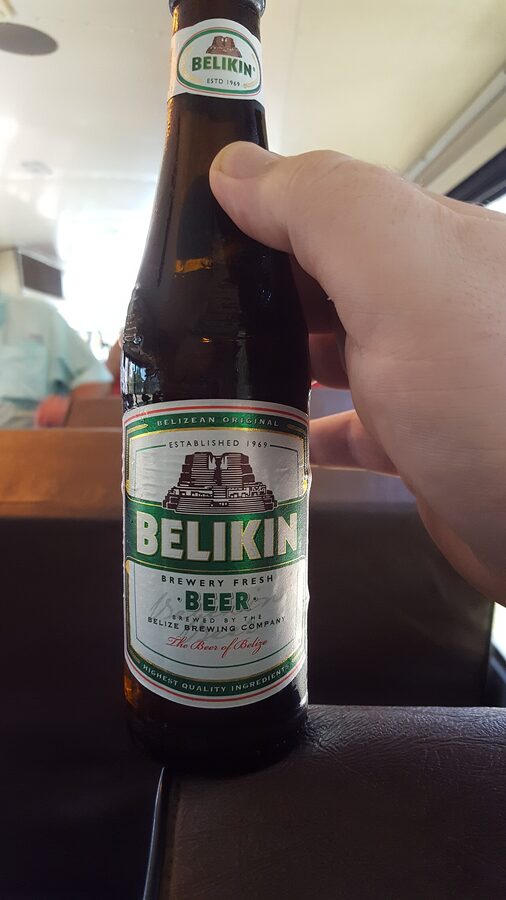
Belikin is the national beer, the only domestic brewery, and you’ll see the logo (a stylised Mayan temple from Altun Ha) more than the flag. The Belikin Premium and the Stout are both better than the standard pilsner. One Barrel rum is the local pour; cashew wine is a Crooked Tree specialty if you spot it.
Costs and what to budget
Belize is more expensive than its Central American neighbours. People arriving from Guatemala or Honduras get a small price shock; people from the US find it about half as expensive as the Caribbean equivalent. Daily budgets, very roughly: backpacker BZ$140-180 (hostel dorm, casual meals, local bus, one cheap activity), mid-range BZ$300-450 (mid-range guesthouse, restaurant meals, one tour, taxis), upmarket BZ$650+ (resort or jungle lodge, dive trips, private transfers).
Specific numbers to know: domestic flight Belize City to San Pedro or Caye Caulker is BZ$200-300 round trip on Maya Island Air or Tropic Air; the same routes by water taxi run BZ$84-124. Buses from Belize City to San Ignacio or Belmopán are BZ$10-15; to Placencia BZ$20 and around 5 hours. Car rental runs BZ$90-150 per day and you’ll need an International Driving Permit.
Safety, briefly and honestly
Belize has a complicated safety reputation. The murder rate is high by the numbers, but the homicides are concentrated in specific Belize City neighbourhoods that aren’t on any tourist itinerary, and overwhelmingly involve gang networks, not visitors. Travellers mostly experience Belize as one of the safer destinations in the region. The mainland tourist towns (San Ignacio, Hopkins, Placencia, Punta Gorda) and the cayes have very little of the Belize City crime profile.
The practical advice: don’t walk Belize City after dark, take taxis between the airport and the water taxi terminal, don’t flash valuables on buses or at ATMs, and be sensible on the cayes about leaving things on beaches. Petty theft is the main risk. Solo female travellers report Belize as broadly comfortable, comparable to Costa Rica or Panama. The US travel.state.gov advisory for Belize and the UK FCDO advice for Belize are worth one read before you go; skim them, don’t internalise them.
The summary I wish I’d had
Belize takes 7-14 days to see properly, runs about double the cost of Guatemala or Honduras, requires a separate visa stamp from the rest of Central America, has its own currency permanently locked at half a US dollar, and packs more variety per kilometre than almost any country I’ve travelled. The cayes are oversold, the jungle is undersold, the south is criminally undertravelled, and the Great Blue Hole is overpriced for snorkellers but worth it for divers. The official Belize Tourism Board site is the place to verify festival dates, ferry schedules, and entry requirements before you book.