
You’re probably here because you’re heading to Boquete. Most travellers who land in David, capital of Chiriquí Province, do so with their eyes on the cool highland air an hour up the road. The bus from David’s terminal leaves every 25 minutes for $1.75. So why stop?
The answer: you might not need to. If you’ve got a Boquete reservation tonight, switch buses, get gone. But David sits at sea level in the Chiriquí lowlands, and there’s a logic to spending half a day or one night here before the bus leaves. It’s where you sort out cash, eat a proper sancocho (chicken-and-yuca soup), and get your bearings before climbing 1,200m into coffee country.
I came down from Santa Catalina expecting nothing and stayed long enough to like it. Not love it. There’s no postcard version of David. The streets are flat, hot, and laid out on a grid, and the historic centre walks in twenty minutes. But the city has a real working pulse, the food is good and cheap, and the bus station is a portal to the rest of Chiriquí, plus the Costa Rica border 45 minutes west.
This guide treats David as what it actually is: a transit point worth understanding. Where to eat between buses, how to get to Boquete, Bocas, Boca Chica, the beaches, and the Costa Rica border, where to sleep if you’ve arrived too late to push on, and the handful of things in David itself that earn an hour.
In This Article
- The five-minute briefing
- Should you stay or just transit?
- Things to do that earn the time
- Parque Cervantes
- Barrio Bolívar and the Torre Exenta
- Museo de la Casona
- Mercado Público de David
- The Ferrocarril de Chiriquí relic
- What to skip
- Where to eat
- Where to stay
- Hotel Ciudad de David (mid-range, central)
- Hotel Iberia (mid-range, central)
- Gran Hotel Nacional (mid-range, near centre)
- Hampton by Hilton David (chain, north David)
- Hotel Residencial Cervantes (budget, on the park)
- Zumo Urban Hostel (hostel)
- Getting to David
- From Panama City by bus
- From Panama City by air
- From Costa Rica via Paso Canoas
- From Bocas del Toro
- Getting from David to Boquete
- Day trips
- Boca Chica and the Gulf of Chiriquí
- Las Lajas Beach
- Volcán Barú
- Boquete coffee farms
- Cerro Punta and the highlands
- Getting around David
- Safety
- The bigger picture
The five-minute briefing
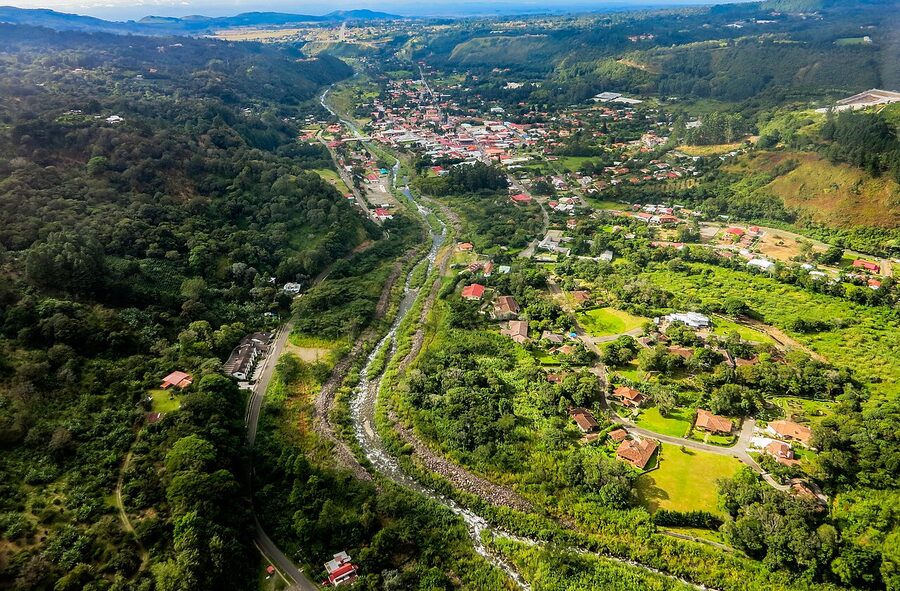
Officially the city is San José de David. Nobody calls it that. On signs, in conversation, and on bus tickets, it’s just David, pronounced “dah-VEED”. Third-largest city in Panama (around 150,000 people), capital of Chiriquí Province, sea level, 50 km from the Costa Rican border, on the Pan-American Highway.
It’s hot. Year-round hot. 30-33°C most days, 22-23°C overnight. There is no cool season. Boquete, 40 km and 1,200m straight up the volcano, sits at 16-22°C all year. That’s the whole reason Boquete has retirees and David has shopping malls.
The currency is the US dollar. Panama mints its own balboa coins (1:1 with USD, used interchangeably with American coins) but paper currency is straight USD. Just bring dollars.
Spanish is the language. English is more common in Boquete because Boquete has an expat retiree community. David doesn’t. Basic Spanish gets you through restaurants, the terminal, and hotels.
One date to know: the Feria Internacional de David runs ten or eleven days every March. If your trip overlaps, hotels fill and prices spike on the closing weekend. The fair itself is mostly agriculture and livestock judging with a fairground tacked on, so it’s not a reason to plan your trip around David, but worth being aware of.
Should you stay or just transit?
Be honest about why you’re in David. If you arrived on a morning bus and there’s a 1pm Boquete shuttle waiting, take it. Boquete is the destination. David is the connection.
If you arrived on the overnight from Panama City (in around 5-6am), give David half a day. Drop your bag at a hotel near Parque Cervantes, eat breakfast at the market, walk the centre, and get the 1pm bus up. Same calculus if you’re coming the other way from Costa Rica via Paso Canoas, the main land crossing 45 minutes west.
The real case for an overnight: an early flight out of DAV tomorrow, a return from Boquete with a bus to catch the day after, or you got in too late to push on. There’s a Boquete-skeptic camp on travel forums that argues David has more “authentic” Panamanian life and the Boquete crowd is missing it. Some truth to that. But David is also flat, hot, and short on actual attractions, so don’t book three nights expecting it to fill up.
Things to do that earn the time
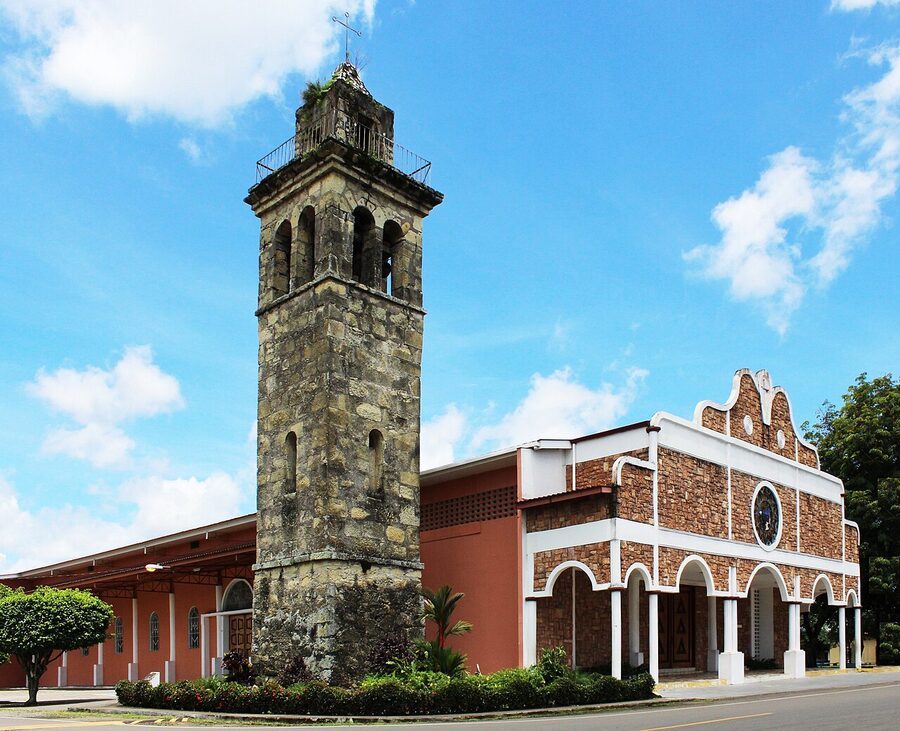
Realistic expectations: David has a handful of things to do, all walkable from Parque Cervantes, and you can see the lot in three or four hours.
Parque Cervantes
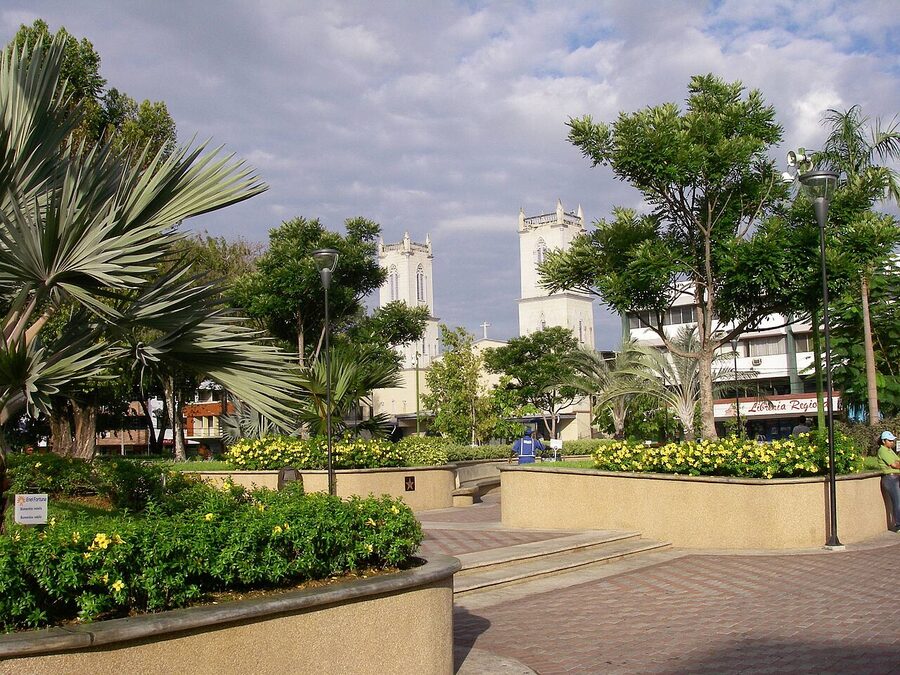
The centre of David, named for Miguel de Cervantes Saavedra, the man who wrote Don Quixote. There’s a statue of him sitting on a low pedestal, looking suitably weary. Shade trees, benches, a fountain, raspado vendors with shaved ice in mango, passion fruit, and tamarind. Twenty minutes on a bench watching the city move is the best free entertainment David offers. Around the square: the Catedral de San José, the Sagrada Familia parish church (yellow and blue, on the northwest corner), and a row of bakeries and comedores where locals eat lunch.
Barrio Bolívar and the Torre Exenta
A few blocks southeast of Parque Cervantes is Barrio Bolívar, the colonial-era heart of David. Low single-storey houses in faded ochres, blues, and pinks. Walk up Avenida 4 Este and you’ll find the Catedral San José, with its detached stone bell tower (the Torre Exenta) standing at the corner. The tower is eighteenth-century, built from local river stones, and is the oldest piece of architecture in the city. The cathedral itself is newer. This is the only part of David that looks old; the rest is concrete and grids.
Museo de la Casona
Officially the Museo de Historia y Arte José de Obaldía, locally just La Casona. Housed in a nineteenth-century wood-and-tile colonial house in Barrio Bolívar, two blocks from the cathedral. Entry around $1. Pre-Columbian Ngäbe-Buglé artifacts, colonial furniture, the history of Chiriquí. Small, 15-20 minutes, Spanish-only signage. The building itself is worth the dollar. Closed Sundays and most Mondays.
Mercado Público de David
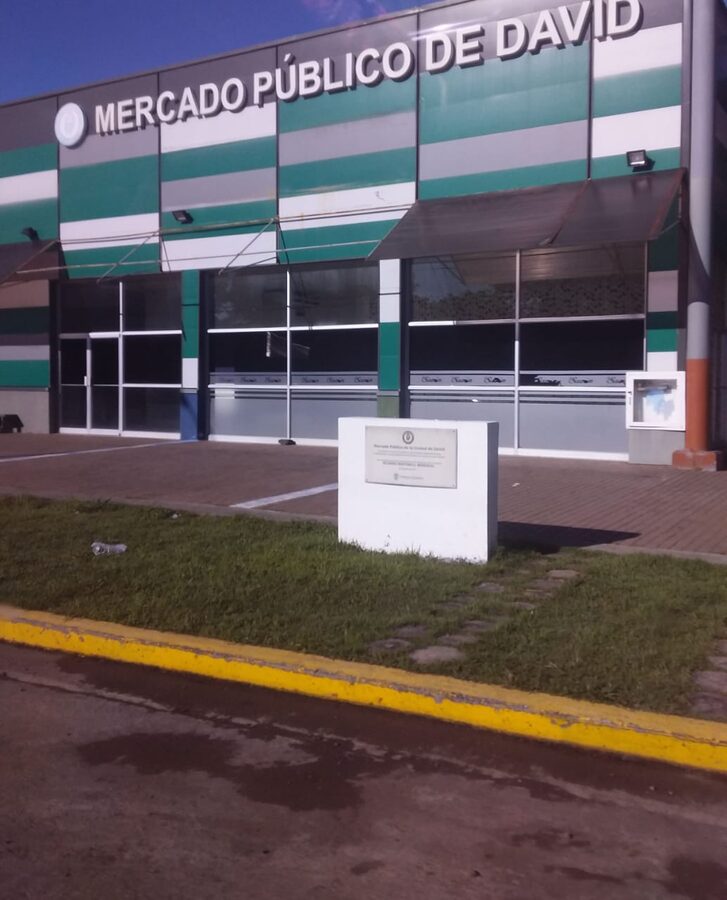
The municipal market on the southwest side of the centre is the standard Latin American trifecta: produce, butcher counters, and a row of comedores (basic family-run lunch counters) at the back where you can get sancocho, hojaldre (fried bread), or arroz con pollo for $3-5. Where bus drivers eat. Go before 11am for breakfast and you’ll get the best of it. Fine in daylight crowds, but watch your phone in the dense aisles and skip it after dark.
The Ferrocarril de Chiriquí relic
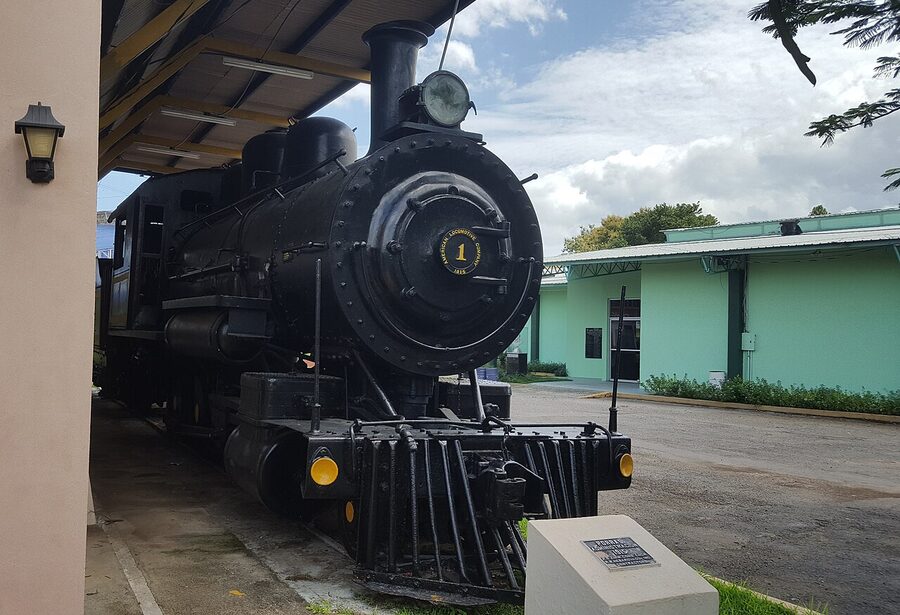
For about a hundred years David had a railway. The Ferrocarril de Chiriquí hauled bananas and cattle from David to Puerto Armuelles on the Pacific coast until the highway took over in the 1970s. An original American-built steam locomotive sits on permanent outdoor display near the bus terminal, painted black and labelled “1” on the boiler. Five-minute stop, but it’s nice context for what Chiriquí used to be.
What to skip
The malls. Federal Mall and Plaza Terronal in north David have the supermarkets and air conditioning you’d expect, and locals use them. As a visitor, you didn’t fly to Panama for a Cinépolis. Skip unless you need a SIM card or a Walmart run.
The nightlife. There are bars and a few clubs along Avenida Domingo Díaz and out towards the malls. Nothing memorable. If you want a night out in Chiriquí, that’s Boquete (small expat-led bar scene) or Panama City.
Walking the city outside the centre. David is a grid of car-built roads. Pavements outside the Parque Cervantes area are cracked or absent. Crossing the Pan-American Highway on foot is unpleasant. Get an Uber for anything more than a five-block walk.
Where to eat
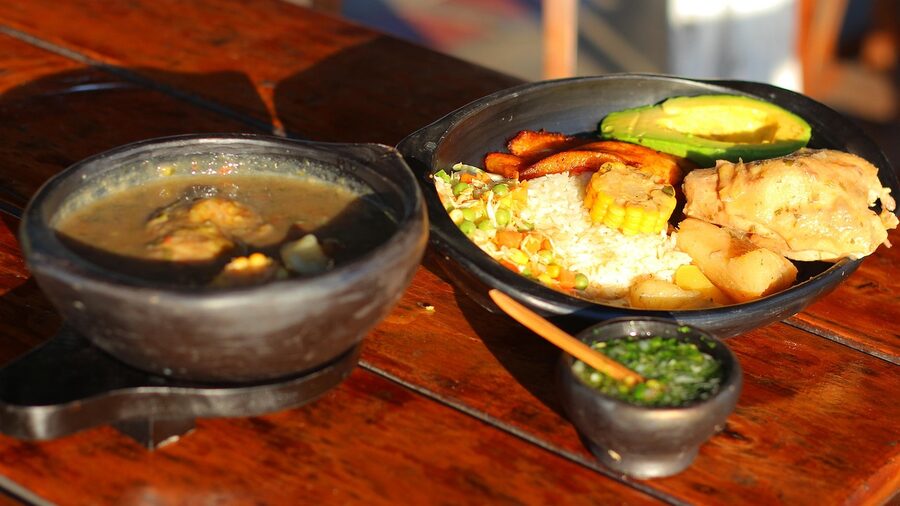
Panamanian food in David is honest, heavy, and cheap. The same handful of dishes everywhere, and that’s fine because the dishes are good.
Sancocho de gallina: chicken-and-yuca soup with ñame (a starchy root) and culantro (the regional cousin of cilantro, sharper). Any comedor at the market or around Parque Cervantes, $3-5, rice on the side.
Ropa vieja: shredded beef in tomato-onion-pepper sauce, with rice and beans. The Panamanian version, less sweet than the Cuban one. $5-8.
Ceviche: Pacific corvina or shrimp in lime, onion, and culantro. Cheaper than in Panama City because David is closer to where the fish lands. Mercado Público stalls do styrofoam cups for around $2.
Hojaldre con bistec: the Panamanian breakfast. Hojaldre is a flat fried-dough disc, like a thick tortilla. With thin steak, eggs, and coffee, around $4 at a comedor. Market stalls open at 6am.
Patacones: twice-fried green plantain rounds, salted, with most fish or meat plates.
Spots worth knowing. Restaurante Don Chicho on Calle Central is the long-running favourite for ropa vieja, sancocho, and a daily plato del día (set lunch) for around $5. Café Multi Café, a block from Parque Cervantes, is reliable lunch and air-con. For dinner with slightly more polish, Cuatro on Calle E Norte is one of the few sit-down dinner places worth recommending. Skip Pío Pío, Niko’s Café, and the mall chains; the price gap is significant and the food is better at the local places.
Where to stay
If you’re overnighting, stay near Parque Cervantes. Walking distance to the centre, market, restaurants, and most bus stops. The malls and airport are out in the north and not where you want to base.
Hotel Ciudad de David (mid-range, central)
Probably the best mid-range in the centre. Modern, clean, on Calle D Norte, walking distance to Parque Cervantes. Pool, decent on-site restaurant, reliable wifi. Check rates on Booking.com.
Hotel Iberia (mid-range, central)
Long-running locally-owned hotel three blocks from Parque Cervantes. Solid, no-frills mid-range. Good on-site restaurant with a reliable buffet breakfast that locals also use for lunch (usually a sign). Check rates on Booking.com.
Gran Hotel Nacional (mid-range, near centre)
Older property a short walk from the centre. Rooms are dated but the pool is one of the largest in the city, which matters when it’s 32°C and you’ve been on a bus all morning. Check rates on Booking.com.
Hampton by Hilton David (chain, north David)
The only international chain in David. Predictable air-con and a generator that handles the city’s occasional power cuts. North of the centre near Federal Mall, so you’ll need an Uber to Parque Cervantes ($2-3, five minutes). Worth it for an early flight or if you want certainty over character. Check rates on Booking.com.
Hotel Residencial Cervantes (budget, on the park)
Old-school budget hotel right beside Parque Cervantes. Rooms are dated, air-con is loud, wifi works but slowly. The location is unbeatable, the price is low, and the bakery next door makes the best pastry-and-coffee breakfast within four blocks. Fine for one night before catching a Boquete bus. Check rates on Booking.com.
Zumo Urban Hostel (hostel)
The reliable backpacker option. Dorms and a few private rooms, kitchen access, small social area. You’ll meet other travellers heading north to Boquete or Bocas, or south from Costa Rica. Not party-loud. Ten-minute walk from Parque Cervantes.
Getting to David
David is the transport hub of western Panama. Four real ways in.
From Panama City by bus
Buses run from Albrook Bus Terminal in Panama City (attached to the metro) to David’s Terminal de Transporte. Departures every hour or so through the day, plus an overnight service. 6-8 hours depending on traffic. Day buses $15-18, express overnight $18-20. Padafront and Terminales David-Panama are the main operators.
The overnight leaves Panama City around 11pm and gets in around 5am, which saves a hotel night. Seats recline reasonably. Air-con is aggressive, so bring a layer. Meal stop around 2-3am.
From Panama City by air
If your time matters more than your money, fly. Air Panama and Copa both run Panama City to David in about 50 minutes from Albrook Airport (Panamá-Pacífico, the small domestic airport, not Tocumen). Tickets $80-150 depending on lead time. Enrique Malek International Airport (DAV) is six kilometres from David’s centre, around $5 by Uber. Air Panama also runs occasional flights from David to San José, Costa Rica.
From Costa Rica via Paso Canoas
The land border at Paso Canoas is 45 minutes west of David on the Pan-American. International buses (Tica Bus, Panaline, Tracopa) run David to San José direct in about 7-8 hours, plus 30-45 minutes for stamping at the border. Bring USD for fees and a printout of onward travel if asked. Doing it independently is cheaper: David-Paso Canoas local bus from the terminal ($2.50, 90 minutes), walk across, pick up a Costa Rican bus on the far side. More hassle.
From Bocas del Toro
One of the most useful regional connections in Panama. Buses leave Almirante (the mainland port for Bocas) hourly, 3-4 hours over the continental divide through dense rainforest before descending to David’s lowlands. $10-12.
Getting from David to Boquete
This is the trip most readers actually came for. Cheap, frequent, easy.
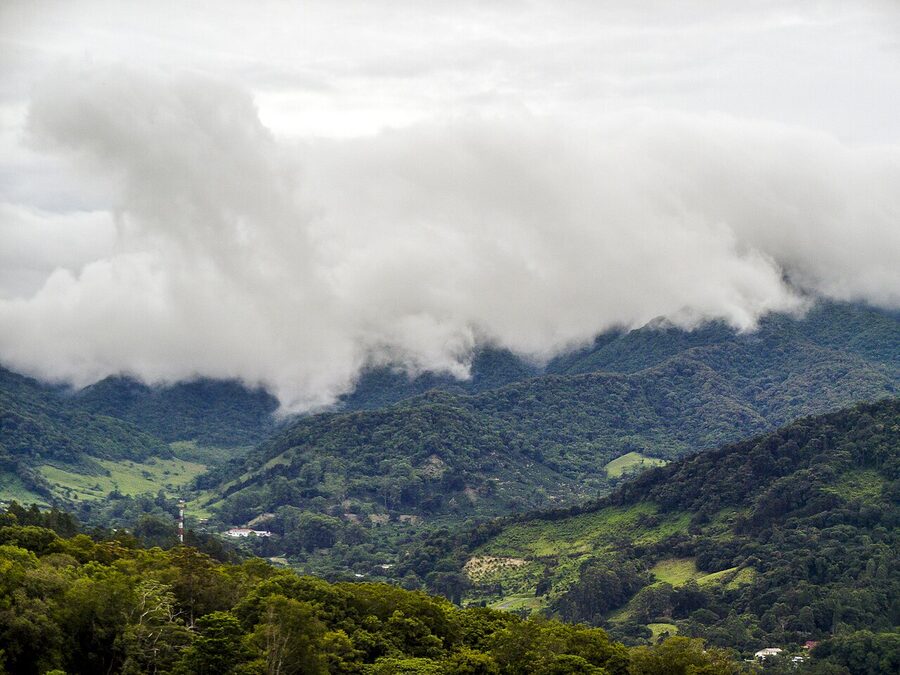
From the David Terminal de Transporte on Avenida del Estudiante, Boquete buses leave every 25 minutes from 5am to 9pm. Standard blue-and-white minibus with “Boquete” on the front. Pay $1.75 in cash to the driver. 50-60 minutes climbing 1,200m through coffee farms and pine plantations. Sit on the right side going up for the volcano views. The last bus back from Boquete is around 8pm, same price.
Two practical things. The Boquete bus drops you in central Boquete beside Parque Domingo Médica. If you’re staying further out (Alto Boquete, Bajo Mono, Volcán), you’ll need a taxi from there, $5-15 depending. Second, the bus fills up on Friday afternoons and Saturday mornings as locals head up for the weekend, so get there early or expect to stand.
Day trips
If you do end up with a day to fill, David’s location pays off. Beach, boat, volcano, or coffee country, all under two hours.
Boca Chica and the Gulf of Chiriquí
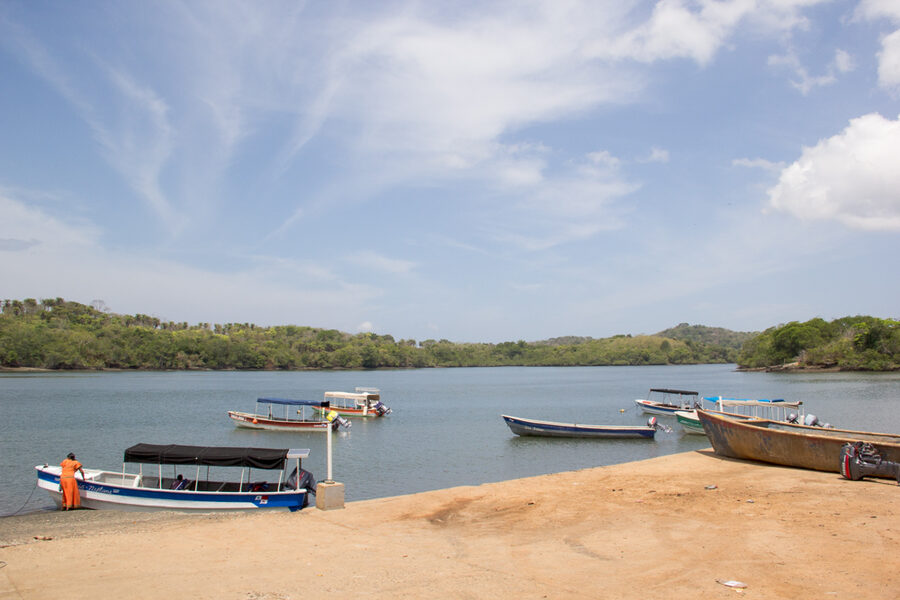
Boca Chica is a small fishing village on the Pacific, an hour southeast of David. From the dock you can hire a boat to Parque Nacional Marino Golfo de Chiriquí, a marine park of around 25 islands with white-sand beaches, snorkelling reefs, and minimal development. Isla Parida and Isla Boca Brava are the most-visited. Day boats run roughly $80-150 split between a group. This is also the launch for Sport Fish Panama Island Lodge on Isla Parida.
Las Lajas Beach
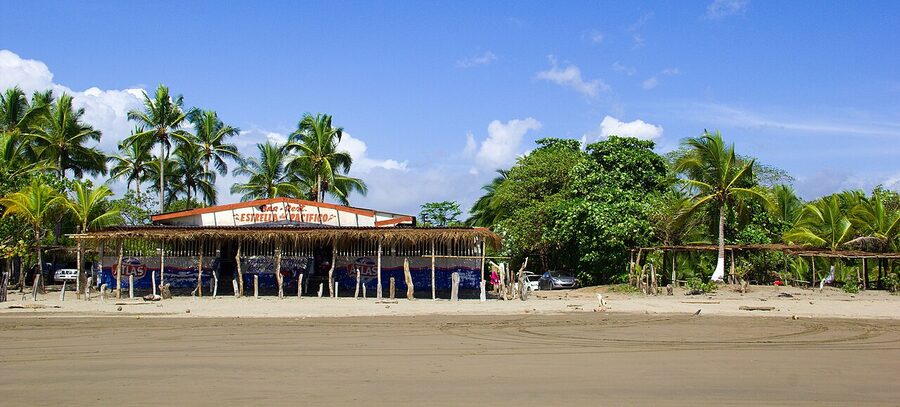
An hour east of David, Las Lajas is one of the longest unbroken beaches on the Panamanian Pacific. Dark grey-brown sand, moderate surf, mostly thatched beach bars and a few small hotels. Buses from David’s terminal run to Las Lajas Cruce ($2-3, 60 minutes) and from there it’s a short taxi to the beach. A budget Panamanian beach day, no resort vibe.
Volcán Barú
Panama’s highest peak (3,475m) and one of the few places where you can see both the Atlantic and the Pacific on a clear day. The summit hike is an eight-hour overnight trek, traditionally started at midnight for a dawn arrival. Most people climb from the Boquete side with a guide. If you don’t want to climb, the road goes most of the way up in a 4×4.
Boquete coffee farms
Boquete’s volcanic soil produces some of the most expensive coffee in the world. Geisha varieties from farms like Hacienda La Esmeralda regularly auction for over $1,000 a pound. You can tour working fincas (Café Ruiz, Finca Lerida, Casa Ruiz, Hacienda La Esmeralda) for $30-60 including cupping sessions. Day-trippable from David, but more sensible from a Boquete base.
Cerro Punta and the highlands
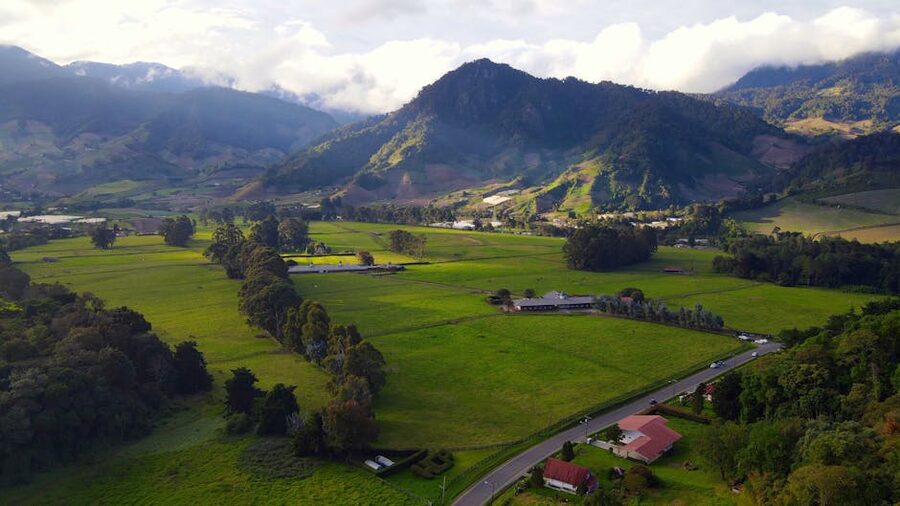
Up the western side of Volcán Barú is the village of Cerro Punta at 2,000m, where high-elevation farms grow Panama’s broccoli, cabbage, and dairy. The Sendero Los Quetzales, a 9 km cloud-forest trail across the volcano’s flank, links Cerro Punta to Boquete. 5-6 hour hike, downhill if you go Cerro Punta to Boquete. Quetzal sightings peak February-May. Hire a guide unless you’re an experienced cloud-forest hiker.
Getting around David
Walk inside the four-block radius of Parque Cervantes. Beyond that, Uber. Ubers are cheap ($1.50-3 for most city trips) and drivers are honest about routes. Peak-hour waits (5-7pm) can run 10-15 minutes, and there are dead zones near the malls and airport where you might wait longer. Yellow taxis are everywhere and cheaper still, but negotiate the fare before you get in: bus terminal to Parque Cervantes should be $2-3, and the common scam is doubling the rate for foreigners.
Safety
David is fine. Chiriquí is one of the safer provinces in Panama. Standard provincial-city precautions apply: don’t flash valuables, watch your bag in the market, take Uber rather than walk after dark, and avoid the eastern industrial fringes at night. The current US State Department and UK FCDO advisories rate Panama at Level 2 (exercise normal precautions) with no specific Chiriquí warnings. The current US guidance is on the State Department’s Panama page, and Panama’s tourism authority publishes general visitor info at atp.gob.pa.
Real risks: petty theft in the market and at the bus terminal (keep your bag closed and on your front), and traffic. Drivers are aggressive, the Pan-American runs straight through town, and pedestrian infrastructure is poor. Cross at lights. Don’t assume cars will stop.
The bigger picture
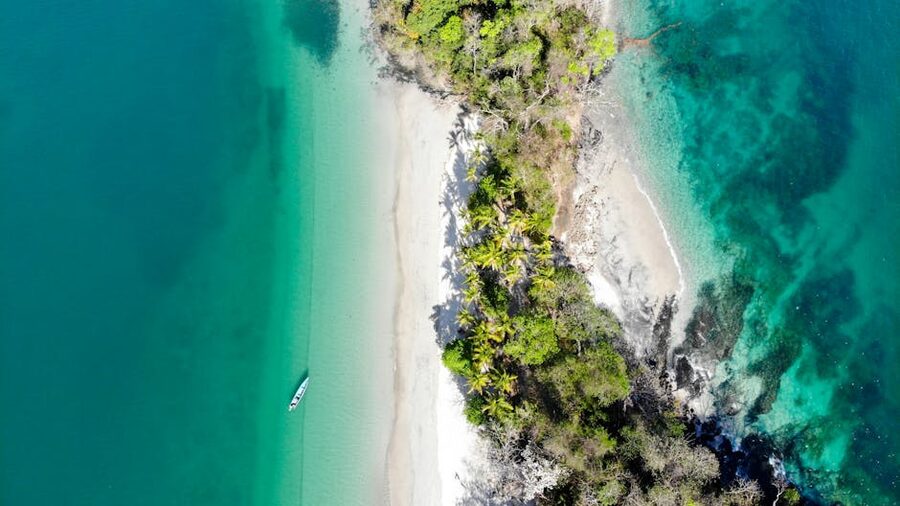
David doesn’t need defending and it doesn’t need overselling. It’s the practical hub of one of the most varied corners of Panama. From here you can be on a Pacific island in 90 minutes, in a cloud forest in 60, in coffee country in 60, on a long brown beach in 60, or across the Costa Rica border in 45. The city itself is hot, flat, and short on traditional sights, but the food is good, the people are unaffected, and the bus connections genuinely useful.
If you’ve got a Boquete reservation tonight, don’t overthink David. Eat at the market, walk Parque Cervantes, get on the bus. If you’ve got a gap, half a day or a night here is a reasonable use of your travel time in western Panama. Just don’t expect a postcard.


.jpg)


