
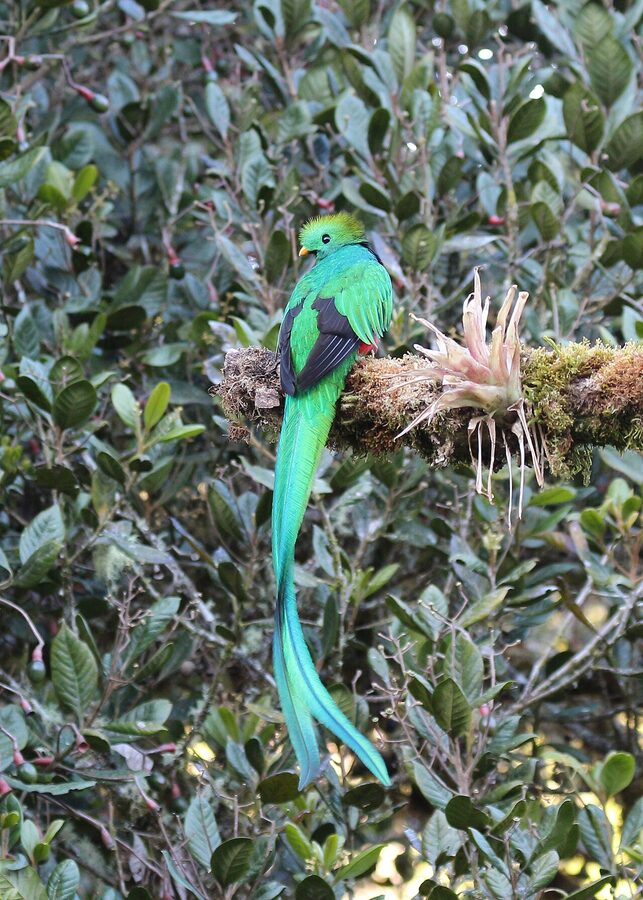
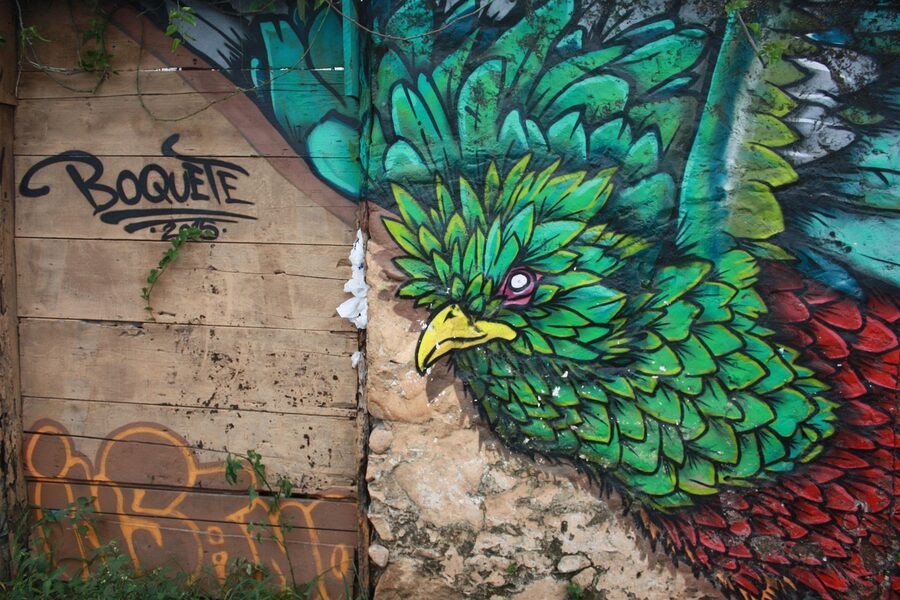
The first time I saw a resplendent quetzal in Monteverde, it was 6.20am, the cloud was still hugging the canopy, and the guide had been pointing his telescope at the same spot for forty silent minutes. Then there was a flash, half a second of green and crimson cutting through the understory. He’d already swung the scope onto a fruiting aguacatillo tree before I’d registered what I’d seen. The bird sat there for maybe four minutes, eating wild avocados, the long emerald tail trailing. I have never been so cold in Costa Rica and I have never cared less.
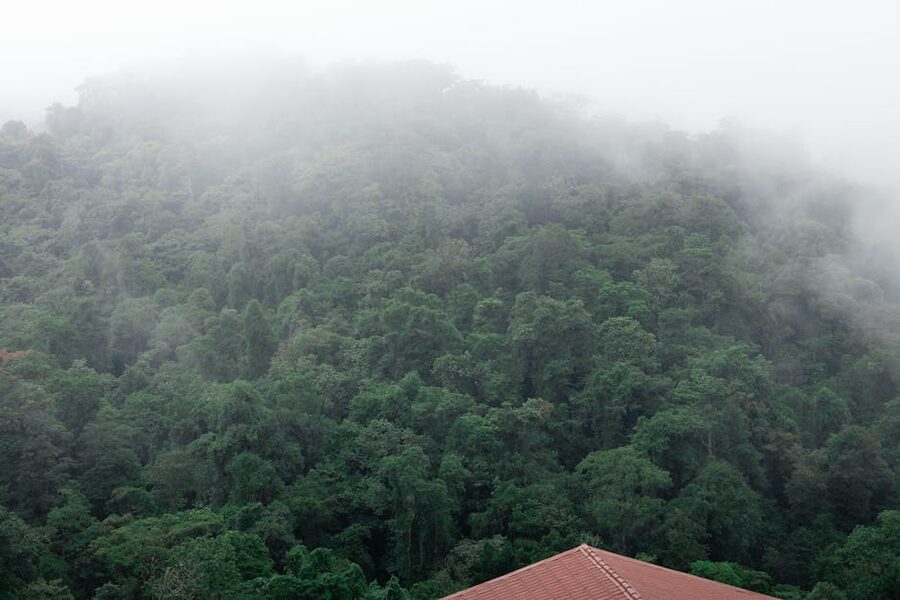
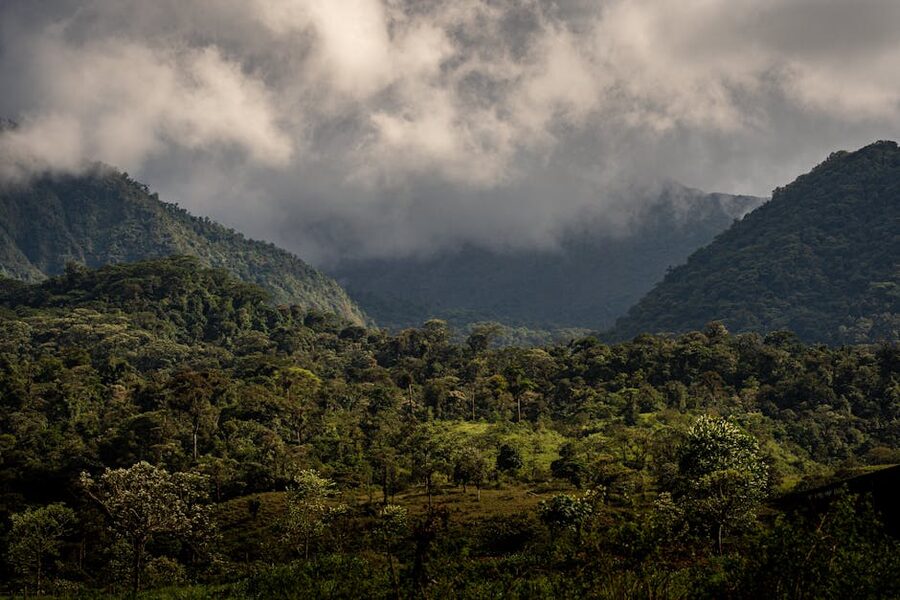
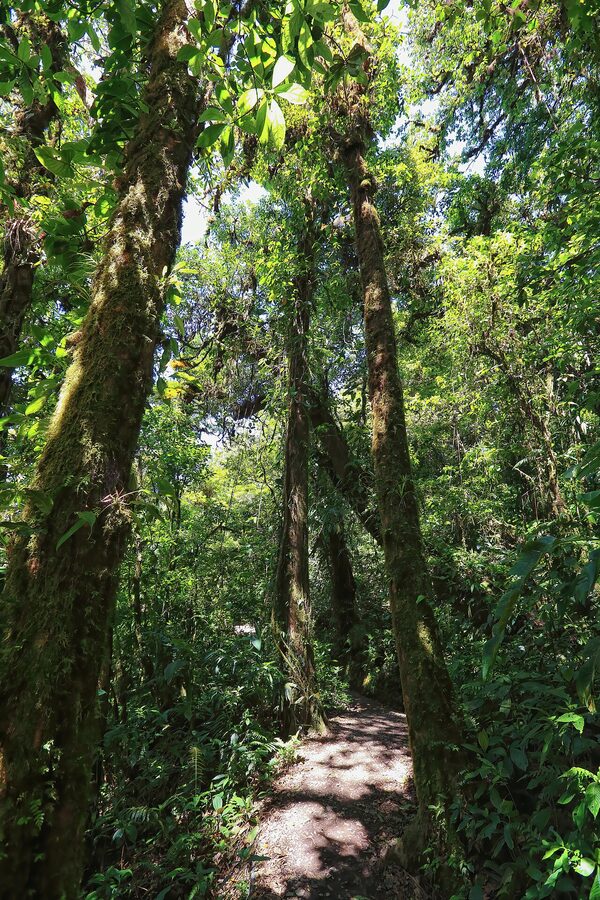
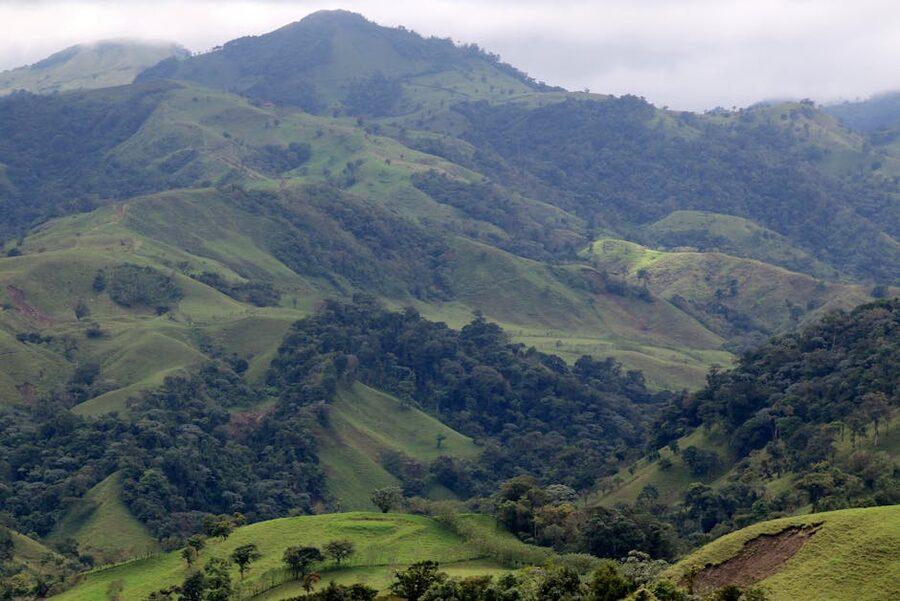
That is Monteverde in one moment. A different Costa Rica from the beach playgrounds and the volcano-side hot springs. At 1,400m on the Continental Divide, the cloud forest is wet by definition, temperatures drop to 11-13°C overnight in the dry season, and the wildlife is the headline. Sloths and monkeys aren’t the calling card the way they are in Manuel Antonio. Birds are. Over 400 species, including the only tropical bird most travellers can name from memory.
This guide is the practical version: which reserve to pick, where to stay by tier, how to get there from La Fortuna via the jeep-boat-jeep across Lake Arenal, and what to skip. What nobody tells you in the listicles: Monteverde is expensive by Costa Rican standards, the road in is genuinely rough, and the quetzal you came for might not show up for two days.
If this is your first Costa Rica trip, the standard loop is San José or Liberia airport, then La Fortuna (Volcán Arenal, hot springs), then Monteverde, then a Pacific beach. Monteverde is the cool, mossy, slow part of that itinerary and most people emerge from it deciding they should have stayed an extra night.
In This Article
- Monteverde or Santa Elena: same place, two names
- The cloud forest reserves: which one to pick
- Monteverde Cloud Forest Biological Reserve
- Santa Elena Cloud Forest Reserve
- Curi-Cancha Reserve
- Children’s Eternal Rainforest
- The wildlife: birds, then everything else
- Hanging bridges and zip-lines: the Costa Rica brand activity
- Selvatura Park
- 100% Aventura and Sky Adventures
- Night tours: don’t skip this
- Coffee and chocolate tours
- Wildlife exhibits worth doing
- El Tigre Waterfalls
- Where to stay: by tier
- Splurge: Senda Monteverde
- Mid-range: Hotel Belmar
- Mid-range alt: El Establo Mountain Hotel
- Mid-budget and budget
- Where to eat
- When to go
- How to get there
- From La Fortuna: jeep-boat-jeep (the one you should pick)
- From San José or Liberia
- Public bus (cheap option)
- How long to stay
- Budget and onward
- Practical odds and ends
- What to skip
- Two and a half days, the version I’d run
Monteverde or Santa Elena: same place, two names
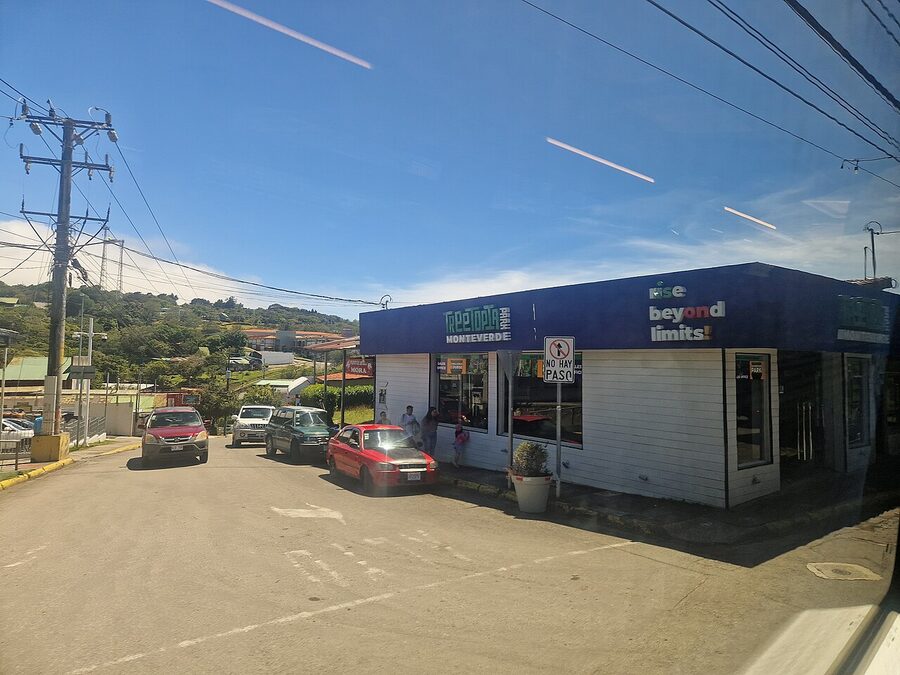
This trips up first-timers constantly. The town you sleep in is called Santa Elena: a small main street with hostels, sodas (basic local cafés), tour offices, a Megasuper grocery, and gear-rental places. Monteverde is technically a smaller settlement 6 km southeast on the road that dead-ends at the Cloud Forest Reserve, founded by Quaker dairy farmers from Alabama in the 1950s. In casual conversation, “Monteverde” gets used for the whole region. Two cloud forest reserves carry both names: the famous Monteverde Cloud Forest Biological Reserve, and the quieter Santa Elena Cloud Forest Reserve. Different gates, different vibes.
If you’re booking a hotel without a car, stay in Santa Elena town. With a car, anywhere along the Santa Elena-Monteverde road works. The road is paved at first, gravel at the end.
The cloud forest reserves: which one to pick
You have four real options, and most people pick badly because the famous one is crowded for a reason and the quieter alternatives often deliver better wildlife sightings.
Monteverde Cloud Forest Biological Reserve
The original. About 14,200 hectares, founded 1972, run by the Tropical Science Center, sitting right on the Continental Divide. Eight trails ranging from a 30-minute loop (Sendero Bosque Nuboso) to the longer Camino Sendero out to the Continental Divide viewpoint. There’s one famous suspension bridge, the Puente Wilford, that gives you a canopy-level view if the cloud cooperates. Entry is around ₡14,000 for non-residents. They cap entries at 250 people in the park at once, which sounds great until you realise everyone wants the 7am slot.
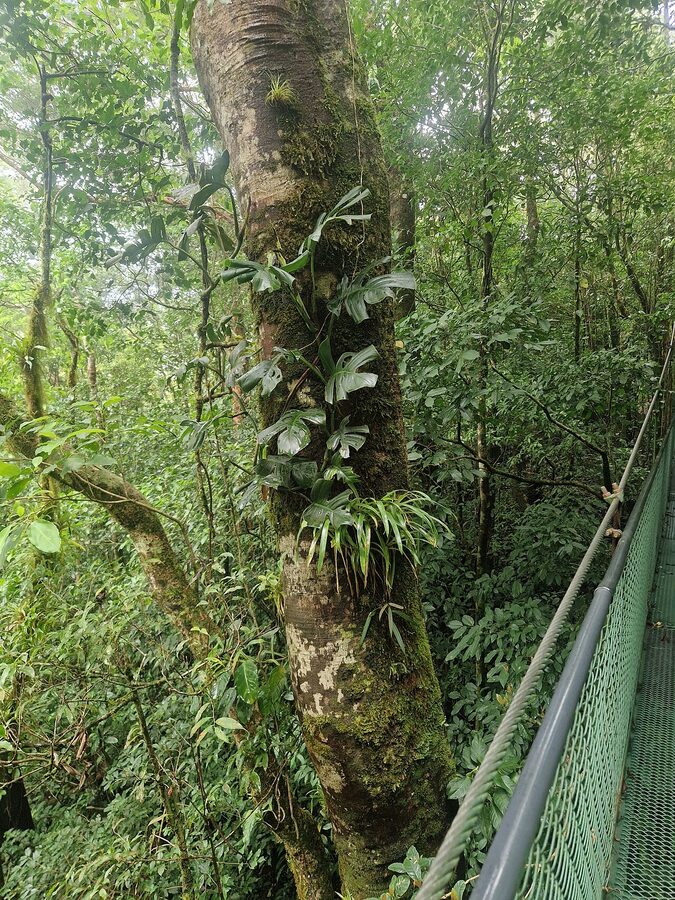
Worth doing once if it’s your only Costa Rican cloud forest. Hire a guide (₡22,000 per person for a 2-3 hour group tour). The forest is so dense, sound is muffled by moss, and you walk past birds you don’t see. With a guide and a telescope you’ll see five times what you’d find alone.
Santa Elena Cloud Forest Reserve
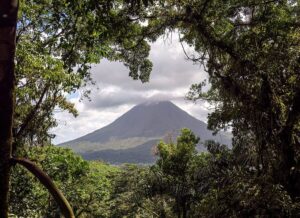
5 km north of Santa Elena town, smaller (310 hectares), higher elevation (1,700m), wetter, mossier, and less crowded. Trails feel more enclosed, more like the cloud forest in fairy-tale shorthand. On clear days the Youth Challenge Trail offers a view of Volcán Arenal over the canopy. Entry around ₡8,000.
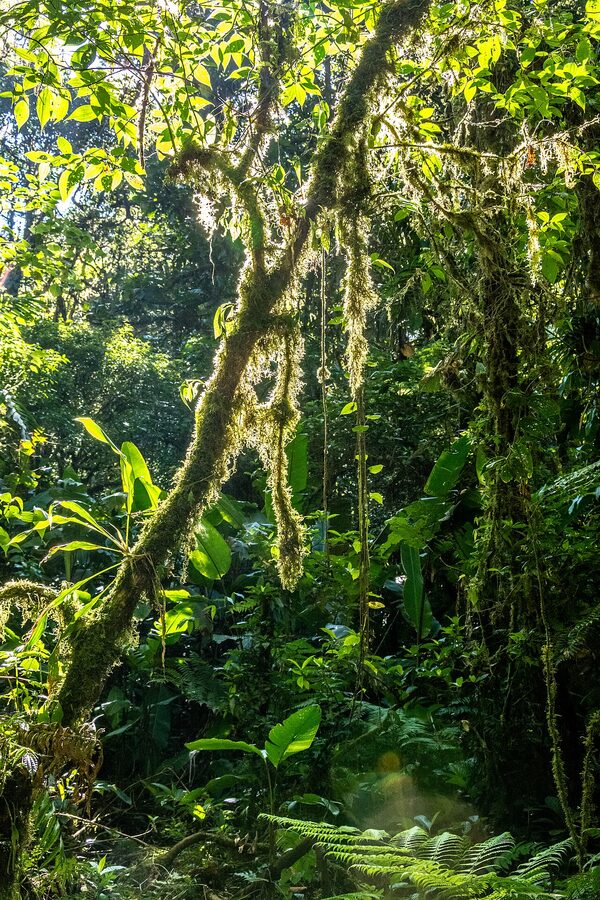
If you only have one cloud forest visit, this is the better one for atmosphere. If you want the famous suspension bridge and the original-place experience, do Monteverde. If you have two days, do both.
Curi-Cancha Reserve
The locals’ favourite and the birders’ choice. About 100 hectares, privately owned, a mix of secondary forest and former pasture which sounds worse but is the secret: the mixed habitat brings birds out into open spaces where you can actually see them. If you have any chance of spotting the resplendent quetzal between March and July, this is where it happens.
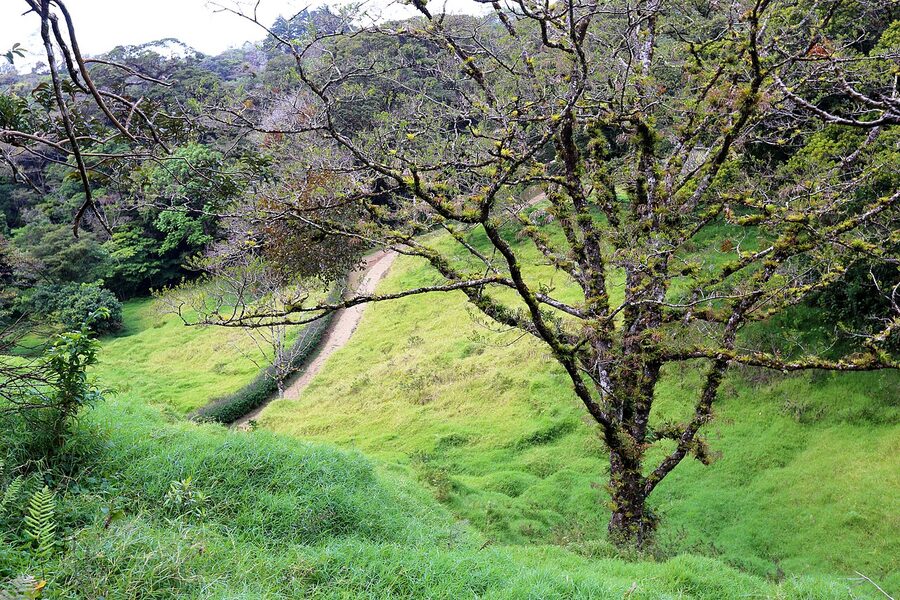
Bookings are required and they cap entry. Hire the in-house naturalist guide (Carlos and Gerardo are the regulars) and start at 6am. Entry plus guide runs about ₡35,000-40,000. Worth every colón if quetzals are why you came.
Children’s Eternal Rainforest
The largest private reserve in Costa Rica (Bosque Eterno de los Niños), 22,500 hectares started in 1988 by Swedish schoolchildren. The Bajo del Tigre trail near Santa Elena (3 km, ₡8,000) is a low-elevation drier alternative when it’s pouring up at Monteverde proper.
The wildlife: birds, then everything else
You came here for the resplendent quetzal. Get the disappointment out of the way: there is a meaningful chance you won’t see one. They’re most active during nesting season, March through July, when the males flash their metre-long tail streamers around fruiting aguacatillo trees. Outside those months, sightings exist but they’re harder. Within nesting season, your best odds are at Curi-Cancha with a guide at first light, then the regular Monteverde reserve with a guide. Wandering alone hoping to get lucky is the worst plan.
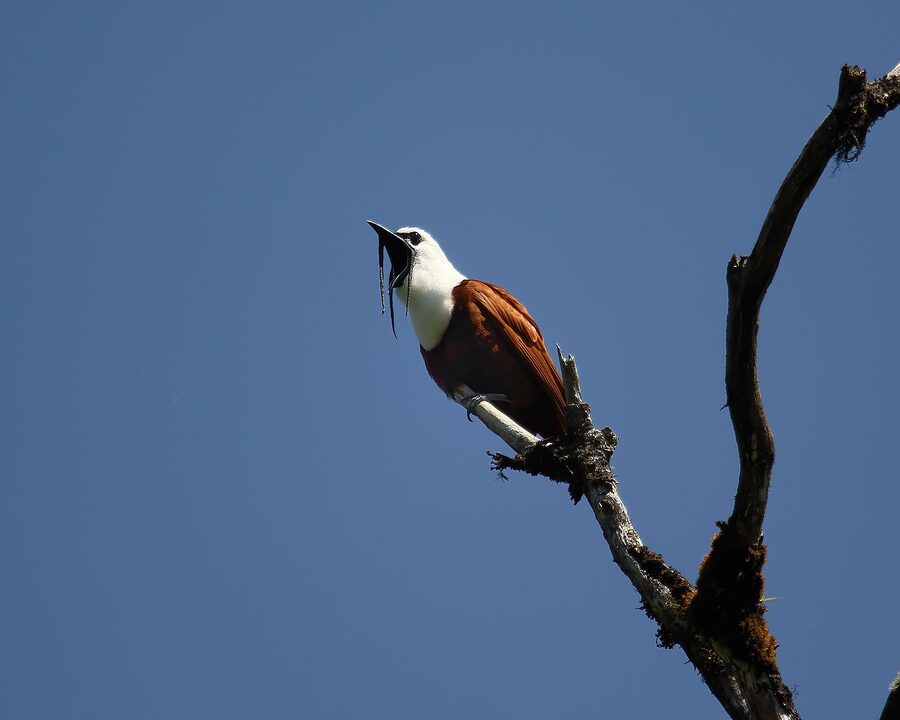
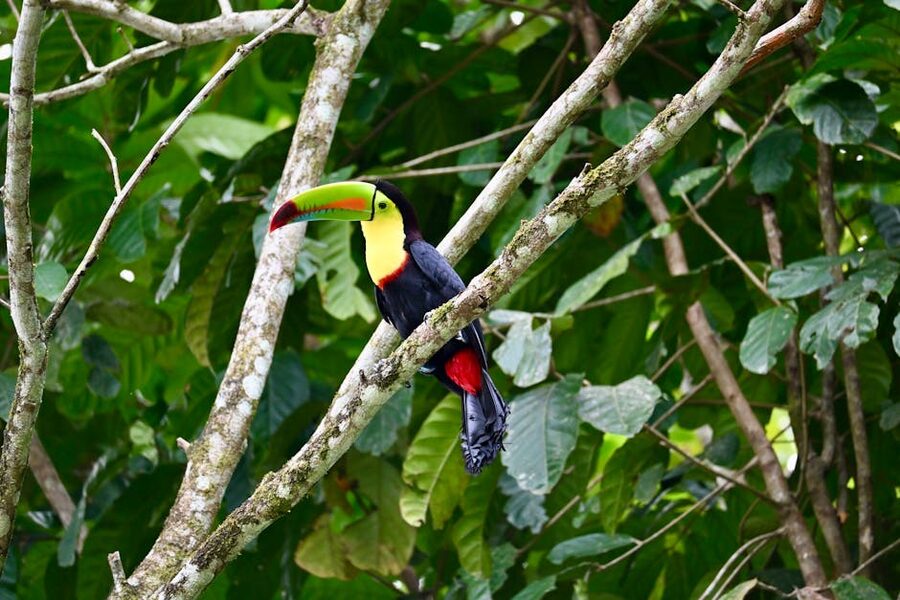
The other two birds birders fly here for: the three-wattled bellbird, whose call sounds like a metallic hammer striking and carries up to a kilometre, and the bare-necked umbrellabird, with a male crest like an Edwardian wig. Bellbirds are present year-round, calling most in the dry season; umbrellabirds are tougher, often seen in lower parts of the Children’s Eternal Rainforest.
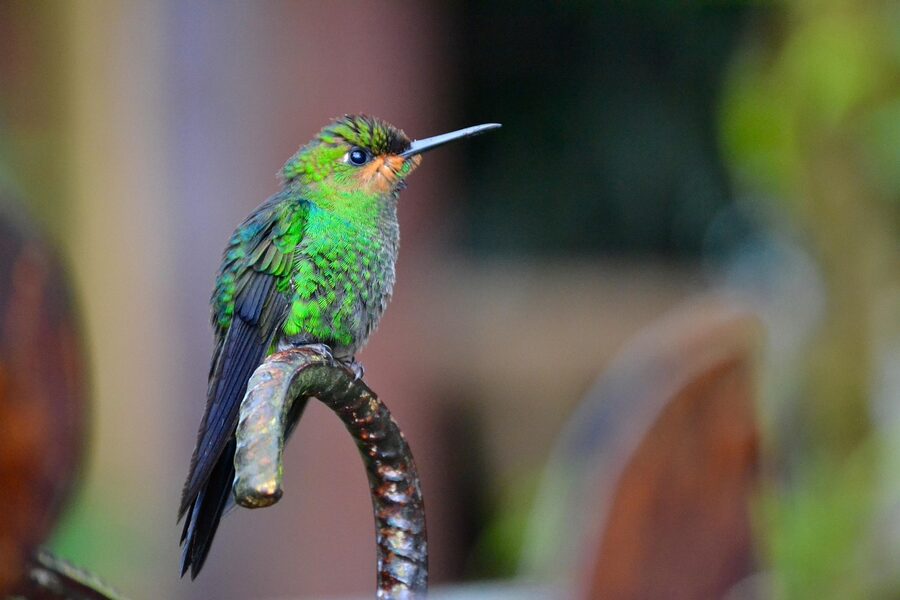
Beyond the headliners, the area logs over 400 bird species. Hummingbirds are constant. Ten species visit the feeders at the Hummingbird Gallery next to the Monteverde Reserve entrance, where you can stand a metre from a green-crowned brilliant or a violet sabrewing as they argue over sugar water. It’s free and it’s the highest density of bird species you’ll experience in five minutes anywhere in the country.
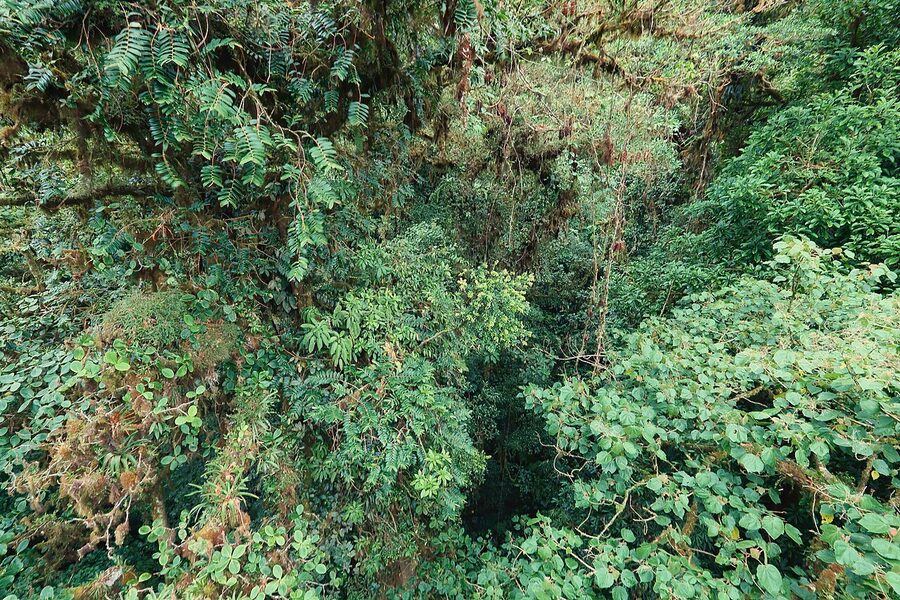
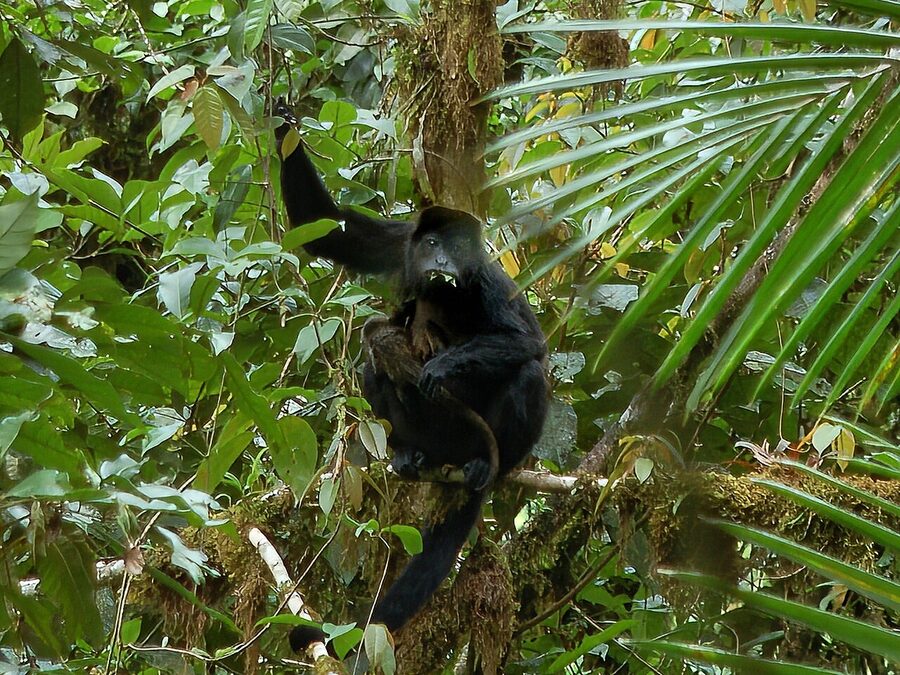
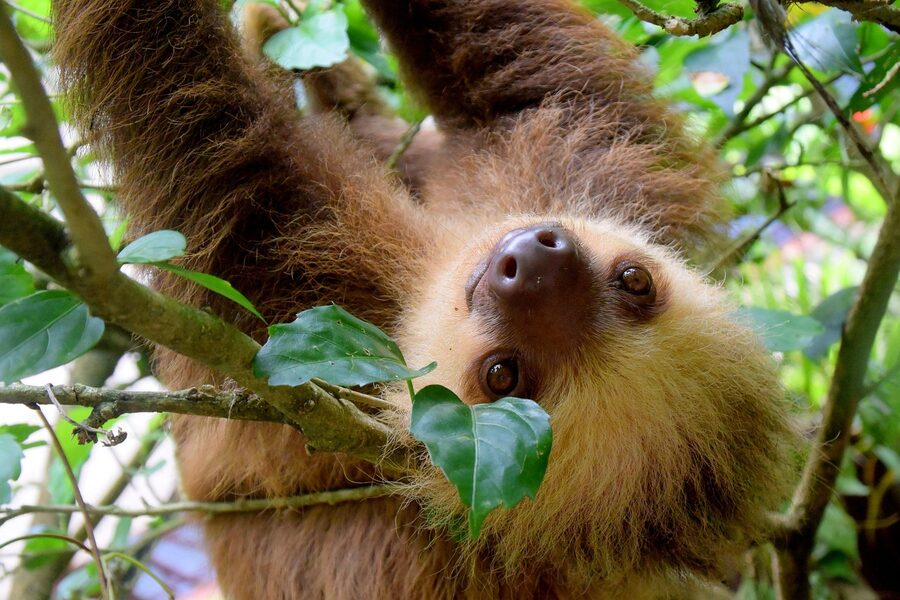
What about the rest? Mammals are quieter here than at lower elevations. You’ll probably hear howler monkeys at dawn, but the deafening pre-dawn chorus you get in other Costa Rican forests is muffled by the cloud and altitude. White-faced capuchins and coatis are around but skittish. Two- and three-toed sloths exist in Monteverde but are far easier to spot at sea-level reserves like Manuel Antonio. Don’t come to Monteverde primarily for sloths.
Hanging bridges and zip-lines: the Costa Rica brand activity
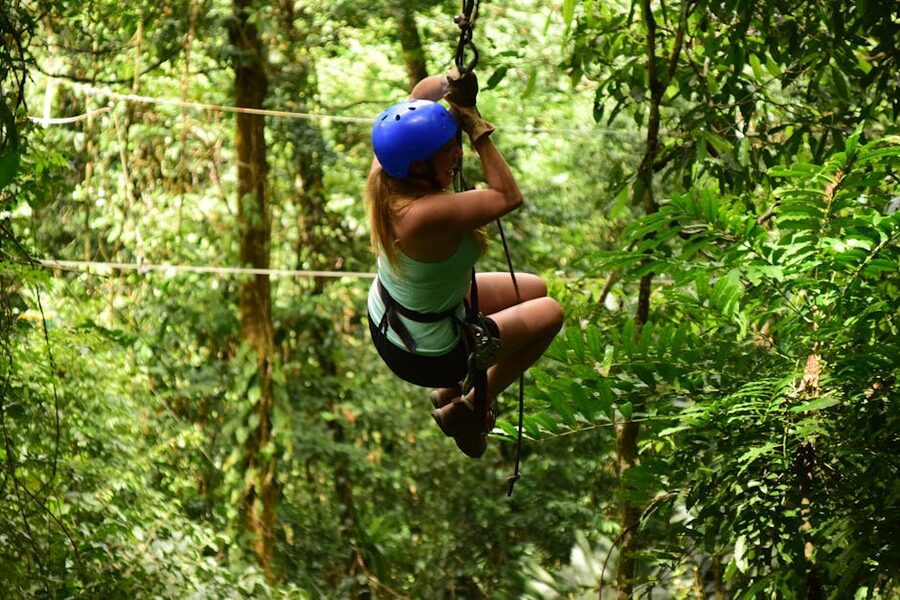
Monteverde claims to be the birthplace of the canopy zip-line, dating back to a 1970s research rig that someone realised tourists would pay to ride. Three main parks operate today, plus treetop hanging-bridge walks if heights and harnesses aren’t your thing.
Selvatura Park
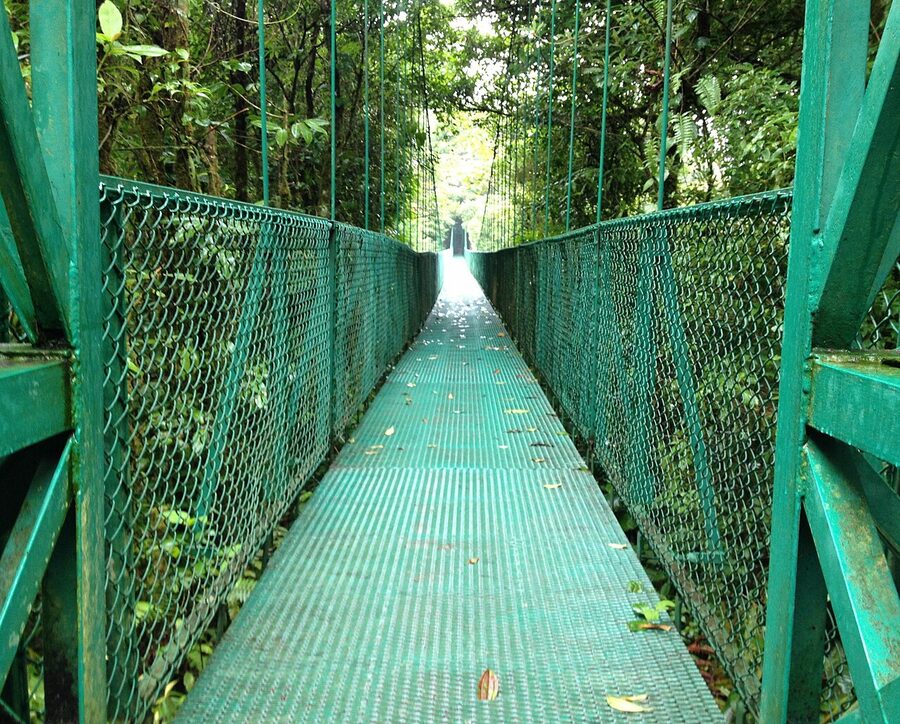
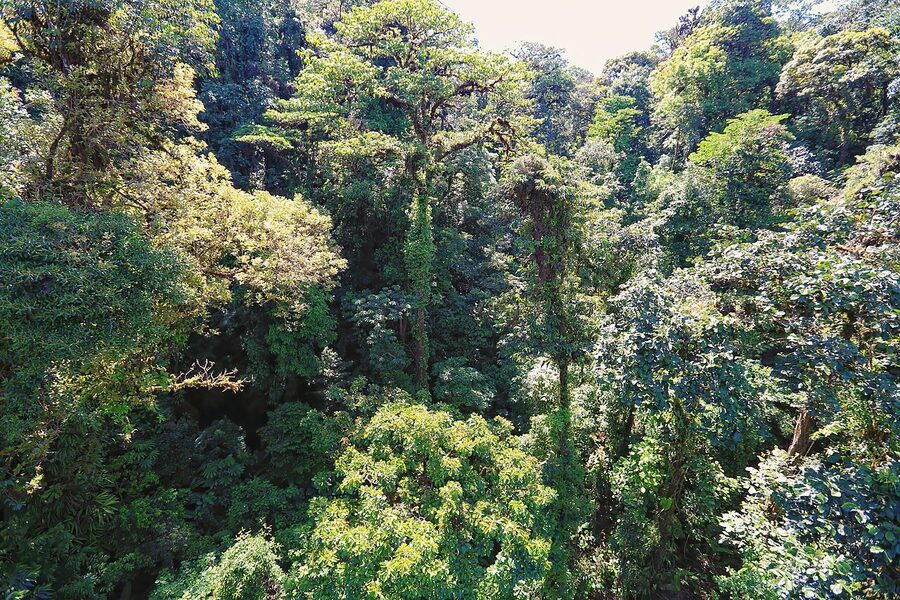
The biggest and most varied. Eight suspension bridges totalling about 3 km of treetop walkway, 13 zip-line cables, plus hummingbird garden, butterfly garden, sloth sanctuary, and herpetarium. The price stacks because each add-on is its own ticket; full combo ₡60,000-65,000, bridges-only ₡25,000. Bridges-only is what I’d recommend if you’re not committed to ziplining: they sit higher than the other parks and pass through proper cloud forest.
100% Aventura and Sky Adventures
The other two big operators sit a few minutes’ drive from each other. 100% Aventura is the adrenaline option: their Superman cable is 1.6 km long and you fly headfirst with arms out like the namesake, plus a Tarzan swing and a 143-metre bungee jump (Costa Rica’s tallest). Combo zip-line tickets around ₡40,000-50,000. Sky Adventures bundles Sky Walk (bridges), Sky Trek (zip-line), and Sky Tram (an aerial gondola to the top of the course). The full bundle is about ₡73,000. The tram is the differentiator if you have mobility limitations and want to be in the canopy without the stairs.
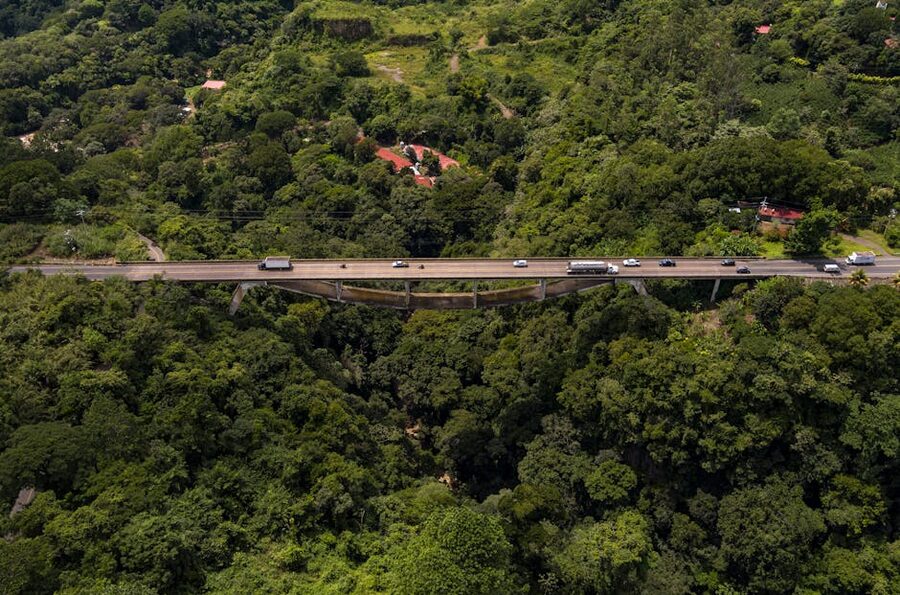
The take: do one zip-line park or one bridges-only walk, not all three. The activities overlap and the parks are five minutes’ drive apart. If I were picking once: the Selvatura bridges, no zip-line.
Night tours: don’t skip this
The night tour is the activity I would not skip if I had to pick one. After 6pm the cloud forest becomes a different ecosystem, and a guide with a torch will show you things that walked past you in daylight without you noticing.
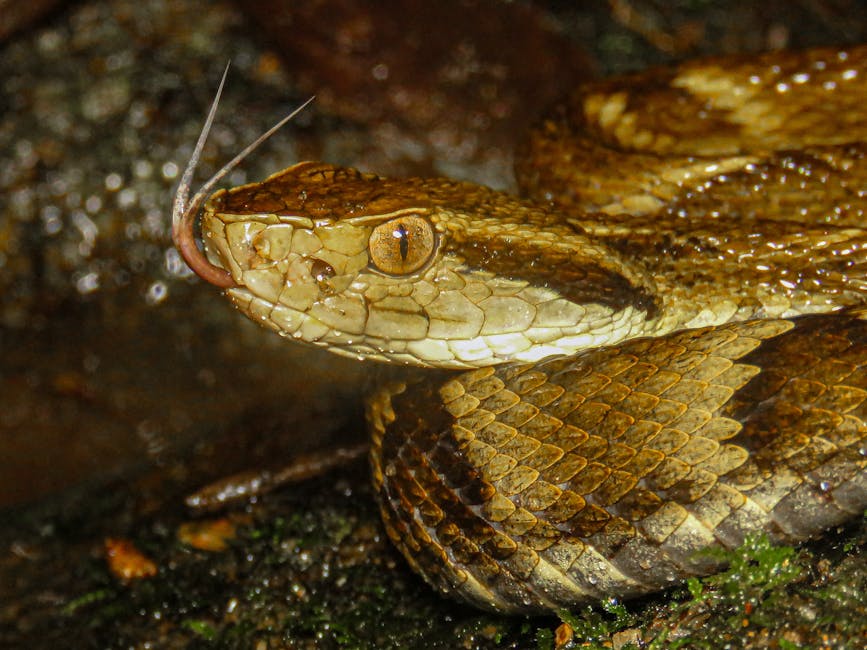
In roughly descending order of likelihood: tarantulas (Costa Rican red-rumps), stick insects, glasswing butterflies roosting under leaves, sleeping toucanets, two-toed sloths (they’re nocturnal), kinkajous, olingos, the occasional eyelash pit viper, scorpions glowing under UV light, leafcutter ant columns, and various tree frogs. Two hours, ₡25,000-30,000 per person.
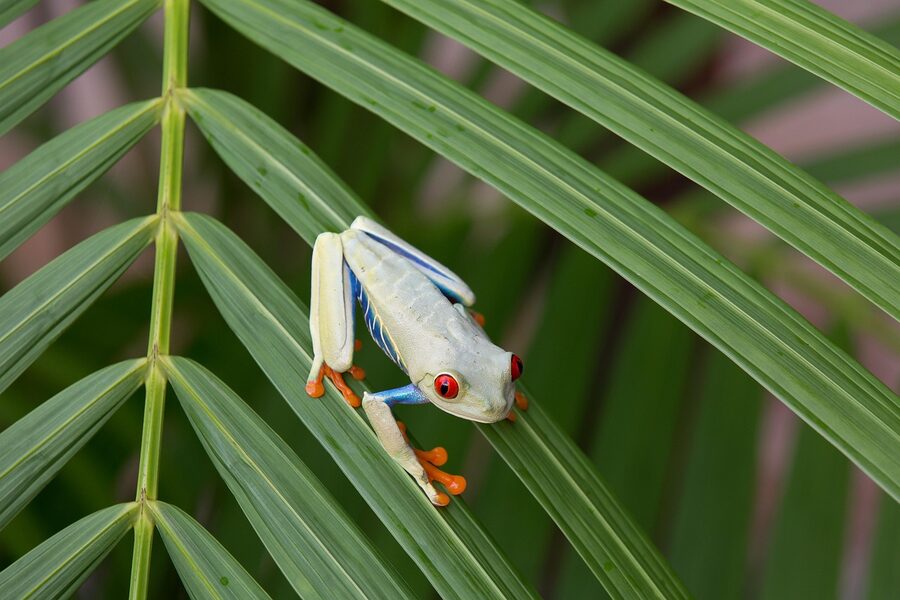
Operators run from any guesthouse in town. Refugio Bartola, Kinkajou Tours, and the Monteverde Reserve’s own evening tour are the ones that come up repeatedly across local recommendations. Bring a head torch even though they provide one. Yours frees up your hands; theirs is for spotting.
Coffee and chocolate tours
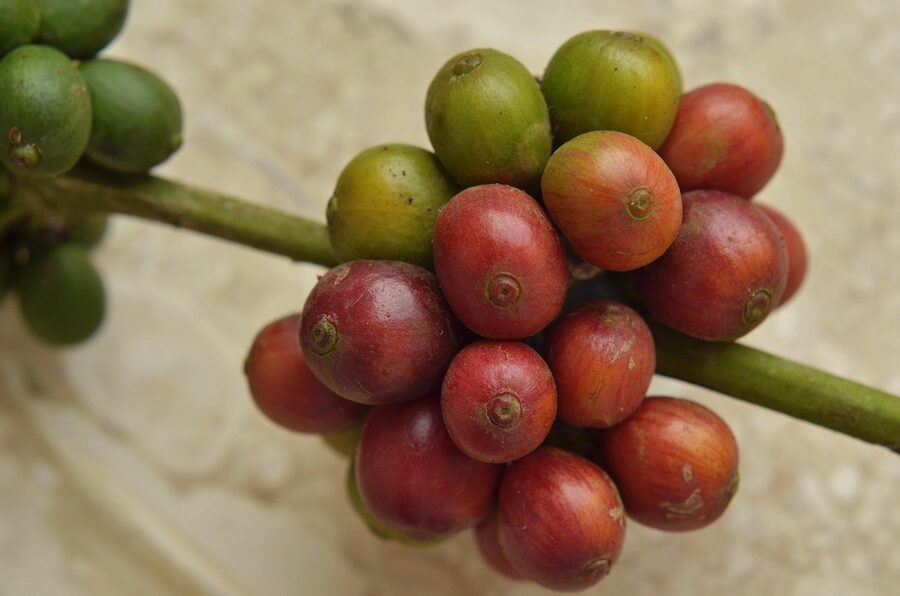
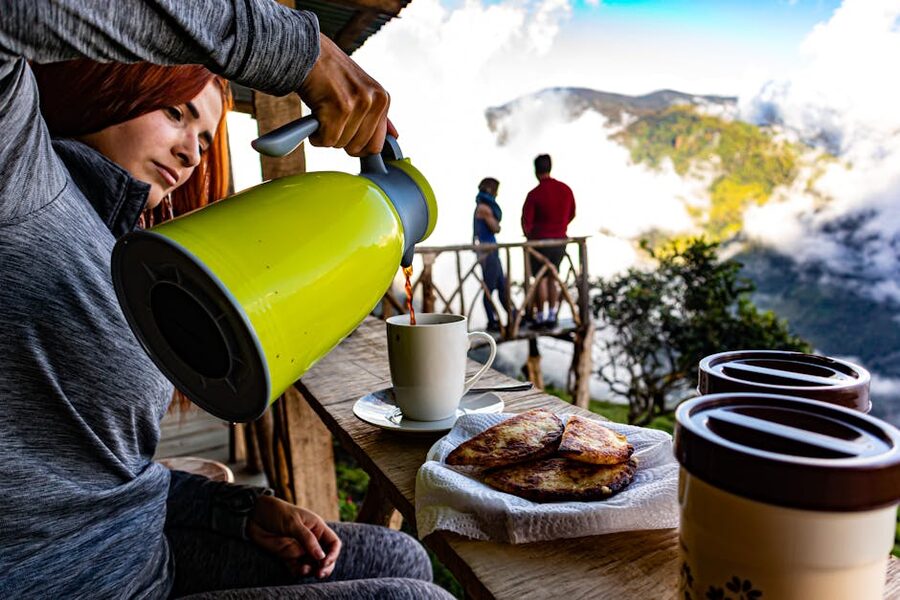
Monteverde grows arabica at 1,200-1,500m, which is the elevation that gets you proper acidity and complexity. Three operators are commonly recommended, each slightly different. Don Juan Coffee Tour (around ₡30,000, 2.5 hours) is the polished combo of coffee, chocolate, and sugar cane processing: family-friendly, more theatre than artisanal. Café de Monteverde (around ₡25,000) is focused on the bean and the cup, with a roastery tour and proper cupping. If you drink coffee seriously, this is the one. El Trapiche is a working family farm doing the same coffee-chocolate-sugar combo with a less staged feel and an oxcart ride at the end that kids remember. Pick one.
Wildlife exhibits worth doing
Monteverde has an oversupply of small exhibits competing for the same dollars. The two I’d actually pay for: Bat Jungle (₡8,000) is a simulated nocturnal environment with eight or nine species of free-flying bats, a bilingual guide-led tour, and a bioacoustic microphone that translates ultrasound calls into audible clicks. About 45 minutes, educational without being preachy. Monteverde Butterfly Garden (₡10,000) covers four habitats with a glass-sided leafcutter-ant nest where you can see the queen. Worth it especially if it’s raining hard enough that the reserve hike will be a slog. The orchid garden, serpentarium, and frog pond are all fine for an hour out of the rain but skippable if you’re tight on time.
El Tigre Waterfalls
If you want a hike that isn’t a reserve walk, El Tigre Waterfalls is the standout. Private property 25 minutes by 4×4 from Santa Elena, an 8-km trail through six waterfalls connected by hanging bridges. Mostly downhill, which feels great until you remember you have to come back up; they offer a horse or 4×4 ride back. Plan a full day; ₡30,000-45,000 depending on the return-and-lunch bundle. Worth it if you like hiking and you’re tired of the cloud-forest reserves. If you’ve already done waterfalls at La Fortuna, this might feel like overkill. For something quick and free, the Catarata Los Murciélagos is a 20-minute walk from Santa Elena town.
Where to stay: by tier
Hotel inventory stretches from ₡13,000 dorm beds to ₡280,000 boutique cabins.
Splurge: Senda Monteverde
The clear premium pick. 35-acre private reserve about 5 minutes from the main reserve gate, private bungalows, a cantilevered deck restaurant overlooking the canopy, and trail access from the property. ₡180,000-280,000 per night. Worth it if Monteverde is the centrepiece of your trip and you want to wake up in the forest. Check rates on Booking.com.
Mid-range: Hotel Belmar
Family-run since 1985, Austrian alpine-style chalet, one of the older Monteverde properties and still one of the best for the price. The on-site restaurant Celajes is the real draw, with local sourcing and a small in-house brewery (the only craft beer in town). Sunset views from the upper terraces are the best in Monteverde. ₡85,000-140,000 per night. Check rates on Booking.com.
Mid-range alt: El Establo Mountain Hotel
Larger and more resort-style, with a tram between buildings on the steep hillside. Private trails, a couple of restaurants, a spa. ₡100,000-150,000. Better if you want more facilities; less character than Belmar. Check rates on Booking.com.
Mid-budget and budget
Camino Verde B&B (₡35,000-55,000) is a family-run place 5 minutes from the main street, often recommended on traveller forums for value. Hotel Poco a Poco (₡70,000-110,000) is the in-town pick with pool and spa. Sloth Backpackers (₡13,000-18,000 dorm bed) is the sociable hostel option, walking distance to everything in Santa Elena. Monteverde Country Lodge is the slightly-out-of-town quieter alternative at ₡25,000-40,000 for a private double.
Camino Verde | Hotel Poco a Poco | Sloth Backpackers | Monteverde Country Lodge.
Where to eat
Santa Elena and the road up to Monteverde have more restaurants than the size of the place suggests, and the standard is above other Costa Rican mountain towns of this size.
Stella’s Bakery is a Monteverde institution since 1990, run by the original Quaker founders’ family. Strong breakfasts, fresh-baked bread, granola made on-site. Where the locals go before everyone else gets up. Sabor Tico is the local-favourite soda for casados (the Costa Rican plate-of-the-day with rice, beans, plantain, salad, and a protein) and gallo pinto, around ₡4,500 a plate. Tree House Restaurant is built around a living strangler fig in the middle of Santa Elena: touristy but the location is properly cool and the food is reliable. Restaurante Celajes at Hotel Belmar is the upscale pick, farm-to-table with vegetables from the hotel’s own farm a few hundred metres downhill, mains ₡10,000-18,000, and the only on-tap craft beer in town. Tramonti does wood-fired pizza with flour imported from Italy (₡8,000-12,000) when you’re done with rice and beans. Orchid Coffee is the morning anchor for espresso, and Cafe Cabure is the hot chocolate move on cold misty afternoons.
When to go
Costa Rica splits into a dry season (verano, December through April) and a green season (invierno, May through November). Monteverde is more nuanced because it’s a cloud forest, which means it’s wet to some degree year-round.
December-April (dry season): Best general weather, less rain, more reliable views. Also peak prices and crowds, especially mid-December through January and at Easter (Semana Santa, when domestic tourism doubles). The tradeoff: resplendent quetzals are most active here because nesting runs March through July. May-July (early green season): The sweet spot for many travellers. Quetzal nesting peak, fewer crowds, prices ease, and afternoon rain is a feature not a bug. Mornings clear, rain 1-3pm, dry by sunset. August-September: Wetter but still doable. Forest at its mossiest. October: The one month I’d avoid. Heaviest rain, some trails close, hanging-bridge visibility drops to nothing. November: Transition month, rain easing, prices low, crowds light, foliage at its greenest. Underrated.
Practical kit regardless of season: a thin waterproof shell, layers (it gets to 11-13°C overnight in the dry season), closed-toe walking shoes you don’t mind getting muddy, and a dry bag for camera gear. Cotton dries slowly in this humidity; pack quick-dry.
How to get there
Monteverde sits at the end of a road. You’re driving up to a remote mountain town from the Pan-American Highway, and there are two main routes plus the genuinely-fun option from La Fortuna.
From La Fortuna: jeep-boat-jeep (the one you should pick)
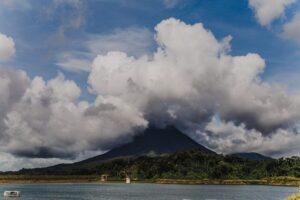
The iconic Costa Rican shuttle: van from La Fortuna to Lake Arenal (30 min), 30-passenger boat across the lake with the volcano behind you (30 min), van up the climb to Santa Elena (90 min). Total around 3 hours. Shared shuttle ₡18,000-23,000 per person, booked through any La Fortuna hotel. Worth doing for the view alone.
From San José or Liberia
From San José, roughly 4 hours by shared shuttle (₡20,000-30,000 per person) or 4-5 hours by rental car. From Liberia (LIR airport), 3-3.5 hours, shared shuttles around ₡30,000. Both routes end with gravel and switchbacks. Costa Rica deliberately keeps the access road semi-paved to slow mass tourism. A regular sedan will make it slowly in the dry season; in rain you want 4×4. Most rental companies require a 4×4 to release a car for Monteverde.
Public bus (cheap option)
Empresarios Unidos / Transmonteverde run direct buses from San José Terminal de Buses at around 6.30am and 2.30pm; ₡4,000-5,500, 4.5-5 hours. Slow and inflexible but cheapest.
How long to stay
Two full days minimum, three better, four if you’re serious about birding. Two days covers one cloud forest reserve plus one canopy or zip-line activity plus a night tour and a coffee tour. Three days adds Curi-Cancha or Santa Elena Reserve and El Tigre Waterfalls. Monteverde is not a day-trip destination; people try it from La Fortuna or San José and get six hours of shuttle and three hours of cloud forest. Don’t.
Budget and onward
Monteverde is the most expensive non-beach destination in Costa Rica per traveller-day. Three reserves at ₡14,000-22,000 each plus guides, one zip-line park at ₡40,000-65,000, a night tour at ₡25,000-30,000, a coffee tour at ₡25,000-30,000. A solo backpacker on a hostel-and-frugal-meals plan can do three days for around ₡180,000-250,000 excluding transport. A mid-range traveller staying at Belmar and picking three or four big activities will land around ₡500,000-700,000 for three days. Activities are the big spend, not the accommodation.
If you’re combining Monteverde with Nicaragua, the closest land crossing is Peñas Blancas on the Pan-American Highway, about 3.5 hours from Santa Elena. Tica Bus and Transnica both run direct services from Liberia and San José up to Granada, Managua, and León. Expect 1-2 hours at the border with cash for the small exit and entry fees both countries charge.
Practical odds and ends
ATMs: Banco Nacional and Banco de Costa Rica branches in Santa Elena both have ATMs that work with foreign cards. Carry colones for sodas, small purchases, and tips; cards work at most hotels, restaurants, and tour offices. The pulpería corner shops are cash only. Language: Spanish; English widely spoken in tourism contexts thanks to 70+ years of Quaker-community presence. Connectivity: Most accommodations have Wi-Fi; Kolbi/Liberty mobile signal covers Santa Elena and most of the road but drops in the reserves. Tipping: 10% is added to most restaurant bills as servicio; an extra ₡3,000-5,000 per person for a good private guide is normal.
Safety: Monteverde is one of the safest destinations in Costa Rica. The risks are environmental, not human: don’t hike off-trail, don’t leave food out (raccoons and coatis are persistent), watch for the fer-de-lance during night tours but stay behind the guide’s torch and you’re fine. The U.S. State Department’s Costa Rica travel advisory The Costa Rican park-system authority SINAC publishes the official trail and access status for the Monteverde reserve and changes do happen — confirm before you go. is Level 2 (exercise increased caution), the same as most of Western Europe.
What to skip
The serpentarium, the frog pond, and the orchid garden if your time is tight. They duplicate what the night tour and the cloud forest do better. Doing all three zip-line parks in two days. Trying to “do” Monteverde as a day trip from San José or La Fortuna. The bungee jump unless you specifically came for one. The hop-on tour-bus combos that bundle six activities into one day; you’ll see everything and experience nothing.
Two and a half days, the version I’d run
Day one (arrival): jeep-boat-jeep across Lake Arenal, arrive Santa Elena around 1pm, lunch at Sabor Tico, afternoon at the Hummingbird Gallery and Bat Jungle, dinner at Tramonti.
Day two: 6am at Curi-Cancha with a guide for 3 hours of birding (your quetzal day if it’s nesting season). Late breakfast at Stella’s. Afternoon at Selvatura walking the bridges. Night tour at 6pm. Late dinner at Celajes.
Day three (morning): Santa Elena Cloud Forest Reserve from 7am, the quieter alternative. Out by 11am, coffee tour at Café de Monteverde over lunch, then on to your next stop.
That’s everything you came here for, none of the duplicates, and you’ve left with a quetzal sighting (or you haven’t, and you have a reason to come back). If Monteverde is on the front end of your trip, your next move is usually La Fortuna for Volcán Arenal via that same boat-jeep route in reverse. If you’re heading south, the rest of Costa Rica is downhill from here.

.jpg)
.jpg)
.jpg)


.jpg)


