
It’s 4.30am, the headlamp on my forehead is the only light on the path, and somewhere ahead, deep in the canopy I cannot see, a troop of howler monkeys begins to roar. Not chatter. Not call. Roar. The sound is closer to a jet engine than anything mammalian, and it rolls across the Petén jungle in waves that you feel in your sternum before your ears catch up. By the time I’m halfway up the wooden staircase strapped to the back of Temple IV, the noise has the entire forest doing the dawn chorus underneath it: parrots, toucans, something I would later learn was an oropendola, a gecko clucking in a hollow stone close to my hand on the railing.
This is the Tikal sunrise tour. Whether you actually see a sunrise is a different question, and one we’ll get to. But this part, the dark walk and the howlers and the smell of wet leaf litter, is the bit nobody can take away from you. It is also the reason you are here.
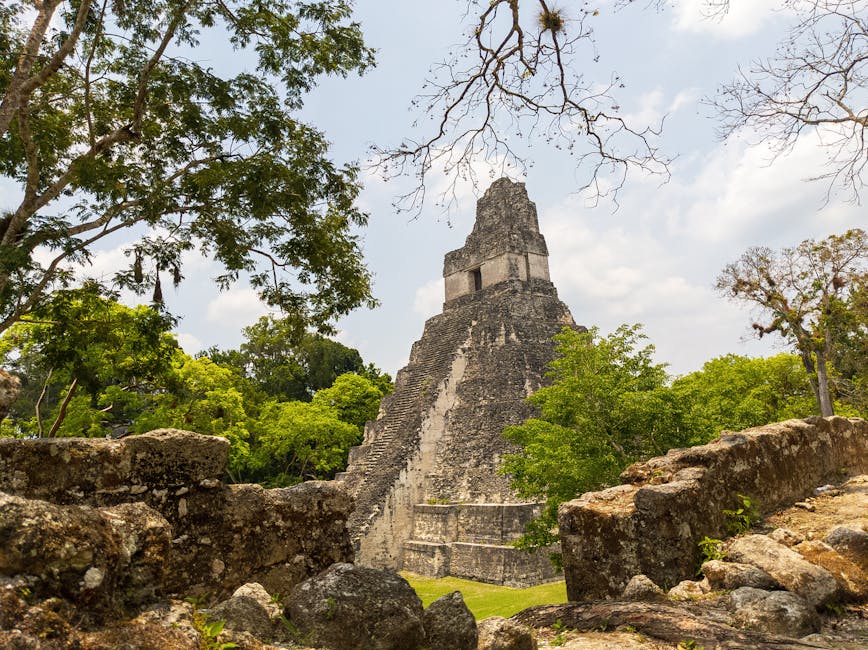
Tikal is the largest excavated Mayan city, sitting in 220 square miles of protected rainforest in the Petén department of northern Guatemala, about 60km from the lakeside town of Flores. It was built and rebuilt by Mayan kings between roughly 400 BCE and 900 CE, abandoned to the jungle, and rediscovered in 1848. Roughly 15% of the site has been excavated. The other 85% is still under the trees you can see from the top of Temple IV. That fact does something to your sense of scale.
What follows is the practical version: how to get there, when to go, where to sleep, what entry actually costs in quetzales (Q150 day fee, plus extras for sunrise and sunset), how to think about a guide, and the unvarnished take on what to expect from those famous sunrise tours. I’ve cross-referenced everything against current ticket prices and verified each lodge through Booking.com directly.
In This Article
- What Tikal actually is
- Where Tikal is, and how to get there
- By air from Guatemala City
- Overland from Antigua or Guatemala City
- Overland from Belize
- Overland from Copán Ruinas
- When to visit
- Tickets, the unvarnished version
- The temples, and what to actually see
- Temple I (Templo del Gran Jaguar)
- Temple II (Templo de las Máscaras)
- Temple III (Templo del Sacerdote Jaguar)
- Temple IV
- Temple V
- The Lost World (Mundo Perdido)
- The North and Central Acropolis
- Temple VI (Inscripciones)
- The wildlife is the second reason you came
- Sunrise vs sunset , the real call
- Should you hire a guide?
- Where to stay , inside the park or in Flores?
- Inside the park (the three lodges)
- In Flores or El Remate
- How long do you actually need?
- Yaxhá and El Mirador , Tikal’s siblings
- Practical things nobody mentions
- Tikal in a wider Guatemala trip
- The bit nobody asks but should
What Tikal actually is
The polite description is “one of the largest cities of the Classic Maya world.” The accurate one is that Tikal was a kingdom. At its peak around 700 CE, between 60,000 and 100,000 people lived in and around the central core you’ll walk through. There were causeways, residential zones, ceremonial complexes, ball courts, water reservoirs cut into the limestone. The whole thing was painted: the pyramids you see in faded grey today were originally bright red, the plazas plastered white.
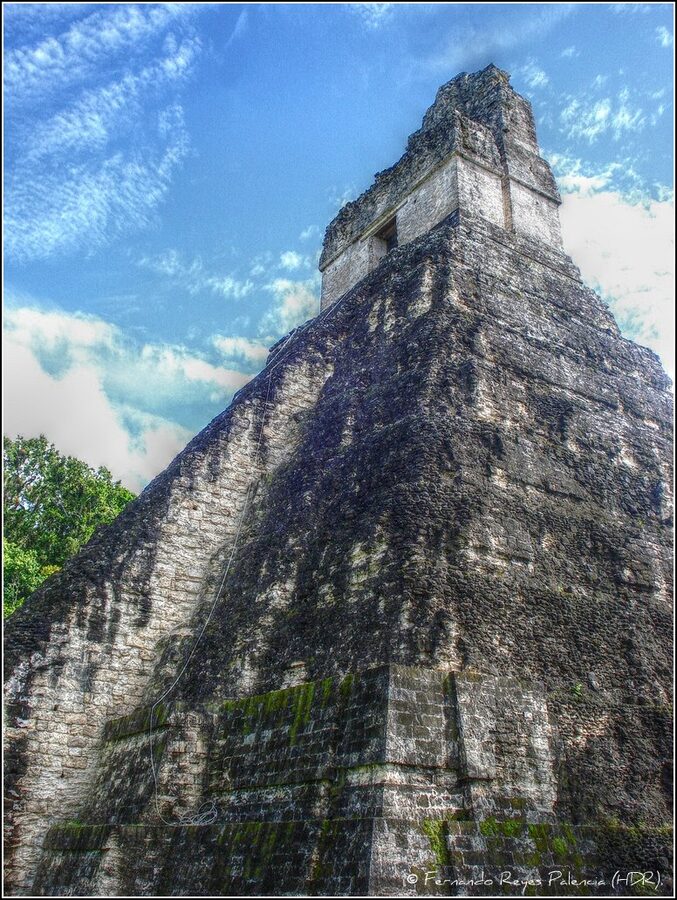
The two rulers you’ll keep hearing about are Yax Nuun Ahiin (Curl Snout, 379-411 CE), who locked Tikal into a long alliance with the central Mexican city of Teotihuacan, and Jasaw Chan K’awiil (Ah Cacao, 682-734 CE), who broke a long Tikal slump by defeating the rival city of Calakmul in 695 CE and then commissioned Temple I and Temple II as part of that victory. Temple I is his tomb. You’re looking at one of the highest-stakes career monuments in human history.
Tikal collapsed around 900 CE, along with the rest of the southern Maya lowland cities, in what archaeologists now think was a combination of prolonged drought, political fracturing, and a population outgrowing the carrying capacity of its environment. The Spanish never found it. By the time the conquistadors were burning Mayan codices in the Yucatán, the city was already 600 years deep into the canopy. UNESCO listed it as a World Heritage Site in 1979, one of the few sites globally listed for both cultural and natural value. You can read the full UNESCO entry for the academic framing. On the ground, the picture is simpler: it’s vast, the jungle is part of the experience, the wildlife is loud, and one day is enough only if you don’t try to do too much.
Where Tikal is, and how to get there
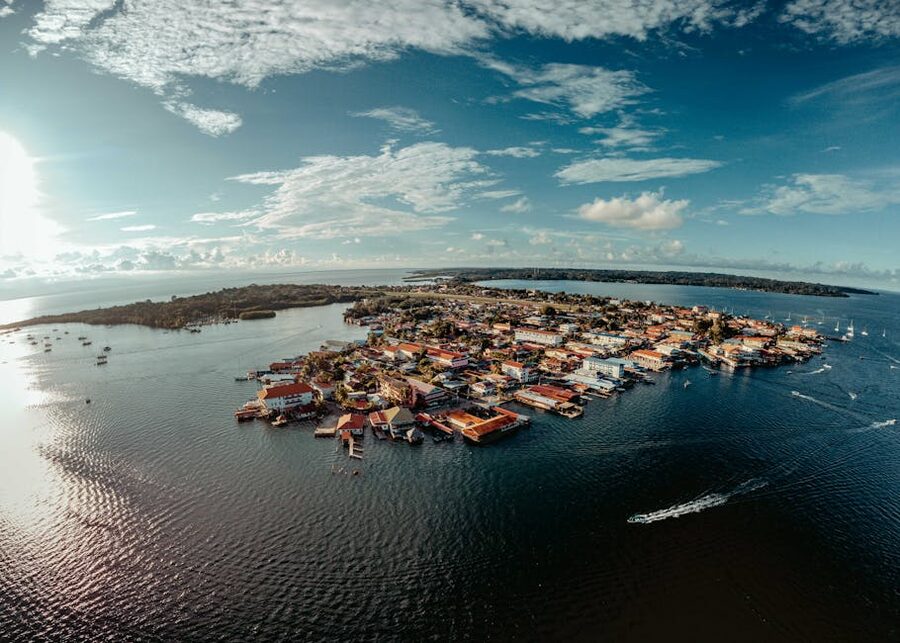
Tikal sits in the Petén, the dense lowland forest department of northeast Guatemala. Two airports serve the area: Mundo Maya International (FRS) on the mainland just outside Santa Elena, and the lakeside town of Flores, which is the actual base most travellers use. Santa Elena and Flores are connected by a short causeway. Most people just call the whole thing Flores.
By air from Guatemala City
The fast route. Daily flights run between Guatemala City (GUA) and Mundo Maya (FRS) on TAG and Avianca. Flight time is 55-65 minutes versus 8-10 hours by road. Round-trip fares run roughly Q1,200-Q2,000 if booked a week or two out. Buy direct from the airline; aggregator markups for what is essentially a regional puddle-jumper are rude.
From the airport in Santa Elena, hotel transfers run Q40-80 by tuk-tuk to Flores island. A taxi from the airport direct to Tikal park runs Q400-500.
Overland from Antigua or Guatemala City
Cheaper, much longer. The standard option is the overnight bus run by Linea Dorada or Fuente del Norte from Guatemala City’s main bus terminal in Zona 1, leaving 9-10pm and arriving in Flores around 5-6am. Q200-280 for a regular seat, Q300-400 for a “pullman” / cama (reclining) seat. A long night of cold air conditioning and stops you’d rather not think about.
From Antigua you connect via Guatemala City; most hostels arrange a shuttle to the GUA terminal in time for the night bus. The other overland option is a tourist shuttle that runs Antigua to Lanquín (Semuc Champey) to Flores over two or three days, breaking the journey at Semuc. That’s the trip if you have time. The non-stop overnight is the trip if you don’t.
Overland from Belize
If you’re coming from Belize, the border crossing is at Melchor de Mencos: San Ignacio (Belize) by taxi or shuttle to the border, walk the crossing yourself (under 20 minutes if the queue is short), then a Guatemalan colectivo or pre-arranged shuttle on to Flores. Total Q250-400 plus a Q20 Guatemalan border tax. Four to five hours total from San Ignacio. Several operators bundle this with a Tikal day tour for US$70-90 in Belize dollars; the DIY version is cheaper if you’re game.
Overland from Copán Ruinas
This is the Mayan-ruins-double trip: Copán Ruinas in Honduras, Tikal in Guatemala, and the El Florido border between them. Most travellers do the long version: Copán to Antigua (8-10 hr shuttle), then night bus to Flores. No quick connection. The pyramid styles at the two sites are completely different, and seeing both is one of the better Central American itineraries.
When to visit
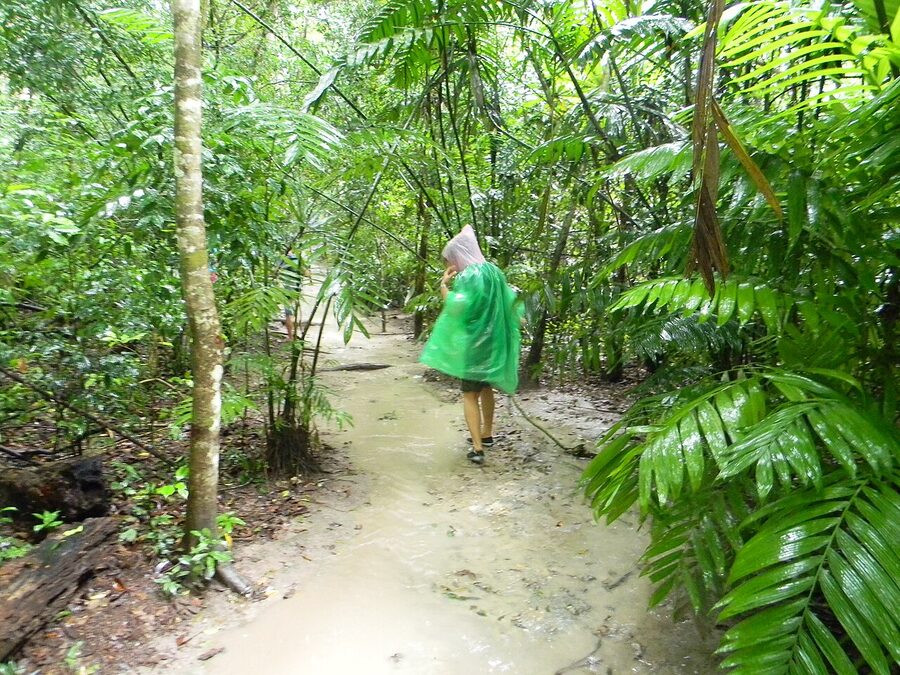
Two seasons in Petén: dry (November to April) and wet (May to October). Straightforward advice is dry season, no contest. Trails turn to slick black mud in the wet, the wooden temple stairs get genuinely treacherous, and the mosquito load goes from “irritating” to “actually a problem.” The wet season does have an argument: cheaper everything, fewer visitors, and the jungle is greener and more alive. If you’re a wildlife photographer or a botanist, May-June can actually be the better trip.
Avoid Semana Santa (Easter week); the site fills up with Guatemalan domestic tourists, and entrance is free for Guatemalans on Sundays. Christmas-New Year is similarly busy. The sweet spot is mid-November to mid-December, or late January through February.
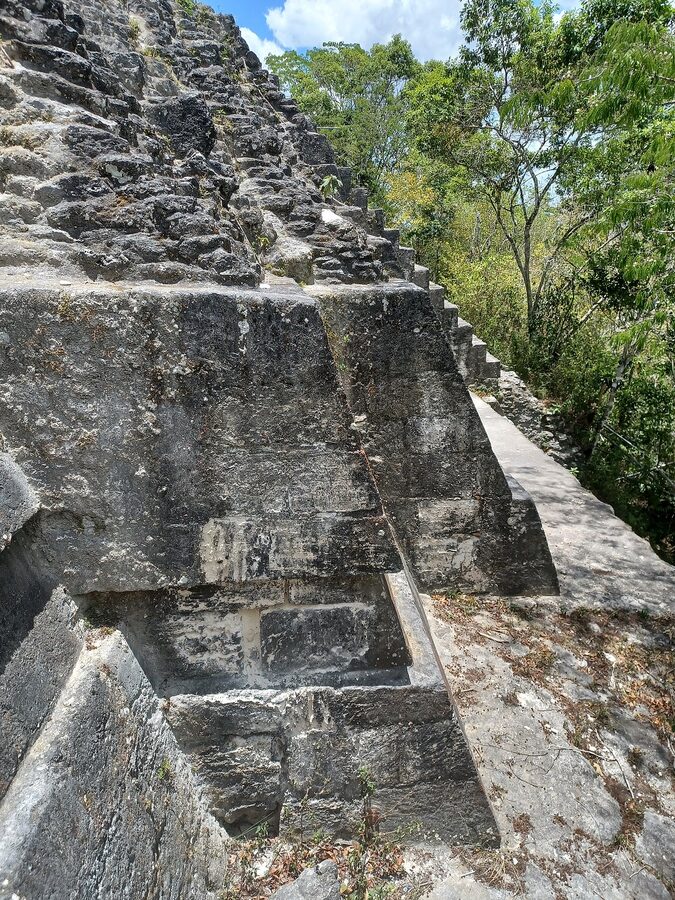
Temperatures sit in the 28-34°C range year-round, hottest in March-April when it can hit 37°C with humidity that turns a 5km walk into something else. Carry more water than you think you need. The site has water tanks at the entrance and at the visitor centre near the museum, and that’s it.
Tickets, the unvarnished version
The ticketing has gotten more complex in the last few years. Here’s what’s actually true as of late 2025, cross-checked against multiple recent visits.
- Park entry (foreigners): Q150 per adult per day. Children under 10 free. Valid 6am-6pm.
- Sunrise extension: Q100 additional. Lets you enter before 6am. Requires a guide.
- Sunset extension: Q100 additional. Lets you stay past 6pm. Requires a guide.
- Museum: Q30 (the small archaeological museum near the visitor centre).
- Camping: Q50 if you bring your own tent or hire a hammock at the official campground.
You can buy entry online through the official park website or in person at Banrural bank branches; the larger one is in Santa Elena’s Centro Comercial Metroplaza Mundo Maya. Cash only at the bank, and you’ll need your passport. You can also buy at the park gate. The catch is solely the sunrise tour: the gate office doesn’t open until 6am, so if you arrive at 4.30am for sunrise without a pre-purchased ticket, you don’t enter. Hotel-arranged sunrise tours include the pre-purchase. Sunset is more forgiving; buy at the gate when you arrive in the afternoon.
A persistent scam works the bus from the Belize border and the streets near Hospedaje Doña Goya in Flores. Someone tells you the park is closed, or your ticket is fake, or they can sell you a discount. Walk away. Buy from your hotel, from a verified operator like Los Amigos Hostel’s in-house agency, or directly through GetYourGuide.
The temples, and what to actually see

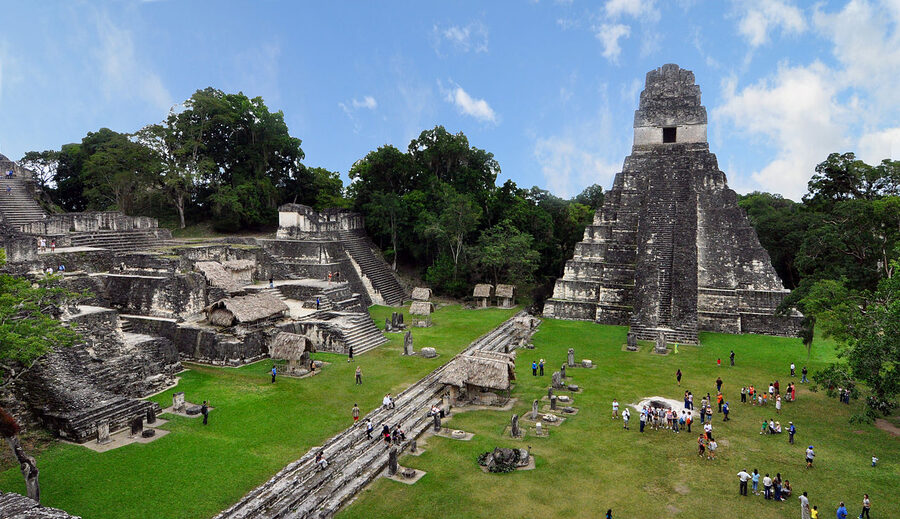
The site is laid out roughly along a north-south axis, with the Gran Plaza at the heart and other complexes radiating out via causeways. You enter from the south at the visitor centre. A relaxed loop hits the major sights in 4-5 hours. A hurried one does it in three. The path map you get with your ticket is pretty good. The trail signs are not always great. Use the map.
Temple I (Templo del Gran Jaguar)
The face of Tikal. 47 metres from base to roof comb, nine stepped levels, finished in 734 CE as the funeral monument of Jasaw Chan K’awiil. You cannot climb it. The steps are too eroded and too steep, and the park has been firm about that for over a decade now. You can however climb the smaller wooden staircase up the back of Temple II opposite, which gives you the postcard shot looking back across the Gran Plaza.
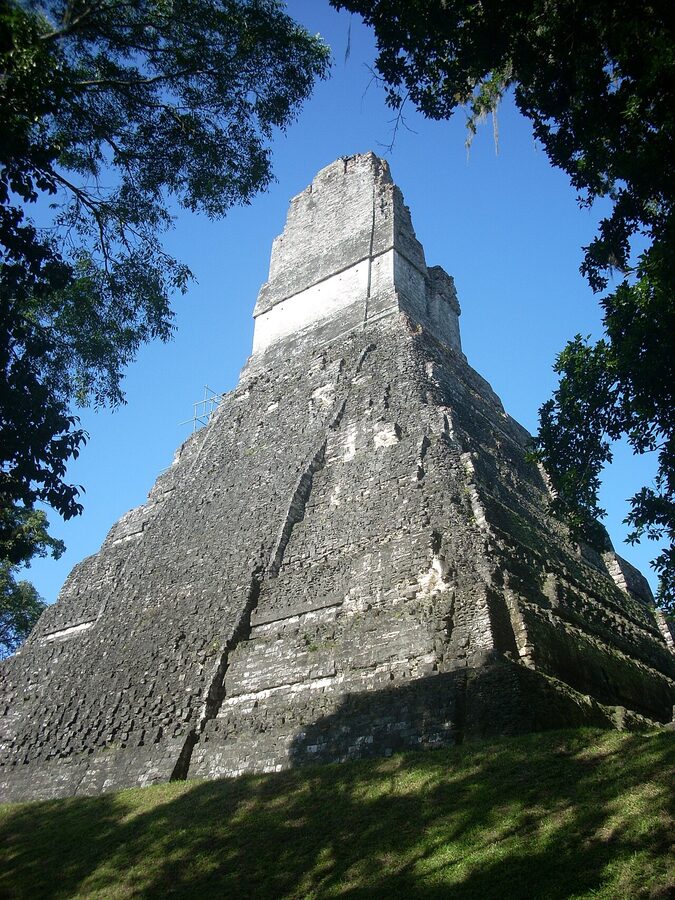
Temple II (Templo de las Máscaras)
38 metres, opposite Temple I across the plaza. Built around the same time, dedicated to Jasaw’s wife. Her tomb has never been found. The wooden staircase up the back is the climb of the day for most visitors. Allow ten minutes up, fifteen minutes at the top, ten minutes down. There’s room for maybe twenty people on the summit platform; don’t be the person hogging the view for a photo session.
Temple III (Templo del Sacerdote Jaguar)
55 metres, mostly still under jungle and unrestored. You get a sense of what the rest of the site looked like before excavation began in 1956. It’s the temple you walk past more than walk to. Worth a five-minute pause.
Temple IV
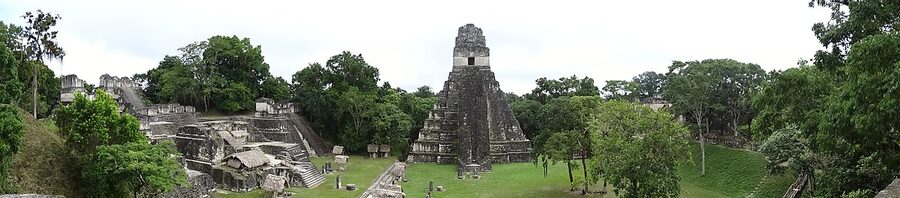
70 metres. The tallest pre-Columbian structure in the Americas. Built around 741 CE, possibly as the tomb of Yik’in Chan K’awiil, son of Jasaw. You don’t see Temple IV the way you see Temple I; what you see from the ground is mostly stone rising out of trees. The wooden staircase strapped to its back side is the climb. From the summit platform, you’re looking at the canopy from above, three other temple roof combs poking through, and the eternal green roll of the Maya Biosphere Reserve to the horizon. This is the Star Wars view (yes, really; George Lucas filmed the rebel base reveal here in 1977). It’s also the standard sunrise platform.
Temple V
57 metres, restored along its central axis but not climbable. Tucked south of the Central Acropolis, it stands strangely alone in a small clearing. My personal favourite. The afternoon light on the western face is exceptional and you’ll usually have it to yourself because most tour groups don’t loop south.
The Lost World (Mundo Perdido)
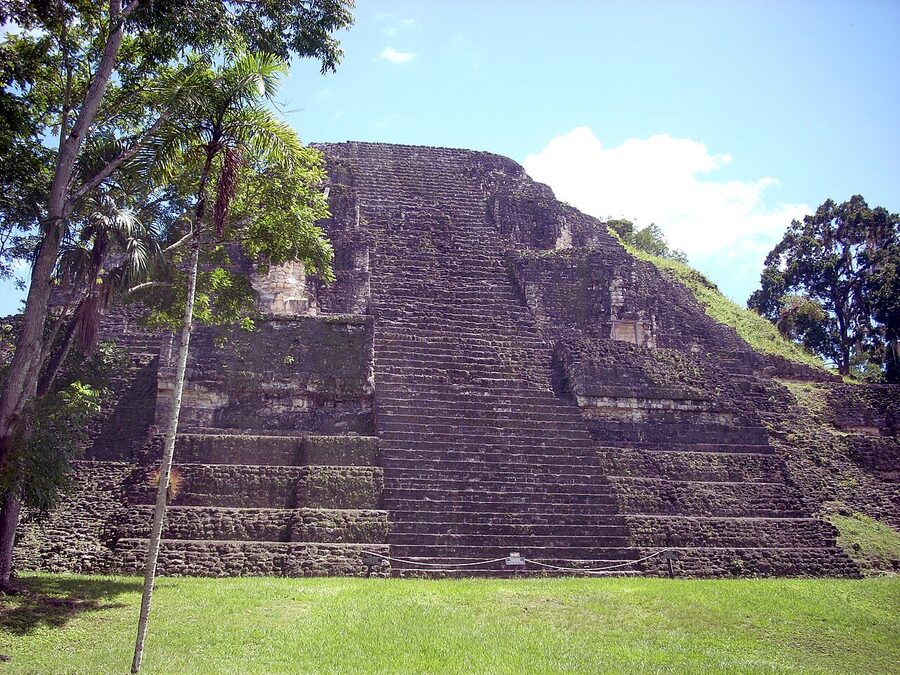
The Mundo Perdido (Lost World) complex predates the Gran Plaza by centuries. Its main pyramid (Structure 5C-54) was an astronomical observatory built and rebuilt from 700 BCE through the Classic period; the Maya tracked the sun’s solstice and equinox positions from its summit. It’s climbable on the south side, gives a different angle on the site, and is the standard sunset climb. Less crowded than Temple IV at sunrise.
The North and Central Acropolis
Forming the north and south sides of the Gran Plaza respectively, these are the residential and ritual cores: palaces, courtyards, audience chambers, royal tombs. The North Acropolis has the densest concentration of stelae and altars; some of the carved monarchs you can pick out are 1,500 years old. Spend at least half an hour wandering. There are unmarked corners where you can lose the tour groups completely.
Temple VI (Inscripciones)
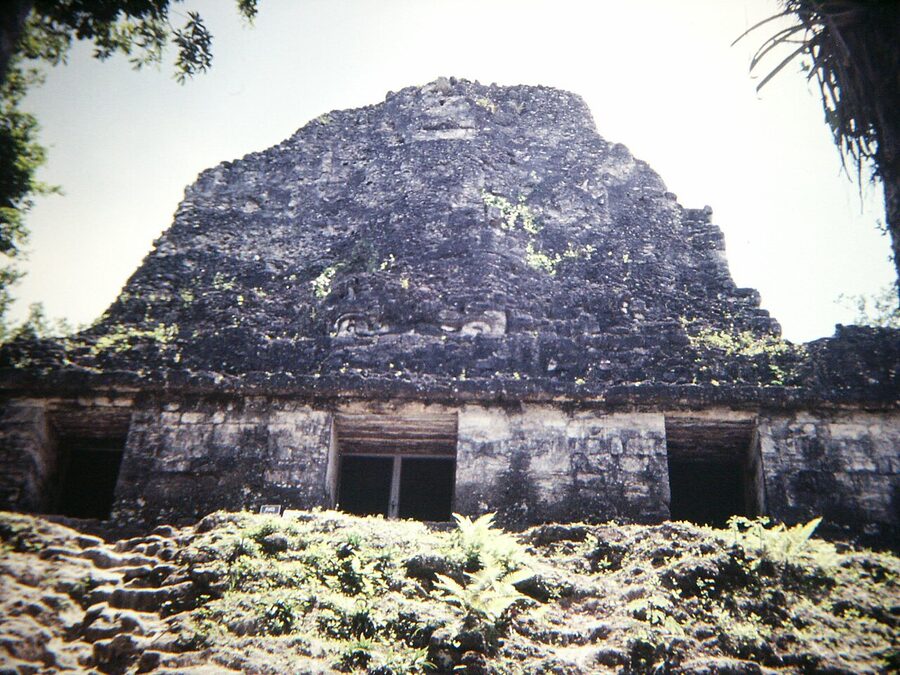
A 25-minute walk from the Gran Plaza along a quieter path. Most day-trippers skip it. Worth the detour if you’re staying overnight or if you’re simply curious about the longest single hieroglyphic text at Tikal: the back of the roof comb carries 186 glyphs detailing the city’s dynastic history.
The wildlife is the second reason you came
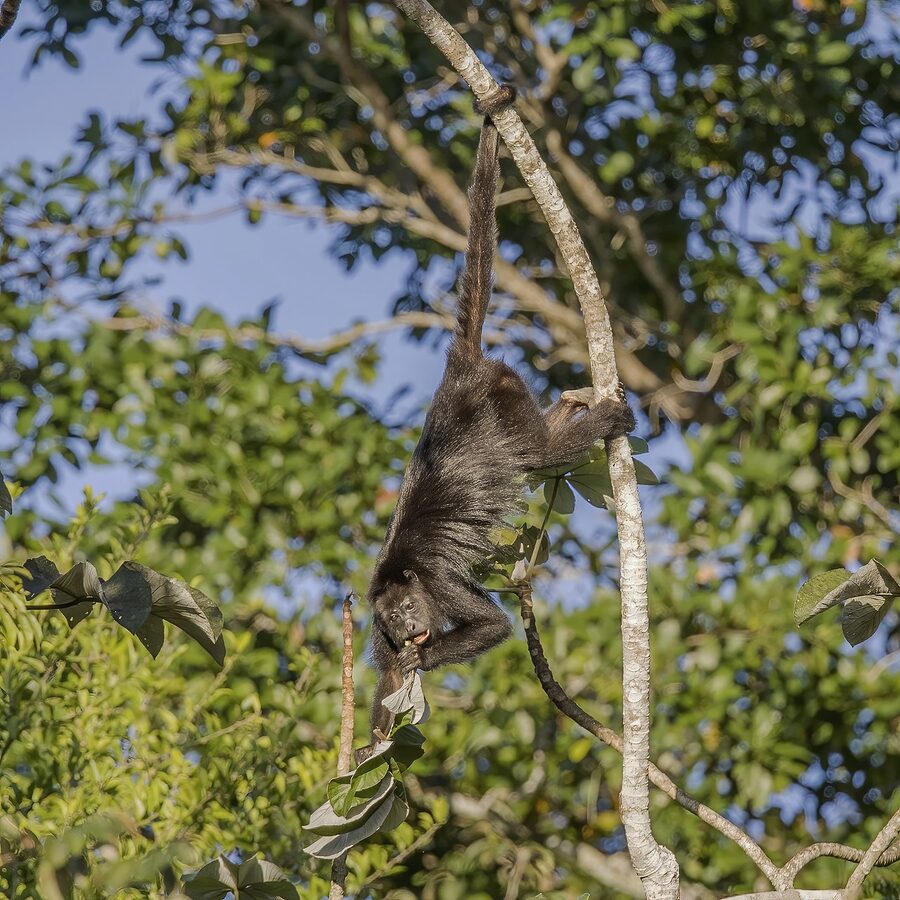
The Maya Biosphere Reserve protects roughly 5 million acres. Tikal is the most visited slice of it. You will, if you spend any meaningful time on the trails, see:
- Howler monkeys (saraguates locales): Yucatán black howlers, in troops of 10-30. The early-morning chorus is the audio signature of Tikal.
- Spider monkeys (monos araña): long-limbed, faster, more curious than howlers. Often dropping fruit shells on your head from the canopy if you stop to eat anywhere obvious.
- Coatis (pizotes): raccoon relatives with elongated snouts. They patrol the Gran Plaza like they own it. Don’t feed them.
- Keel-billed toucans (tucán pico iris): the species on the Cuban beer cans, despite Cuba being nowhere near. Loud, slightly-clattering wing beats.
- Ocellated turkeys: basically a peacock-toned wild turkey, found pretty much only in the Petén. Walks the trails like a cocky dog.
- Agoutis (tepezcuintles): short-legged rodents that sound like small explosions when they sprint through dry leaves.
- The improbable but real: jaguars, ocelots, margays, tapirs. Almost nobody sees them. The night-walking crew at the Jungle Lodge gets occasional sightings near the back perimeter trails. Don’t plan around it.
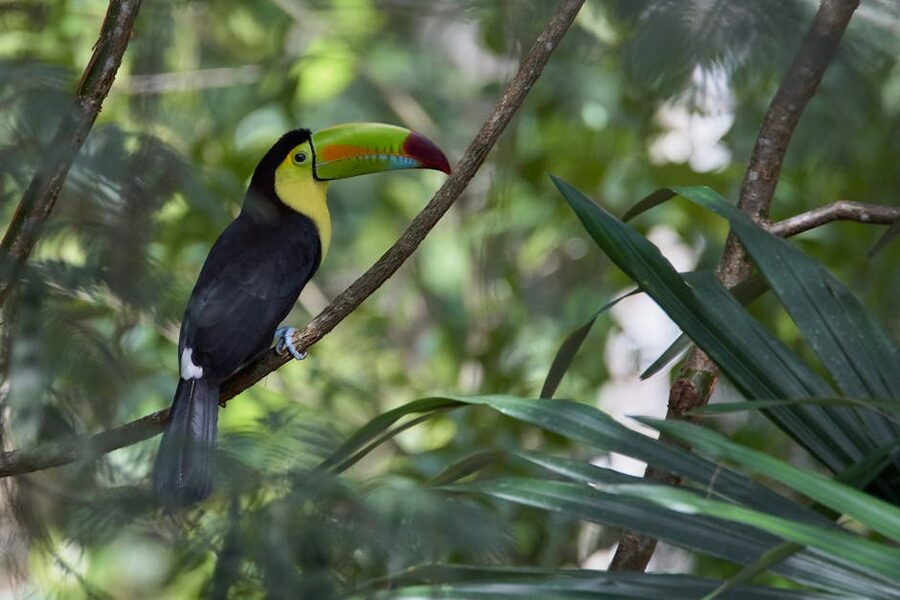
Bring binoculars even if you don’t usually. Tikal is a birder’s site dressed up as a Mayan one, over 300 species recorded inside the park boundary. A reasonable pair of 8x42s is the difference between a vague green dot and an actual oropendola.
Sunrise vs sunset , the real call
Every Tikal blog tells you the sunrise tour is the highlight. Most of them then bury, deep in a footnote, the sentence “but it’s often misty.” Here’s the unvarnished version.
You will pay roughly Q500 (Q150 entry + Q100 sunrise extension + Q250 mandatory guide) for the full sunrise package, leaving Flores at 3-3.30am to be at the park gate by 4am, then walking 2km in the dark to Temple IV. You will summit by 5am. The sun officially rises around 5.45-6.10am depending on the time of year. If, and it’s a real if, the morning is clear, you’ll watch the canopy turn from black to grey to gold, the howlers will begin their chorus, and the temple roof combs will catch the first light. It’s spectacular. People remember it for life.
If the morning is misty, and in this rainforest it often is, especially in the wet season but also surprisingly often in the dry, you’ll see white. Pure, dense, milk-white fog with sound but no visual reward. The howlers will still roar. The light won’t actually break through until 7am. Some people find this beautiful in its own quiet way. Others feel cheated.
Sunset, by contrast, has a higher hit rate. The Lost World pyramid (or Temple IV again, if your guide chooses) is a steadier bet, the afternoon thunderstorms that often build through the wet season usually clear by 4-5pm, and the evening light coming in low across the canopy is consistently photogenic. You’re also less knackered going in.
If I were doing it again on a single visit, I’d choose sunset over sunrise. If you’re staying inside the park for two days, do both: sunset on day one, sunrise on day two with the park already familiar in daylight. One thing nobody tells you: Yaxhá, an hour east, runs a sunset tour over a much smaller and quieter site, and the success rate for a clear horizon is meaningfully higher because Yaxhá sits on a lake.
Should you hire a guide?
Yes for sunrise and sunset (mandatory anyway). Yes for the first daytime visit. Maybe not for a second.
A site this size with this many overlapping building phases reads like a foreign-language street map without context. A good guide is the difference between “interesting old stones” and “the political and astronomical reasoning behind why this stone is exactly where it is, this far apart, and this tall.” Rates are roughly Q250-350 for a half-day, Q400-500 for a full day, sometimes split with up to four other people. Book through your hotel, through the in-house agency at Los Amigos Hostel in Flores, or through GetYourGuide / Viator. Avoid street-front operators with no shopfront and no reviews. Confirm in advance whether your guide speaks English, Spanish, or both; most do functional English, but some senior naturalist-guides are Spanish-only and will go deeper if you can keep up.
Where to stay , inside the park or in Flores?
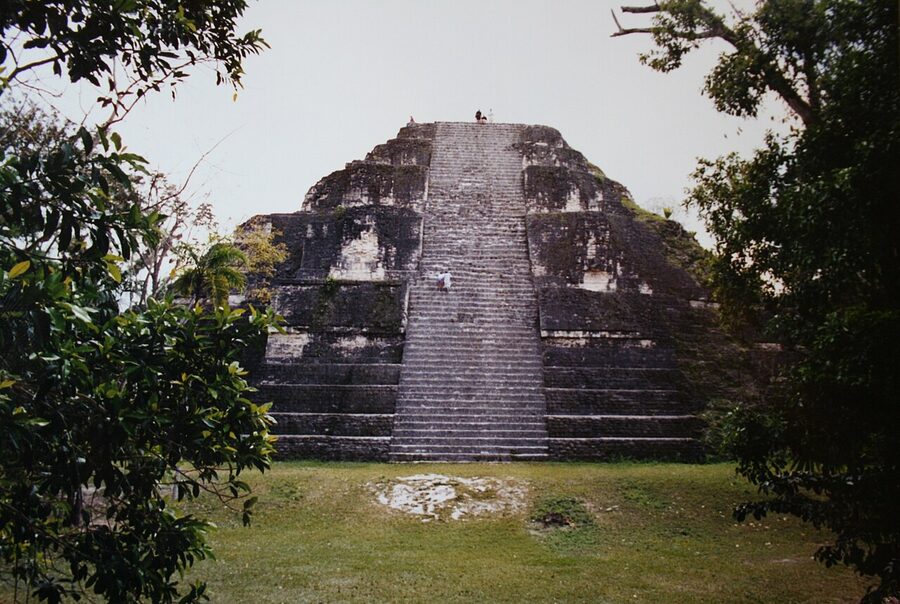
This is the question that defines your trip. The short version: stay one night inside the park if you can possibly afford it. The longer version follows.
Inside the park (the three lodges)
There are exactly three places to sleep inside the Tikal National Park boundary, and competition is essentially zero. All three are walking distance from the visitor centre.
Jungle Lodge Tikal: the priciest of the three, with private bungalows scattered along jungle paths, a small pool, and a restaurant. WiFi is patchy and there’s no phone signal in the rooms. Run by the Banchero family, who’ve owned it for decades. Rooms typically Q900-1,400 in dry season for a double. Verified booking page: Jungle Lodge Tikal on Booking.com.
Hotel Tikal Inn: the middle option. Rustic cabins in the jungle, also with a pool, slightly older feel than Jungle Lodge but a real fraction cheaper. The best value of the three if you can get a thatched-roof bungalow rather than one of the standard rooms. Rooms typically Q600-900. Hotel Tikal Inn on Booking.com.
Hotel Jaguar Inn Tikal: the cheapest of the three, simpler rooms, smaller property. The on-site restaurant is a known late-evening gathering spot for guides and overnight guests. Rooms Q450-700. Jaguar Inn Tikal on Booking.com.
The argument for staying in the park is simple. Day-trippers leave at 4pm; the shuttles roll out at 4-4.30pm. From then to 6pm, with a sunset extension ticket, the site is essentially yours, with maybe twenty other overnight guests scattered across miles of trail. Same in the morning, before the 8am buses arrive. You’ll hear howlers at the lodge breakfast table. You’ll see coatis from your room. The wifi is bad and dinner is fine but not exceptional; absolutely none of that matters. The argument against is cost: you’re paying double or triple what equivalent rooms cost in Flores, for very basic accommodation.
In Flores or El Remate
Flores is the lakeside island town 60-65km from the park (1 hour 15 minute drive). El Remate is a small lakeside village halfway between Flores and the park, about 35 minutes from the gate. Either works as a base. Flores has the food, the bars, the small-town wandering, and a 25-minute lakeside loop you can walk in the evening. El Remate is quieter, cheaper, and closer to the park.
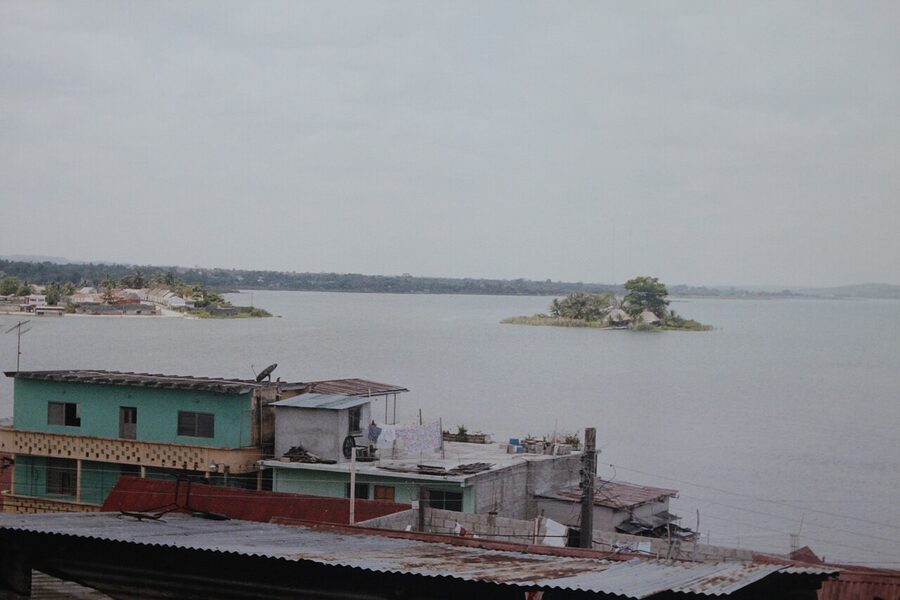
Top picks in Flores, all verified:
- Bolontiku Boutique Hotel: the splurge in Flores, on the lake just off the island. Cayuga Collection property. Bolontiku on Booking.com.
- Las Lagunas Boutique Hotel: over-the-water bungalows on a small private lagoon outside Flores. Marketed at honeymoon energy, priced accordingly. Las Lagunas on Booking.com.
- Hotel Casona de la Isla: solid mid-range on the island itself, lake-facing rooms, pool. Casona de la Isla on Booking.com.
- Los Amigos Hostel: the backpacker hub. Dorms, private rooms, a busy garden bar, and an in-house tour agency that runs reliable Tikal trips. Cheap and noisy in the way the best hostels are.
El Remate options:
- Hotel Gringo Perdido: eco-lodge on the lake, 25 minutes from the park, the move if you want quiet plus proximity. Gringo Perdido on Booking.com.
For the full inventory near the park itself, Booking lists everything within reach of the gate at booking.com/city/gt/tikal.
How long do you actually need?
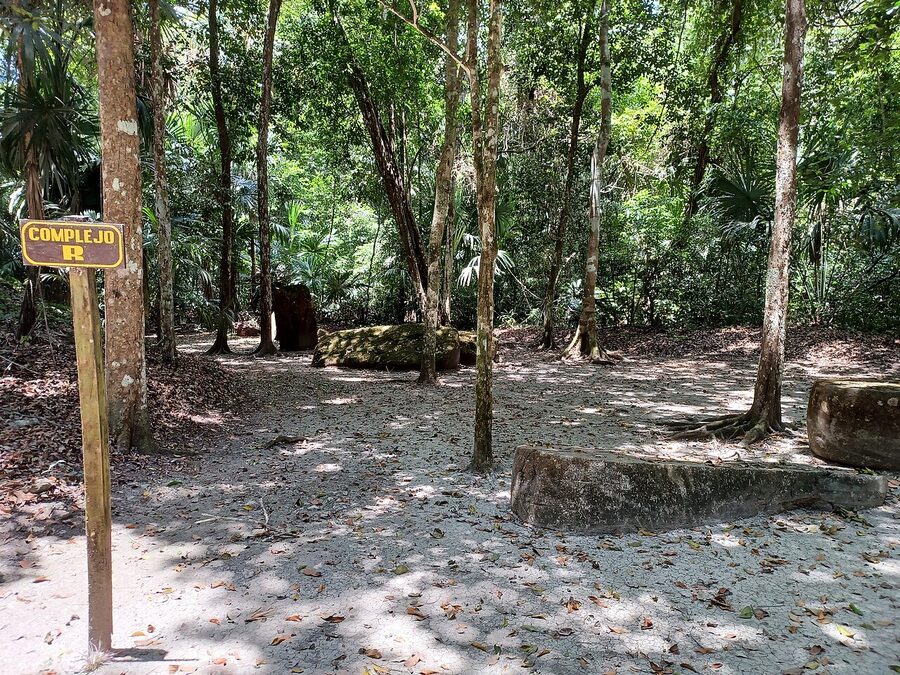
One full day is the minimum: walk the major temple loop, summit Temple IV, see the Mundo Perdido, lunch at the visitor centre kiosk, all in 6-7 hours. Two days is the sweet spot. Afternoon and sunset on day one to familiarise yourself with the layout, sleep inside the park, sunrise on day two, then explore the further-flung sights (Temple VI, Group R, the perimeter trails) without time pressure. Three days is over-budget for most people; worth it if you’re a serious archaeology enthusiast or birder.
Yaxhá and El Mirador , Tikal’s siblings
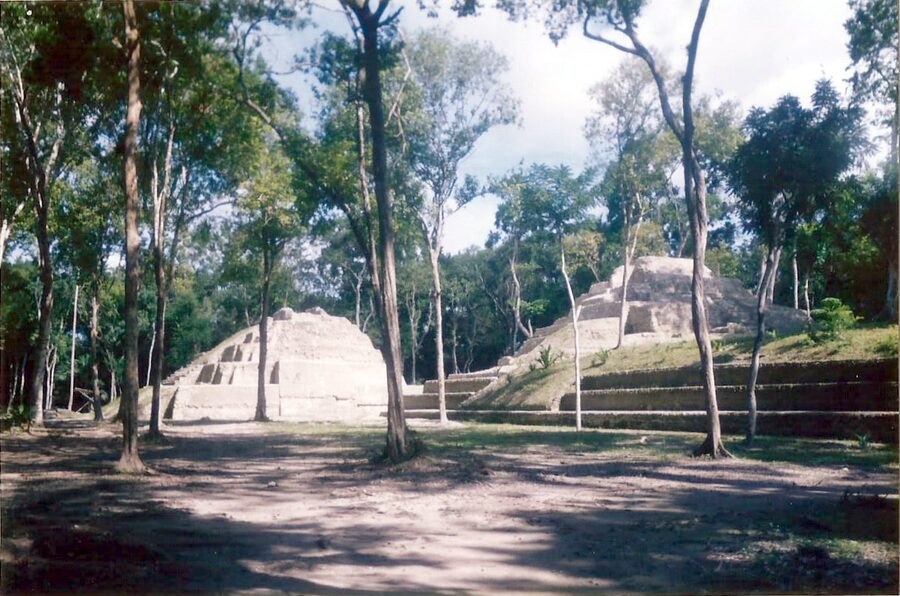
If Tikal whets your appetite, two other Maya sites in Petén offer different angles.
Yaxhá is the easy one. Roughly an hour east of Flores by road, smaller than Tikal, far less visited. The principal temple (Templo 216) sits on a rise above Lake Yaxhá, which means a clearer western horizon for sunset. Q80 entry, no extra extension fee for sunset (you just need to be inside before close and exit by full dark with a guide). Half-day trips from Flores run Q200-300 plus park entry. If you only have time for one Maya site beyond Tikal, this is it.
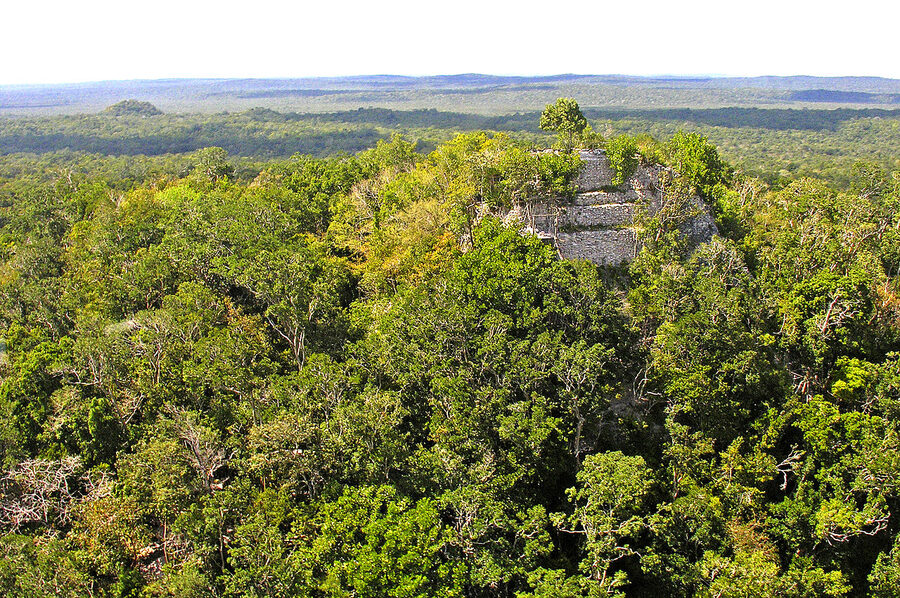
El Mirador is the hard one. A pre-Classic city north of Tikal, accessible only by a 5-day jungle trek (45km each way, mules carrying gear, mosquito-heavy camping) or by helicopter from Flores. La Danta pyramid out there is the largest pyramid by volume ever built anywhere, 2.8 million cubic metres of fill, 79m tall. It’s the kind of trip that looks easy on paper and is properly hard on the ground. Don’t go in the wet season. Operators run guided expeditions from Carmelita village (3 hours by truck north of Flores), typically Q4,500-7,000 for the full 5-day trek including porters, food, and site fees. The new helicopter day-trip option from Mundo Maya airport runs roughly Q9,000 per person and lands you on the central plaza for a few hours.
Caracol, just over the Belize border, is a third option for those continuing into Belize. The drive in is rough but the site itself is largely intact and the temples here are taller than Tikal’s by a few metres. Most travellers visit it from San Ignacio rather than from Flores.
Practical things nobody mentions
- Mosquito repellent and long sleeves from dusk onward, every visit, every season. Dengue is present in the Petén; it’s not a hypothetical. Park-rated DEET 30% works.
- Cash for the bank ticket office. Cards aren’t accepted at the in-person sale points. There’s a Banrural ATM in Santa Elena and a Cajero 5B at the Flores causeway. The park gate doesn’t take cards either.
- Footwear: closed-toe hiking shoes or trail runners. Sandals are fine for the central paths but bad for the wooden temple staircases and worse on muddy trails. The sloped limestone gets slippery when wet.
- Water: minimum 2 litres per person per day. The visitor centre kiosk sells overpriced bottles. Carry your own.
- Food: the central kiosk sells lukewarm sandwiches and sliced fruit. Pack a comedor lunch from Flores in the morning and you’ll eat better.
- Connectivity: patchy at best inside the park. Tigo and Claro both have weak signal at the visitor centre, basically nothing past Temple I. Treat it as a phone-off day.
- Easter week: packed. Don’t.
- Sunday: free entry for Guatemalans. Locally welcomed; busier on the trails.
Tikal in a wider Guatemala trip
Most travellers fold Tikal into a 10-14 day Guatemala loop. The standard rotation is Antigua, then Lake Atitlán, then Quetzaltenango (Xela), then flight or overnight bus to Flores, then Tikal, then out via Belize or back to Guatemala City. Two to three days is enough for the Petén leg.
If you have less time, the GUA flight to Flores plus two nights at the park is doable as a 3-day side trip from Antigua. Lake Atitlán and Tikal are the two anchors of any first-timer’s Guatemala visit, and they pair well: one gives you the highland-volcano-coffee version of the country, the other gives you the jungle-Maya-stone version. You’ll want both.
For the cross-border Maya circuit, pair Tikal with Copán Ruinas in Honduras (different style, denser carvings, smaller scale) for a fuller picture of the Classic Maya world. Or extend east into Belize for Caracol and the Cayes. For currency, safety, and CA-4 visa rules, the country breakdown is at our Guatemala category page; the wider regional picture is in the Guatemala travel guide.
The bit nobody asks but should
Tikal will be busier in five years than it is today. INGUAT (the Guatemalan Institute of Tourism, visitguatemala.com) has been actively promoting Petén tourism for a decade, and the 2018 lidar survey of the broader region revealed thousands of unexcavated structures across the Maya Biosphere Reserve. Some of that is good (more revenue, more research, better conservation), some of it is the standard tension of any major archaeological site that’s also a tourist economy.
Visit now if you can. Visit slowly when you do. The site has been here for 2,400 years; pretending you can do it in three hours on a day trip from Belize is the kind of move you’ll regret on the way home. Spend a night. Climb Temple IV in the dark. Listen to the howlers wake up the jungle. The pictures are the postcard. The morning is the trip.


.jpg)

_Peten.jpg)


_-_Guatemala_1828_-_La_Danta_at_the_Mayan_site_of_El_Mirador.jpg)
