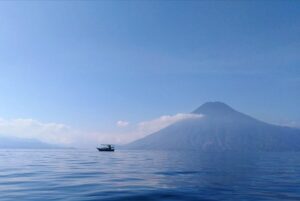
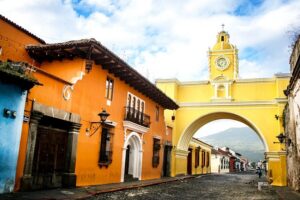
The cobblestones in Antigua hum at seven in the morning. There is almost no traffic, the bakeries on 4a Avenida Norte are pulling out the first trays of the day, and at the south end of nearly every street the view ends in the same place: the dark green cone of Volcán de Agua, framed between yellow and ochre walls like a postcard somebody propped up on purpose. Then the bells start. By nine the Spanish schools have opened their courtyards, by four those same bells will be ringing again to mark the end of conversation hour, and around dusk, if you walk up to the cross on the hill north of town, you might catch Volcán de Fuego doing what it does almost every evening: a slow, deliberate burp of lava lighting the sky orange.
That is the rhythm of Antigua. Three volcanoes, one of them constantly erupting, around a UNESCO-protected colonial grid of pastel buildings and earthquake-cracked church facades, with one of the world’s better Spanish-school scenes in the middle. It is also the easiest landing in Guatemala. The Pacific-coast highway from Guatemala City drops you here in 45 minutes if traffic cooperates, an hour and a half if not, and after that you can spend a week without a car.
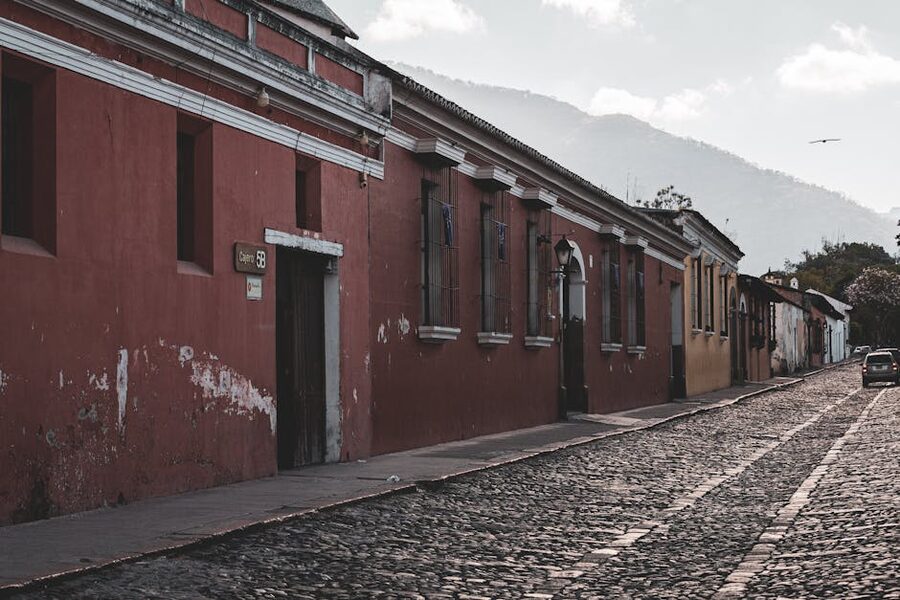
This guide is the practical version: where to stay by tier, what to do in the colonial centre, the volcano hikes that matter, the coffee fincas worth a half day, where to actually eat, and how the week reshapes itself around Semana Santa if you land in late March or April. I’ll also tell you what to skip. Lots of people will tell you to do Pacaya as your volcano. Pacaya is fun. Acatenango is the headline.
In This Article
- Why Antigua first, before anywhere else in Guatemala
- The colonial centre: what to actually see
- Parque Central and the Cathedral
- Iglesia de la Merced
- Convento de las Capuchinas
- Iglesia de San Francisco and the Hermano Pedro shrine
- Cerro de la Cruz
- Acatenango: the overnight that everyone talks about
- Pacaya: the casual half-day version
- Coffee fincas: Antigua is on a serious coffee mountain
- Spanish schools: Antigua is one of the best places in the world for this
- Markets: textiles, food, and what to actually buy
- Where to eat in Antigua
- Where to stay in Antigua
- Splurge
- Mid-range
- Budget
- When to go
- Semana Santa: the carpets, the processions, why this is unlike anywhere else
- How to get to Antigua
- Money, safety, and the practical layer
- What I’d skip
- One-week sample loop
Why Antigua first, before anywhere else in Guatemala
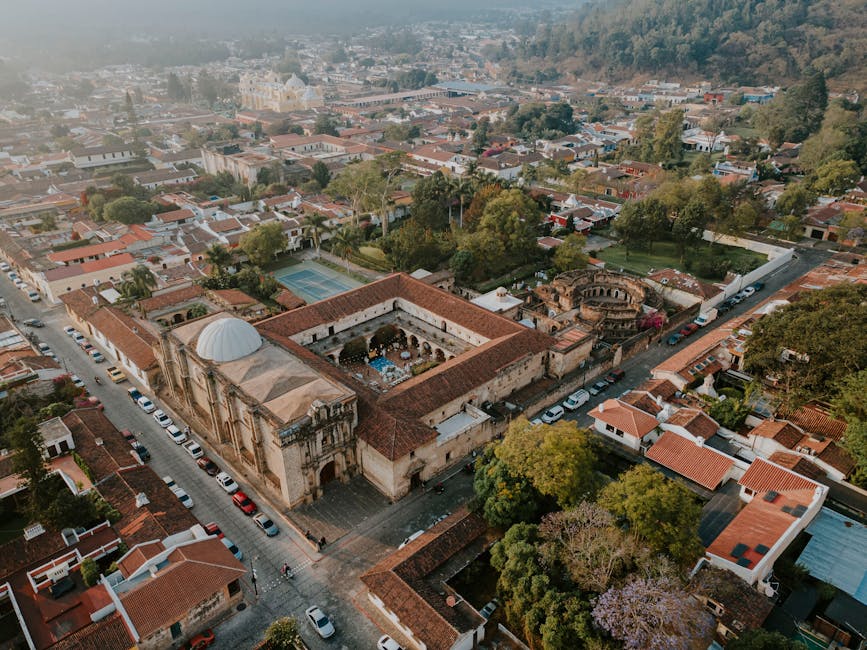
If you have one week in Guatemala, Antigua is the base. The town sits at 1,500m, so the climate is a permanent spring: warm days, cool evenings, almost no humidity. It is small enough to walk end to end in 25 minutes, which means no rideshares, no logistical friction. Acatenango trailheads are 45 minutes away. Pacaya is an hour. Lake Atitlán shuttles leave at 8am and 3pm. Tikal flights leave from Guatemala City’s airport, which is the same one you flew into.
It is also where Guatemalan high-end cooking shows up properly, and where you can drop into Spanish lessons by the week and feel the difference in your cómo estás by Friday.
The colonial centre: what to actually see
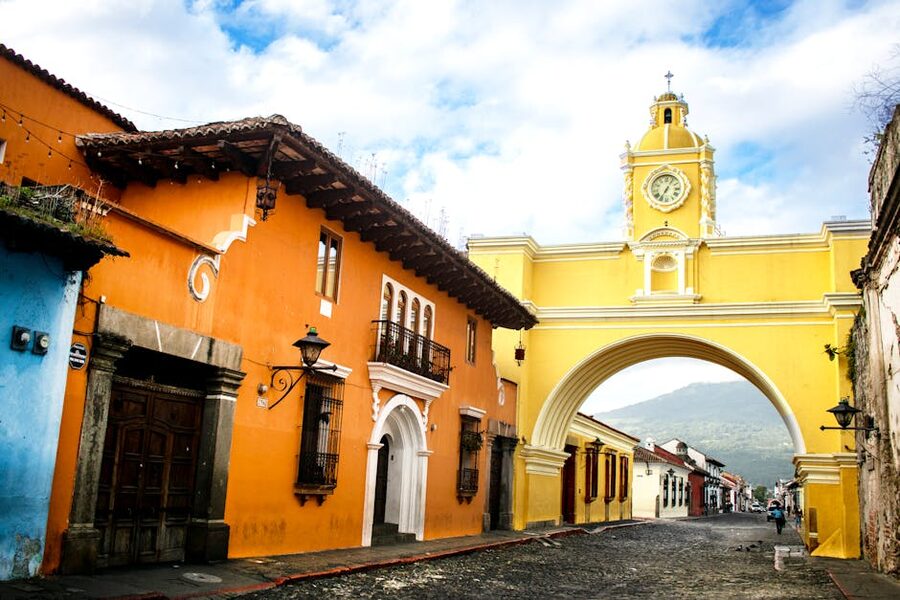
The grid is small: 12 by 12 blocks of cobblestone, every street walled with one- and two-storey colonial facades in postcard colours of ochre, terracotta, indigo, rose. UNESCO inscribed the town in 1979 after the 1773 earthquakes had reduced half the churches to roofless ruins, and the rule since has been that you can repair what is here but you cannot build new. That is why Antigua looks the way it does. Frozen.
Parque Central and the Cathedral
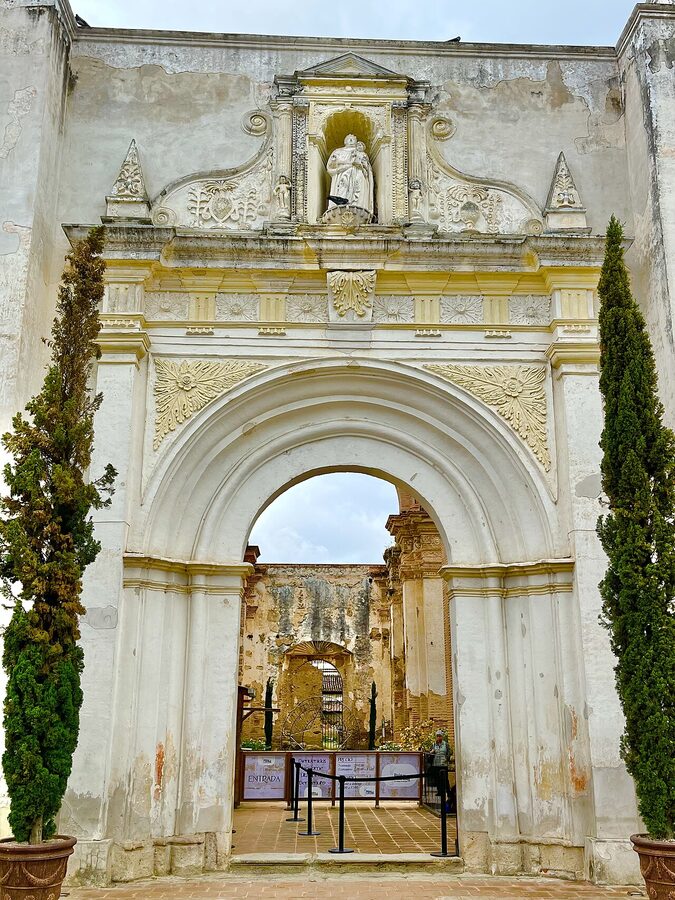
The main square is a real square, used by real people. Shoeshine men set up under the laurel trees from breakfast onwards, the fountain in the middle (a partial reconstruction of a 17th-century original) gets photographed every two minutes, and on Sunday afternoons there’s usually live marimba and traditional dancing on one corner. Sit on a bench, watch for ten minutes, then start clockwise.
On the south side is the working Catedral de Santiago, still active for masses. Behind its small modern facade is the much bigger ruin: the Ruinas de la Catedral, the original 1545 cathedral that the 1773 quake destroyed. Pay the small entrance (Q40 last I checked, cash in quetzales) and walk through the broken nave. The crypt under what was the high altar is open and unsigned, so bring a torch.
On the north side of the square is the Palacio del Ayuntamiento with its arcaded portico (the photogenic stone columns you see in every aerial shot). On the west is the Palacio de los Capitanes Generales, the old colonial governor’s seat, now home to MUNAG, the Museo Nacional de Arte Guatemalteco. Free entry, lovely interior courtyards, and the upstairs balconies give you the best free view of Volcán de Agua over the rooftops.
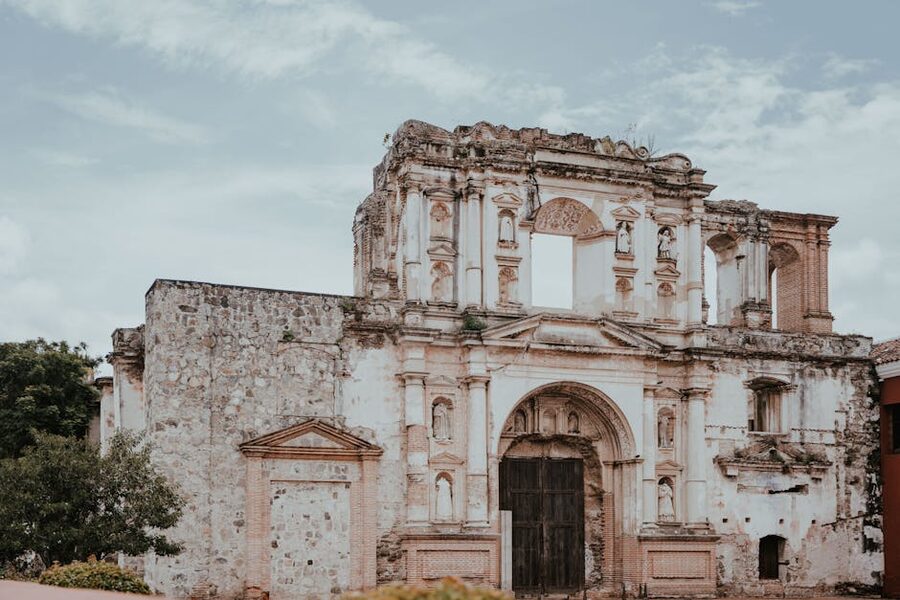
Iglesia de la Merced
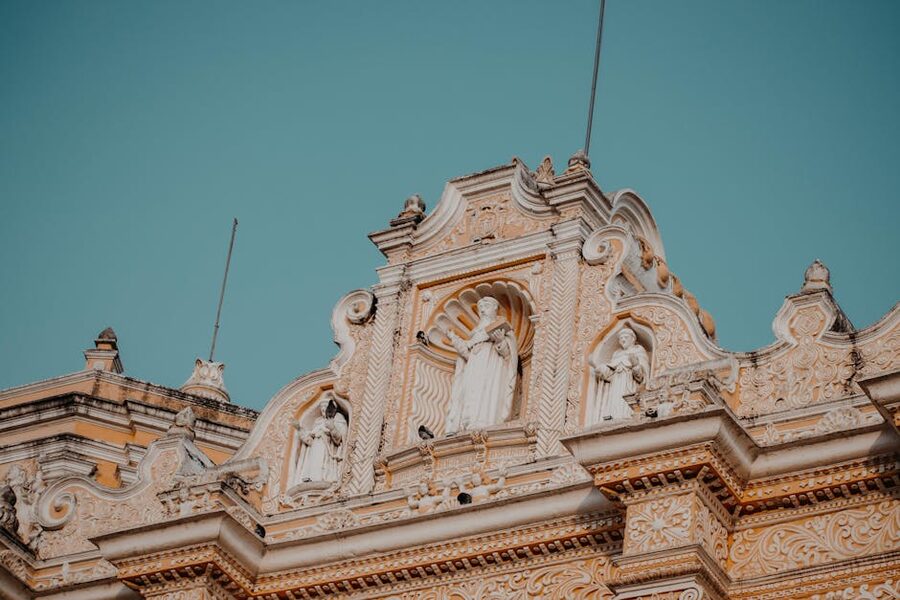
Six blocks north of the square, La Merced survived 1773 better than the rest because architect Juan Luis de Dios Estrada built it low and squat on purpose, knowing what the ground does here. The yellow facade is the most photographed building in town after the arch. Inside there’s a small courtyard with the ruins of an enormous fountain, and for around Q15 you can climb to the roof for panoramic views of Antigua and the volcanoes. Go before 10am for the best light; by midday the haze rolls in.
Convento de las Capuchinas
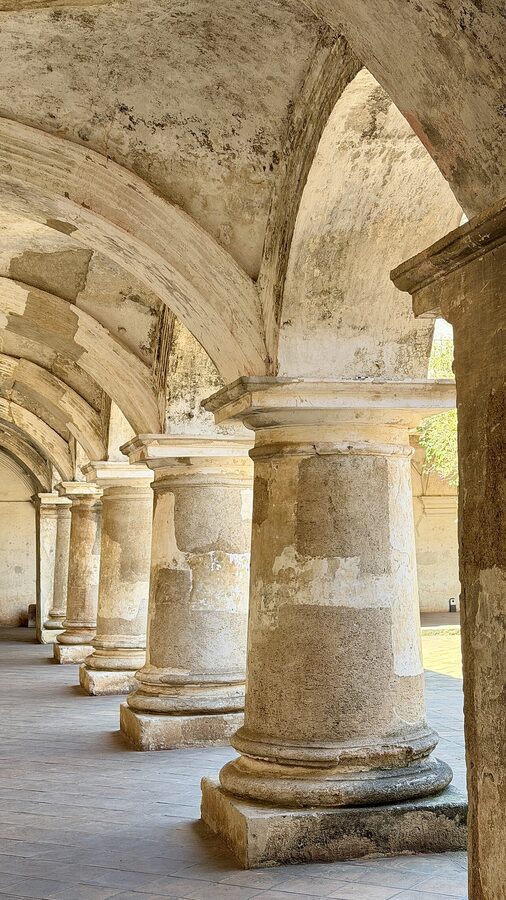
If you only do one ruined religious building in Antigua, this is it. Las Capuchinas was a 1736 convent for cloistered Capuchin nuns; the order was small, rigorous, and the architecture reflects it. The site has the cleanest restoration work in town and a circular nuns’ residence where eighteen wedge-shaped cells radiate from a central courtyard. Entrance Q40, open daily, allow an hour. The acoustics in the central tower are unsettling.
Iglesia de San Francisco and the Hermano Pedro shrine
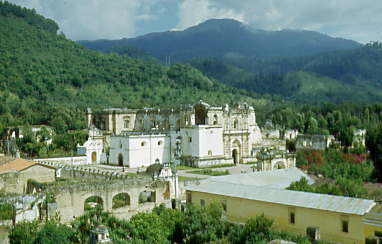
San Francisco sits on the southeast edge of the grid: working church plus a ticketed ruin complex. The pull is Hermano Pedro de San José Betancur, the 17th-century friar who founded a hospital here for the poor and was canonised in 2002 (Guatemala’s first saint). His tomb is in the working church and gets a steady stream of pilgrims; the ruins next door include a small museum about his life.
Cerro de la Cruz
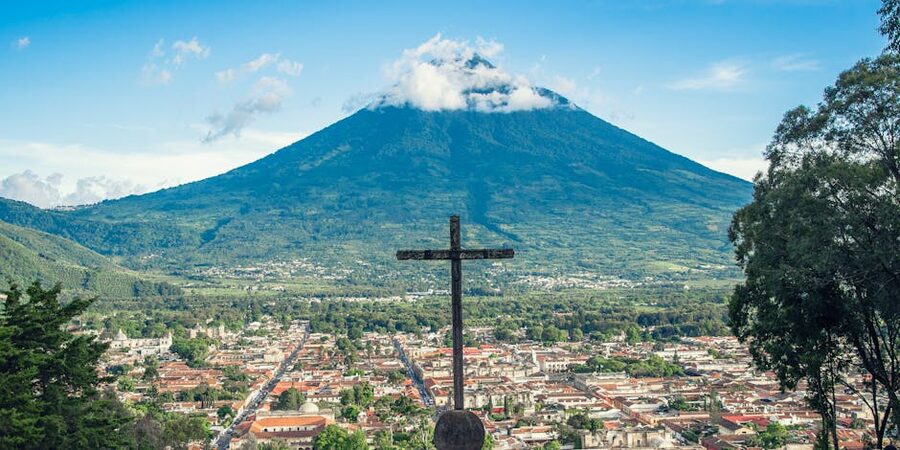
This is the postcard view. Twenty minutes north of Parque Central there’s a paved path up a small hill to a stone cross, and the whole town spreads below with Volcán de Agua filling the back of the frame. Tourist-police volunteers walk groups up several times a day from the corner of 1a Avenida Norte and 1a Calle Oriente; the schedule is posted on a board at the booth. Go with them. Solo at dawn or after dark is not advised, mainly because the path used to have mugging issues a decade ago and the patrol culture is what fixed it. Best light: 7am for the volcano, sunset for the colonial roofs glowing pink. Doña Luisa runs a small coffee stand at the top in the morning.
Acatenango: the overnight that everyone talks about
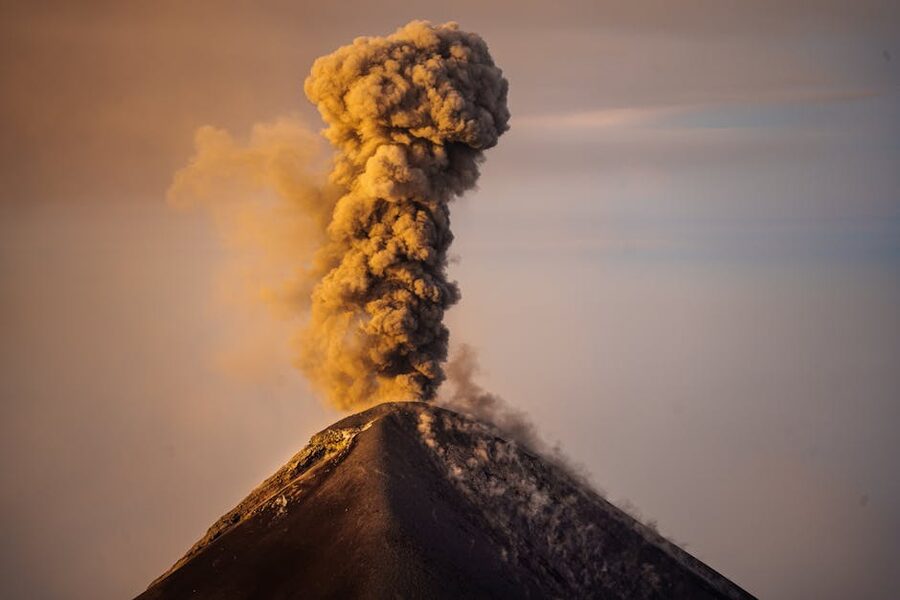
You hike up Volcán Acatenango (3,976m, dormant) so you can sit a kilometre across the saddle and watch Volcán de Fuego (3,763m, very active) erupt. Fuego goes off every 15 to 30 minutes, day and night, in plumes of ash, lava bombs, and at night a slow run of glowing rock down the western flank. From the camps at around 3,600m you have a front-row seat. It is one of the best hike experiences anywhere in Latin America.
The hike is two days, one night. Day one: shuttle from Antigua at 8 or 9am to the trailhead at La Soledad (1.5 hours), then 5 to 6 hours up through cornfields, cloud forest, and pine forest to camps at 3,600m. Day two: a 4am wake-up to climb the last 380m to the summit for sunrise, descend to camp, head down by midday. Back in Antigua by 2pm.
Challenging but doable for anyone in reasonable shape. The hard parts are altitude (1,500m to 3,600m in one push) and loose volcanic gravel. Hiking poles help. Wear actual hiking shoes. Camp temperature drops to 2 to 5°C at night; most operators provide a heavy jacket and gloves but check.
Operators verified from competitor reviews and forum threads:
- Tropicana Hostel. Popular budget option, Q400 to Q500 all-in. Group hikes daily. Tents shared.
- Lava Trails. Mid-range, smaller groups, private cabins instead of tents at the camp, Q900 to Q1,200.
- Wicho & Charlie’s. Long-running outfit, A-frame cabins at the camp, Q1,000 to Q1,500. Good food.
- Ox Expeditions. Premium, longer trips that summit Acatenango itself rather than just camping below.
You can also book on Viator or GetYourGuide if you want a card-and-confirmation paper trail rather than a WhatsApp deposit:
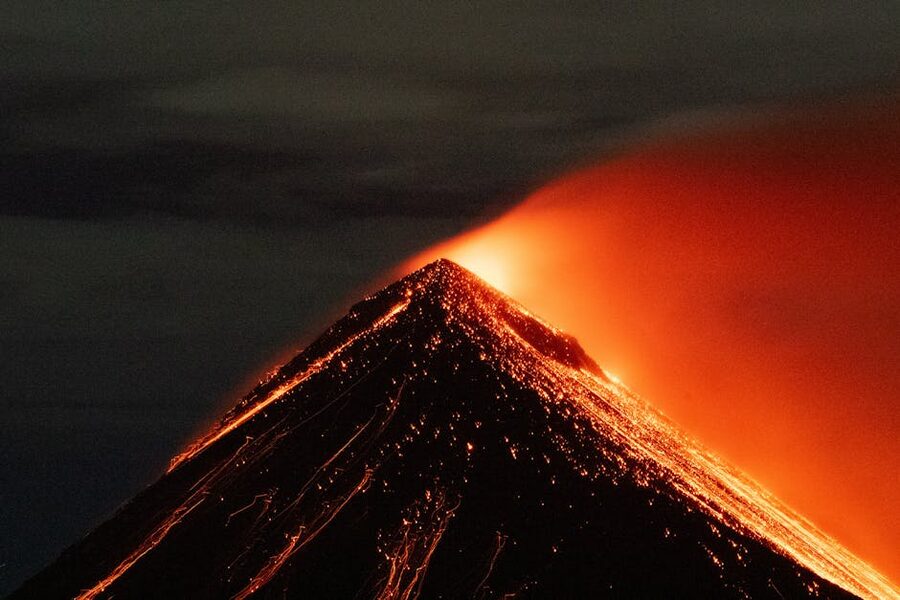
One caveat worth knowing. The popular camp area is busy. On a weekend in dry season you can have 200 people on the same ridge. For a quieter version, book midweek and ask for the lower camp at the end of the line. The second-night option (some operators add a Fuego summit hike on day two for an extra fee) is exhilarating but not always running depending on volcanic activity. Worth asking, not worth fixating on.
Pacaya: the casual half-day version
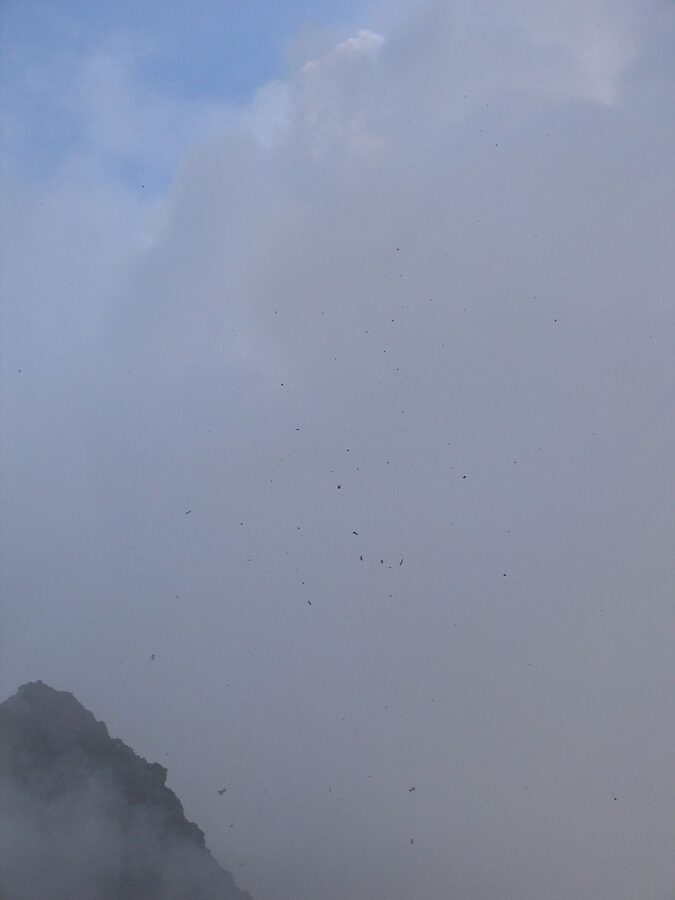
If overnight camping at altitude isn’t your thing, do Pacaya. It’s a 2,552m active volcano about an hour south of Antigua, the hike up takes 90 minutes to two hours each way, and depending on current activity you walk on a recent lava field where the rock is still warm enough below the surface to toast marshmallows. Group tours leave Antigua at 6am and 2pm and cost Q150 to Q200 plus the Q50 park entrance. You’re back by lunchtime or sunset.
The horse touts at the trailhead are aggressive. They follow you up offering a horse rental in case you give up. The standard line is “taxi” and the price is around Q150. Just say no, gracias firmly and keep walking; they leave you alone after about 20 minutes. The hike is steady but not punishing. Good shoes still required.
Coffee fincas: Antigua is on a serious coffee mountain
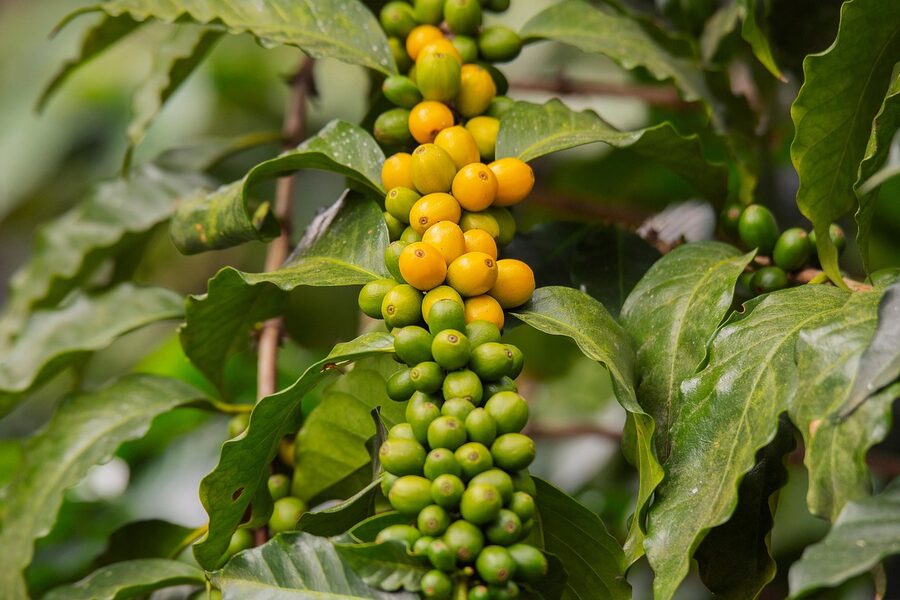
Antigua sits in one of Guatemala’s named coffee regions and the volcanic soil on the slopes of Agua and Fuego is exactly what high-grown arabica wants. Three farms run real tours, all bookable from town.
Finca Filadelfia is the polished version: shuttle pickups from Parque Central, full walkthrough of harvest, processing, drying, roasting, and cupping, lunch on a terrace looking down to Volcán de Agua. Q250 for the coffee tour. Good for first-timers.
La Azotea is smaller, on a working farm a few minutes outside town, with a cultural museum about the cofradía traditions of San Felipe de Jesús alongside the coffee process. Q200. Less polished, more intimate.
De La Gente is the one to do if you can. It’s a non-profit cooperative and the tour visits the farm of an actual smallholder family in San Miguel Escobar, the village just east of Antigua at the base of Volcán de Agua. Two to three hours with a farmer, doing the harvest if it’s the season (October to February), pulping, drying, roasting on a stovetop comal, grinding on a Mayan stone. Coffee plus lunch with the family. Q200. The money goes to the farmer. The best coffee tour I know in Central America.
Spanish schools: Antigua is one of the best places in the world for this
If you’re travelling in Latin America for more than a few weeks, take a week of Spanish in Antigua. Schools are cheap, plentiful, and the format is the same almost everywhere: four hours of one-on-one tuition every weekday morning, plus an optional homestay with a Guatemalan family that includes three meals a day. A standard week (20 hours plus homestay) runs Q1,800 to Q2,500. Standalone weeks without homestay are Q1,000 to Q1,400.
- Probigua. Non-profit, profits fund rural libraries. Long-running, classic courtyard setup near the centre. Most-recommended for a first week.
- Spanish Academy Sevilla. Large school, runs activities most afternoons. Good for the social side.
- Christian Spanish Academy. Small classes, religious framing optional, well-rated for absolute beginners.
- Antigüeña Spanish Academy. Popular with backpackers, flexible week lengths, decent reputation across travel forums.
Pick whichever has space the week you arrive. The differences are small. Most travellers book one school, are happy enough, and never bother comparing.
Markets: textiles, food, and what to actually buy
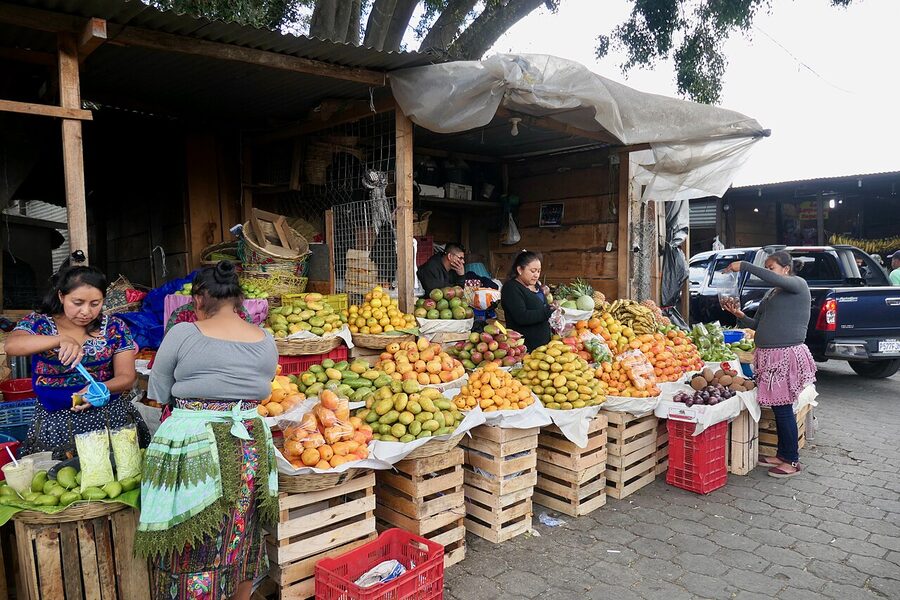
Two markets worth time. Mercado Central, on the western edge of town next to the chicken bus terminal, is the working market: produce, meat, comedor stalls doing Q35 plates of chicken with rice, beans, plantain. Almost no tourist stuff. Wander for an hour, eat lunch at one of the comedores, watch the rhythm. Wallet in front pocket.
Nim Po’t, on 5a Avenida Norte two blocks from the arch, is the textile market. A sprawling indoor space packed with huipiles (the embroidered traditional blouses), cortes (wraparound skirts), table runners, masks, and ceramics from villages across the western highlands. Prices are fixed-ish and labelled. Maya artisan cooperatives sell directly here too. Quality varies; ask where pieces are from and you’ll get a real answer.
Saturday and Sunday there’s also an artisans’ market in Plaza La Merced, smaller, more open-air, good for last-minute things on the way out. Skip the souvenir-shop strip on 5a Avenida Norte between the arch and Parque Central unless you’re looking for fridge magnets.
Where to eat in Antigua
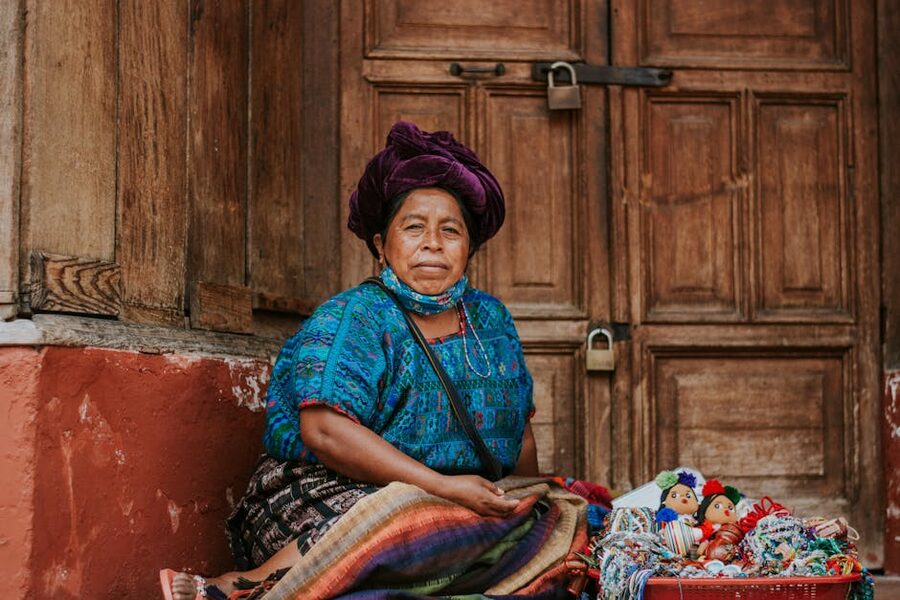
Eating in Antigua is one of the genuine pleasures of the place. There’s a working high-end scene and a strong street-food and comedor scene, and the gap between them is the entire range of a country’s cooking. A few rules: drink filtered water, eat where locals eat at lunch (queues are good), and try at least one desayuno chapín (refried beans, eggs, fried plantain, chirmol salsa, tortillas).
Por Qué No? sits on most “favourite Antigua restaurant” lists. Tiny, the upstairs is reached by a narrow staircase with a rope to haul yourself up, every wall covered in graffiti from past patrons. The food is not gimmicky: steaks, ceviche, shrimp. Reservations help. Q200 to Q300 for two with drinks.
Hector’s, opposite La Merced, is small, French-leaning, menu changes weekly. About 12 covers, no reservations, queue from 6.30pm. Q300 to Q400 for two.
Caoba Farms is the brunch slot: 10 minutes south of the centre, organic farm with cafe and bakery, weekend farmers market. Big portions, outdoor seating. Q100 a head. Rincón Típico is the local-cooking lunch spot: a buffet of clay-pot Guatemalan classics like pepián, jocón, kak’ik. Queue most days; service is fast once you’re in. Q60 to Q90 a head, worth it.
Cafe Sky has the best rooftop view in town and you go for a drink, not the food. Q40 for a beer, Q70 for a cocktail. Sunset is the moment. Cafe No Sé on 1a Avenida Sur is the mezcal bar, the first dedicated mezcal bar outside Mexico. Live music most nights, tiny dim rooms, the locally distilled Ilegal Mezcal still gets bottled here. The pinhole-camera doorway to the back bar is a thing.
For the rest: Cafe Sol for breakfast (banana French toast, big terrace), Cafe Condesa on Parque Central for brunch (Q80 to Q120 for a proper plate), Tartines for the French splurge (Q400 to Q600 for two), and for specialty coffee the names that come up everywhere are Alegría, Artista de Café, 12 Onzas, and El Gran Café. Walk to whichever is closest. None disappoint.
Where to stay in Antigua
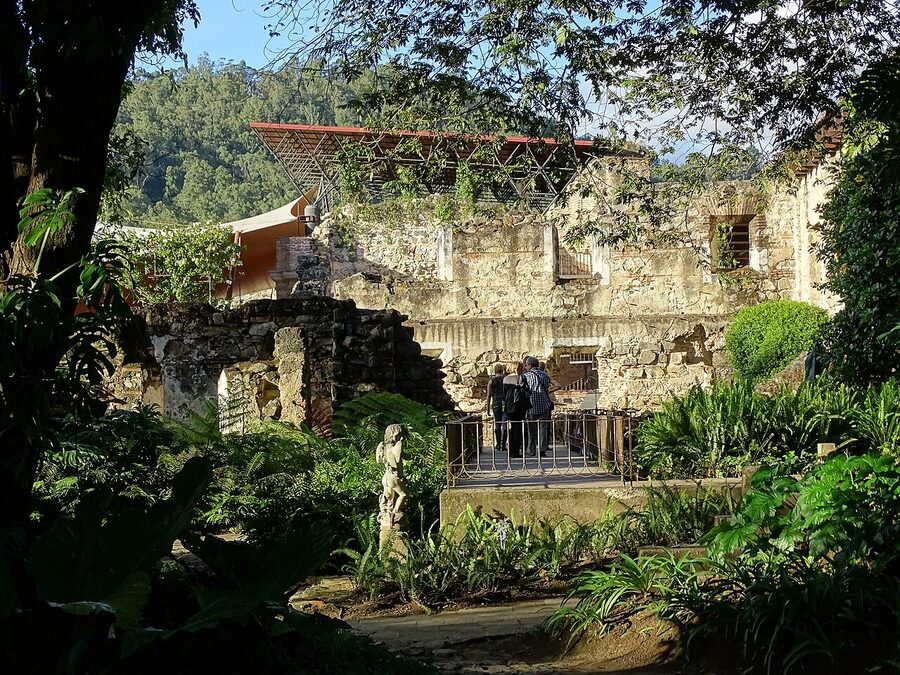
The grid is so small that “central” basically means everywhere; most places are within a 10-minute walk of Parque Central. The trade-off is between colonial character (older, beautiful, sometimes thin walls) and design polish. Prices below are dry-season indicative; Semana Santa and Christmas weeks at least double, book months ahead.
Splurge
Hotel Museo Spa Casa Santo Domingo is the headline: built into the ruins of a 16th-century Dominican convent, six in-house museums, two art galleries, one of the loveliest hotel gardens in Central America. Rooms from Q1,400. Worth a visit even if you don’t stay; you can buy a museum day pass.
Villa Bokéh Relais & Chateaux sits on the eastern edge of town and feels less Guatemalan, more European-countryside-mansion. Two restaurants, pool, full spa, Q3,000+ a night. Quieter. El Convento Boutique Hotel is the polished colonial-charm option: fewer rooms, indoor pool, very central, around Q2,000 a night.
Mid-range
Posada del Angel, behind the famous turquoise doors south of Parque Central, is the most-recommended pick. Garden courtyards, outdoor pool, volcano views from upper rooms, eight rooms total. Q1,000 to Q1,400. GOOD Hotel Antigua is the design-led option, a Design Hotels member; for every night you stay they fund a week of school for a child in need. Q900 to Q1,200.
San Rafael Hotel has the kind of atmospheric colonial rooms you came to Antigua for: high ceilings, dark wood, courtyard. Q900 to Q1,400. Villa Las Mil Flores is newer with a pool and breakfast, Q900 to Q1,300. Camino Real Antigua is the more-amenities option (restaurant, fitness centre, spa, bar) at Q800 to Q1,200.
Budget
Cacao Boutique Hotel is slightly out of the centre, thoughtfully designed, very good value at Q500 to Q700. Garden, terrace, peaceful. Ojalá Hostel is the cool-design hostel, dorm beds from Q140 and private rooms from Q400. Books out fast.
Earth Lodge sits 25 minutes outside town on a hillside above San Lucas with one of the best volcano views in the valley. A working avocado farm with cabins, hammocks, and a treehouse. Bookable through earthlodgeguatemala.com rather than Booking. Cabins from Q400 to Q700.
When to go
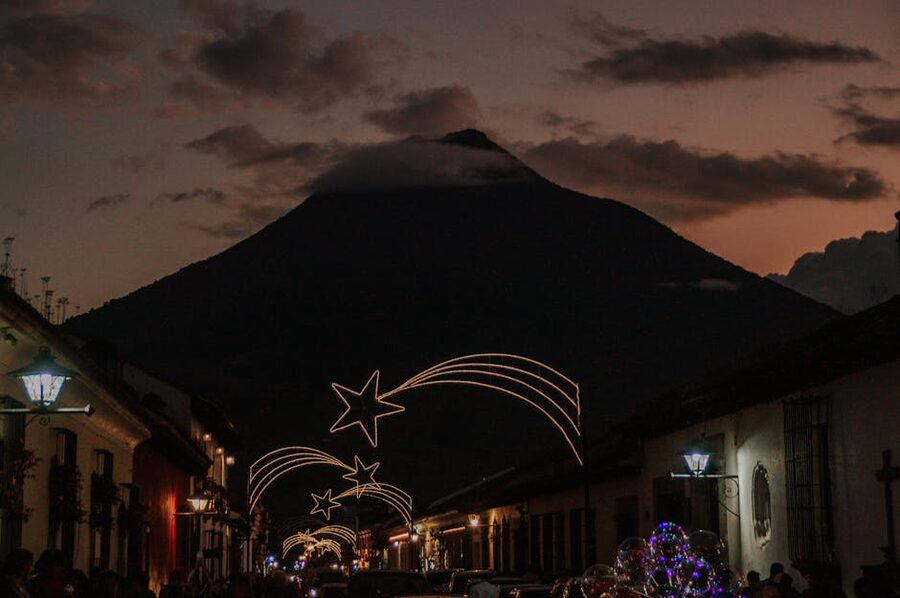
Antigua’s seasons split cleanly. Dry season runs November to April: warm sunny days, cool nights, almost no rain, clearest volcano views. This is high season; Christmas week and Semana Santa are the two crunch points where everything books out and rates climb sharply.
Wet season runs May to October. Mornings are usually clear, afternoons get an hour or two of heavy rain that clears out by evening. Town is quieter, accommodation is cheaper (sometimes 30%), the hills are absurdly green. Volcano hikes get harder and summit views worse. June to September haze from agricultural burning further south can wash out distant views even on a dry day.
If you have to pick a single ideal month: February. Reliable weather, Semana Santa hasn’t started, rates lower than Christmas or Easter, volcanoes usually clear by mid-morning.
Semana Santa: the carpets, the processions, why this is unlike anywhere else
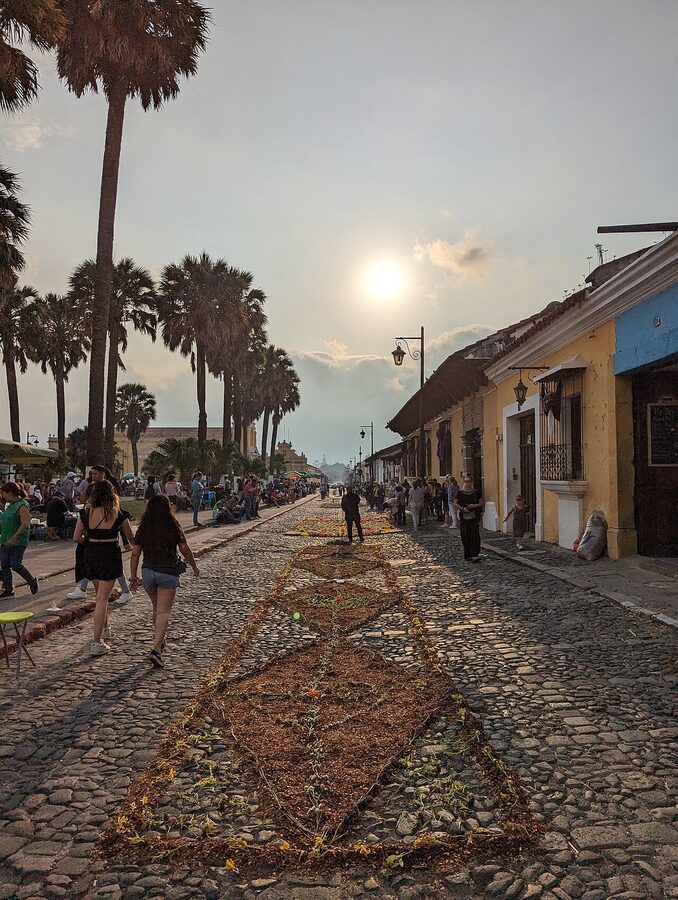
Antigua’s Holy Week has been on UNESCO’s intangible heritage list since 2022 and it’s the single most extraordinary cultural moment you can witness in Central America. From Palm Sunday through Easter Sunday, processions of robed cucuruchos (cofradía members, in purple then black on Good Friday) carry enormous wooden andas (floats) bearing scenes from Christ’s passion. The floats weigh up to four tonnes and are shouldered by 80 people at a time, rotating in shifts.
The signature moment is the alfombras. In the hours before each major procession, families and church communities lay down carpets of dyed sawdust, flower petals, pine needles, and fruit on the cobblestones, sometimes 30m long, intricately patterned like a rug. They take 6 to 12 hours to build. The procession walks over them. Within 90 seconds they’re destroyed. Then the family sweeps up and starts thinking about next year.
If you want to come for Semana Santa: book accommodation at least 6 months ahead, expect rates to double or triple, plan to stay at minimum from Holy Wednesday through Easter Sunday. The two heaviest days are Good Friday (largest procession leaves La Merced before dawn) and Holy Saturday.
How to get to Antigua
From Guatemala City‘s La Aurora airport (GUA, Zona 13), Antigua is 45 minutes to 1.5 hours by road. Three options. Shared shuttle is what most travellers do: GuateGo, Antigua Tours, and Adrenalina Tours run vans direct from the airport to your hotel for Q120 to Q160 per person. Uber works at GUA and runs Q300 to Q400. Private transfer through a hotel is Q400 to Q600 for the car. Public chicken buses run from the Centra Norte terminal for around Q15 but aren’t practical with luggage. Shuttles are also how you’ll move on to Lake Atitlán and other towns afterwards: they are Antigua’s connective tissue.
From Copán Ruinas in Honduras, the standard route is the Hedman Alas bus from Copán to Guatemala City (5 hours) plus a shuttle to Antigua (1.5 hours). Daily, reclining seats, crosses at El Florido in around 30 minutes if your paperwork is in order. Bring a printed ticket and Q20 to Q40 cash for the border fee. Door to door is about 8 hours.
Money, safety, and the practical layer
Currency is the quetzal (Q or GTQ). Tourist hotels and a handful of high-end restaurants quote in or accept US dollars, but everything else (taxis, comedores, markets, shuttles, museum tickets) is quetzales. ATMs are everywhere on 5a Avenida Norte and around Parque Central; Bantrab and Banrural are the most reliable. Some Guatemalan ATMs trip on 4-digit cards, so bring a 6-digit PIN if your bank offers one. Tip 10% in restaurants if it’s not already on the bill (the line on the bill is servicio).
Safety in Antigua itself is fine, day and night. The colonial centre is patrolled, well-lit on the main streets, and tourist police walk the obvious routes. Standard sense: don’t flash phones in dark side streets late at night, take Uber after midnight rather than walking, do not walk to Cerro de la Cruz alone after dark. Petty theft happens at the chicken bus terminal and the central market; keep your bag in front. The bigger ambient concern is Guatemala City, not Antigua, which is part of why the airport-Antigua shuttle is the standard advice. The US State Department Guatemala page and the UK FCDO Guatemala advice are both worth a glance before you travel.
What I’d skip
Three things people obsess over that I’d rank lower than the SERPs imply.
Hobbitenango. An hour from town, Q150 entrance plus Q100 transport each way, hobbit-themed photo park with viewpoints, a giant swing, and a wooden hand over a cliff. Fun with kids or if you love Lord of the Rings. As a half-day, you’d be better off at De La Gente, Pacaya, or Caoba Farms.
The Choco Museum chocolate-making class. The class itself is fun for an hour, but the museum is a chain (you’ll see them in Lima, Cusco) and it’s more activity than cultural deep dive. Do De La Gente’s coffee tour first.
Rolling straight through to Lake Atitlán on day three. Lake Atitlán is worth the days, but Antigua repays staying longer than you think. Acatenango eats two days. A coffee tour eats half a day. Spanish school eats a week. The pacing that works for most travellers is five to seven nights in Antigua, then onward.
One-week sample loop
If you’re planning a week from a fresh GUA arrival:
- Day 1. Land, shuttle in, walk Parque Central to the arch, dinner at Por Qué No.
- Day 2. Cerro de la Cruz at 7am with the tourist-police group, churches and ruins until lunch (Catedral, San Francisco, Las Capuchinas, La Merced), afternoon at MUNAG and a coffee at 12 Onzas, sunset drinks at Cafe Sky.
- Day 3. De La Gente coffee tour in San Miguel Escobar, brunch at Caoba Farms, evening on the rooftop of La Merced.
- Day 4. Acatenango overnight (depart 8am).
- Day 5. Acatenango return (back by 2pm), recovery dinner at Hector’s.
- Day 6. Mercado Central, Nim Po’t textiles, lunch at Rincón Típico, afternoon at the Choco Museum or a Spanish lesson, dinner and mezcal at Cafe No Sé.
- Day 7. Buffer day, or shift to Lake Atitlán or Tikal.
Cut day six if you only have five nights. If you have ten, add a Lake Atitlán shuttle on day seven and route back through Antigua on the way out. For more on the country beyond Antigua, our Guatemala country guide is the precursor read, and the full Guatemala article archive covers Tikal, Lake Atitlán, Guatemala City, and the cross-border options into Honduras and Belize. Antigua is the gateway. Enjoy the cobblestones.